Wizard of Oz, Camel’s Nose and Being a Change Agent:

oz

In my last post, I talked about learning from Dr. Seuss’ quotes. In his “Greens Eggs and Ham” book, one of the characters(Sam) tries to persuade the other character to eat green eggs and ham. “Try it, try it, you may like it”, Sam says.

Aldean Jakeman commented on this post and stated that the “Green Eggs and Ham” book was her first change management book. This got me thinking about the “Wizard of Oz” story, and the story of the camel’s nose.

Learning from the Wizard of Oz:

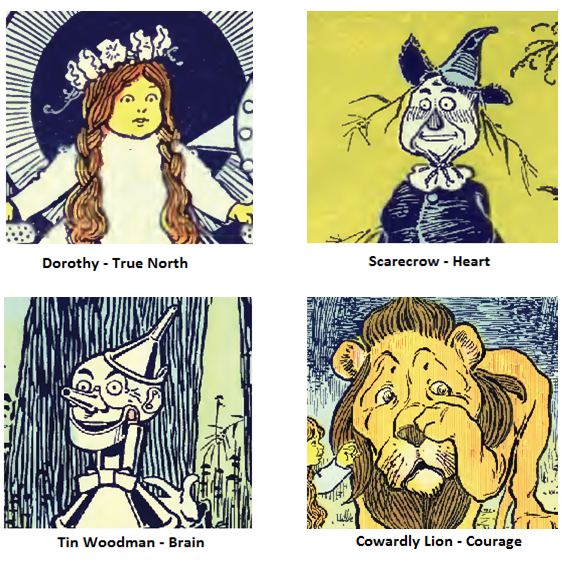
There are four main characters in “Wizard of Oz”, written by Frank Baum. These four characters represent a quality characteristic that every change agent needs:

  • Dorothy – the main protagonist of the story. She was swept into the wonderful fantasy land of Oz by a cyclone. All she wants is to go back home to Kansas.
  • Scarecrow – the first friend Dorothy makes on her journey home.
  • Tin Woodman – a character who originally was a real human, but now is completely made of tin. Tin Woodman is the second friend that Dorothy makes.
  • Cowardly Lion – the third and final member of Dorothy’s team.

True North (Home):

“True North” is a strong concept in Toyota Production System (TPS). True North depicts our ideal state. True North is what we are striving towards. We are trying to reach True North. In a TPS/Lean way, Dorothy represents the characteristic of True North, our ideal state. All she wants is to go home (True North). A change agent should form his/her team, like Dorothy did, to reach their goal (true north).

Heart:

The scarecrow represents the quality of “the heart”. A change agent should have his/her heart in the game. This allows you to think from the other person’s viewpoint. Having the heart characteristic makes you realize that this is a win-win, non-zero sum game. The heart represents empathy and compassion, without which you cannot gain the buy-in from your team. You should be open for suggestions and ideas for improvements. Toyota has identified “Respect for Humanity” as one of the two pillars of Toyota Way.

Brain:

Tin Woodman represents “the brain” characteristic. A change agent should never stop learning. You should be smart enough to try things out and learn from your mistakes. You should also be smart enough to realize that you need to train and develop more change agents. A change agent should know how to approach when he/she is trying to implement a change. Here, Brain represents both knowledge and wisdom. A wise change agent will request his/her team to try things out at first. The “for trial only” approach eases them into the actual implementation.

Courage:

Cowardly Lion represents “courage”. A change agent should be brave enough to look back at himself/herself with a critical eye and challenge assumptions. A change agent should be open about the problems, and transparent in communication. At Toyota, they talk about the importance of “Hansei”. “Hansei”, a Japanese term, loosely translated means “self reflection”. This can act as a strong and effective feedback loop that will steer you back on course towards True North. Having courage also means that you are capable of saying “No”. Ultimately, a change agent should be brave enough to stand up for what he/she thinks is right. Winston Churchill, the former UK prime minister, said the following about courage:

“Courage is what it takes to stand up and speak; courage is also what it takes to sit down and listen.”

Final Words:

I will finish off with an Arabian story that goes by the name “The Camel’s Nose”. The story has created the phrase “camel’s nose” in English language that is a metaphor for allowing a larger change in the pretense of small incremental changes. This phrase has a negative connotation since the change represents something that is not desirable. Here, I will be presenting it as a tactic for a change agent to encourage their team to implement the change. This story is about a wise camel, and the importance of implementing a change little by little at a time.

It was an unusually cold night in the desert. The camel was outside, tied to the tent. The master was inside the tent, comfortable and getting ready to sleep.

“Master,” the camel said putting his nose under the flap, “it is so cold outside. Can I at least put my nose inside the tent?”

“Sure,” the kind master replied, and rolled over.

A little later, the master rolled over and found that the camel had his whole head inside the tent.

“Master, it feels so nice here. Can I please put my front legs inside the tent too?”, the camel asked.

“Okay, you may”, the master said moving a little toward the edge since the tent was small.

The master again rolled over trying to sleep. A little while later, the camel again said “Master, Master, can I come inside the tent all the way? I will stand inside. It is very cold outside.”

“Yes,” the master said unwittingly. The master went back to sleep.

The next time the master woke up, he found himself outside the tent and cold.

I am not suggesting here that the change agents should be the camel kicking out the master. I am presenting the story to show the importance of taking things a small step at a time.

Always keep on learning…

In case you missed it, my last post was Learning from Dr. Seuss.
Learning From Dr. Seuss:

drseuss

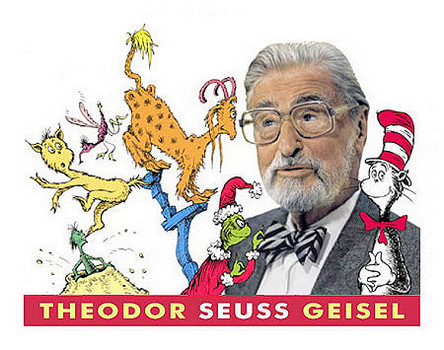
Dr. Seuss (Theodor Seuss Geisel), the renowned children’s book author, was born on this date (March 2nd) in 1904. Interestingly, he used “Dr.” in his pen name since his parents really wanted him to be a doctor. In today’s post, I will look at eight great quotes from him to learn from.

I immigrated to America from India. I did not know Dr. Seuss until I met my wife here in America. I grew up with Enid Blyton, the English author. I very much enjoyed reading the Dr. Seuss books with my kids because of his unique writing style. As I was introducing my three children to his books, I was also learning from Dr. Seuss at the same time.

Here are eight lessons from Dr. Seuss:

  • “From there to here, and here to there, funny things are everywhere.” (Source – One Fish, Two Fish, Red Fish, Blue Fish)

As Lean practitioners, we can translate this as “from there to here, and here to there, wastes are everywhere”! The funny things are the different wastes! Everything we do has waste in it. Taiichi Ohno is a big proponent of eliminating waste. He made managers stand inside a circle and look for wastes. Wastes forces us to be non-value adding, and increases overall cost.

  • “Why fit in when you were born to stand out?” (Source – Unknown)

If you try to copy the best, you will only come in second. Trying to copy Toyota does not make sense unless you have the same problems as Toyota. You should try to create your own system – Company XYZ Production System rather than a frail copy of Toyota Production System. Understand your problems and then address them, creating your own production system.

  • “Sometimes the questions are complicated and the answers are simple.” (Source – Looking Tall by Standing Next to Short People)

This is a true gem. The insurmountable problems become ant hills once they are solved. This is akin to Occam’s razor in some sense. Occam’s razor can be loosely stated as “the simplest answers provide the best explanations”. We have a tendency to complicate things. As an Engineer, I can vouch for this. At Toyota, they talk about using automation as the last resort to improve a process. They push for simple solutions.

  • “You have brains in your head. You have feet in your shoes. You can steer yourself in any direction you choose. You’re on your own, and you know what you know. And you are the guy who’ll decide where to go.” (Source – “Oh, the Places You’ll Go!)

You have brains in your head – you need to use them. You have feet in your shoes – you need to go to the Gemba. This is a perfect summation of Genchi Genbutsu – going to the Gemba to learn the actual facts. You have to go to the source, where the action takes place and see for yourself.

  • “You’ll miss the best things if you keep your eyes shut.”(Source – I Can Read With My Eyes Shut!)

You have to keep your eyes open but you have to observe. Seeing and observing are two different things. When you keep your eyes open, you start to see things. When you see more things, you start to observe things. When you observe things more, you start to understand things more.

  • “It is better to know how to learn than to know.” (Source – Unknown)

It’s not the tools system, it is the thinking system. To know and to understand are two different things. To know something makes you rigid in your thinking. To understand something makes you flexible in your thinking.

  • “How did it get so late so soon?” (Source – Poem by Dr. Seuss)

There is no better time than now to start improving and to start learning. Do not wait for the best idea to happen. Do not wait for the new and improved machine. Do not wait for next month. Now is indeed the right time. As Hillel the Elder said, “If not now, when?”

  • “Try them, try them, and you may! Try them and you may, I say.”(Source – Green Eggs and Ham)

This is the best way to implement process improvement activities. You can say “try them, try them, you may like them”. All you need them to do is to try the idea out. Once tried, they will provide ideas to improve and make them better. The lesson here is that you should not try to force your ideas, rather ask them to try it out. After all, what is the harm in trying it out? Brian Fitzpatrick, and Ben Collins-Sussman recommends saying “let’s try this for 30 days. If this does not work, we will go back to the way it was.” This approach helps in getting buy-in. Almost always, they will start using the new method. If they do not, at least you will get feedback as to why the new method does not work.

Thank you Dr. Seuss for everything you have done.

Happy Birthday!

Always keep on learning…

In case you missed it, my last post was Be an Amateur at the Gemba.

Be an Amateur at the Gemba:

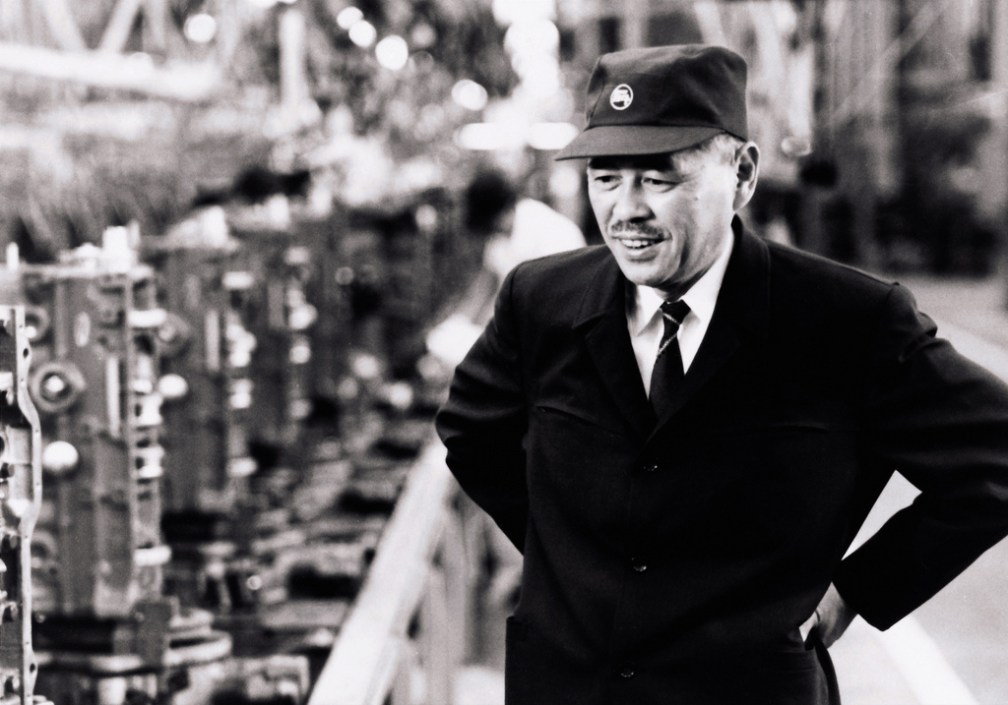
ohno

In my last post, I talked about being like a Samurai warrior at the gemba. Today, I am posting about being an amateur at the gemba.

The word “amateur” has roots in the Latin word “amare” which means to love. “Amateur” used to mean someone who is pursuing something out of pure love or passion. Once the word “amateur” entered the English language, it got associated with a negative connotation. Today being an amateur means that one is a mere hobbyist, and may lack experience and knowledge. Today, its meaning does not encompass the meaning of passion that it once used to have.

Taiichi Ohno was a man of passion and was new to the automobile world when he heard Kiichiro Toyoda, the then leader of Toyota, talking about the need for Toyota to catch up with American car manufacturing in three years to survive. Ohno was not an expert in auto manufacturing, and the Toyota Production System did not exist at that time. Ohno called himself a “layman” when it came to the auto industry. However, he did have a tremendous amount of love and passion for the manufacturing world. He was an amateur in the classic and modern sense.

Taiichi Ohno- What would Ohno Do?

Taiichi Ohno graduated from the Department of Mechanical Technology of Nagoya Technical High School in the spring of 1932. He then got a job at Toyota Textiles through his father, who was an acquaintance of Kiichiro Toyoda. He later got transferred to Toyota Motor Company in 1943, when Toyota Textiles was dissolved. At this time, it was declared that the Japanese worker’s efficiency was only 1/9th of that of an American worker. Kichiiro Toyoda gave Toyota the clear vision of catching up to America in three years.

Ohno correctly concluded that the high efficiency of the American operator was not due to him exerting ten times more physically than the Japanese operator. His only logical explanation was that there was a lot of waste in what the Japanese operator was doing. Ohno started experimenting and began planting the seeds of Toyota Production System (TPS). This was where the passion or love of the “amateur” came in. The amateur was not afraid to fail. Each step was a learning step for him. In my eyes, the turning point of TPS came when Ohno realized that he can have one operator take care of more than one machine at a time. The norm in those days was that one operator managed only one machine. The operator was not doing anything while the machine was operating. Ohno put the operator in charge of more than one machine. He had to ensure that the labor content remained the same. The operator was not being required to work harder! Ohno instead focused on the flow of operations. The machines were operated in the order as dictated by the flow of operations. In Ohno’s words;

The first step was to establish a flow system in the machine stop.

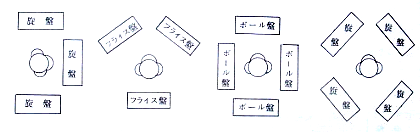
Ohno proposed to implement work improvement first, and then to do facility improvement. Ohno experimented with different layouts to improve the flow. Some of them are shown below (U-shape/Bracket, Triangle, Square and Diamond).

huki03

Ohno also introduced the idea that to manufacture beyond what is needed is to create waste (waste of over-production). He also introduced the idea of using kanban as a way to ensure a pull system and continuous flow.

One would imagine that Ohno’s ideas would be welcomed with open arms. Instead, he faced a lot of resistance. In fact, his ideas were first called “Ohno’s System” instead of “Toyota Production System”. Gandhi famously stated the following;

“First they ignore you. Then they laugh at you. Then they fight you. Then you win.”

This was true in Ohno’s case. Ohno was called “Mr. Mustache”. The operators thought of Ohno as an eccentric. They used to joke that military men used to wear mustaches during World War II, and that it was rare to see a Japanese man with facial hair afterward. “What’s Mustache up to now?” became a common refrain at the plant as Ohno carried out his studies. (Source: Against All Odds, Togo and Wartman)

His ideas were not easily understood by others. He had to tell others that he will take responsibility for the outcomes, in order to convince them to follow his ideas. To his credit, he taught his ideas at the top and bottom simultaneously.

Ohno could not completely make others understand his vision since his ideas were novel and not always the norm. His style of production was not being practiced anywhere. Ohno was persistent, and he made improvements slowly and steadily. He would later talk about the idea of Toyota being slow and steady like the tortoise. Many of his ideas were based on trial and error, and were thus perceived as counter-intuitive by others. Ohno loved what he did, and he had tremendous passion pushing him forward with his vision. For this reason, Ohno was truly an “amateur”.

Final Words:

I have cited the example of Ohno, the father of Toyota Production System, to propose that one should try to be like him, an amateur – one who has tremendous passion and love for what he does and one who does not mind trying out his ideas even if they might fail. I will finish off with a story I read about Ohno,

As I mentioned above, Ohno’s methods were counter-intuitive in nature. Ohno wanted to increase productivity, and yet not over produce! Ohno in fact called Over-production as the biggest waste of all.

Ohno had started implementing Just-in-Time in the plant. The operators became insecure with this. They felt secure having extra in-process inventory so that they can keep working if there were line stoppages.

Ohno understood this, and became angry about this. He decided to combat this by making the operators take the unneeded material home with them.

“Since the company does not need these things”, he would tell the men as he filled their arms with parts at the end of the day, “you must take them home.”

(Source: Against All Odds, Togo and Wartman)

Always keep on learning…

In case you missed it, my last post was Be a Samurai Warrior at the Gemba.

Be a Samurai Warrior at the Gemba:

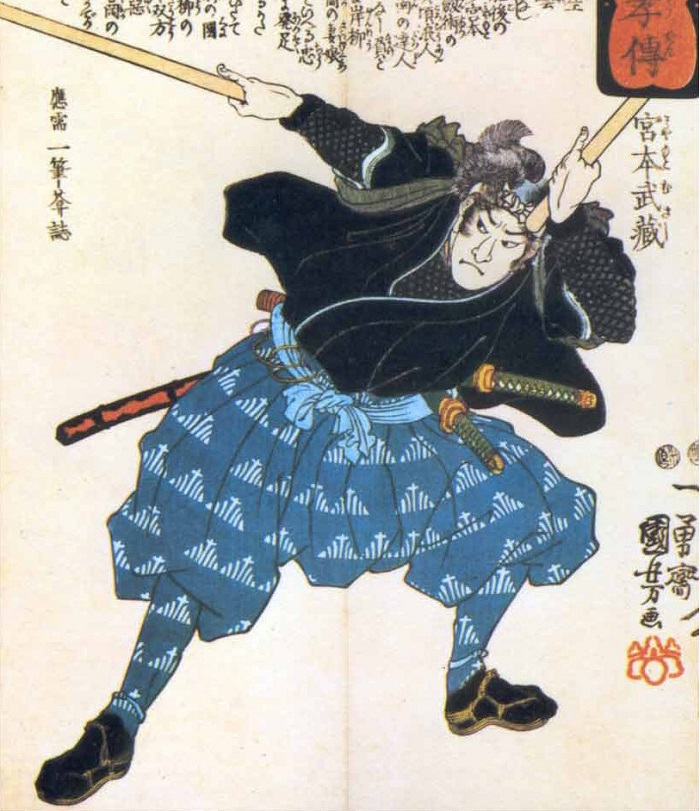
MM

There is a great Japanese notion about the Samurai Warrior. I first came across this in Norman Bodek’s preface to “Kanban and Just-in-Time at Toyota”. The main idea is that a Samurai warrior never stops perfecting his style. This is akin to a manager who should never stop improving his managerial ability. The Samurai warrior also never stops polishing his sword. This is akin to the manager constantly trying to improve the process and the product.

This got me thinking about Miyamoto Musashi. Miyamoto Musashi (1564 – 1645) was a great swordsman and a great artist from Japan. He is most commonly known as the author of the great book – “The Book of Five Rings”. He was said to be undefeated in duels. His book is still considered to be a great book on strategy similar to the Art of War. His book consists of five different themes (earth, water, fire, wind and void). In this post, I will talk about five of his sayings from the Book of Five Rings that resonated the most with me.

  • If you practice diligently day and night in the strategy, your spirit will naturally broaden. Thus you will come to comprehend large scale strategy and the strategy of one on one combat. (Book of Earth)

Musashi is talking about the small picture and the big picture view here. In the book, the strategy refers to the use of the long sword. He advises the student to practice every day and to be fluent in both large scale strategy and small scale strategy.

In a similar vein, Musashi states the following in the Book of Water:

In strategy it is important to see distant things as if they were close and to take a distanced view of close things. It is important in strategy to know the enemy’s sword and not to be distracted by insignificant movements of his sword. (Book of Water)

The key points I am taking away to use are diligent practice in order to broaden your spirit. This allows you to see the big picture vs. the small picture, and strengthens your ability to look at the small details and not lose sight of the forest for the trees.

Musashi also said, “Know the smallest things and the biggest things, the shallowest things and the deepest things.”

  • The teacher is as a needle, the disciple is as thread. You must practice constantly.(Book of Earth)

In Lean we say that the Teacher has not taught, if the student has not learned. Musashi requires the student to follow the teacher as a thread follows the needle. This is such a powerful analogy.

  • Really skilful people never get out of time, and are always deliberate, and never appear busy.(Book of Wind)

When you look at successful people, they make you go, “How does he/she do it?” Continuous learning and practice makes you better at what you do and allows you to become so skilful that you are able to flow gracefully. Business does not equate to busyness. Being busy and getting things done are two different things.

  • You should not have any special fondness for a particular weapon, or anything else, for that matter. Too much is the same as not enough. (Book of Earth)

Musashi cautions us against having a favorite tool. This is akin to the saying; if you have a hammer everything you see is a nail. One should use the right tool for the right problem. To use the right tool, one should understand what the problem is. Do not become over-reliant on a favored approach or process.

  • There is rhythm in everything; however, the rhythm in strategy, in particular, cannot be mastered without a great deal of hard practice. (Book of Earth)

There is a constant theme in the book about being fluid. Musashi talks about having a rhythm in what you do. This is a toyotayesque approach of production leveling and takt time. Musashi also rightfully points out that the rhythm cannot be achieved without a great deal of practice.

Final Words:

Musashi’s book succinctly sums up the idea of constant practice and constant learning. I encourage the reader to read the Book of Five Rings. It is full of great nuggets that are applicable at the Gemba. I also encourage the reader to be a Samurai warrior at the Gemba – never stop practicing your style (always keep on improving) and never stop polishing your sword (always keep on learning).

I will finish off with a Zen Story that talks about working smarter and not harder:

A young man went to a famous teacher and asked, “I am devoted to your way of thinking. I am willing to work hard under you. How long will it take me to reach enlightenment?”

“Ten years”, the teacher replied.

“Ten years!”, the young man remarked. “But I want to reach enlightenment faster. I will work harder and devote ten or more hours a day. How long will it take me then?”

The teacher sipped his tea, thought for a bit and said. “Twenty years.”

Always keep on learning…

In case you missed it, my last post was Cpk/Ppk and Percent Conforming.

Cpk/Ppk and Percent Conforming:

cap

It has been a while since I have posted about Quality Statistics. In today’s post, I will talk about how process capability is connected to percent conforming.

In this post, I will be using Cpk and assuming normality for the sake of simplicity. Please bear in mind that there are multiple ways to calculate process capability, and that not all distributions are normal in nature. The two assumptions help me in explaining this better.

What is Cpk?

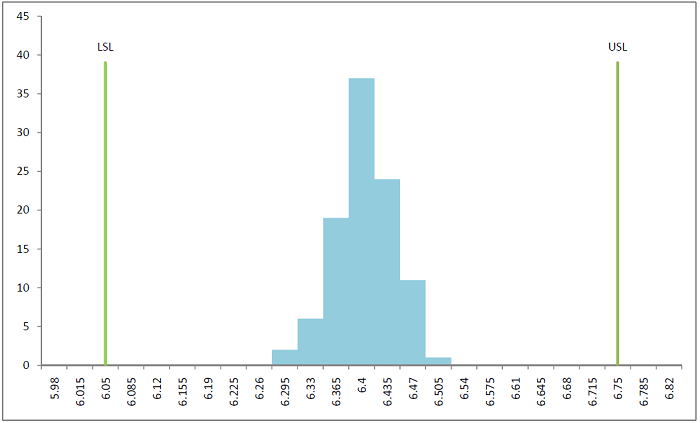
The process capability index Cpk is a one shot number that gives you an idea of the capability of the process to center around the nominal specification. It also tells you how much percent conforming product is the process producing. Please note that I am not discussing Cp index in this post.

Cpk is determined as the lower of two values. To simplify, let’s call them Cpklower and Cpkupper.

Cpklower = (Process Mean – LSL)/3* s

Cpkupper = (USL – Process Mean)/ 3* s

Where USL is the Upper Specification Limit,

LSL is the Lower Specification Limit, and

s is an estimate of the Population Standard Deviation.

Cpk = minimum (Cpklower, Cpkupper)

The “k” in Cpk stands for “Process Location Ratio” and is dimensionless. It is defined as;

k = abs(Specification Mean – Process Mean)/((USL-LSL)/2)

Where Specification Mean is the nominal specification.

Interestingly when k = 0, Cpk = Cp. This happens when the process is perfectly centered. An additional thing to note is also that Cpk ≈ Ppk when the process is perfectly centered.

You can easily use Ppk in place of Cpk for the above equations. The only difference between Ppk and Cpk is the way we calculate the estimate for the standard deviation.

But What Does Cpk Tell Us?

If we can assume normality, we can easily convert the Cpk value to a Z value. This allows one to calculate the percentage falling inside the specification limits using normal distribution tables. We can easily do this in Excel.

Cpk can be converted to the Z value by simply multiplying it by 3.

Z = 3 * Cpk

In Excel, the Estimated % Non-conforming can be calculated as =NORMSDIST(-Z)

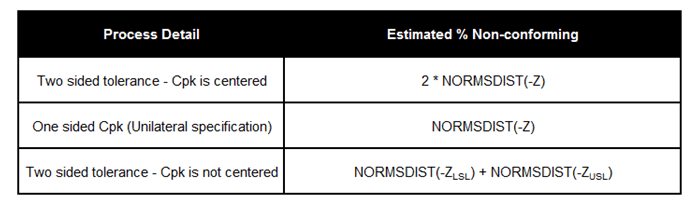
It does get a little tricky, if the process is not centered or if you are looking at a one-sided specification. The table below should come in handy.

z table

The Estimated % Conforming can be easily calculated as 1 – Estimated % Non-conforming.

The % Conforming is very similar to a tolerance interval calculation. The tolerance interval calculation allows us to make a statement like “we can expect x% of the population to be between two tolerance values at y% confidence level.” However, we cannot make such a statement with just a Cpk calculation. To make such a statement, we will need to calculate the RQL (Rejectable Quality Level) by creating an OC curve. Unfortunately, this is not straightforward, and requires methods like non-central t-distribution. I highly recommend Dr. Taylor’s Distribution Analyzer for this.

What about Confidence Interval?

I am proposing that we can calculate the confidence interval for the Cpk value and thus, for the Estimated % Non-conforming. It is recommended that we use the lower bound confidence interval for this. Before I proceed, I should explain what confidence interval means. It is not technically correct that the population parameter value (e.g. height of kids between ages 10 and 15) is between the two confidence interval bounds. We cannot technically say that at 95% confidence level, the mean height of the population is between X and Y for kids between ages 10 and 15.

Using the mean height as an example, the confidence interval just means that if we keep taking samples from the population, and keep calculating the estimate for mean height, the calculated confidence interval for each of those sample would contain the true mean height, 95% of the time (if we used a 95% confidence level).

We can calculate the lower bound for Cpk at a preferred confidence level, say 95%. We can then convert this to the Z-value and find the estimated % conforming at 95% confidence level. We can then make a statement similar to the tolerance interval.

A Cpk value of 2.00 with a sample size of 12 may not mean much. The calculated Cpk is only an estimate of the true Cpk of the population. Thus like any other parameter (mean, variance etc.), you need a larger sample size to make a better estimate. The use of confidence interval helps us in this regard since it penalizes for lack of sample size.

An Example:

The Quality Engineer at a Medical Device company is performing a capability study on seal strength on pouches. The LSL is 1.1 lbf/in. He used 30 as the sample size, and found that the sample mean was 1.87 lbf/in, and the sample standard deviation was 0.24.

Let’s apply what we have discussed here so far.

LSL = 1.1

Process Mean = 1.87

Process sigma = 0.24

From this we can calculate the Ppk as 1.07. The Quality Engineer calculated Ppk since this was a new process.

Ppk = (Process Mean – LSL) /3 * Process Sigma

Z = Ppk * 3 = 3.21

Estimated % Non-conforming = NORMSDIST(-Z) = 0.000663675 = 0.07%

Note: Since we are using a unilateral specification, we do not need to double the % non-conforming to capture both sides of the bell curve.

Estimated % Conforming = 1 – Estimated % Non-conforming = 99.93363251%

We can calculate the Ppk lower bound at a 95% confidence level for a sample size = 30. You can use the spreadsheet at the end of this post to do this calculation.

Ppk Lower bound at 95% confidence level = 0.817

Lower bound Z = Ppk_lower_bound x 3 = 2.451

Lower bound (95%) % Non-conforming = NORMSDIST(-Lower_bound_Z) = 0.007122998 = 0.71%

Lower bound (95%) % Conforming = 99.28770023% =99.29%

In effect (all things considered), we can state that with 95% confidence at least 99.29% of the values are in spec. Or we can correctly state that the 95% confidence lower bound for % in spec is 99.29%.

You can download the spreadsheet here. Please note that this post is based on my personal view on the matter. Please use it with caution. I have used normal distribution to calculate the Ppk and the lower bound for Ppk. I welcome your thoughts and comments.

Always keep on learning…

In case you missed it, my last post was Want to Increase Productivity at Your Plant? Read This.

Want to Increase Productivity at Your Plant? Read This

bio

In my last post on Respect for People, I talked about the myth of Sisyphus and respect for people. In today’s post I will talk about Dan Ariely’s study and what he says about ways to increase productivity.

What makes you tick? What would cause you to give your best? Dan Ariely, a professor of Psychology and Behavioral Economics at Duke University, conducted a study in which he set out to understand how perceived meaning of a job impacted productivity. There were two study groups used for this study. Both groups consisted of 20 students from Harvard. The two groups were asked to build Bionicle Lego models and were offered pay for their work. The only condition was that the payment was made on a declining scale. The first model got $2.00. From then on each subsequent model was paid 11 cents less. This is a linear scale, and thus at the 19th model, the student would get paid 2 cents. From that point onwards, each model was paid 2 cents each. The intent of the study was to identify at what point is the student going to decline the payment and stop building.

The payment scale was the same for both groups. Group 1 was called “Meaningful”, and group 2 was called “Sisyphus”, after the myth of Sisyphus. The difference between the two groups was that for the second group, they were given only two Lego models. As they were working on one model, the other model that was already built was torn down in front of them by the experimenter. Thus, the study replicated the idea of the futile effort similar to Sisyphus. Sisyphus, a Greek mythological character was made to roll a rock up a hill. The rock would then roll down, and Sisyphus would have to then roll it up again. He was punished by having to repeat this for eternity. His story is the epitome of non-value added work. The students in Group 2 were made to feel like Sisyphus because the model they just built was being torn down in front of their eyes, and they had to build it up again.

Both groups had the same labor content, and the goal of the study was to find who was more productive. The productivity was measured by the amount of Lego Bionicle models they built. The results of the study showed that Group 1 (Meaningful) made 10.6 models on average, netting an average $14.40 earnings. Group 2 (Sisyphus) made only 7.2 models on average, netting an average $11.52 earnings. The experimenters argue that the subjects in the Sisyphus condition became disenchanted with their work and this impacted their productivity. In their words;

The background question, “Why am I doing this?”, is difficult to evade if an individual is in a situation where one’s work is repeatedly undone.

Respect for people & Continuous Improvement:

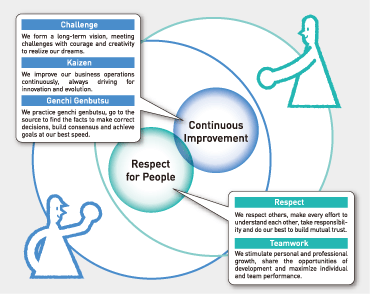
You feel good if you know what you are doing at work is meaningful. If the work is not meaningful, then you would soon feel burned out. Do you come later than usual to work? Do you leave earlier and earlier from work? Dan Ariely says that this could be an indication of you feeling that what you do at work is not adding any value. This is the spirit of Respect for People. Respect for People is creating an environment where your work is fully value added. Removing the elements of non-value added work is the spirit of Continuous Improvement. Thus, in my eyes, Continuous Improvement and Respect for People go hand in hand. This is the Toyota Way. I view Toyota Way as a synergy of Respect for People – creating an environment of value added work and Continuous Improvement – ensuring non-value added elements are eliminated.

employees_value

Final words:

Dan Ariely’s study can be summarized in one sentence:

Create/increase the value of the job to increase productivity.

Aside from eliminating non-value added steps, train your employees on how the product is actually used in the field. I have seen organizations bring in end users to talk to the employees on the floor. Having a sense of purpose increases the value of the day to day monotonous work.

I will finish off with a story I read about perceived value.

His Holiness, the Pope is making a tour of the United States and of course has a very busy schedule that he’s trying his best to stick to. Unfortunately, things run a bit long at one stop and he has to make up time any way he can if he’s to be on time for the next gathering. So he dismisses the rest of the entourage and takes off in his Pope-mobile with just his driver.

They’re making good time on the back roads, but His Holiness is still worried they’re going to be late. He tells his driver to floor it, but the fella refuses to push it any further. After all, he had heard the police in those parts were tough on speeders and didn’t want to find out first-hand.

This angers His Holiness and he orders the driver to pull over. The Pope insists on doing the driving himself for he says no one will toss the Pope in jail. They take off in a cloud of dust, His Holiness at the wheel, his driver cowering in the back seat.

Not too much later, a State Trooper pulls them over. The young man strides up to the car all businesslike and mean. This lasts right up until he sees who’s driving. His face pasty-white, he heads back to his car to radio in for some advice.

“Uh, let me talk to the Chief … Hello, sir. Sorry to trouble you, but I have a bit of a problem. Just pulled over a speeder and it turns out he’s someone quite important. How should I handle this?”

“Depends on who you got, son. Let me guess, it’s the Mayor, right?”

“Uh, no sir, not the Mayor.”

“Bigger than that, eh? Not the Senator again!”

“Uh, no sir, wasn’t the Senator. Someone a lot more important.”

“Well, who you got, son? The President?”

“I don’t rightly know, sir. But whoever he is, he must be damned important because the Pope is his driver.”

Always keep on learning…

In case you missed it, my last post was Ten Things I Learned from The Walking Dead.

Ten Things I Learned from The Walking Dead

wd

The Walking Dead is one of the most successful TV shows in America. The story follows Rick Grimes and his group of friends and family in a Zombie apocalypse. I got hooked onto it last year and binge watched all the available seasons on Netflix with my wife. I have come to realize that The Walking Dead can teach you one or two things about Management. Here is my list of 10 things I learned from The Walking Dead. I am hopeful that you can also learn to survive the “problems apocalypse” in your work or life.

  • Observe and let the patterns emerge:

The whole world is falling apart. Nobody knows what to do. Everybody is turning into zombies. It is chaos everywhere. Have you felt that sometimes at work everything is falling apart? There is one problem after the other. What is going on?

You have to let the patterns emerge to start making sense of things. At first Rick and his group thought that you have to be bitten for a person to become a zombie. It was later learned that any person once he dies becomes a zombie. Similarly, they learned that a zombie can be “killed” by destroying its brain. The group has learned to observe and let the patterns emerge! Once the patterns emerge, you can start creating basic rules to survive.

  • This too shall pass:

Rick and his group have learned the important lesson – this too shall pass. If you see a horde of zombies coming your way or if you are surrounded by zombies, panicking will not help. Understand that the problem seems insurmountable at the time, but the problem too shall pass. Each problem is an opportunity that you can learn from.

  • Learn to adapt/ keep learning new things to survive:

Rick’s group contains people from different walks of life. Glenn, a major character was a pizza delivery boy prior to the zombie apocalypse. Glenn learned the superior zombie survival skills to emerge as a leader in his group. Rick’s group had to learn to adapt to live in the new world. They had to always keep learning new things to survive, such as fighting, using guns, hunting etc. Similarly, to overcome stagnation apocalypse at your work or in life, you have to keep learning new things.

As Dr. Deming may or may not have said:

“It is not necessary to adapt/change. Survival is not mandatory.”

  • Teamwork:

The only way Rick’s group is able to keep on surviving is because of only one thing – teamwork. Each person in his group is important. They have appointed Rick as their leader, and they work together to survive. Rick’s group goes out from their haven to the outside world in order to scavenge food and necessities to survive. They risk their lives to do this, and they are able to do it only because of teamwork. Nobody tries to sub-optimize. They know that it is not about one person, and that it is about the group. Anybody trying to look out only for themselves gets killed. It is about system optimization!

  • Rotate/follow-up:

Even if you are good at what you do, you need to rotate your job. You need experts but your team thrives from cross-training. Especially on an assembly line, rotation of the job is important to stay alert. If you are not on the assembly line, request review of what you do. You will learn more that way. Give and take feedback! Remember this, when you are on a watch for zombies, always rotate for survival.

  • Ground Yourself:

Life can be stressful. Your work can be stressful. It is easy to lose hope. You need to learn to manage stress. Find joy in the little things of life. You have to learn methods to ground yourself back to your place of confidence and serenity. The lesson of grounding yourself is very important in martial arts disciplines such as Aikido. Rick’s group has enemies in both zombies and remaining predatory human survivors. Rick’s group knows that losing your cool can get yourself killed.

  • There is almost always a way:

No matter how unsolvable a problem is, there is always a way. Sometimes, there is more than one way. Rick’s group has been in several situations where they felt like there is no way out. But always they found a way out.

Something that I have always wondered while watching the show is– why not climb a tree to escape from the zombies? Zombies do not climb trees.

  • Make sure everybody knows the plan:

One thing that Rick is really good at is that he lets his group know what the plan is. This is important in order to survive. Rick has laid down the rules, and everybody is happy to adhere to the rules. In the show, whenever the leader does not share his plans (e.g. the governor, a negative character in the show) it always ends up bad for his group. When everybody is working towards the common goal, you reach your goal faster, better and cheaper. You need to let your team know the what, the why, the who, the when and the how. Keep your communication lines open and your plans transparent.

  • Develop your people:

Rick is wise to know that you need to develop your people. Almost all the members in his group started off as scared and unsure. For example Carol, a strong character and care taker in his group, was initially portrayed as meek and defenseless. Carol has become a resourceful and strong leader in her own right. She provides counsel to Rick with difficult decisions and protects the group from outside dangers.

Rick helped develop his group members to be strong and able to handle themselves in an emergency. Rick has developed his group with a strong purpose – survival of the entire group. Rick is able to let others lead when required. Rick knows that he cannot survive without his group.

  • Don’t rest on your laurels:

This is most likely the largest of Rick’s pet peeves. He hates the idea of being complacent. His group has been through a lot, but he does not want them to drop their guard. One misstep can lead to a big loss. He is keen on growing themselves and being ready for what comes next. Today’s success does not guarantee tomorrow’s success.

Always keep on learning, and remember to run for the tree when the zombies come…

The Myth of Sisyphus and Respect for People:

sisyphus

Sisyphus was the king of Ephyra in Greek mythology. The Gods punished him for tricking them. His punishment was to push a boulder to the top of the hill, upon which the boulder would then roll down the hill to the starting point. He had to push the boulder back up again, and the boulder would again roll down. This continued for eternity. Sisyphus was engaged in an endless task of futile effort. Do you feel like Sisyphus at work? What Sisyphus is trying to do is to push the boulder to the top of the hill. There is no value in this. What he is accomplishing is heavy labor and no progress. Sisyphus is a perfect metaphor for non-valued added work.

The myth of Sisyphus is closely related to respect for people. Sisyphus is engaged in a 100% non-value added activity. No matter how much kaizen he does, his activity would still remain 100% non-value added. Perhaps, he can come up with a cart with wheels to improve his work; still what he is doing ultimately does not add any value. He is going through a punishment. Is this comparable to an operator spending 10 minutes to an hour looking for tools or making parts that are poor quality such that they have to be reworked immediately?

Labor Density – Toyota:

Taiichi Ohno, the father of Toyota Production System has stated the following about work and motion;

Moving about quite a bit does not mean working. To work means to let the process move forward and to complete a job. In work there is very little waste and only high efficiency. Managers and foremen must endeavor to transform mere motion into work!

Here, work indicates value added activity. Ohno talks about ugoki, which in Japanese means wasted motion and tenuki, which in Japanese means an act of omission. Ugoki is when an operator is merely moving material from one location to the other. Tenuki is when an operator is carelessly performing an operation such as tightening a bolt half way. Hataraki, on the other hand in English can be translated as value added work.

Toyota describes Labor Density as follows;

   Work/Motion = Labor Density

The goal is to increase the Labor Density as much as possible. There are two ways this can be done. The first way is to increase the numerator (Work) by making the operators work harder. One way of increasing the numerator is when the work load is increased without improving the process itself. The second way, prescribed by Ohno, is to reduce the denominator (Motion) by eliminating waste.

The Counterintuitive Nature of Respect for People and TPS:

Employees at an organization give their valuable time and energy to the organization. Sometimes, it may be perceived that TPS is about getting the maximum benefit out of the employees. This is against respecting them, as taught by TPS. However, TPS is not all about numbers. Toyota’s goal has always been to reduce the overall man hours required by eliminating wasted motions. This concept eliminates those actions that do not produce profit and do not let the process to move forward. This concept utilizes the energy of the employees to effective and useful work. This is stated in an internal Toyota document from 1970’s as an expression for respect for humanity (or respect for people as it is termed now):

If the organization does not create an environment where the work performed by the employee is not value added, it is against the principle of respect for humanity.

The following is taken from Toyota no Genba Kanri,(the title of English translation was changed as Kanban – Just in Time at Toyota);

People’s sense of value cannot be satisfied unless they know they are doing something worthwhile.

island

Source: The first book Toyota Production System, Ministry of Education 1973.

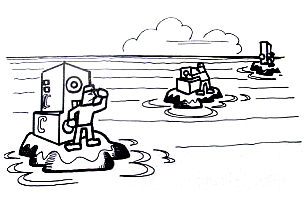
Respect for People is not about making the employees work harder, but increasing the value in what they do. Another way that Ohno talked about this was by introducing the idea of “work floating” and “work flowing”. The process can only progress when things flow. This is the concept of “work flowing”. Everything is connected, and work is pulled by the subsequent operation. However, when material is transported from one operation to another in batches, work is not flowing. It is now “floating”! Ohno called the different stations as remote islands.

Final Words:

Respect for people’s impact on productivity is also backed up by science. Dan Ariely, a professor of Psychology and Behavioral Economics at Duke University, has shown that making work meaningful increases productivity. More on this in a later post.

The Engineer in me tells me that with time, Sisyphus would have cut through the hill due to the constant rolling of the boulder. The boulder would turn into a small pebble from the constant rolling as well. Thus, maybe the moral of the story is to be persistent at what you do, and in the end you will succeed. There is also another explanation that the story is about the sun rising and setting. The sun is the boulder that gets pushed at the break of dawn, and reaches the top at noon time, and then rolls down to cause the night.

I will finish this post with a story I heard as a kid. Strangely enough, there is a character in Kerala’s mythology that is similar to Sisyphus. Kerala is a state in India, and I hail from there. The character of the story is called Naranathu Branthan, the madman of Naranathu. He is regarded as a very wise man today, but was seen by others as a madman in those days. One of his characteristics was that he had elephantiasis (a deformation caused by disease where the leg is swollen up) on his left leg. He used to roll a boulder up a hill every day, and then would let it roll down for his own enjoyment. He would clap his hands and laugh with glee as he watched the rock roll down. Unlike Sisyphus, the madman of Naranathu did it just for pure enjoyment. One day he met Kali, an Indian goddess, as he was retiring for the night. Kali was impressed by the madman and told him that she will give him a boon (blessing).

“I do not want any boons”, the madman said.

Kali informed him that she has to give a boon or a curse, and she insisted that he take a boon.

“I want to increase my life time by a second”, the madman replied.

Kali told him that she could not do that.

“Then I want to decrease my life time by a second”, the madman said.

Kali told him she could not do that either.

The madman thought for a while and asked Kali to move the elephantiasis from his left leg to the right leg. Kali complied, and the madman lived with elephantiasis on his right leg from that day onwards.

Always keep on learning…

In case you missed it, my last post was Stop Asking Why!

Stop Asking Why:

why_s

We have been trained to ask “why” a lot in lean. Today’s post is about asking “why”.

My friend was doing data analysis of ERP transactions, and he noticed that the material handler was creating transactions in two different programs for dock-to-stock components. This process created double entries and did not seem to add value. He asked the question “why” and the material handler reported that she was doing it because it was the way she was trained, and because it was the way they had always done it.

I was always curious about the “5 why” method. English is my second language, and in my native language (Malayalam), I cannot ask the “why” question because it means more than one thing.

For example, let’s look at the following question;

Why are you doing double transactions?

The same question has two different layers. You can get very different answers depending upon how the “why” question is perceived;

  • What causes you to do the double transactions?

The answer could be that the operator was trained to do that or that it is in the procedure.

  • What is the purpose of doing the double transactions?

The answer to this question now makes the waste visible. There is no need for doing the double transaction.

In the Malayalam language, I have to ask each question the way it is written above. The question cannot be perceived in a different manner. It is very direct. I believe that this is where the “5 Why” method in Lean does not get the same results for everybody. The “why” question has more than one meaning, as explained above.

First Question (What Caused):

The first question (what caused) is extrinsic in nature and this is valuable in a root cause investigation. We start from a phenomenon -> cause ->effect view. Thus, the effect happened due to the presence of a cause. The “why” question is a “what caused” question. It would help if the question is asked as a “what caused” question. This type of thinking is also evident in the P-M Analysis method at Toyota. I will discuss about this more in a future post.

As an example, let’s look at a problem where the operator was missing a step. There is a big difference between “why did the operator miss the step?” and “what caused the operator to miss the step?” The first question might lead down a rabbit hole that puts the blame on the operator (needs more training, operator is lazy, etc.). The second question focuses the spotlight on the process or the system (needs error proofing, needs more defined structure etc.). Jon Miller from Gemba Academy has talked about using “what caused” in place of “why” as part of the Practical Problem Solving process.

Second Question (What is the purpose):

The second question (what is the purpose) is intrinsic in nature and this is valuable in a continuous improvement activity or during gemba walks. We start from an “operation yields value” viewpoint.

We should train the employees to ask this question on their processes. This is how we can develop our employees.

As a leader in your organization, you should ask the right question to properly develop your employees.

Story of the Ham and the story of the Can of Beans:

The reader may be aware of the story of the ham. It goes something like this:

ham

The newlywed wife was making her first major dinner for her husband. She was cooking ham. The husband was helping his wife in the kitchen. He noticed that she was cutting the ends of the ham.

“Why are you cutting the ends of the ham?” asked the husband curiously.

“This is how I learned watching my mother” answered the wife.

Now the husband was more curious. He asked his wife to call up her mother to verify the answer. The wife called her mother inquiring about the cutting.

“Hmmm, that is how I learned watching my mother” answered her mother.

Now the wife was also curious, so she called up her grandmother and probed her about the curious cutting of the ham.

The grandmother started laughing.

“Back in the day, we could only afford a small stove. Our roasting pan was small and we cooked the ends separately.”

There is a similar story about opening cans:

can

In this story, the husband notices that the wife opens the cans upside down. The wife tells him that she learned that by watching her mother. A short phone call solved the mystery. Her mother used to store the cans in a dusty cellar. Instead of cleaning the top of the cans, she found it easy to just turn it upside down and then open it.

Next time, instead of asking “why”, ask “what caused” or “what is the purpose”.

Always keep on learning…

In case you missed it, my last post was Who is Right?


Who is right?

132

I came across a great graphic that I thought I should share.

right

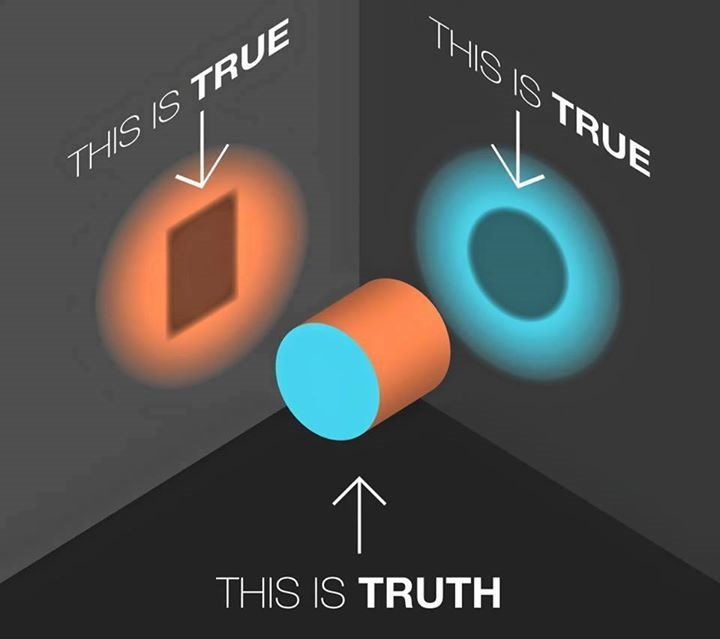
The graphic above shows the importance of understanding the perception of the other party involved. This helps us in understanding their viewpoint.

It is also important as a leader in your organization that when you are trying to spread your vision, to make sure you understand how your employees view your vision. The view at the top of the organization may not match the view at the bottom of the organization.

The view at the top of the organization may not match the view at the bottom of the organization.

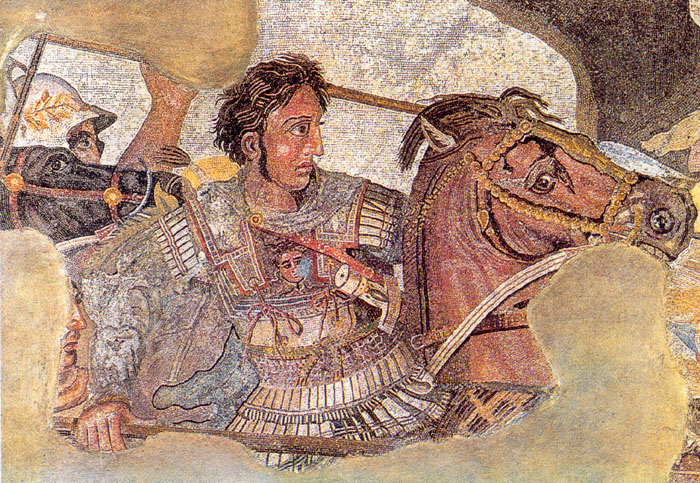
Alexander the Great and the monk:

There is a great story I heard from Devdutt Pattanaik, that explains this really well. I have paraphrased it.

Alexander the great reached India after conquering a lot of nations. On his path to conquer India, he met a monk. The monk was sitting on a rock enjoying the beauty of nature. The monk was naked, and belonged to a sect of Jainism.

Alexander watched the monk for a while. The monk was just sitting and smiling, totally oblivious of Alexander watching him.

“What are you doing?” Alexander asked the monk.

“I am enjoying being nothing.” the monk looked at Alexander, and said.

“What a fool to sit there and do nothing?” Alexander laughed at him. Alexander saw the monk as wasting his life away, doing nothing.

“What are you doing?” the monk asked Alexander.

“I am conquering the world”, Alexander replied with great pride.

Now the monk started laughing at Alexander.

“What a fool to pursue such a futile effort?” the monk thought to himself.

The next time, you face an opposing view; try to understand where the other party is coming from. What is his viewpoint? Are you the monk or Alexander?

Always keep on learning…

In case you missed it, my last post was Lean and the Mountain.