
Most mornings I do not think about the water heater. I turn the tap, the water comes warm, and I move on with my day. In those moments the water heater does not exist for me. What exists is the shower, the coffee, and the next thing on the list. The morning the water comes cold, the water heater suddenly appears. Then I get reminded of where it sits, how old it is, who installed it, and what that small blinking light means. The whole setup of pipes, valves, and gas lines shows up at once, and only because it stopped doing what I expected of it.
I have written about this before as the invisible system principle. We do not see a system until it breaks, or until it stops meeting our needs. In today’s post, I want to push the idea one step further. There is no system without an observer. There are artifacts and events: a tank, some pipes, a pilot light, cold water on my hand. The system, with its purpose and its parts and its failure, is something we bring forth when we gather those artifacts and events under one name. A system shows up when a practice fails us, and not before.
The Microsoft 365 outage happened last week, worldwide. Outlook mail and Teams stopped working across regions on November 12, and the restoration took until November 14. I watched it arrive at work in pieces, with a mailbox that would not load and a calendar that showed nothing. The post I want to use comes from X and was reshared on Reddit. Its author is an anonymous account presented as a Microsoft engineer in India. I do not work at Microsoft, and I have no inside knowledge of how its teams are staffed, paid, or promoted. I have not been able to verify any of the claims, and they may be exaggerated, partial, or simply false. Microsoft’s own updates on this outage pointed to a patch to an upstream authentication and routing configuration, not to staffing. So please read what follows as a third-hand account, used as an illustration and not as a report of fact.
Here is the post as it circulated, in its own words:
“An internal Microsoft India engineer just leaked why the Microsoft 365 outage is taking too long to fix, and it’s every software company in 2026. Big Tech executives:
- Lay off the senior engineers who built the core infrastructure
- Give sub 5% hikes to the ones who stay
- Refuse to promote anyone doing “boring” reliability work
- Force everyone to ship half baked AI wrappers instead”
The post then turns to what actually happens when production breaks at 3 AM. The version I saw stops right there.
Whether or not any of this is accurate, the shape of the claim is familiar to anyone who has worked inside an organization of some size. As a cybernetician, I would point at the vantage point. The very notion of efficiency pulls the eye upward. A cost saving initiative looks at the organization from above, and from that height reliability shows up as a cost line while its results show up as nothing at all. From up there, the work that keeps the lights on is hard to tell apart from waste. Reliability work is the water heater of the organization. When it is done well, nothing happens. Why should that be easy to reward? Nothing happening leaves no trace. Reliability is the only product that is delivered as an absence. A feature launch has a date, a demo, and a slide. A service that stays up for eleven months has no event to point to. The people who keep it up are invisible to the parts of the organization that decide budgets and promotions.
What interests me more is that the post spread at all. People found it plausible, and they found it plausible because they recognized it from their own work. The claim may be false about Microsoft and still be true as a description of something many readers have lived through.
Martin Heidegger, the German philosopher, gave this experience a careful description. In Being and Time he distinguishes equipment that is zuhanden, ready-to-hand, from things that are vorhanden, present-at-hand. A hammer in use is ready-to-hand. I do not look at the hammer but at the nail, the board, the work, and the hammer withdraws into the activity. When the head comes loose, the hammer becomes conspicuous. It is now an object in front of me, something to inspect and puzzle over. In that moment of breakdown, the whole web the hammer belonged to lights up with it. The workshop, the purpose, the person waiting for the shelf.
Heidegger is careful on one more point. The hammer is not first a neutral object to which meaning gets added later. The hammer shows up from the start as something for hammering, inside a whole of references that he calls world, or Welt. World in this sense is not a container of things but the web of significance that our involved and concerned dealings open up. The broken hammer does not expose a hidden object. What the breakdown exposes, briefly, is that the significance came from our involvement and not from the hammer alone.
Susan Leigh Star, the American sociologist I drew on in my post on the invisibility of infrastructures, arrived somewhere similar decades later. Among the properties she listed for infrastructure was that it becomes visible upon breakdown. A working infrastructure is, almost by definition, something we do not attend to.
W. Ross Ashby, a giant in the world of Cybernetics, adds another layer. His Law of Requisite Variety can be stated as – “only variety can absorb variety“. A cloud service faces enormous variety: unusual configurations, odd traffic, a certificate expiring at the wrong hour. Something has to absorb that variety, and in my view that something is mostly people. It is the engineer who remembers why a particular setting was left alone years ago, or who recognizes a pattern in the logs because she has seen it twice before. Michael Polanyi, the Hungarian-British polymath, said that we know more than we can tell, and much of this knowledge lives in exactly that untold region. None of it appears on the org chart. The org chart looks the same the day after a layoff as it did the day before. What has changed is the capacity to absorb variety, and that change stays invisible until the variety arrives and the capacity is not there.
You could put the objection to this yourself: am I really saying that letting people go can reduce the ability to handle variety, by losing skills? Yes, and the reason is in the first sentence of this post. A system, as we draw it, hardly contains the experience of living people. It becomes a static representation. So we lose variety, and if what we lost was part of the requisite variety, then we are in trouble.
This is where the language of “the system” can mislead us. We say the system handled it, or the system failed. The system never handled anything. People handled things, and the word let us forget them. Calling it the system is convenient for an observer at a distance. For the person woken at 3 AM there is no system. There is a phone buzzing with alerts at 3 AM, a status page, and the memory of how this went last time.
The invisibility, then, is not out there in the infrastructure but sits with the observer. The invisibility principle is not a property of the heater; it is a property of the looking. Humberto Maturana, the biologist, put it plainly: anything said is said by an observer. A system is not something we find but a distinction we draw, a way of grouping artifacts and events so that they hang together for some purpose of ours. Microsoft 365 as a system exists for the customer who cannot open an email, for the executive reading a quarterly review, and for the engineer on call. These are not three views of one thing. They are three different worlds, brought forth by three different observers.
Maturana and Francisco Varela, the two biologists who developed autopoiesis, also gave us a way to say how this happens. A living being is structurally determined. The environment does not instruct it but perturbs it, and what follows depends on the being’s own structure. Over a history of such perturbations, being and environment change together, and this is what they called structural coupling. Our sense of a stable, working world is the residue of that coupling. As long as the perturbations fall inside what our structure has learned to compensate for, nothing stands out. The water comes warm, the email arrives, and no system is needed. When a perturbation exceeds what we can absorb, we are pushed to draw new distinctions, and this is when the system appears. In their phrase, we bring forth a world.
Heinz von Foerster, the Socrates of Cybernetics, liked to say that we do not see that we do not see. An executive looking at a dashboard of launches and margins sees what that dashboard distinguishes, and the dashboard is itself a distinction someone drew. Reliability work that prevents an outage leaves no mark there, because what it produced is an absence, and an absence does not perturb. The blind spot is less a moral failing than a feature of how the observation was set up. It becomes a moral question when we forget that we set it up, and that we could set it up differently.
Final Arc:
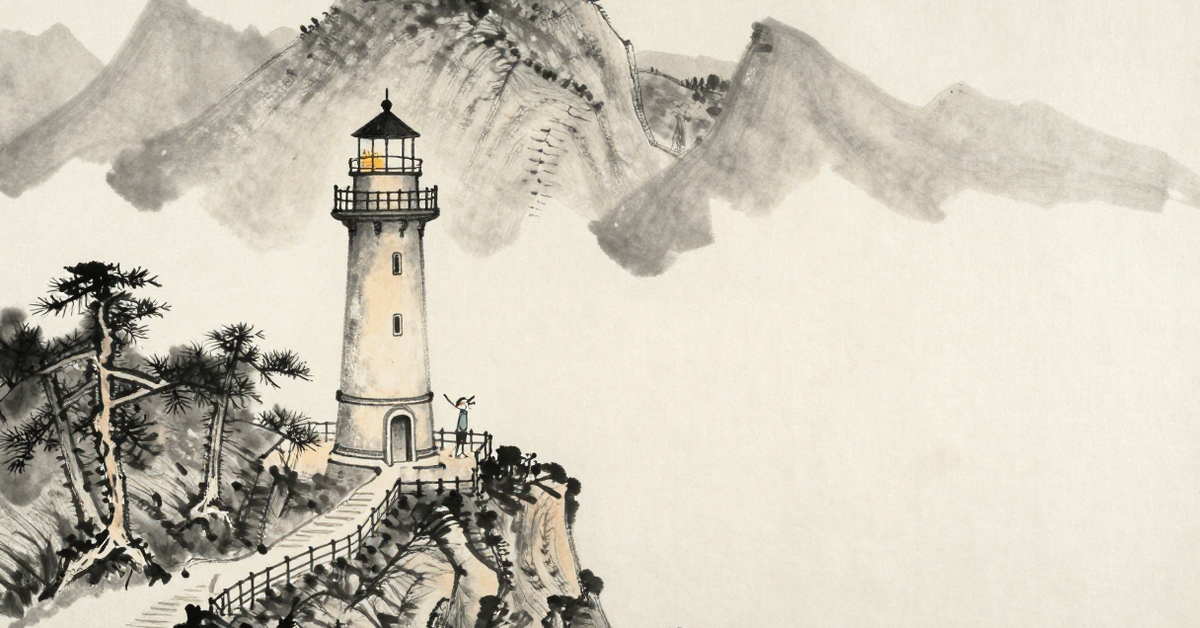
Here is a small story. On a rocky stretch of coast there was a lighthouse, and an old keeper who climbed its stairs each evening, trimmed the wick, and cleaned the glass. Ships passed safely. The town did not think about the keeper at all. There was nothing to think about. No wrecks, no news in the paper.
One year the town council reviewed its expenses. Someone noticed that in twenty years there had not been a single wreck. Another asked what, exactly, they were paying the keeper for. The question seemed reasonable, since the coast was clearly safe.
The keeper was thanked and let go, and the light was put on a timer. The first winter was quiet. So was the second.
I do not know how the story ends. I am not sure the council knew either. They had looked at the coast and seen safety. They had not seen that the safety was something someone was doing.
Stay Curious and Always Keep on Learning…
If you liked what you have read, please consider my book “Second Order Cybernetics,” available in hard copy and e book formats. https://www.cyb3rsyn.com/products/soc-book
Note:
In referencing the work of Martin Heidegger, I want to acknowledge the deeply troubling fact of his affiliation with the Nazi party. This aspect of his life casts a long and painful shadow over his legacy. While I draw on specific philosophical ideas that I find thought-provoking or useful, this is not an endorsement of the man or his actions. Engaging with his work requires ethical vigilance, and I remain mindful of the responsibility to not separate ideas from the broader context in which they were formed.
Discover more from Harish's Notebook - My notes... Lean, Cybernetics, Quality & Data Science.
Subscribe to get the latest posts sent to your email.


As I’ve told, I limit the use of the word “system” to human made artefacts, machines. If you take a part out, repair, put it back in, and it works like it did, I call a system. The structure of the system, account for it’s usefulness.
Asking, what “hides in plain sight” and you can make a system visible by asking: “what’s the purpose?”. Showering. Start with end in mind. No need to observe a break down first: look in the bath room. When it breaks down – as every system will -, you can find or invent another “system”. For instance: heat water in a kettle, pour it in a bucket and use a sponge to bath.
Starting with a principle, that a system “shows up” when it breaks down. You approach a system from the other side: cause and effect. Then, by default, you start “problem solving”.
When a system shows up when a practice fails, a word like “system” works like your water heater: systems only show up, when there’s a problem. One uses “systems” like a tool, ready-to-hand, and overlooks the purposes. I asked my friends, how theyr dealt with the system failures of MicroSoft. One discovered telephone conversations, another had downloaded the 365 software in the past (it’s hidden deep inside the web site).
The paradox comes from the complementary pair of causality and finality or purpose and the choice one makes in observing. For a man-made artifact, we can ask ourselves both cause-and-effect and what purposes. Applying the conceptual metaphor on organisation, society, economy, ecology, philosophy … and gradually the metaphors become “truths” and are used as dogma’s.
Then “the system” start to treat human beings as “cogs in the machine”. I told you, I opposed to calling “Personnel and Organisation department” “Human Resource Department”. The fact that it is now called HR, shows that it has become a dogma. HR took over organising.
The infrastructure is invisible: pipelines, sewage, cables run underground. The stones of the road “hide” the structures that gives it its stability. You and your heater works because of an infrastructure. Again, the structure accounts for its usefulness: it’s like a model, on a scale of 1:1.
Talking a language also requires an infrastructure, known as grammar. The grammar hides the purpose of language: metaphorical expressions by a structure based on principles: cause and effect, order, rules, laws. subject – verb – object. So the grammar of English and Dutch pushes one toward problem solving before one says anything about systems.
You wrote: “This is where the language of “the system” can mislead us. We say the system handled it, or the system failed. The system never handled anything.” I would go further: a grammar misleads us in thinking in cause and effect. whenever someone uses the word “system”, ask: “what works?”.
LikeLike