In today’s post, I am looking at ideas of the famous Algerian-French philosopher, Jacques Derrida. Derrida is often described as a post-structuralist philosopher. His most famous idea is deconstruction. Deconstruction is often associated with analyzing literary works. The basic notion of deconstruction can be loosely explained as when a text is produced, the author dies, and the reader is born. A text is presented as a coherent whole with a basic idea in the center. The language in the text is all about the idea in the center. The assumption is that the central idea has a fixed meaning. The point of deconstruction is then to disturb this coherent whole, and challenge the hierarchy of the coherent whole. The intent of deconstruction is discovery; the discovery of what is hidden behind the elaborate plot to stage the central idea. It is an attempt to subvert the dominant theme.
Deconstruction is taking the text apart to understand the structure of the text as it is written, and to determine the meaning in several different ways by challenging the hierarchy put in focus by the author. Derrida believed that in language we always prefer hierarchies. We prefer good over bad, or day over night etc. Most often this behavior of focusing on hierarchies results in believing them to be the ultimate truth. We tend to think in terms of false dichotomies. It has to be “this” or “that”. If I don’t do “this”, I am “bad”. Deconstruction always pushes us to look at it from another side or perspective. Deconstruction challenges the notion that language is a closed system – that the meaning is fixed. Derrida viewed language to be an open system, where meaning is not fixed and can depend on the context, the culture and the social realm in which it was constructed. Every perspective is an attempt to focus on certain ideas. But in the act of doing this, we are forced to ignore certain other ideas. The act of deconstruction is an attempt to look at the ideas that lay concealed in the text.
Another important idea that Derrida put forward was differance. Derrida came up with this as a play on words. Derrida is putting two different ideas together into one word. The two different ideas are that of difference (how one word get its meaning by being different to another), and deference (how the meaning of a word is provided in terms of yet more words). The idea of differance is that the complete meaning is always deferred (postponed) and is also differential. The dictionary is a great example to explain differance. The meaning of a word is given in terms of other words. The meaning of those words is given in terms of yet another set of words, and so on.
Derrida’s most famous quotation is – Il n’y a pas de hors-texte. This is often translated as “There is nothing outside the text.” This idea is misrepresented as all ideas are contained in language and that you cannot go outside the language. Derrida was not saying this. A better translation is – There is no outside-text. Here the outside-text refers to an inset in a book, something that is provided in a book as a supplement to provide clarity. We can see this as an outside authority trying to shed light on the book. Derrida is saying that there is no such thing. The meaning is not fixed, and what is presented as a closed system is actually an open system. We have to understand the historicity and context of the text to gain better understanding. Derrida is inviting us to feel the texture of text. As Alex Callinicos explained it:
Derrida wasn’t, like some ultra-idealist, reducing everything to language (in the French original he actually wrote ‘Il n’y a pas de hors-texte’ – ‘There is no outside-text’). Rather he was saying that once you see language as a constant movement of differences in which there is no stable resting point, you can no longer appeal to reality as a refuge independent of language. Everything acquires the instability and ambiguity that Derrida claimed to be inherent in language.
Derrida says that every text deconstructs themselves. Every text has contradictions, and the author has written the text in a forceful manner to stay away from the internal contradictions. Derrida is inviting us to challenge the coherence of text by pulling on the central idea and supplementing it to distort the balance. Paul Ricoeur wonderfully explained deconstruction as an act that uncovers the question behind the answers already provided in the text. The answers are already there, and our job then is to find the questions. We cannot assume that we have understood the entire meaning of the text. We have to undo what we have learned and try to feel the texture of the relations of the words to each other in the text.
Derrida was influenced by the ideas of Ferdinand de Sassure, who was a pioneer of a movement called Structuralism. Structuralism presents language as a self-enclosed system in which the important relationships are not those between words and the real objects to which they refer, but rather those internal to language and consisting in the interrelations of signifiers. Ferdinand de Sassure stated that in language, there are only differences. Derrida went a step further this. He challenged the idea of the continuous movement of differences and postponement of meaning that came as a result of structuralism. Callinicos explained this beautifully:
There is no stable halting point in language, but only what Derrida called ‘infinite play’, the endless slippages through which meaning is sought but never found. The only way to stop this play of difference would be if there were what Derrida called a ‘transcendental signified’ – a meaning that exists outside language and that therefore isn’t liable to this constant process of subversion inherent in signification. But the transcendental signified is nothing but an illusion, sustained by the ‘metaphysics of presence’, the belief at the heart of the western philosophical tradition that we can gain direct access to the world independently of the different ways in which we talk about and act on it…
He (Derrida) believed that it was impossible to escape the metaphysics of presence. Meaning in the shape of the ‘transcendental signified’ may be an illusion, but it is a necessary illusion. Derrida summed this tension up by inventing the word ‘differance’, which combines the meanings of ‘differ’ and ‘defer’. Language is a play of differences in which meaning is endlessly deferred, but constantly posed. The idea of differance informed Derrida’s particular practice of philosophy, which he called deconstruction. The idea was to scrutinize texts – particularly philosophical classics – to expose both how they participated in the metaphysics of presence and also the flaws and tensions through which the limitations of this way of thinking were revealed. As a result, these texts would end up very different from how they had seemed when Derrida started on them: they would have been dismantled – deconstructed.
Deconstructing Systems:
At this point, I will look at deconstructing Systems. The idea of a System is very much aligned to the ideas of Structuralism. A system is viewed as a whole with interconnected parts working together. The focus is on the benefit of the whole. The whole is the central idea of Systems Thinking. The whole is said to be more than the sum of its parts. The parts must be sub-servient to the whole.
When we approach systems with the ideas of deconstruction, we realize that every system is contingent on who is observing the system. There is no system without an observer. This makes all systems to be human systems. We have to consider the role of the observer and the impossibility of an objective world. As the famous Cybernetician, Klaus Krippendorff said – whatever is outside our nervous system is accessible only through our nervous system, and cannot be observed directly and separated from how that nervous system operates. We may refer to and talk about the same “system.” However, what constitutes the system, its complexity and what we desire its purpose to be all are dependent on the observer. All systems are constructed in a social realm. After all, meaning is assigned in the social realm, where we bring forth the world together through “languaging.” What the whole is and whether a part should be subservient to the whole depends upon who constructs the system as a mental construct to make sense of the world. If you consider the healthcare system, what it means and what it should do depends on who you talk to. If you talk to the healthcare provider or the insurance company or the patient, you would get different answers as to what the healthcare system means and what it should be doing. There is no one objective healthcare system. We can all identify the parts, but what the “system” means cannot be objectively identified. We must look at this from different perspectives to challenge the metanarratives. We should welcome multiple perspectives. Every perspective reveals certain attributes that were hidden before; the process of which knowingly or unknowingly requires hiding certain other attributes. From the discussion, we might say that – The center does not hold in systems.
There are many similarities between the hard systems approach of Systems Thinking and Structuralism. We talk of systems as if they are real and that everyone can objectively view and understand it. Gavin. P. Hendricks sheds some light on this:
Structuralism argues that the structure of language itself produces ‘reality’. That homo sapiens (humans) can think only through language and, therefore, our perceptions of reality are determined by the structure of language. The source of meaning is not an individual’s experiences or being but signs and grammar that govern language. Rather than seeing the individual as the center of meaning, structuralism places the structure at the center. It is the structure that originates or produces meaning, not the individual self. Meaning does not come from individuals but from the socially constructed system that governs what any individual can do.
Derrida’s ideas obviously rejected the notions put forth by Structuralism. Derrida’s ideas support pluralism. There is no outside-text doesn’t mean that there is no text for us to process. It means that the text can be interpreted in multiple meaningful ways. And of course, this does not mean that all of them are valid. This would be the idea of relativism. As Derrida said, meaning is made possible by relations of words to other words within the network of structures that language is. The different meanings generated through deconstruction (pluralism) are meaningful to those who generated them. This idea is something that we need to bring back into “the front” of Systems Thinking. Derrida invites us to dissolve the hierarchy of the whole in the system that you have created, and look at the part that you have marginalized in your system. When we view the part from another perspective, we suddenly realize that the center of our system does not align with the center of the new different view.
I will finish with wise words from Richard Rorty:
There is nothing deep down inside us except what we have put there ourselves.
The corollary of course is- there is nothing out there giving us meaning or purpose, except that which we have constructed ourselves.
Please maintain social distance and wear masks. Stay safe and Always keep on learning…
In today’s post, I am looking with more depth at the ideas of Cybernetics with relation to Ross Ashby, one of the pioneers of Cybernetics.
In particular, I am looking at one of the Ashby aphorisms:
When a machine breaks, it changes its mind.
This is a very interesting observation from a Cybernetics standpoint. Ashby defined a machine as follows:
It is a collection of parts which (a) alter in time, and (b) which interact with on one another in some determinate and known manner.
A designer designs the machine specific to an environment. This means that the designer has encoded a model of the environment into the machine so that when certain perturbations are encountered, the machine reacts in a certain manner. The variety that is estimated to be “thrown” at the machine is captured by the designer, and appropriate responses are encoded into the parts or the circuitry of the machine. The external variety is attenuated to a successful degree by the information conveyed by the machine in terms of affordances and signs on the machine. For example, a vending machine has signs on it along with pushable buttons that convey information to the user.
Ashby viewed this as the machine being successfully adapted to its environment. Ashby spoke of adaptation as being in a state of equilibrium. He referred to the stable state of equilibrium as “normal” equilibrium.
Normal equilibrium has some special properties which we must notice. Firstly, the system tends to the configuration C; so, if it is disturbed slightly from C, it will automatically develop internal actions or tendencies bringing it back to C. In other words, it opposes any disturbance from C. Further, if we disturb it in various ways, it will develop different tendencies with different disturbances, the tendencies being always adjusted to the disturbances so as to oppose them.
it must be noted that an equilibrium configuration is a· property of the organization… The equilibrium states of a machine are defined by the organization only.
From this point on, Ashby explains what the “break” means with regards to the machine.
Let us imagine a machine has “broken.” The first observation is that no matter how chaotic the result, it is, by our definition, still a machine. But it is a different machine. A break is a change of organization.
The specific organization entails what the machine can do when it is perturbed. The machine only has the initial information to deal with perturbations. When a new scenario arises, it cannot deal with it because it cannot generate new information (unlike humans). The difference with us humans is that we can generate new information as needed to deal with the new perturbation. Sometimes, this can be in the mode of the basic fight or flight response. The reaction is indeed an effort to get an equilibrium. As Ashby put it:
The drive to equilibrium forces the emergence of intelligence.
Information is described as the reduction in uncertainty. When the environment is dynamic and constantly changing, we can say that there is a usefulness quotient for the freshness of the information on hand. This is something like a “best by date” that is on the carton of milk. As Ashby put it – Any system that achieves appropriate selection (to a degree better than chance) does so as a consequence of information received. From a second order Cybernetics standpoint, information is generated by the autopoietic being. It is not something that can be transmitted in the form of a physical commodity from one person to the other. We should work on improving our ability to generate new information as needed when new perturbations arise. This provides us the requisite variety to deal with the new variety that is thrown at us. What worked in the past, and what worked at another organization may not be meaningful with the new perturbations. The generation of new information requires updating the model of the environment to some degree. This updating corresponds to isomorphism, the idea that there is a corresponding one to one relationship between the various states of the model and the environment. The better this correspondence, the better the model.
Another aspect of the statement that the machine changes its mind, is that the “mind” is embodied in the physical body also. There is a famous debate in philosophy that looks at how much the mind is separate from the body – is the mind embodied in the body or is it separate? It is believed that the mind is part of the body as much as the body being part of the mind. There is no use trying to separate the two. Ashby may be giving a gentle nod to this idea that the mind should not be separated from the body. When a machine breaks, it changes its mind!
Ashby’s approach of tying adaptation/intelligence to the idea of stable equilibrium is unique. I will finish off with his explanation regarding this:
Finally, there is one point of fundamental importance which must be grasped. It is that stable equilibrium is necessary for existence, and that systems in unstable equilibrium inevitably destroy themselves. Consequently, if we find that a system persists, in spite of the usual small disturbances which affect every physical body, then we may draw the conclusion with absolute certainty that the system must be in stable equilibrium. This may sound dogmatic, but I can see no escape from this deduction.
Please maintain social distance and wear masks. Stay safe and Always keep on learning… In case you missed it, my last post was Cybernetics Ideas from a Thermostat:
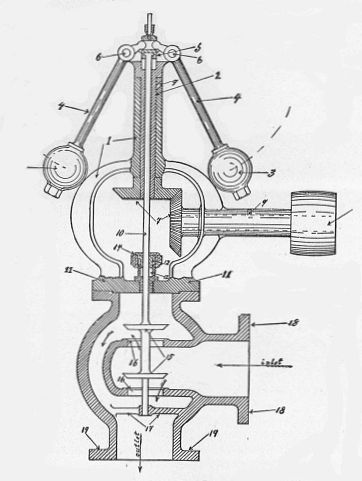
The thermostat is a simple device that is often used to describe the basic ideas of Cybernetics. Cybernetics is the art of steering. Simply put, a goal is identified and the “system” acts to get closer to the goal. In the example of the thermostat, the user specifies the setpoint for the thermostat such that when the temperature goes below the setpoint, it kicks on the furnace and stops when the internal temperature of the house meets the desired temperature. In a similar fashion, when the temperature goes above a setpoint, the thermostat kicks on the air conditioner to bring down the internal temperature. The thermostat acts as a medium for achieving a constant temperature inside the house. This is also the idea of homeostasis. In order to achieve what the thermostat does, it needs to have a closed loop. It needs to read the internal temperature at specified frequencies, and act as needed depending upon this information. If it was an open loop, no information is fed back into the system, and thus no homeostasis is achieved. An example of an open loop is a campfire without anyone to manage it. The fire continues to burn until it goes out.
Ernst von Glasersfeld, the father of radical constructivism, talked about these ideas in his short paper, Reflections on Cybernetics (2000):
The good old thermostat, the favorite example in the early literature of cybernetics, is still a useful explanatory tool. In it a temperature is set as the goal-state the user desires for the room. The thermostat knows nothing of the room or of desirable temperatures. It is designed to eliminate any discrepancy between a set reference value and the feedback it receives from its sensory organ, namely the value indicated by its thermometer. If the sensed value is too low, it switches on the heater, if it is too high, it switches on the cooling system. Employing Gordon Pask’s clever distinction (Pask, 1969, p.23–24): from the user’s point of view, the thermostat has a purpose for, i.e. to maintain a desired temperature, whereas the purpose in the device is to eliminate a difference.
The idea that the thermostat’s purpose is simply to eliminate a difference is most important here. I have written about this here.
Von Galsersfeld continues:
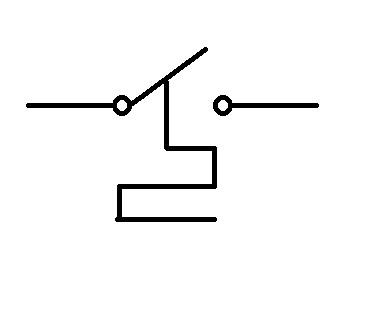
This example may also help to clarify a second cybernetic feature that is rarely stressed. Imagine a thermostat that has an extremely sensitive thermometer. If it senses a temperature that is a fraction below the reference value, it switches on the heater. The moment the temperature begins to rise above the reference, it switches on the cooling system –and thus it enters into an interminable oscillation. This would hardly be desirable. Therefore, it is important to design the device so that it has an area of inaction around the reference value where neither the one nor the other response is triggered. In other words, rather than a single switching point, there have to be two, with some space for equilibrium in between.
Homeostasis does not refer to a fine line it needs to maintain. It is often a band or a range. The wider the band, the easier it is to maintain homeostasis. It is more efficient to define the “stable conditions” to be between a range of values. A good example for this is a bicycle lane. It is not easy, if not impossible, to ride a bicycle in a straight line. However, it is easy to ride a bicycle in a somewhat wider lane. With the thermostat, this region is sometimes referred to as a “deadband.” This is the range of the temperature, within which the thermostat does not act (stays OFF). Below the lower limit, the thermostat will kick on the furnace, and above the upper limit, the thermostat will kick on the air conditioner.
Another important lesson from a thermostat is that if you want to change the room temperature, there is no point in moving the thermostat value to an extreme setpoint. Let’s say that you want to cool the room down. It is of no use if you put the thermostat value at 40 degrees F (4.44 degrees C). The house will not get colder faster with this approach. The thermostat controls the temperature inside the house, but not the speed with which it achieves this.
To be economically efficient, the thermostat must be aligned with the external temperature. For example, in colder weather conditions, the heat setpoint should be reduced (for example 67 degrees F or 19.4 degrees C), and similarly during warmer weather conditions the cool set point should be raised. Even though, the thermostat is the regulator, the user determines how this regulation is achieved. The thermostat as a regulator must also follow the Good Regulator Theorem. All good regulators must be a model of the system that it tries to regulate. The model of how to maintain the internal temperature constant (within the deadband) is programmed into the thermostat. It also follows the law of Requisite Variety. The thermostat must have the requisite variety to adjust the internal temperature based on the external perturbations. The thermostat must be able to differentiate the states of “below the setpoint temperature” or “above the setpoint temperature” to achieve the requisite variety and maintain the internal temperature. Both the Good Regulator Theorem and the Law of Requisite Variety are at utmost importance in Cybernetics, and they are both the contributions of one of the pioneers of Cybernetics, Ross Ashby.
I will finish this with some great aphorisms from Ross Ashby:
The drive to equilibrium forces the emergence of intelligence.
That the brain matches its environment is no more surprising than the matching of the two ends of a broken stick.
Every piece of wisdom is the worst folly in the opposite environment. Change the environment to its opposite and every piece of wisdom becomes the worst of folly.
The rule for decision is: Use what you know to narrow the field as far as possible: after that, do as you please.
Any system that achieves appropriate selection (to a degree better than chance) does so as a consequence of information received.
Please maintain social distance and wear masks. Stay safe and Always keep on learning…
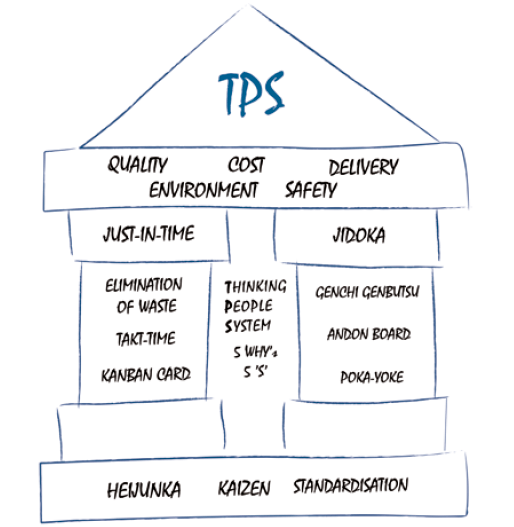
In today’s post, I am looking at the “house” of Toyota Production System. The TPS house is shown above (Source: Toyota Europe website).
The two pillars of the house are Jidoka and Just-In-Time (JIT). I have been thinking about why Jidoka and JIT are the two pillars, and why it is not kanban or kaizen. Jidoka was developed from the ideas of Sakichi Toyoda, father of Kiichiro Toyoda. Kiichiro Toyoda founded the Toyota Motor Corporation. Sakichi Toyoda invented an automatic loom that stopped immediately when the thread broke. He viewed it as automation with human intelligence. Jidoka in Japanese means “automation”, but Toyota’s Jidoka has a human character included in the script such that it still pronounces as “jidoka” but it now means “autonomation”. The emphasis of Jidoka is quality. We can view Jidoka as not passing defects along or ensuring that the quality of the product is maintained as it flows through the line. The second pillar of the TPS House is JIT. JIT was the brainchild of Kiichiro Toyoda. The idea of JIT is also quite simple – have only what is needed, only in the right quantity, and only when it is needed. Perhaps, one might view that the two pillars of the TPS house are Jidoka and JIT to show respect to the Toyoda elders. I think there is more to this than just showing respect to Sakichi and Kiichiro Toyoda.
One way to explain the two pillars is to view them as two lofty goals – Jidoka as a call for maximizing quality and JIT for minimizing inventory. I again think there is more to this. Toyota in their 1998 little green & white book explained Jidoka as:
The principle of stopping work immediately when problems occur and preventing the production of defective items is basic to the Toyota Production System. We call that principle Jidoka… we design equipment to detect abnormalities and to stop automatically whenever they occur. And we equip our operators with means of stopping the production flow whenever they note anything suspicious. That mechanical and human jidoka prevents defective items from progressing into subsequent stages of productions, and it prevents the waste that would result from producing a series of defective items… The most fundamental effect of jidoka, though, is the way it changes the nature of line management: it eliminates the need for an operator or operators to watch over each machine continuously – since machines stop automatically when abnormalities occur – and therefore opens the way to major gains in productivity. Jidoka thus is a humanistic approach to configuring the human-machine interface. It liberates operators from the tyranny of the machine and leaves them free to concentrate on tasks that enable them to exercise skill and judgment.
Similarly, they explained JIT as “doing it all for the customer”. They noted:
JIT is making on what is needed, only when it is needed, and only in the amount that is needed. JIT production eliminates lots of kinds of waste. It eliminates the need for maintaining large inventories, which reduces financing costs and storage costs. It eliminates the waste that occurs when changes in specifications or shifts in demand render stocks of old items worthless. It also eliminates the waste that occurs when defects go undetected in the manufacturing of large batches. JIT production, though simple in principle, requires dedication and careful, hard work to implement properly. Once managers and employees have mastered the basic concept, they learn to devise various tools and techniques for putting this concept into practice… (leveled production, pull system, continuous-flow processing and takt time).
The two principles also link to another House of Toyota called the Toyota Way. The two pillars for the Toyota Way are Continuous Improvement and Respect for People. This is explained very well by the architect of the Toyota Way, Fujio Cho:
Toyota is planning and running its production system on the following two basic concepts. First of all, the thing that corresponds to the first recognition of putting forth all efforts to attain low cost production is “reduction of cost through elimination of waste”. This involves making up a system that will thoroughly eliminate waste by assuming that anything other than the minimum amount of equipment, materials, parts, and workers (working time) which are absolutely essential to production are merely surplus that only raises the cost. The thing that corresponds to the second recognition of Japanese diligence, high degree of ability, and favored labor environment is “to make full use of the workers’ capabilities”. In short, treat the workers as human beings and with consideration. Build up a system that will allow the workers to display their full capabilities by themselves.
Toyota Production System is a result of decades of trial and error to find solutions for unique problems faced by Toyota. Toyota did not have luxury to have the state-of-the-art machines or carry large inventory to support the then prevalent mass production system. Taiichi Ohno, the father of TPS, was able to come up with a framework that incorporated the principles of Jidoka and JIT to ensure that Toyota was able to keep the cost low for its customers, increase productivity and yet at the same time provide them high quality products. Jidoka and JIT are aligned very well with the principles of continuous improvement and respect for people. Ohno was famous for asking to do more with less (less people, less inventory etc.). He created conditions where the human capital was nurtured such that they learned to see wastes and came up with ingenious ways to remove them. Ohno created a framework for cultivating capable leaders and for providing employees with necessary practical skills. The idea of Jidoka ensures that quality is not compromised (quality is built-in). The operators can take pride in what they are doing and ensure that it is value-added. The work of the machine is separated from the operator such that they can focus on utilizing their creative skills to remove further waste.
Toyota Production System’s framework can be viewed as a closed system, in the sense that their framework is static. At the same time, the different plants implementing the framework are dynamic due to the simple fact that they exist in an everchanging environment. In a cybernetic sense, information can be processed (meaning can be generated) only in a closed system. And viability requires an open system. Thus, you need to be closed and open at the same time.
The basic concepts of the Toyota Production System are unchanging. But companies implement those concepts differently. One of the great advantages of the Toyota Production System is its adaptability. Yet common threads are apparent in the experience of the companies that have implemented the system successfully. Just-In-Time manufacturing and other elements of the Toyota Production System work best when they are a common basis for synchronizing activity throughout the production sequence. This an egalitarian arrangement in which each process in the production flow becomes the customer for the preceding process and each process becomes a supermarket for the following process.
I will finish with some strong words from Taiichi Ohno:
Those who decide to implement TPS must be fully committed. If you try to adopt only the “good parts” you will fail.
Please maintain social distance and wear masks. Stay safe and Always keep on learning…
“Gemba” is an important concept in Toyota Production System (TPS) and Lean. Gemba, the Japanese word, can be translated as the actual place. The etymology of Gemba stems to “gen” (meaning “actual”) and “ba” (meaning “place”). One might say that the first lesson in TPS is to go to the gemba. This is often expressed as “genchi genbutsu” or “Go and See to grasp the facts from the source.”
My take on gemba is that it is to do with reality as the word suggests. From here, I will ask the question – whose gemba is it anyway? I am asking this from a post-modernist/Constructivist angle. We are all meaning generating, sensemaking autopoietic creatures. We are organizationally closed, and this means that we generate meaning from the many interactions based on our internal meaning-generating framework. Reality as we perceive it exists in a socially constructed realm and each one of us have our own take of this. There is no objective reality in practice, simply because we do not have direct access to it. Our meaning-generating framework is an emergent property of our brain that has to rely on our sensory organs to make sense of the sensory input coming in. The meaning-generating framework or schemata is ever-evolving and conditioned by our ongoing experiences.
From this standpoint, when we say that we are going to gemba, we need to realize that the gemba as we perceive it is not the same as the gemba perceived by the operator on the floor. Normally, in the manufacturing world, gemba refers to the production floor where the work is taking place. We go there with our preconceived ideas and notions. Thus, the first step is to realize that the gemba as we see it is not what we need to be seeing. The gemba that we need to visit and understand is that of the employee engaged in the actual work. Our role at the gemba is to develop the others and in the process develop ourselves. This circular nature of gemba, understanding and sharing our understanding; developing others and developing ourselves, is very cybernetic in nature. When we try to reflect on our understanding, we are also required to view it from the eyes of the operator who is doing the actual work. Taiichi Ohno, the father of Toyota Production System explained these ideas really well.
Taiichi Ohno described the production floor as a “silent” space that always heightened human awareness and stimulated our imagination. Ohno advised:
When you give an order or an instruction to a subordinate, you have to think as if you were given the order or instructions yourself… You have to struggle together and think about the problem together.
Ohno advises that we should challenge our team members, and in the process challenge ourselves. We should be aware of what we are asking, and in fact we should be able to understand what is doable and what is not doable. If our team member says that the task is impossible, we should be able to counter that. Ohno says:
If you want your subordinate to feel so squeezed that they believe saying “It is impossible” is not an option, you must feel the squeeze and struggle just as hard with it yourself when you give your subordinate the problem.
Here the phrase “feel the squeeze” refers to the challenging process where the employee is pushed to see the problem and come up with a resolution. It is this challenging process that aids in the development of the employee. Ohno wants us to destroy our various preconceptions on a daily basis to further our understanding of gemba. He said:
Another way of stating the essence of the Toyota Production System is to say we are doomed to failure if we do not initiate a daily destruction of our various preconceptions.
Ohno challenged the then prevalent Ford’s Mass Production system with his ideas of a Limited Production system. He offers one more aspect of “whose gemba? thinking”. He noted:
The real waste is making products that don’t sell. Even quality products, if they don’t sell, must be discarded. This waste, in fact, is the most crucial because it is not just a loss to the company – it is a loss to society… The original concept behind Toyota Production System was the total elimination of waste. Carrying this to its logical conclusion, it follows that the function of industry is to accept orders not from an abstract clump known as “the masses,” but from individuals with unique preferences, and to produce similar items accordingly. Waste and high costs occur when we try to produce similar items in large quantities. It is cheaper by far to produce unique items one by one.
Final Words:
Being aware and recognizing that the we are in a social realm and that our perspective of reality is not the only one is of utmost importance. There are multiple perspectives of gemba, and the one that is most important is that of the actual employee most engaged with it. At the same time, we should engage with them in bettering their understanding of their gemba.
I will finish with a very insightful anecdote from the linguist Lera Boroditsky:
Kuuk Thaayore, are an Australian people living primarily in the settlement Pormpuraaw. Boroditsky talks about an experiment that she did with the Kuuk Thaayore. She gave them a set of photographs of her grandfather, ranging from youth to old age, and asked them to order them in the correct sequence. She repeated the test different times. Each time, the sequence of the order was correctly placed, however, the orientation was different. For most of the wester world, we would say that the correct order is from left to right, where the “left side” represents the young age, and as you move towards your right, the subject gets older and older. The Kuuk Thaayore oriented the photographs sometimes left to right, and sometimes top to bottom, and other times diagonally. Boroditsky realized that in their culture, their spacial meaning differs from us. She noted:
“their arrangements were not random: there was a pattern, just a different one from that of English speakers. Instead of arranging time from left to right, they arranged it from east to west. That is, when they were seated facing south, the cards went left to right. When they faced north, the cards went from right to left. When they faced east, the cards came toward the body and so on. This was true even though we never told any of our subjects which direction they faced.”
If we were to see the orientation, we might say that the Kuuk Thaayore got it wrong. We might say that the correct order is always left to right. It does not matter if we are facing north or east or west, we would always place it left to right. Boroditsky says that perhaps we are so self-centered that we always assume that orientation is based on our self-reference whereas Kuuk Thaayore people are externally-centered that their orientation depends on whether they are facing north or east or west.
The next time you go to gemba, ask yourself “whose gemba is it anyway?”
Please maintain social distance and wear masks. Stay safe and Always keep on learning…
In today’s post, I am using the ideas of the great American pragmatist philosopher, Richard Rorty. Rorty’s most famous work is Contingency, Irony and Solidarity. Rorty as a pragmatist follows the idea of an anti-essentialist. This basically means that there is no intrinsic essence to a phenomenon. Take for example, the idea of “Truth”. The general notion of Truth is that it can be found independent of human cognition. Rorty points out that this idea is not at all useful.
Rorty states:
Truth cannot be out there – cannot exist independently of the human mind – because sentences cannot so exist, or be out there. The world is out there, but descriptions of the world are not. Only descriptions of the world can be true of false. The world on its own – unaided by the describing activities of human beings – cannot.
The suggestion that truth, as well as the world, is out there is a legacy of an age in which the world was seen as the creation of a being who had a language of his own.
A key idea that Rorty brings up is the contingency of language. We may see language as this wonderful thing that enables us to communicate. Rorty describes language as contingent. This means that language is actually something we invented rather than discovered. And that language is really a tool we use to describe what is around us and our ideas. It is contingent because it is historically and geographically based. It is also contingent because we are engaged in language games, and meaning is an emergent phenomenon from our language games. This idea of language games is inspired by Ludwig Wittgenstein. If we see language as contingent, then we can prepare ourselves to not fall prey to the idea that truth is out there in the world, and that it is something that we can find. When we realize that language is contingent, we stop believing in dogmas and doctrines stipulated to us. We stop asking questions such as “What is it to be a human being?” Instead we ask, “What is it to inhabit a twenty first century democratic society?”
The idea of contingency slowly reveals us that sentences are no longer important. We should focus on vocabularies. Rorty explains that vocabularies allow us describe and re-describe the world. It is a holistic notion. When the notion of a “description of the world” is moved from the level of criterion-governed sentences within language games to language games as wholes, games which we do not choose between by reference to criteria, the idea that the world decides which descriptions are true can no longer be given a clear sense. It becomes hard to think that, that vocabulary is somehow already out there in the world, waiting for us to discover it. Languages are made rather than found, and truth is a property of linguistic entities (sentences).
As a pragmatist, Rorty’s view is that language, and in turn vocabulary, is a tool that is useful in a particular context. It does not have an intrinsic nature on its own because it is contingent on us, the users. Rorty wonderfully explains this as – the fact that Newton’s vocabulary lets us predict the world more easily than Aristotle’s does not mean that the world speaks Newtonian.
Another idea that Rorty proposes is that of the final vocabulary. Rorty says that we all have final vocabularies. All human beings carry about a set of words which they employ to justify their actions, their beliefs, and their lives. These are the words in which we formulate praise for our friends and contempt for our enemies, our long-term projects, our deepest self-doubts and our highest hopes… It is “final” in the sense that if doubt is cast on the worth of these words, their user has no noncircular argumentative recourse. Those words are as far as he can go with language; beyond them there is only helpless passivity or a resort to a force. A small part of a final vocabulary is made up of thin, flexible, and ubiquitous terms such as “true,” “good,” “right,” and “beautiful. ” The larger part contains thicker, more rigid, and more parochial terms, for example, “Christ,” “England,” “professional standards,” “decency,” “kindness,” “the Revolution,” “the Church,” “progressive,” “rigorous,” “creative.” The more parochial terms do most of the work.
Let’s look at what we have discussed so far and look at systems thinking. Pragmatism is not foreign to systems thinking. The pioneer of soft systems approach, C. West. Churchman was a pragmatist. He advised us that systems approach starts when we view the world through the eyes of another. The general commonsense view of systems is that they are real, and everyone sees the “system” objectively which helps to address the problem. The “system” can be drawn and described accurately. The system can be optimized to achieve maximum performance. This is the “hard systems” approach which utilizes a mechanistic view. However, as we start applying the pragmatist ideas we have looked at, we start to challenge this. “Systems” are not real entities but mental constructs by an observer to aid in understanding of a phenomenon of interest. “Systems” no longer become a necessity, but become contingent on the observer constructing it. When one says that the “healthcare system” is broken, we no longer look at the sentence in isolation, but rather we start looking at the vocabularies. The idea of contingency brings the non-objective nature of reality into the front. How one sees or experiences something depends on his or her contingency and their final vocabulary. From this standpoint, a system has nothing that the observer does not put into it. The intrinsic nature of a system is actually the properties assigned by the observer and contingent on his or her final vocabulary.
Similar ideas are present in Cybernetics and Systems Thinking:
We exist in language using language for our explanations- Humberto Maturana
The environment as we perceive it is our invention. – Heinz von Foerster
If contingency of language is an issue, then how does one do systems thinking then? Here I will introduce another idea from Rorty. This is the idea of an “ironist”. Rorty said:
I shall define an “ironist” as someone who fulfills three conditions : ( 1 ) She has radical and continuing doubts about the final vocabulary she currently uses, because she has been impressed by other vocabularies, vocabularies taken as final by people or books she has encountered; (2) she realizes that argument phrased in her present vocabulary can neither underwrite nor dissolve these doubts ; (3 ) insofar as she philosophizes about her situation, she does not think that her vocabulary is closer to reality than others, that it is in touch with a power not herself. Ironists who are inclined to philosophize see the choice between vocabularies as made neither within a neutral and universal metavocabulary nor by an attempt to fight one’s way past appearances to the real, but simply by playing the new off against the old.
Rorty adds:
The ironist spends her time worrying about the possibility that she has been initiated into the wrong tribe, taught to play the wrong language game. She worries that the process of socialization which turned her into a human being by giving her a language may have given her the wrong language, and so turned her into the wrong kind of human being. But she cannot give a criterion of wrongness. So, the more she is driven to articulate her situation in philosophical terms, the more she reminds herself of her rootlessness by constantly using terms like “Weltanschauung,” “perspective,” “dialectic,” “conceptual framework, “historical epoch,” “language game,” “redescription,” “vocabulary,” and “irony.”
From a second order Cybernetics standpoint, the idea of an ironist is self-referential. The observer is aware of their final vocabulary. Moreover, they are aware that their final vocabulary is perhaps incomplete or incorrect. They are historicist in the sense they understand that their language is contingent based on the time, place and society they were born into. They are also aware that others do not share their vocabulary. From this standpoint, what they can do is to seek understanding and ask leading questions to expose others to their contingencies of their vocabulary. They understand that truth is a function of agreement within language games. They don’t look at sentences in isolation, but at vocabularies in a holistic fashion. They realize that ideas are dynamic and do not have a fixed essence because vocabularies themselves are dynamic. They are open to changing their vocabularies without the fear of going against ideas they once held on to. They understand in a pragmatist sense that all models are wrong but the practical question is how wrong do they have to be to not be useful. (George Box)
I will finish with a quote from Fredrich Nietzsche:
“Truths are illusions about which one has forgotten that this is what they are; metaphors which are worn out and without sensuous power; coins which have lost their pictures and now matter only as metal, no longer as coins.”
Please maintain social distance and wear masks. Stay safe and Always keep on learning…
In today’s post, I am following the theme of cybernetic explanation that I talked about in my last post – The Monkey’s Prose – Cybernetic Explanation. I recently listened to the talks given as part of the Tenth International Conference on Complex Systems. I really enjoyed the keynote speech by the Herb. A. Simon award winner, Melanie Mitchell. She told the story of a project that her student did where the AI was able to recognize whether there was an animal in a picture or not with good accuracy. Her student dug deep into the AI’s model. The AI is taught to identify a characteristic by showing a large number of datasets (in this case pictures with and without animals). The AI is shown which picture has an animal and which picture does not. The AI comes up with an algorithm based on the large dataset. The correct answers reinforce the algorithm, and the wrong answers tweaks the algorithm as needed with the assigned weights to the “incorrectness”. This is very much like how we learn. What Mitchell’s student found was that the AI is assigning probabilities based on whether the background is blurry or not. When the background is blurry, it is more likely that there is an animal in the picture. In other words, it is not looking for an animal, it is just looking to see whether the background is blurry or not. Depending upon the statistical probability, the AI will answer that there is or there is not an animal in the picture.
We, humans, assign the meaning to the AI’s output, and believe that the AI is able to differentiate whether there is an animal in the picture or not. In actuality, the AI is merely using statistical probabilities of whether the background is blurry or not. We cannot help but assign meanings to things. We say that nature has a purpose, or that evolution has a purpose. We assign causality to phenomenon. It is interesting to think about whether it truly matters that the AI is not really identifying the animal in the picture. The outcome still has the appearance that the AI is able to tell whether there is an animal or not in the picture. We are able to bring in more concepts that the AI cannot. Mitchell discusses the difference between concepts and perceptual categories. What the AI is doing is constructing perceptual categories that are limited in nature, whereas what we construct are concepts that may be linked to other concepts. The example that Mitchell provided was that of a bridge. For us, a bridge can mean many things based on the linguistic application. We can say that a person is able to “bridge the gap” or that our nose has a bridge. The capacity for AI, at this time at least, is to stick to the bridge being a perceptual category based on the context of the data it has. We can talk in metaphors that the AI cannot understand. A bridge can be a concept or an actual physical thing for us. For a simple task such as the question of an animal in the picture carries no risk. However, as we up the ante to a task such as autonomous driving, we can no longer rely on the appearances of the AI being able to carry out the task. This is demonstrated in the morality or ethics debate with regards to AI, and how it should carry out probability calculations in the event of a hazard. This involves questions such as the ones in the trolley problem.
This also leads to another idea that has the cybernetic explanation embedded in it. This is the idea of “do no harm”. The requirement is not specifically to do good deeds, but to not do things that will cause harm to others. As the English philosopher, John Stuart Mill put it:
That the only purpose for which power can be rightfully exercised over any member of a civilized community, against his will, is to prevent harm to others.
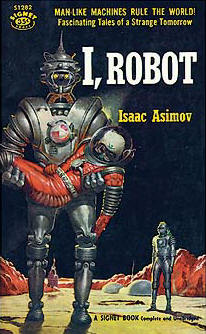
This is also what Isaac Asimov referred to as the first of the three laws of robotics in his 1942 short story, Runaround:
A robot may not injure a human being or, through inaction, allow a human being to come to harm.
The other two laws are circularly referenced to the first law:
2. A robot must obey the orders given it by human beings except where such orders would conflict with the First Law.
3. A robot must protect its own existence as long as such protection does not conflict with the First or Second Law.
The idea of cybernetic explanation gives us another perspective to purpose and meaning. Our natural disposition is to assign meaning and purpose, as I indicated earlier. We tend to believe that Truth is out there or that there is an objective reality. As the great Cybernetician Heinz von Foerster put it – “The environment contains no information; the environment is as it is”. Truth or descriptions of reality is our creation with our vocabulary. And most importantly, there are other beings describing realities with their vocabularies as well. I will finish with some wise words from Friedrich Nietzsche.
“It is we alone who have devised cause, sequence, for-each-other, relativity, constraint, number, law, freedom, motive, and purpose; and when we project and mix this symbol world into things as if it existed ‘in itself’, we act once more as we have always acted—mythologically.”
Please maintain social distance and wear masks. Stay safe and Always keep on learning…


 Harish's Notebook - My notes... Lean, Cybernetics, Quality & Data Science.