
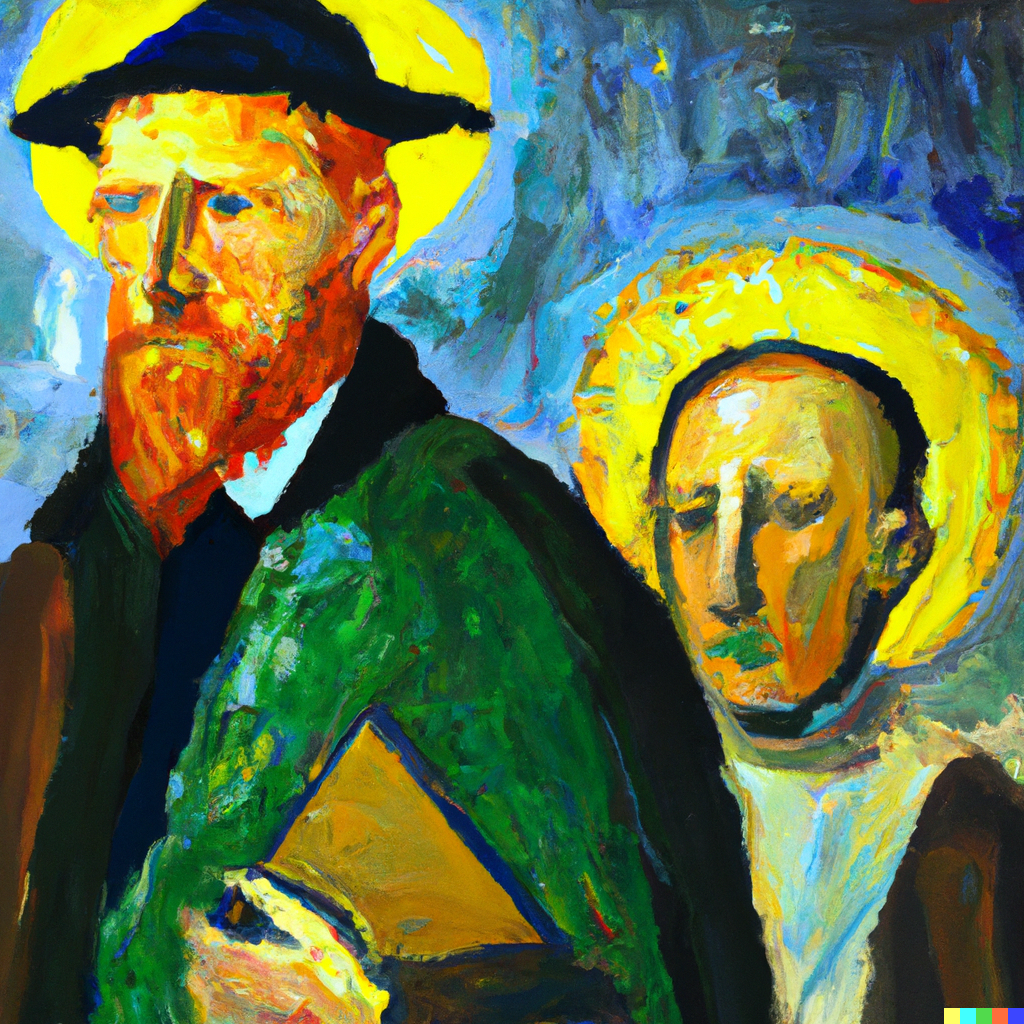
This is available as part of a book offering that is free for community members of Cyb3rSynLabs. Please check here (https://www.cyb3rsynlabs.com/c/books/) for Second Order Cybernetics Essays for Silicon Valley. The ebook version is available here (https://www.cyb3rsyn.com/products/soc-book)
Stay safe and always keep on learning…
In case you missed it, my last post was Informational Closure in the Human and the Machine:
Discover more from Harish's Notebook - My notes... Lean, Cybernetics, Quality & Data Science.
Subscribe to get the latest posts sent to your email.
 Harish's Notebook - My notes... Lean, Cybernetics, Quality & Data Science.
Thank you.
I’ve always resisted the idea of “Human Resource Management” from the very start the Staff and Organisation Department (P&O) with AT&T and Philips Telecommunication started to call itself “HRM”. With the same argument you’re using: human beings are not means, but ends in themselves.
A few years later I was fired – actually for no reason at all, I’ve always had very good reviews, and I had made sure they had asked me for this job – manager productions. (The people in my production department offered to strike for me. I said, they had better things to do). A member of HRM told me in confidence: “you’re a real leader. They’re always being fired in our organisation”. I said: “So you know”.
(Later I realized, it was inevitable. People who manage things- like most people – haven’t learned to deal with ambiguity in a constructive way. Human beings are both objects and subjects. The word “management” has been derived from hand (in French: “le main”), using one’s hand to steer(!) horses or a ship. (your) Hands are no ambiguous, hands – as in crew – are).
I’ve always been influenced by Max DuPree, “Leadership is an Art”, who states that the first task of a leader is to define reality – he does this by asking questions. And the important one is to say “thank you”.
Being a radical constructivist, I reject the idea of a split between subject and object. So I also reject the idea of leader and followers. I used to show a clip from Monty Python’s “Life of Brian”, where he speaks to the people. I goes something like this:
B: “I’ve got two things to say” …
B : “You’re all different” -Crowd: “Yes, yes, we’re all different!” – Simon(?): “no, I’m not” – crowd: “shh, shh!”
B: “You’ve got to think for yourself”. Crowd: “we’ve got to think for ourselves!”
B: “No, you don’t get it. You’ve got to think for yourself”.
Leadership, as all core-concepts – is inherently paradoxical. You cannot live with them, nor without them. We use it as an explanatory principle.
As paradoxes go, leadership is associated with authority, dependency, creativity and courage.
LikeLiked by 1 person
Hello Jan,
I always enjoy your comments! 😀
Thank you!
LikeLike
and I enjoy your contributions and commenting.
LikeLiked by 1 person