
This is available as part of a book offering that is free for community members of Cyb3rSynLabs. Please check here (https://www.cyb3rsynlabs.com/c/books/) for Second Order Cybernetics Essays for Silicon Valley. The ebook version is available here (https://www.cyb3rsyn.com/products/soc-book)
In case you missed it, my last post was Ashby’s Trowel:
Discover more from Harish's Notebook - My notes... Lean, Cybernetics, Quality & Data Science.
Subscribe to get the latest posts sent to your email.
 Harish's Notebook - My notes... Lean, Cybernetics, Quality & Data Science.
welcome back!
LikeLiked by 2 people
Thank you, Ben!
LikeLike
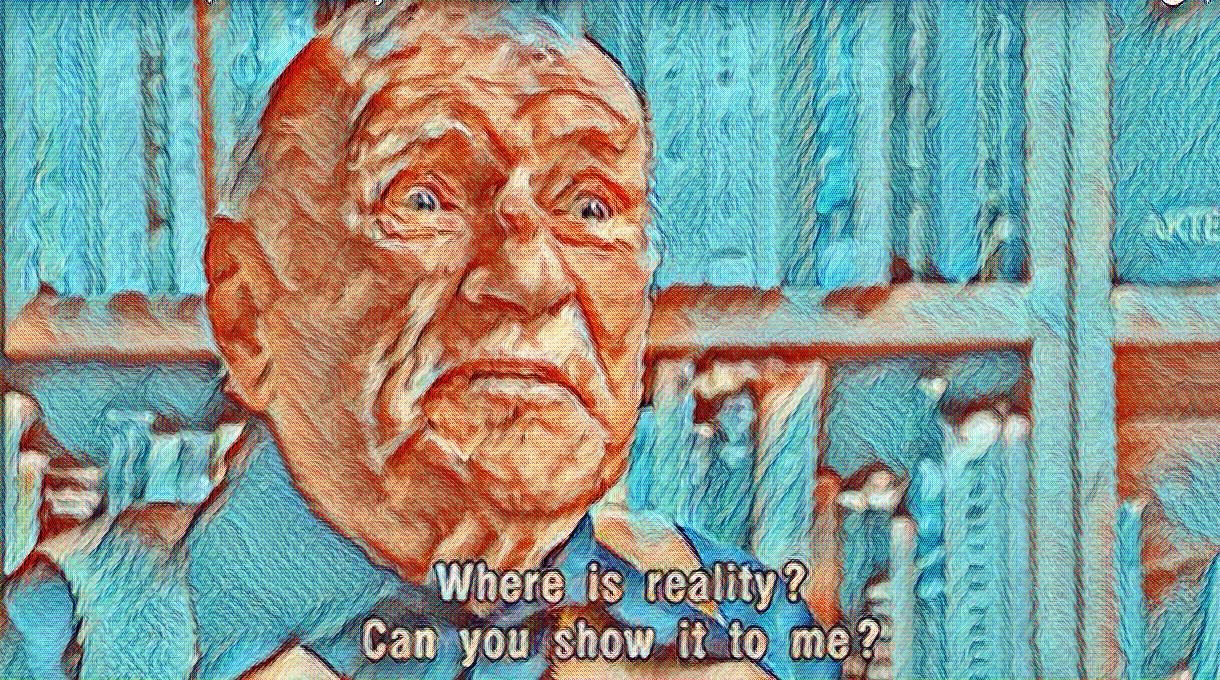
In the Dutch (and German) language one can use the word “werkelijkheid” (Wirklichkeit) for reality. The English “actuality” comes closest, as the word “werk” implies actions, working. This work consist of actively constructing “reality”. One is actually “producing reality”, realizing reality. Really. Continuously. The stream of consciousness consists of a stream of reality.
Or, as Watzlawick wrote, reality is being invented. Inventing or constructing reality cannot be done arbitrarily. Reality has to be made, realized, like a house or building (real estate!) has to be build. One has to use some architectural principles or the house will collapse on you. Through trial and error, we invented high-rise (and still make mistakes).
In the same kind of way, one constructs, or has constructed one’s reality: it works, you inhabit, live “inside”, your “house”. This is why we call it “habits”, derived from Latin habitat or “house”. I’m using the word “house” also because this belongs to the (Jungian) archetype of self. Home is where the heart is.
– I always compared the word “archetype” with “architect”: an architect doesn’t build an house. The builders do. And everything a carpenter, plumper or brick layer did, one can remove from the house. What the architect did, one cannot remove, but one will recognize it immediately. (My grand father was an architect, his trade mark was adding a round window, to the annoyance of a house wife).
Constructing a (one’s) reality is like scaffolding a building. Once the building has been realized (!), one doesn’t need the scaffolding any-more. A house is static. However, because one is dynamic, living, one is in flux, moving, one continuously de/re-constructs “reality”. That’s actually working.
These (mental, personal, ideal, … ) constructs have to be self-referent (actually meaning self-made) because, as you said, the observer takes part in observing. They therefore have to be of fractal dimensions, intuitively I would suggest the Golden Ratio, 1.6180… . This less than three dimensional, as building are, but more than one. In one’s mind, one reconstructs a three dimensional model of a house from a flat image.
In language we construct sentences, which are linear, one-dimensional. So one cannot (re)construct reality in language. Like the map is not the territory, so your reality is not real reality. Reality is at-work.
We have the word realiteit in Dutch also (I once read that in Dutch we have relatively more words than other languages) . The word consists of the Latin “res” or things, affairs and “li”. The latter is a very ancient lemma meaning something like connection, as in li-ne, a line connects. So I say, the word reality suggests something like connecting-with-things.
Reality as-a-concept is a real concept (based on Vaihinger): made-up (invented), used and proven useful. And, paradoxically, can be discarded after being used. One realizes reality.
LikeLiked by 1 person