
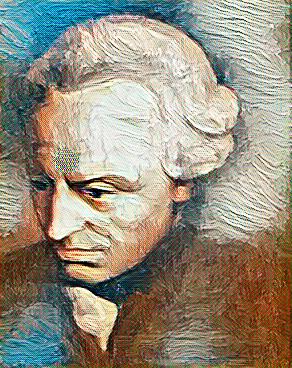
This is available as part of a book offering that is free for community members of Cyb3rSynLabs. Please check here (https://www.cyb3rsynlabs.com/c/books/) for Second Order Cybernetics Essays for Silicon Valley. The ebook version is available here (https://www.cyb3rsyn.com/products/soc-book)
Stay safe and always keep on learning…
In case you missed it, my last post was HvF’s Ethical Imperative:
Discover more from Harish's Notebook - My notes... Lean, Cybernetics, Quality & Data Science.
Subscribe to get the latest posts sent to your email.
 Harish's Notebook - My notes... Lean, Cybernetics, Quality & Data Science.
Reblogged this on Systems Community of Inquiry.
LikeLike
Legend: I’m using some words without (in)definite article, because I want to highlight lack of any definite or indefinite purpose by me.
The words “purpose” and “problem” have been based on the same structure: to put (place, position,…) something in front (pur, pro, for, …), as in pro-pose. As you’re reading this, these words are in front of you, proposing my problem with purpose. In using language, at least in using a language with (in)definite articles, purpose and problem invoke paradoxical pairs. For instance, “individual” and “community”. A community consists of individuals, is not an individual but in our use of language, is being treated as an individual. As in having rights and purposes of its own.
I remember Weick describing a cycle like … –> Individual purpose — makes –> individual means –leads to –> collective means –induces –> collective purposes individual purpose. As there’s a power difference between a community (collective, organisation, …) and the individual, this will lead to the individual purposes being subjugated to collective purposes and becoming a means to this community. Having “other” purposes means becoming a problem.
(I may have mentioned that while working for Philips and AT&T Communications, I resisted becoming a “human resource” in the eyes of HRM, the new name of the Personnel and Organisation Department. Like you, I used Kant to prove my point. Off course, being an individual, my rights were denied. Somebody even told me: “you should bite the hand that feeds you”. As-if).
As I’ve said, structure of language accounts for usefulness (by a community as well as by an individual), as the structure of maps resembles the structure of a territory. Terrains can have several maps, depending on one’s uses, making terrain into a territory. Any map (model, system, …) made is made by somebody, to paraphrase somebody, and someone always has a purpose or purposes with this map (model, system, …). The mapmaker is, in a way, present in the map made, as is his/her purpose. In presenting one’s map or model, one purposely induces a community to realize one’s purpose.
With our (Western) languages we (un)intentionally model a purposeful universe. This goes back to translating the Hebrew verses (incantations) into, “in the beginning God created heaven and earth” and not, as is more, into “something divided heaven and earth”. In using a “creating structure” with purposes, one can, in a way, control the thinking of others. From there it follows logically we think purposefully about systems. The system of language-use induces this.
I hope you can see, how a structure of language, the way we use this (western) language, already presupposes purposes, allocating values on solving problems, the problems in achieving supposed purposes. .
So proposing “system” (any system) has purposes, evokes problems the system (now in place) tries to solve. Organisations organized for a a sensible and often communal purpose, after some (long) time, become “goals in themselves”. Continuing a system, takes over any purpose of the system, while insisting, the system still works for these purposes. Individuals in these organizations become the cogs and pegs of these systems. (I think this shows the work of Parkinson’s Law: ‘work fills the time available for its completion” and how organisations grow while becoming less and less efficient. Because of the individuals, the organisation remains somewhat effective).
Because of the structure (grammar) of our language (use), being “directed to a purpose”, this unintentionally establishes “power games”. In my view, a more sensible way in dealing with this is by facilitating conversations in continuously redistributing power from powerful systems to individuals. I suppose this means restructuring the structure – grammar – of our (Western) language. Other grammars for engaging.
LikeLike