
The Order for Kaizen:

kaizen order

In today’s post, I will be talking about Kaizen and specifically the order for kaizen. Kaizen has come to mean “continuous improvement” today. Kaizen originally translates from Japanese as “change for better”. I will be presenting three different views on approaching kaizen. These are;

  • Taiichi Ohno’s view,
  • Shigeo Shingo’s view, and
  • Hiroyuki Hirano’s view

Taiichi Ohno’s View (Semi-Strategic in nature):

Taiichi Ohno is the father of Toyota Production System (TPS). He has stated that there is a proper order for kaizen. These are;

  • Sagyo kaizen (Operations improvement),
  • Setsubi kaizen (Equipment improvement), and
  • Kotei kaizen (Process improvement)

I believe that Ohno wanted to focus on developing the abilities of people first since this is the lowest level where kaizen is possible. As Hirano says, “The starting point of manufacturing is always people.” Any production system should be people oriented. The first step of all kaizen is to raise the awareness of the people. This allows them to view the waste as a lean leader would. This is achieved only through operations kaizen. The operators involved are finding ways to make their work easier with what they have. This has minimal cost impact of all the kaizen. Ohno has also said;

“People with no capacity for improving operations are a problem because they like to buy new machines all the time.”

Ohno has also said;

“First improve operations. If you start out by bringing in the latest machines people with no capacity for improvement simply end up being slaves to the machines.”

The next in line is Equipment kaizen. Ohno challenges us to find new and creative ways of using the current equipment. Ohno advises us;

“You must have the ability to tinker with and improve the machines you already have.”

Ohno recommends buying new equipment when you have made the maximum use of current equipment and when it is no longer possible to increase effectiveness without new equipment. Purchasing new equipment should result in an improvement of quality. Ohno cautions against purchasing costly specialized equipment and advises going for flexible and low cost equipment. Equipment kaizen alone without operation kaizen results in extreme waste. Now the organization can make waste much better, and lot more of it. Machines cannot see waste, and machines cannot improve anything on their own. Machine kaizen alone foster status quo and invites complacency.

The last in line is Process Kaizen. His view was;

“Making things extremely well by turning the process upside down is Process Improvement.”

With process kaizen, you are looking at rearranging equipment or operations, changing layout, or improving the flow by linking processes.

Shigeo Shingo’s View (Tactical in nature):

Shigeo Shingo has provided us four targets for improvement. They are, in the order of priority;

  • Easier,
  • Better,
  • Faster, and
  • Cheaper

I was watching a Paul Akers (FastCap) video on YouTube and I made a connection to what Shingo said. “Easier” is an improvement from the point of the operator. This also means that it is safer for the operator to do. Any improvement activity should be first focused on Safety. “Better” is an improvement activity resulting in an improvement in quality of the operation/product. “Faster” is an improvement activity that increases efficiency. The final level is “cheaper”, and this should be the last target of all improvement activities. The goal of kaizen is not necessarily to first make the process cheaper.

Hiroyuki Hirano’s view (Strategic in Nature):

Hirano has pointed out the following as the normal progression of kaizen;

  • Point kaizen,
  • Line kaizen,
  • Plane kaizen, and
  • Cubic kaizen

“Point kaizen” is very similar to the operations improvement. This is the basic small improvement activity at the operations level. The next level is “line kaizen”. This is where a lot of the point kaizens merge together to result in flow manufacturing, as in an assembly line. Hirano calls this a vertical development. This is akin to selecting a model line and transforming it to make the process flow better. Once we have line kaizen, the next progression is through “plane kaizen”. This is the idea of “yokoten” or horizontal deployment. This is where the ideas and learning from the model line is used to create more model lines across the plant.  Thus this results in horizontal development. The final level is “cubic kaizen” where the development is made across multiple departments and even the supply chain of the enterprise.

My thoughts:

As with any other buzzword, kaizen has come to mean many things. My goal has been to provide a little more structure to the wonderful idea of kaizen. I would encourage the reader to also read my previous post on this topic here (A brief look at kaizen in the light of the Toyota Way). I will finish this off with a great story on Equipment kaizen from Hitoshi Yamada, a student of Ohno from the book Forging a Kaizen Culture (Japanese version 2009):

Yamada was at a large component manufacturer, Stanley Electric’s Tsuruoka plant. They were looking at a machine that assembled extremely small light bulbs. The cost of the machine was $150,000. The machine had two turn tables, and several robot arms. Due to the high cost of the machine, the factory manager felt that he should rely on mass production to make the maximum use of the machine.

Yamada told the manager to study the machine and find areas of wasted movement. And even better- to build a smaller and better machine.

This improvement activity took several weeks of trial and error. The final machine was $5,000 and 1/27th the size of the old machine. Since the machine was much smaller in size, it was also more efficient.

Always keep on learning…

In case you missed it, my last post was Ohno and the Gemba Walk.
Ohno and the Gemba Walk:

g_walk.png

Taiichi Ohno, the father of the Toyota Production System, was a firm believer in “Gemba Kanri” which translates from Japanese as “workplace management”. Taiichi Ohno and Setsuo Mito wrote a conversation-style book called “Why Not Do It Just-In-Time”. This was translated and released in English as “Just-In-Time For Today and Tomorrow”. Taiichi Ohno talked about the essence of gemba walks in the book. He did not call them gemba walks but he used what was well known at that time; Managing by Walking Around (MBWA) to explain his thoughts on gemba walks.

Gemba Walk:

Gemba is the actual place of action. Gemba Walk is thus a walk to and in the gemba. Ohno clearly explained the purpose of going to the gemba: You go to the gemba to understand and grasp the facts. Ohno said the following;

For the manager wandering around the work place, signs, charts, data and standards that accurately measure current work place conditions are indispensible.

Ohno emphasized that doing gemba walks without established standards is not worthwhile. Ohno viewed problems as deviations from the standards, and if the standards are not established, you will not know what to look for. The standards (also called as Standard Work) represent the most effective combination of human activity, equipment activity and the product being produced. The standards are visual and convey three vital pieces of information;

  • Takt time – the rhythm of production. This explains how often a part should come out.
  • Work Sequence – this shows the sequence of how operations are to be performed. The sequence is created with input from the operators, and this is the easiest and the current best sequence of steps to perform the operation.
  • Standard WIP (Work in Process) – this is the quantity of product allowed in the work station, and this also includes the part the operator is working on. Any extra parts are an indication of disruptions.

The idea of Managing by Walking Around was put forth by Tom Peters and Nancy Austin. The intent of MBWA was proposed as a “technology for implementing the obvious.” Mr. Peters and Ms. Austin proposed that MBWA would enable figuring out exactly what needs to be done. MBWA would help finding out the information that is not readily available otherwise. From this aspect, gemba walks also have the same goal – to implement the obvious. MBWA did not explain what to look for or how to find out the information where as Ohno clearly laid out the “what” and the “where”.

Ohno advises to post the standards in each production areas that everyone can see at a glance;

  • What type of work place it is,
  • What the production amount is,
  • What the sequence of operations should be.

This (posting standards) is fundamental and the model for visual control.

Ohno brilliantly described that the production plant is simultaneously a free and generous creature, and an insidious and mischievous nuisance. We should be fascinated by the challenges of discovering ways to deal with this entity. Ohno goes on to explain that for a production plant to properly operate, people should assume leadership and bring out the best in the machines and the system. To do so, people must utilize their intelligence and imagination to improve their work environment as well as investigate problems in the production plant. This is the main idea behind Ohno’s teaching for continuously improving the standards. He would scold the supervisors if the standards are not changed frequently.

The gemba walks often open doors to develop the operators. The first step of kaizen is to teach people how to identify and see waste. This is akin to teaching a person to fish rather than giving him fish every day.

Another aspect that Ohno described was something new to me- he explained that everybody has a principal work place (gemba). However, several of us also have multiple sub-workplaces (sub-gembas). He then stated another reason for doing the gemba walks;

To generate new information and trigger the imagination, a critical mind needs different environments.

My thoughts:

The Gemba Walks provides the meeting ground for top-down and bottom-up management systems. The standards make it easier for management from top-down. The employees are also enabled to make bottom-up proposals since they understand the common goal.

The main purposes of the gemba walks are to identify deviations from the standard, and to look for opportunities to change (improve) the standard.

The following are the desirable outcomes of gemba walks.

  • Self development by observing and learning
  • Developing others to observe and learn
  • Process improvement to establish the next standard
  • Harmony (bringing out the best)

The following are things to keep in mind doing gemba walks;

  • Do not immediately show them how to fix a problem
  • Do not have preconceived notions
  • Show respect, do not be an expert
  • Challenge the status quo
  • Always ask questions as “what should be the ideal state (standards) and what is the current state?” Explain problems always as deviations from the standard.

I will finish this off with a neat Ohno story from the book, “Just-In-Time For Today and Tomorrow”;

Setsuo Mito approached Ohno and asked about the origin of his name – Taiichi.

“Your father probably named you hoping that you would become a ‘patient’ child (nin T AIno)”, Mito said.

Ohno simply replied, “My father named me after his job in Dairen, where he worked with ‘firebricks’ (TAIkarenga)”.

Always keep on learning…

In case you missed it, my last post was Does Lean = the Elimination of Waste?

Does Lean = the Elimination of Waste?

muda

I have been reading several posts about Lean and Six Sigma. The way the two philosophies apparently differentiate is that Lean is all about eliminating waste, and Six Sigma is all about eliminating variation. As with many concepts in Eastern philosophy, things appear simple at first sight, and as we learn more about it, the concept gets deeper and deeper. In today’s post, I will look at the Toyota Production System in the light of “waste”.

Waste (Muda):

The Japanese word for waste is “muda”. Muda literally means no value. Mu = no or lack of, and da = value. The idea that Toyota Production System is based on the principle of eliminating waste was put forth by Taiichi Ohno, the father of Toyota Production System. Ohno identified seven types of wastes as follows;

  • Waste of overproduction
  • Waste of time on hand (waiting)
  • Waste in transportation
  • Waste of processing itself
  • Waste of stock on hand (inventory)
  • Waste of movement
  • Waste of making defective products.

A close review of these wastes shows that many of these wastes are interconnected. If you have inventory, you will also have transportation. Waste of processing can also lead to waste of movement. Waste of overproduction is sometimes called as the mother of all wastes since it can lead to all of the other types of wastes. Several practitioners have identified more types of wastes, of which the most popular is the “under utilization of human talent”.

Let’s Go Deeper:

I do not agree with the generalization that lean is about eliminating waste. Toyota speaks about 3 “Mu”s. They are as follows;

  • Muda = waste
  • Muri = overburden
  • Mura = unevenness

Muda:

Things get complicated when we learn that Toyota uses Muda in 3 different meanings. The Japanese language has several writing systems. Muda has roots in Chinese language. Japanese can write Muda in 3 different writing styles to add particular nuances.

Muda in kanji (based on Chinese scripts) means waste that was created by existing management policies. Muda in hiragana (based on native or naturalized Japanese words) means waste that cannot be eliminated right now. Muda in katakana (based on foreign words or words used with emphasis) means waste that can be eliminated immediately. (Source: Kaizen Express, Toshiko Narusawa and John Shook)

Taiichi Ohno defined the Toyota Production System as follows;

“The fundamental doctrine of Toyota Production System is the total elimination of waste”.

Muri:

Muri literally means “unreasonable” in Japanese. Mu = No or lack of, and Ri = reason. Both muda and muri can be explained in Japanese as a “lack of something” or as “no + something”. Muri also has several nuanced meanings in Japanese. “Muri suru” in Japanese means “to take things too far” or “to overdo”. In TPS, muri refers to overburdening the operator so that it can result in injuries or defective products. This is akin to saying work harder to produce more products while not improving the process. The standard work is often used as a means to tackle muri.

Mura:

Mura is defined as “uneven”. I have not seen mura explained as a “lack of evenness” (Mu + evenness) in Japanese. For example, the unevenness is in how we manufacture products. We should produce products so that we can meet the customers’ demands. From a producer’s standpoint, producing product of one type makes the most sense since it maximizes efficiency. This is akin to the famous Ford quote “as long as it is black”. However, each customer is unique. He may want “red” instead of black. He may want a different model than what you want to make. The unevenness is in how the units are being produced without keeping the end picture in mind. TPS utilizes both kanban and heijunka to level production.

Taiichi Ohno defined the Toyota Production System in light of this as follows;

“The goal of the Toyota Production System is to level the flows or production and goods.”

The 3 Mu’s:

The keen learner can see that muda, muri and mura are closely intertwined. Toyota has even defined muri and mura as two forms of muda!

“Both mura and muri are thought of as types of muda, or waste, and should be eliminated.”

Mikio Kitano, former President of Toyota Motor Manufacturing of North America Inc, has identified the order to approach the 3 Mu’s for a new process. (Muri -> Mura -> Muda)

“First, Muri focuses on the preparation and planning of the process, or what can be avoided proactively. And, then, Mura focuses on implementation and the elimination of fluctuation at the operations level, such as quality and volume. The third — Muda — is discovered after the process is in place and is dealt with reactively. It is seen by variation in output. It is the role of Management to examine the Muda, or waste, in the processes and eliminate the deeper causes by considering the connections to Muri and Mura of the system. The Muda – waste – and Mura – inconsistencies – must be fed back to the Muri, or planning, stage for the next project.

The continuous cycle of self-examination allows for the outcomes to continuously improve. This brings in Management’s responsibility:

  • to provide and improve a flexible system, and
  • to connect the workforce and the customer.”

My thoughts:

As I have already stated, I do not believe in the generalization that TPS or Lean is about the elimination of waste. This makes it a tool based system. TPS is a holistic management system. Once we look deeper at how the “waste” is viewed, we understand that this does not mean just seven types of waste.

There is a counter-intuitive aspect to muri. Taiichi Ohno was famous for asking to produce the same amount of products by utilizing fewer employees. He would say to remove one operator and then try to meet the same production numbers. Would this be not adding muri? My understanding on this is that Ohno was very good at identifying all of the non-value adding activities in the process. He was able to see that the production can be run with fewer operators. He wanted to challenge the supervisor and the operators in kaizen by studying their standard work and improving their process.

I will finish off with a zen story about “mu” that I like a lot. This story is similar to this post in that it appears straightforward at first.

A monk asked Joshu, “Does a dog have the Buddha-nature or not?”

Joshu replied, “Mu.”

In this koan/story, Joshu is breaking the conventional thinking of the monk. In Mahayana Buddhism, the Buddha-nature is present in all beings including humans and dogs. The answer to the monk’s question should have been “yes”. But the monk’s perspective of nature of existence was one-sided and tunnel-visioned. Joshu challenged this and broke the monk’s mold of thinking by saying the answer “no”.

If Ohno was alive today and one were to ask him whether TPS was about eliminating waste, the master might have replied, “Mu”.

Always keep on learning…

In case you missed it, my last post was Respect for Humanity in the Light of Quality Control (QC).

Respect for Humanity in the Light of Quality Control (QC):

rfp

In my last post, I talked about kaizen in the light of the Toyota Way. In today’s post, we will look at “Respect for People”, the second pillar of the Toyota Way, in the light of Quality Control. I was surprised to find that the theme of “Respect for Humanity” (another name for Respect for People) is a central theme for Quality Control. The Quality Engineer in me smiled happily when I started researching the subject of Respect for Humanity in the light of Quality Control.

The term “Quality Control” or QC does not have the same meaning outside of Japan. The terms Quality Assurance, Quality Control and Quality Management are often used interchangeably. Kaoru Ishikawa, the great Japanese Quality mind, defines QC as;

“To practice in Quality Control is to develop, design, produce and service a quality product which is most economical, most useful, and always satisfactory to the consumer.”

Japan started the QC movement with teachings from Dr. Deming and Juran. QC became the central theme of doing a business through the guidance of Kaoru Ishikawa. Ishikawa interpreted QC as a management system rather than a product control system. He made it about the entire organization. He also played a strong role in developing QC circles. QC circles are small groups of voluntary employees who meet outside of their work schedules to address a known process problem. The scope of QC circles soon included process improvement activities under the term “QC activities”.

Respect for Humanity – an Underlying Theme of QC:

Ishikawa identified the following as the “basic ideas” behind QC circle activities:

  • Contribute to the improvement and development of the enterprise.
  • Respect humanity and build a worthwhile-to-live-in, happy and bright workshop.
  • Exercise human capabilities fully and eventually draw out infinite possibilities.

Ishikawa emphasized this underlying theme in his 1981 book “What is Total Quality Control? The Japanese Way”. The following statements are from the book.

  • Not about Taylorism: “The Taylor method does not recognize the hidden abilities workers possess. It ignores humanity and treats workers like machines.”
  • Respect for Humanity: “The fundamental principle of successful management is to allow subordinates to make full use of their ability.”
  • Respect for Humanity: “The term humanity implies autonomy and spontaneity… People have their own wills, and do things voluntarily without being told by others. They use their heads and are always thinking. Management based on humanity is a system of management that lets the unlimited potential of human beings blossom.”
  • Professionalism: “In the United States and Western Europe, great emphasis is placed on professionalism and specialization… People possess far greater abilities than professionalism is willing to give credit for.”
  • Respect for Humanity: “It is a management system in which all employees participate, from the top down and from the bottom up, and humanity is fully respected.”

My Thoughts:

The two principles of “Respect for Humanity” in the Toyota Way are;

  • Respect, and
  • Teamwork

From the surface, this appears to be all about niceties and “lip service”. Toyota says that making product is achieved through developing people. The process of developing people is thus made into a value-adding activity. Respect for Humanity is when you ensure that the work done is only value-adding. Asking an operator to engage in wasteful activities is not engaging in Respect for Humanity. As John Shook put it – “Don’t waste the operator’s time and effort.”

Engaging in Respect for Humanity is engaging the operator in improving his process through developing him. Interestingly, Respect for Humanity is a two-way street. The operator should be looking at his process and improving it. He should also engage in developing people around him as well. Respect for Humanity is a nice mixture of self-development and mutual-development. It is about creating mutual understanding and mutual responsibility. Toyota calls their production system a “Thinking Production System” because they heavily involve people. Toyota garners their ideas from everyone, from the floor to the corner office.

My personal view is that “Respect for People” is akin to making soup. Hot, hearty and delicious soup is made with many ingredients. It takes energy. It needs participation from all the ingredients. It takes time. It is cooked slow and steady. Any of the ingredients by itself does not taste good. Soup is about the perfect mixture of all the ingredients. The end product is great and no one ingredient stands out. The individual succeeds when the team succeeds. The team grows when the individual grows.

I will finish this post with an old story about soup and participation – The Story of Stone Soup. I have one of the several versions below:

A weary, poor traveler arrived in a small village. He had no food or money and had not eaten in days. The one thing he did have was a cooking pot that he used on those rare occasions when he had something to cook.

The villagers were not willing to give him any food. They complained that they do not have any food at all to share, and that they were hungry themselves. He built a small cooking fire, placed his pot on it, and poured in some water. When a few villagers asked what he was doing, he replied that he was making Stone Soup which was an ancient tasty recipe passed down to him from his ancestors. He then dropped in a smooth, round stone he had in his pocket into the pot.

As the soup warmed, the traveler told the villagers stories of his travels and the exciting things he’d seen. He tasted his soup and said it was coming along nicely, but a bit of salt would bring out the flavor. One curious villager went into her home and returned with some salt for the soup.

A few more villagers walking by stopped to see what was going on when they heard the traveler speaking. The traveler told more stories and said that a couple carrots or onion would be a nice addition to the already delicious soup. So, another villager figured he could give a few carrots and retrieved them from his cellar.

This continued on with the traveler casually asking for onions, seasoning, a bit of meat, celery, potatoes to bring out the full potential of the soup.

Finally, the soup was ready and the traveler shared the delicious soup with everybody. The villagers did not have anything to eat on their own, but when they combined everything they had, they all enjoyed a delicious meal.

Always keep on learning…

In case you missed it, my last post was A Brief Look at Kaizen in the Light of the Toyota Way.

A Brief Look at Kaizen in the Light of the Toyota Way:

chie to kaizen

I have talked many times in this blog about the “Toyota Way 2001”. The Toyota Way was an embodiment of Toyota’s management philosophy and values that were passed on to its employees as implicit knowledge. Due to rapid global expansion, Toyota Management decided to write down this implicit knowledge into a booklet – Toyota Way 2001, in order to help expand their production system properly across the globe.

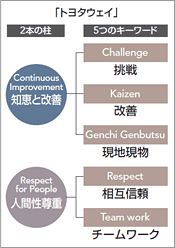
The Toyota Way has two pillars – “Continuous Improvement” and “Respect for People”. The “Continuous Improvement” pillar stands on three principles:

  • Challenge
  • Kaizen
  • Genchi Genbutsu

IMG_1282

All is good up to this point. “Kaizen” is often translated as “Continuous Improvement”. I saw this as a linguistic “chicken or egg situation”: How can kaizen be one of the three principles of “Continuous Improvement” when kaizen itself is “continuous improvement”? Why was the pillar not named simply as “Kaizen”?

Michel Baudin has written about it here. He has shown that the pillar is actually termed “Chie to Kaizen” in the Japanese version of Toyota Way 2001. “Chie to Kaizen” is translated as “Wisdom and Continuous Improvement”. I encourage the readers to check out Michel’s blog post.

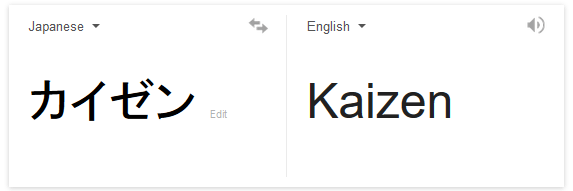
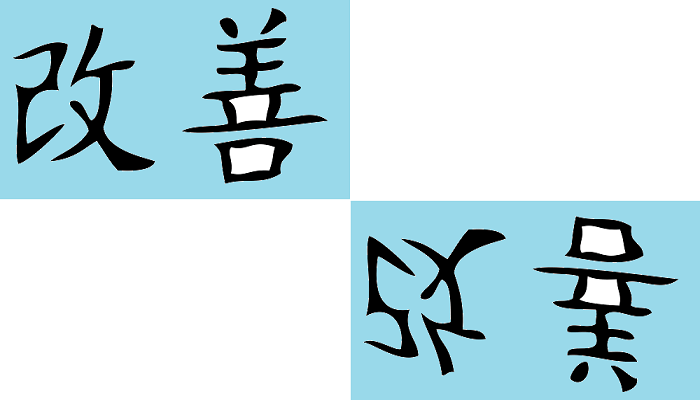
Kaizen in Japanese is not translated literally as “continuous improvement”. The literal meaning is “change for better”. The Japanese word kaizen is derived from the Chinese word gaishan. They both mean “to improve”. Kaizen is written as 改善 in both Chinese and Japanese. This is because Japanese language uses a lot of characters adopted from Chinese language called Kanji. Apparently, to distinguish between “kaizen – improvement” and “kaizen – continuous improvement”, several Japanese writers have started using “カイゼン”, which reads the same. “カイゼン” is written in Katakana script, one of several writing components in the Japanese language, besides Kanji. Katakana is generally used for words imported from foreign languages. Thus when you translate the word “カイゼン” into English through Google Translator, you will find that the word translates to “Kaizen” in English. I am assuming that Kaizen in English means “Continuous Improvement.” 🙂

Kaizen

Wisdom/Intelligence and Continuous Improvement:

The only source where the pillar is not called as “Continuous Improvement” in English by a Toyota personnel that I could find, was “The Toyota Way in Sales and Marketing” by Yoshio Ishizaka. In this book, the first pillar is called as “Intelligence and Kaizen”. In my eyes, this is a better phrasing for the pillar. Ishizaka explains this pillar as follows;

Intelligence and Kaizen describes an attitude in which you are never satisfied with the current condition and continuously develop innovative ideas yielding higher added values.

Kaizen achieves a better meaning when viewed in the light of Challenge and Genchi Genbutsu. There is a sense of continuity towards improvement with this view. This meaning is more synonymous to “Continuous Improvement”. Let’s look at the other two principles: Challenge and Genchi Genbutsu.

Challenge: The key point here is to challenge the status quo. Do not be satisfied with your current state. There is almost always a better way of doing things. This may push you outside your comfort zones. But that is how you can continuously improve. This principle also encourages us to have a long term vision, and to move towards it at all times. As Toyota puts it “Working at Toyota is also an exercise in long-term thinking.”

Genchi Genbutsu: This is described as “going to the actual source and getting the actual facts” so that you can make the correct decisions. It is looked down upon in Toyota to make decisions based on data (on paper) alone. You have to be at the gemba to understand the problem.

My final words:

I will finish this post with a story I read that has the spirit of “chie to kaizen”.

Once upon a time a very strong woodcutter asked for a job from a timber merchant, and he got it. The pay was really good and so were the work conditions. The woodcutter was determined to do his best.
His boss gave him an axe and showed him the area where he was supposed to work. The first day, the woodcutter cut down 18 trees.

“Congratulations,” the boss said. “Go on that way!” Very motivated for the boss’ words, the woodcutter tried harder the next day, but he could only cut down 15 trees.

The third day he tried even harder, but he could only cut down 10 trees. Day after day he was bringing fewer and fewer trees.
“I must be losing my strength”, the woodcutter thought. He went to the boss and apologized, saying that he could not understand what was going on.

“When was the last time you sharpened your axe?” the boss asked.

“Sharpen? I had no time to sharpen my axe. I have been very busy trying to cut trees”, the woodcutter responded.

Always keep on learning…

In case you missed it, my last post was Don’t be an Expert at the Gemba.

Don’t Be an Expert at the Gemba:

Expert

In today’s post I will be talking about being open-minded at the gemba. I heard a wise saying;

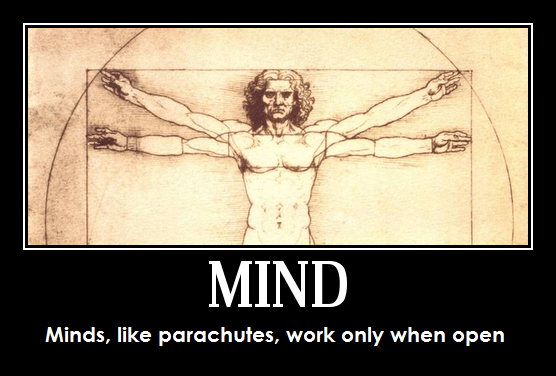
“Minds, like parachutes, only work when open.”

parachute

I am sometimes guilty assuming that I know completely about the matter at hand – that I am an expert. I would be at the gemba and instead of listening to the operator talk, I would be talking to the operator, and trying to find solutions on my own. This type of thinking results in three things;

  • I am not respecting the operator or his expertise by not being open to his suggestions. The operator is truly the expert since he has been doing this, day in and day out.
  • By rushing to solutions, I am wasting the opportunity to develop the operator. By providing the solutions, I am taking away the privilege for the operator to think and come up with solutions.
  • I may not get his buy-in for what I am planning on implementing. Things will go back to the way they were once I leave that area.

Being an “expert” makes one close minded. It puts the blinders on for the person, and prevents them from seeing the whole. There is another side effect to being an “expert”. You become very comfortable at something and will not want to steer away from your comfort zone.

I have been reading books by Bruce Lee, the famed martial artist. Apart from being a great martial artist, Bruce was also a deep thinker. He talked about the great analogy of a cup that is applicable to this post:

“The usefulness of a cup is that it is empty.”

If a cup is not empty, it is not useful. The emptier the cup, the more useful it is!

Ohno and Experts:

Taiichi Ohno used to say that experts are not good for kaizen. “They would just get in the way”, he said. Ohno’s point about this statement is that experts would not be open to going outside their comfort zones, and they would not allow others to speak or be open to their ideas. Kaizen needs for you to be outside of your comfort zones. Comfort zones are the playgrounds for status-quos. This is against the spirit of kaizen.

In Toyota, there is a great concept called “chie”. Chie stands for “wisdom of experience”. If experience equates to expertise, then chie equates to wisdom that comes from experience. Toyota views their production system as a “Thinking Production System”. Toyota’s goal is to increase chie of all their workers so that their thinking leads to improved processes and this ultimately improves Toyota altogether. This type of thinking is against “experts” on the floor. Experience may result in improved efficiency, however this does not equate to improved effectiveness.

Final Words:

This post is more a reminder for me to be open minded at the gemba, and to listen to the operator, and to encourage them to ask questions and come up with solutions. This allows for developing the operator. This also allows you to learn from the operator as well. I will finish off with a short story from Leo Tolstoy about someone who thought he was an expert:

There once were three hermits on a remote island. They were known in the region for performing miracles. They were very simple, and did not know complicated prayers. The only prayer they knew was “We are three, Thou art Thee, have mercy on us.” 

One day the local bishop came to hear about the three hermits and their prayer. He thought to himself that he should pay them a visit so that he can teach them prayers that were “more correct”.

He arrived at the island and taught them the “state of the art” prayers. The three hermits recited the prayers after the bishop. The bishop was quite pleased with himself. He bid them good bye and left. His boat was sailing away from the island. It was getting dark. The bishop looked back at the island, and saw a radiant light slowly approaching the boat from the direction of the island. To his surprise, he saw that the three hermits were holding hands and running towards the boat, over the water.

“Bishop, we have forgotten the prayers you taught us”, they said, and asked him if he would please repeat them.

The bishop shook his head in awe at the miracle he was witnessing. “Dear ones”, he replied humbly, “Please forgive me, and continue to live with your old prayer!”

Always keep on learning…

In case you missed it, my last post was The Opposite of Kaizen.

The Opposite of Kaizen:

opposite_kaizen

“Kaizen” is the Japanese word that means “change for good”. Kaizen is probably the most used word in lean today. Kaizen has come to mean many things including “Kaizen events” – a week long group activity to improve a process. In today’s post, I am going to look at kaizen – the simple idea of “change for better” and look at what could be the opposite of kaizen. Kaizen is also translated as “continuous improvement”.

What is the Opposite of Kaizen? – Kaiaku

This is an interesting philosophical question. From a Japanese language standpoint, the opposite of kai-zen is kai-aku. In Japanese, Kai means “to change”, zen means “better” or “good” and aku means “bad” or “evil”. Thus kaizen literally means “change to be better” and kaiaku means “change to be worse”.

From a philosophical viewpoint, I do not agree that kaiaku is the opposite of kaizen. A person engaged in the kaizen mindset learns from failures as well. The fear of failure does not stop him from trial and error. Sometimes this activity can result in terrible failures – kaiaku. However, the mindset of kaizen is still alive. In fact, it is said that one learns the most from failures. Thus, kaiaku cannot be the opposite of kaizen. Failures which result in worse-of scenarios act as an impetus to make things even better.

What is the Opposite of Kaizen? – Kaikaku

Kaikaku translates from Japanese to English as “revolutionary change”. This is generally a large scale transformation. The intent behind kaikaku is that it is not a simple small scale change like kaizen. Toyota achieves improvement through both small scale and large scale improvements. They embrace both types. Toyota also embraces innovation (kakushin). From Toyota’s perspective any change that ultimately makes things better is always good! In this regard, the opposite of kaizen cannot be kaikaku either.

What would Ohno Say?

Taiichi Ohno, father of Toyota Production System, said the following about how to begin kaizen:

“You’ve got to assume that things are a mess.”

Ohno’s point behind this is that if you are happy and satisfied with where you are and what you are doing; you will never want to change. You have to be dissatisfied with what you are doing to motivate yourself in order to improve your process. The opposite of kaizen is complacency!

Being complacent means that you are happy where you are, and your goal is to maintain status-quo. In fact, Merriam Webster defines complacency as follows;

Complacency = self-satisfaction especially when accompanied by unawareness of actual dangers or deficiencies

This is the exact opposite of the intent behind kaizen – to improve/make things better. Complacency leads to stagnation, and ultimately this hinders survival. Dr. Deming is often misquoted with “It is not necessary to change. Survival is not mandatory.” His actual quote is;

“Learning is not compulsory; it’s voluntary. Improvement is not compulsory; it’s voluntary. But to survive, we must learn.”(Source: The Age of Stagnation, Satyajit Das)

There is an interesting anecdote in the Harvard Business Review article “What Working for a Japanese Company Taught Me by John E Rehfeld. John talked about his friend who was in charge of two factories, one in America and one in Japan. The Japanese factory always outperformed the American factory. His friend’s rationale was as follows:

“They both set the same target, and they both may hit it. But when the Japanese hit it, they keep going, whereas the Americans tend to stop and rest on their laurels before pursuing the next goal. So in the end, the Japanese achieve more.” They continuously strive for perfection with the goal of achieving excellence.

Final Words:

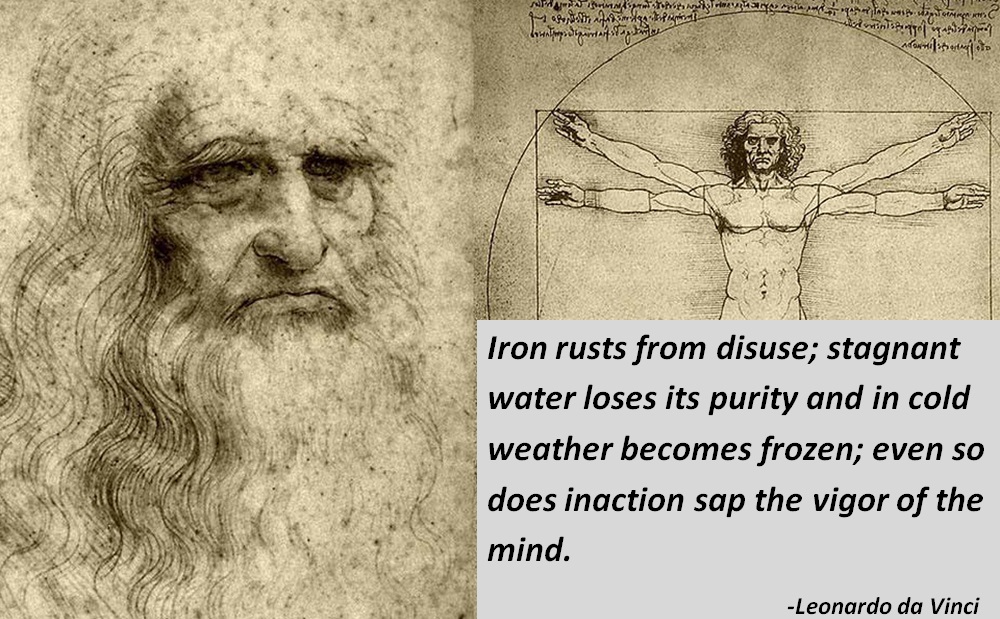
It is my view that although the opposite of kaizen from a linguistic standpoint is kaiaku, from a philosophical standpoint it is complacency. Complacency leads to stagnation, and makes one ignorant of the perils around. I talked about Leonardo da Vinci last time. I will finish off with a quote from him, and an anecdote involving Henry Kissinger and Winston Lord.

davinci

Iron rusts from disuse; stagnant water loses its purity and in cold weather becomes frozen; even so does inaction sap the vigor of the mind. (Source:The Notebooks of Leonardo da Vinci, Richte, 1888)

Winston Lord was working under the then National Security Advisor, Henry Kissinger. There were a lot of high priority national security projects going on at that time. Winston Lord was writing a special report for Henry Kissinger. He worked on it for days knowing how picky and critical Kissinger can be. Lord submitted the report to Kissinger. The report was immediately returned to Lord with a notation by Kissinger – “Is this the best you can do?”

Lord rewrote the report and polished it a little more. The report was again submitted, and almost immediately the report was sent back by Kissinger, again with the same question – “Is this the best you can do?”

Lord rewrote the report one more time and the report was again sent back with the same question. This time Lord snapped at Kissinger, “Damn it, yes, it’s the best I can do.”

“Fine. Then I guess I will read it this time”, Kissinger replied back.

Always keep on learning…

In case you missed it, my last post was Qualities of a Lean Leader.

Qualities of a Lean Leader:

leadership

In today’s post I will look at the qualities of a lean leader. I have been using the term “lean leader” in my posts. This is not an official title, and this does not mean “supervisor” or “manager”. A lean leader is someone who takes initiative in improving one’s process and in developing those around them.

I have wondered which qualities a lean leader needs. I believe that the best source for this is Michael J Gelb’s 1998 book, “How to Think Like Leonardo Da Vinci.”Michael researched Leonardo’s life and identified seven attributes to help one think like Leonardo Da Vinci. Michael listed them as Italian words to pay homage to the master. These are as follows;

  • Curiosità – An insatiable quest for knowledge and continuous improvement
  • Dimostrazione – Learning from experience
  • Sensazione – Sharpening the senses
  • Sfumato – Managing ambiguity and change
  • Arte/Scienza – Whole-brain thinking
  • Corporalità – Body-mind fitness
  • Connessione – Systems thinking

1) Curiosita:

curiosity-landed-drawing

Being curious is an essential attribute a lean leader should have. Being curious forces you to ask questions. Asking questions allows the other party to be involved. This leads to continuous improvement and discoveries. Michael defined this as “an insatiably curious approach to life and an unrelenting quest for continuous learning.”

2) Dimostrazione:

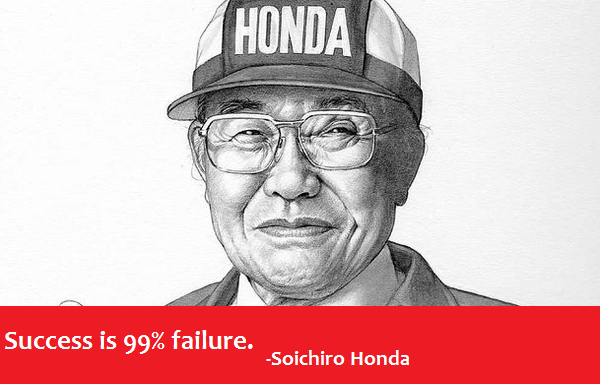
Soichiro Honda

This can be described as a willingness to fail in  order to learn from mistakes. Michael described this as “a commitment to test knowledge through experience, persistence, and a willingness to learn from mistakes.”The example I have here is of Soichiro Honda. Soichiro did not have any formal education, and he went on to build Honda Motor Co.

3) Sensazione:

holmes

Taiichi Ohno would be proud of this attribute. Michael described this as “the continual refinement of the senses, especially sight, as the means to enliven experience.” As the lean learners know, Ohno was famous for his “Ohno circle”. Ohno used to teach supervisors, managers and engineers alike to learn to observe the wastes by making them stand inside a hand drawn chalk circle. They had to stay inside there until they start seeing the wastes like Ohno did.

4) Sfumato:

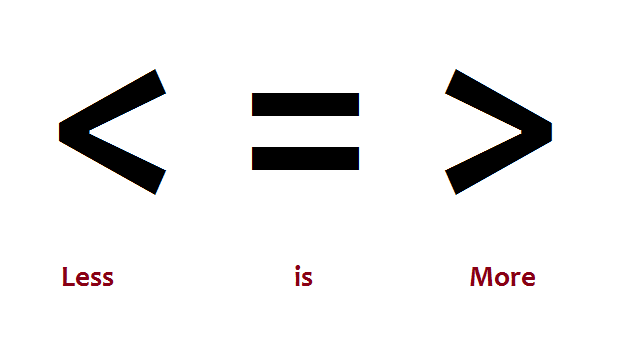
less is more
Sfumato refers to the style of painting Leonardo used. Sfumato is the technique of allowing tones and colors to shade gradually into one another, producing softened outlines or hazy forms. Michael described this as “a willingness to embrace ambiguity, paradox and uncertainty.” Toyota Production System has many paradoxes and counter-intuitive principles. Most of this is because of the trial and error methods that Ohno utilized. All of the manufacturing norms were challenged and broken.

5) Arte/Scienza:

IMG_1183

This attribute represents the synergy between art and science; logic and intuition. The classic TV show Star Trek played around this theme since the two main characters Spock and Kirk represented logic and intuition respectively. A lean leader needs both logic and intuition in order to develop oneself. Michael described this as “the development of balance between science and art, logic and imagination”.

6) Corporalità:

IMG_1186

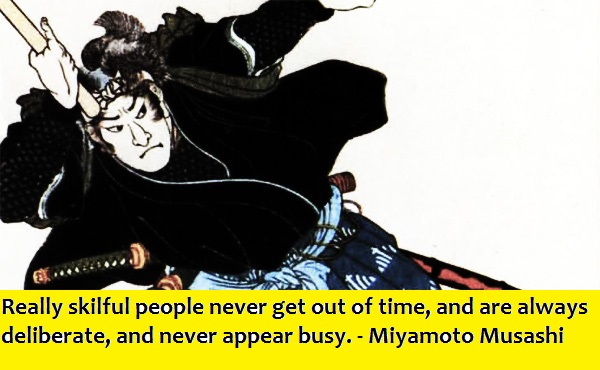
In the Book of Five Rings, Miyamoto Musashi talked about fluidity. “Really skilful people never get out of time, and are always deliberate, and never appear busy.”To me, this is the essence of Corporalita. Michael described this as “the cultivation of grace, ambidexterity, fitness and poise.” The quality of Corporalita is achieved only through constant practice as one strives towards their ideal state.

7) Connessione:

systems

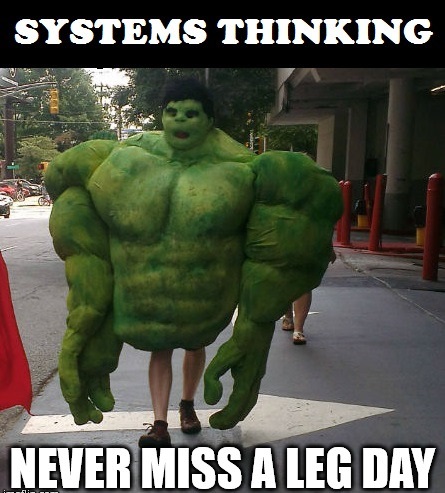
Dr. Deming and Eliyahu Glodratt would be proud to see this attribute on the list. This attribute is about “systems thinking”. Michael described this as “a recognition and appreciation for the interconnections of all things and phenomena.” A lean leader should be able to see everything from a big picture as well as a small picture view points. My favorite meme about Systems Thinking is the Never Miss A Leg Day meme. Local optimization of the just exercising the upper body leads to poor system optimization (muscular upper body and disproportionate skinny legs).

Leonardo, the Writer:

Leonardo da Vinci was also a writer. In his notebooks, he wrote numerous “jests” and fables. I will finish this post with a jest and a fable from the great mind of Leonardo Da Vinci:

A Jest:

It was asked of a painter why, since he made such beautiful figures, his children were so ugly; to which the painter replied that he made his pictures by day, and his children by night.

 The Tree & the Pole, A Fable:

 A tree which grew luxuriantly, lifting to heaven its plume of green leaves, objected to the presence of a straight, dry old pole beside it.

“Pole, you are too close to me. Can you not move further away?”

The pole pretended not to hear and made no reply.

Then the tree turned to the thorn hedge surrounding it.

“Hedge, can you not go somewhere else? You irritate me.”

The hedge pretended not to hear, and made no reply.

“Beautiful tree,” said a lizard, raising his wise little head to look up at the tree, “do you not see that the pole is holding you up straight? Do you not realize that the hedge is protecting you from bad company?

Always keep on learning…

In case you missed it, my last post was Dorothy’s Red Shoes and Toyota.

Dorothy’s Red Shoes and Toyota:

Silver red shoes

Today’s post is about the theme of adapting and not blindly copying something. Lean is the Western cultural interpretation of what is known as Toyota Production System (TPS). Many companies try to implement TPS by simply copying the tools without understanding the context behind them.

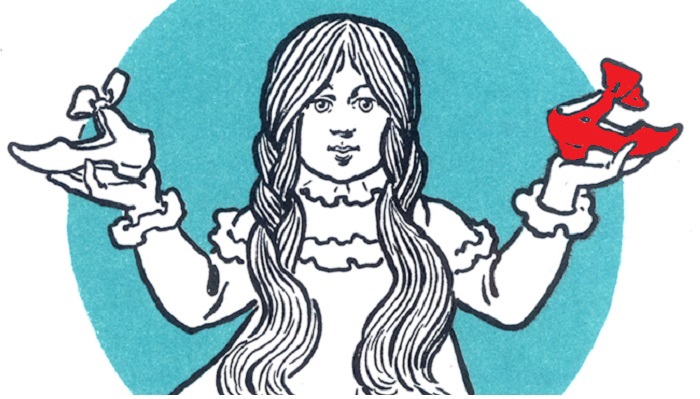
Dorothy’s red ruby shoes are cultural icons from the movie “The Wizard of Oz”. All Dorothy had to do to go home was click the heels three times and command to go home. Poof, like magic she returned home. It is not a widely known fact that Dorothy’s shoes in the actual L Frank Baum’s 1900 book were Silver. The shoes’ color got changed to look “iconic” using the new technology in those days – Technicolor. The shoes appeared extra magical when they were ruby red in the movie. In other words, the movie makers adapted the story to the new technology in order to bring out the best.

What did Toyota Do?

Toyota started off as a Loom Company. Kiichiro Toyoda, son of the founder of the Toyoda Automatic Loom Works, was interested in automobiles. Kiichiro started the Toyota Motor Corporation with little experience in large scale manufacturing. Toyota Production System has been tremendously studied and almost everybody tries to emulate Toyota. In those days, the best production system was Ford’s Mass Production System. It was very much akin to the lean manufacturing system today. In fact, Toyota sent Engineers to study the Ford Production System so that they could come back and implement it. One of the two Engineers sent was Eiji Toyoda, Kiichiro’s cousin, and later the Chairman of Toyota. Eiji was a strong supporter of Taiichi Ohno, the father of Toyota Production System.

Toyota was founded from the very beginning with aspirations to become the “Ford of Japan”.(Source: The Toyota Leader, Masaaki Sato 2008)

Toyota discovered that the Ford System as a whole did not work for them. The idea of a moving assembly line and the idea of an employee suggestion system were two concepts that Toyota adopted and started using. However, Toyota could not implement the “large scale” production practices that Ford was using. The Ford System was focusing on producing a limited product line in large quantities. It also focused on increasing the efficiency of each operation by making the lot sizes as large as possible. Inventory was considered as a buffer and a blessing to cover any production interruptions. Toyota simply did not have the capabilities to maintain a large scale production.

Taiichi Ohno found two main flaws in the Ford’s Mass Production System:

  • Only the final assembly line achieved anything resembling continuous production flow. At the component level, there were piles of inventory and very limited flow.
  • Ford was unable to accommodate customer preferences for product diversity. This is akin to the famous quote attributed to Ford – “You can have any color as long as it’s black.”

Source: The Japanese Automobile Industry, Michael Cusumano 1985.

Taiichi Ohno created the Toyota Production System by adapting ideas from Henry Ford, Sakichi Toyoda, Kiichiro Toyoda, and numerous others, including the inventor of the Supermarket System. He learned from failures and the production system evolved through numerous trials and errors. The Toyota Production System is a custom fit tailored suit that fits only Toyota, and nobody else. However, like Ohno did, we can certainly learn and adapt from it.

Why Should I Copy Toyota?

The short answer is – you should not blindly copy Toyota. You have to understand your problems, and then adapt the Toyota Production System and address the solutions to your problems. In an interview in 2001, Hajime Oba, a retired TPS Sensei said the following about blindly copying Toyota:

Big Three managers, he says, use lean techniques simply as a way to slash inventory and are satisfied with that. “What the Big Three are doing is creating a Buddha image and forgetting to inject soul in it,” he says.

My Final Words:

I will finish off with a lesson from the famous martial artist Bruce Lee and a funny story about the dangers of blindly copying. Bruce Lee is also considered to be a great philosopher as well.

His four steps for efficiency were;

  • Research your own experience
  • Absorb what is useful
  • Reject what is useless
  • Add what is essentially your own.

And now the story I heard as a kid in India;

A father was worried about his son’s lack of ability when it came to the English language. English was his son’s second language and he always had trouble with essay writing in the test. The father made his son memorize a short essay “My Best Friend”, since he was sure it would be part of the essay component of the test. The son learned the essay verbatim, and felt good about writing his essay for the test.

Unfortunately, the essay topic was “My Father”. The boy thought for a bit, and then started writing based on what he had memorized.

“I believe I have many fathers. Shankar Pramod is my best father. He lives a few blocks from my house. He comes to visit us every day. My mother loves him very much. A father in need is a father indeed.”

Always keep on learning…

In case you missed it, my last post was The Anatomy of an Isolated Incident.

Kintsukuroi and Kaizen:

kintsukuroi_tunasima

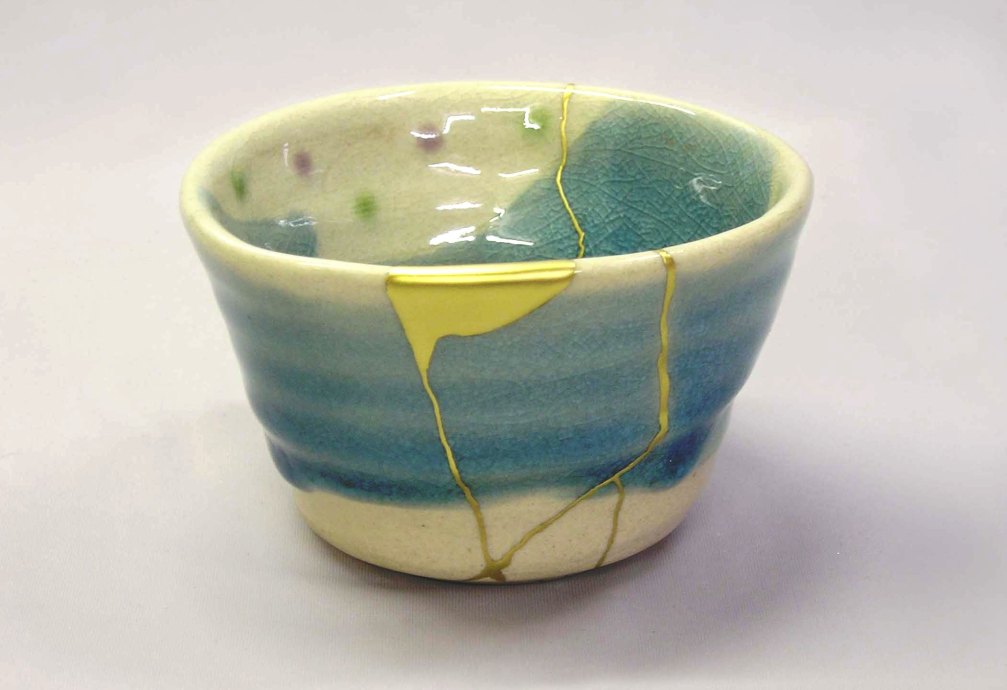
In today’s post, I will look at kintsukuroi and how it applies to lean. Kintsukuroi can be translated from Japanese as “to repair with gold”. This process converts broken ceramic pieces to beautiful art forms. The damaged piece is not thrown away, but is embellished by filling the cracks with a lacquer mixed with gold dust. The final product becomes more valuable than the original.

The Origin Story of Kintsukuroi:

There are several versions of the origin story.

Toyotomi Hideyoshi was a ferocious military ruler in Japan during the 1500’s. He was well known for his quick temper.

He hosted tea ceremonies which were well attended. He was particularly fond of a Korean Ido-style tea bowl. One day, a page handling the bowl accidentally dropped it and it broke into several pieces. Hideyoshi was furious at the page, and everybody feared for the poor page’s life.

One of the guests calmed the military ruler, and went away with the broken pieces of the bowl. He returned after a few days with a fully restored bowl that was “repaired with gold”. Hideyoshi was blown away by the beauty of the restored bowl, and he loved the repaired bowl even more. The repaired bowl was more valuable, more beautiful and became more cherished.

What can we learn from this?

I have been learning about Japanese culture for some time now and the concept of kintsukuroi fascinates me. The readers of my blog know that I enjoy connecting things together. I believe that the concept of kintsukuroi creates a new perspective on Kaizen.

As a lean leader, we should look at breaking the current process, and restoring it through process improvements (Kaizen). We are sometimes too close to the action that we fail to see the wastes in the process. We believe that the current process is adequate as is. We may not see opportunities to improve.

However, we should break apart the bowl, and restore it with gold. We should evaluate the process through the steps of ECRS:

  • Are there any steps we can Eliminate?
  • Are there any steps that we can Combine?
  • Are there any steps that we can Rearrange?
  • Are there any steps we can Simplify?

This is the basic idea of Kaizen. The new process should be more valuable than the old process, in that it has fewer wastes and it utilizes the available resources efficiently and effectively.

Each kintsukuroi process is unique. Similarly each process improvement activity is unique. One should understand the problem first and apply solutions. To understand the problem, one must break apart the process (bowl). Once the process is broken apart, one should utilize Kaizen thinking (gold lacquer mix) and put the process back together.

Always keep on learning…

If you enjoyed this post, you can read more here.

In case you missed it, my last post was What is my purpose?