What is the Sound of One Hand Clapping in Systems?

hand

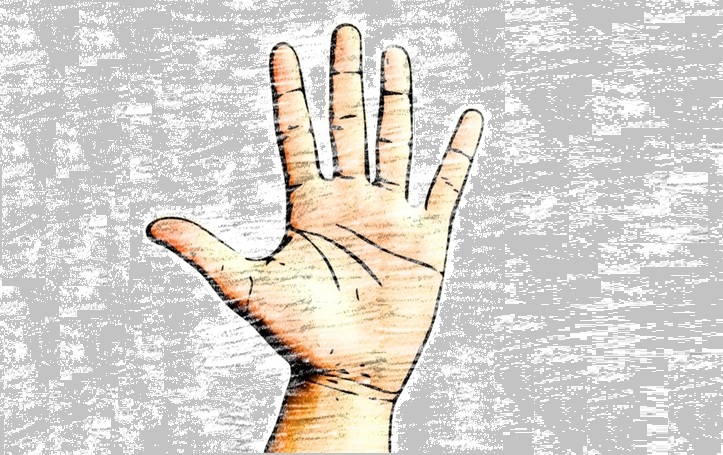
Zen koans are stories that are meant to make you think. These lead to questions that do not always have correct answers. The purpose of a koan is to challenge your mental model and go beyond what you thought to have understood. One of my favorite koans is – what is the sound of one hand clapping?

As a teenager, I used to make my right hand alone clap and proudly say “this is the sound of one hand clapping”. This made me feel smart. But I was missing the point of the koan. There is no correct answer, but there is a correct response- to think, to meditate on what you think you know so that you realize you do not truly know it all. I have read that the answer to the sound of one hand clapping is any sound you want it to be and also that the correct answer is silence with the gesture of one hand clapping.

I had a curious thought recently – what is the sound of one hand clapping in light of systems thinking? Simplistically put, systems thinking is the understanding that the whole is more than the sum of its parts. This concept was first put forward by Aristotle. Aristotle taught that the whole is made up of its parts but it still differs from the sum of its parts. One key concept in systems thinking is the emergent properties in a system. Emergent properties are the unique characteristics of a system that are generated only from the interaction of different parts in the system. The emergent properties constitute the “wholeness”. No part taken alone can generate the emergent property. An example of an emergent property is the ability of a bicycle to go from one point to another. This ability only happens when a rider interacts with the different parts of the bicycle like the pedal, the steering, etc. Sometimes these emergent properties are designed into the system and sometimes these emergent properties are not clear when the system is being designed. The reductionist thinking is to take things apart and ignore the interactions between the parts. This is also referred to as mechanistic thinking. This type of thinking leads to local optimization which ultimately results in an inferior system performance.

Coming back to the question – the sound of clapping only happens with two hands. However, just by having two hands, there is no sound of clapping. The sound only happens when the two hands interact with each other. One hand alone does not generate a “half clap” such that two hands creates a “full clap” as the sum of two “half claps”. The two hands have to physically come in contact with certain force, and this generates the sound of clapping. The sound is an emergent property. Looking at the sound of one hand clapping is reductionist thinking. The emergent property of the sound of clapping come when two hands are taken together and the interaction understood.

Dr. Deming has talked about managing people from a systems view. If there are two people, A and B, then the true capability from these two people working together is not simply A + B. The true capability is A + B + AB – E, where AB is the interaction between A and B, and E is an error term I inserted to represent any noise that may arise due to the interaction with the environment. The most important role of a manager is not to manage people, but to manage the interactions between the people, and make it easy for them to do their job.

I will finish off with the koan of the sound of one hand clapping.

The master of Kennin temple was Mokurai, Silent Thunder. He had a little protege named Toyo who was only twelve years old. Toyo saw the older disciples visit the master’s room each morning and evening to receive instruction in sanzen or personal guidance in which they were given koans to stop mind-wandering.

Toyo wished to do sanzen also.

“Wait a while,” said Mokurai. “You are too young.”

But the child insisted, so the teacher finally consented.

In the evening little Toyo went at the proper time to the threshold of Mokurai’s sanzen room. He struck the gong to announce his presence, bowed respectfully three times outside the door, and went to sit before the master in respectful silence.

“You can hear the sound of two hands when they clap together,” said Mokurai. “Now show me the sound of one hand.”

Toyo bowed and went to his room to consider this problem. From his window he could hear the music of the geishas. “Ah, I have it!” he proclaimed.

The next evening, when his teacher asked him to illustrate the sound of one hand, Toyo began to play the music of the geishas.

“No, no,” said Mokurai. “That will never do. That is not the sound of one hand. You’ve not got it at all.”

Thinking that such music might interrupt, Toyo moved his abode to a quiet place. He meditated again. “What can the sound of one hand be?” He happened to hear some water dripping. “I have it,” imagined Toyo.

When he next appeared before his teacher, Toyo imitated dripping water.

“What is that?” asked Mokurai. “That is the sound of dripping water, but not the sound of one hand. Try again.”

In vain Toyo meditated to hear the sound of one hand. He heard the sighing of the wind. But the sound was rejected.

He heard the cry of an owl. This also was refused.

The sound of one hand was not the locusts.

For more than ten times Toyo visited Mokurai with different sounds. All were wrong. For almost a year he pondered what the sound of one hand might be.

At last little Toyo entered true meditation and transcended all sounds. “I could collect no more,” he explained later, “so I reached the soundless sound.”

Toyo had realized the sound of one hand.

Always keep on learning…

In case you missed it, my last post was Never Let a Mistake Go To Waste.

The Forth Bridge Principle:

scotland-2016-aerial-edinburgh-forth_bridge

The Forth Bridge is a famous railroad bridge in Scotland and is over 125 years old. It needs painting to fend off rust. Albert Cherns, the late famous social scientist who founded the Department of Social Sciences at Loughborough University, identified the Forth Bridge principle as part of the nine principles for designing a sociotechnical system. He also referred to this as “the principle of Incompletion”.

The main idea is that the Forth Bridge was never fully freshly painted – it was always incomplete. The posse of painters started at the Midlothian end, and by the time they reached the Fife end, the Midlothian end would require repainting. In Cherns’ words;

Design is a reiterative process. The closure of options opens new ones. At the end, we are back at the beginning.

As soon as design is implemented, its consequences indicate the need for redesign.

This concept is further elaborated in the book, “Knowledge Management in the SocioTechnical World” edited by Coakes, Willis et al;

Cherns emphasizes that all periods of stability are in effect only temporary periods of transition between one state and another.

Cherns identified the nine principles in his 1976 paper “The Principles of Sociotechnical Design”. I will discuss this list further in a future post. He called all organizations as sociotechnical systems and called for joint optimization of the technical and social aspects. The systems are dynamic and always changing. Cherns also stated that there is no such thing as a final design of the system. The system has to be continuously changed to cope with the impact of changes in the environment the system is in and the impact of changes within the system. This is the idea behind the Forth Bridge principle.

The Forth Bridge principle reminds me of the concept of kaizen and standards in the Toyota Production System. The concept of kaizen is about never being satisfied with the status quo, and improving the process. The concept of standards is about having a high definition of all activities. Dr. Steven Spear in his HBR article with H. Kent Bowen “Decoding the DNA of the Toyota Production System talked about the first rule as – All activities are highly specified in terms of content, sequence, timing and outcome. The standard consists of three elements. They are;

  • Takt time
  • Work sequence
  • Standard Inventory

Taiichi Ohno, the father of Toyota Production System talked about the relationship of Kaizen and Standards as;

“Without standards, there can be no kaizen”.

The problem with standards is that it can create a need to maintain the status-quo. This is against the principle of kaizen. Cherns wrote about the “stability myth” in 1987;

“The stability myth is reassuring but dangerous if it leaves us unprepared to review and revise.”

It is important that we realize the concept of the Forth Bridge principle and appreciate it. The system design is never finished, and we have to keep on improving it. The system is always incomplete and it is our duty to keep on making things better – make the standard, review the standard, make it better, and repeat. This is a Zen-like lesson.

I will finish this post with a story about the never ending quest.

After years of relentless training, a martial arts student has finally reached a pinnacle of achievement in the discipline. He knelt before his sensei in a ceremony to receive the highly coveted black belt.

“Before granting the belt, you must pass one more test,” the sensei solemnly tells the young man.

“I’m ready,” responds the student, expecting perhaps one more round of sparring.

“You must answer the essential question: What is the true meaning of the Black Belt?”

“Why, the end of my journey,” says the student. “A well-deserved reward for my hard work.”

The master waits for more. Clearly, he is not satisfied. The sensei finally speaks: “You are not ready for the Black Belt. Return in one year.”

As the student kneels before his master a year later, he is again asked the question, “What is the true meaning of the Black Belt?”

“It is a symbol of distinction and the highest achievement in our art,” the young man responds. Again the master waits for more. Still unsatisfied, he says once more: “You are not ready for the Black Belt. Return in one year.”

A year later the student kneels before his sensei and hears the question, “What is the true meaning of the Black Belt?”

This time he answers, “The Black Belt represents not the end, but the beginning, the start of a never-ending journey of discipline, work and the pursuit of an ever higher standard.”

“Yes,” says the master. “You are now ready to receive the Black Belt and begin your work.”

Always keep on learning…

In case you missed it, my last post was Sideroxylon Grandiflorum and the Unintended Consequences Phenomenon.

Sideroxylon Grandiflorum and the Unintended Consequences Phenomenon:

dodo-trees

Recently, I came across the story of Sideroxylon grandiflorum (tambalacoque), a tree valued for its timber in Mauritius. In the 1970’s it was thought that this species of tree was becoming extinct. According to University of Wisconsin ornithologist Stanley Temple, there were about 13 trees remaining in Mauritius in the late 1970’s. In his account, these trees were over three hundred years old. He was puzzled by the near extinction of this species of tree. He finally “figured it out” and wrote a paper detailing his hypothesis. He concluded that the near extinction of Sideroxylon grandiflorum was caused by the extinction of the famous bird species – the Dodo. He hypothesized that the tambalacoque fruits have endocarps (shell) and the seeds germinated by passing through the digestive tracts of the Dodo bird. With the extinction of the Dodo bird, the germination of any new seeds stopped, and this was leading to the near extinction of the tambalacoque trees. Temple then tried using wild turkeys in place of the Dodo birds for germination of tambalacoque tree seeds. Even this was not ideal, since the wild turkeys were not as effective as the Dodo birds.

Stanley Temple’s paper was later contested by others, and they were able to show that the seeds could be germinated in the open without the aid of any animals or birds. They argued that the trees were not near extinction and that there were several hundred trees (some younger than three hundred years) in the wild. There was indeed a decline in the tambalacoque tree population and this was caused by large-scale deforestation for sugar cane production, and the introduction of several new species to the island.

Stanley Temple’s paper would have been the perfect case of unintended consequences if it was not challenged by peers. Still, it does give us food for thought. Unintended consequences are events or outcomes from a previous action that was not anticipated at the time of the previous action. These outcomes may sometimes be beneficial and sometimes be detrimental. An example of beneficial result is finding that aspirin, which was originally intended for pain relief, was found to be an excellent anticoagulant. An example of detrimental result is the story of the “A380 Airbus” which was touted as being the “quiet airplane”. Emirate Airline started using A380 Airbus and they received complaints from the travelers and the airline staff alike about it being too quiet. Now everyone could hear “everything” like every crying baby, snoring passenger and flushing toilet.

One of the first people to detail unintended consequences and identify the potential causes was Robert K Merton. He was an American Sociologist and Economist (1910-2003). Merton is credited with creating phrases such as “role model”, and “self-fulfilling prophecy”. He detailed five causes in his 1936 paper “The unanticipated Consequences of Purposive Social Action”;

  1. Lack of adequate knowledge – “sole barrier to correct anticipation.”
  2. Error in appraisal of the current situation – “assumption that actions which have in the past led to the desired outcome will continue to do so.”
  3. Imperious immediacy of interest – “paramount concern only with the foreseen immediate consequences which excludes the consideration of further or other consequences of the same act.”
  4. Basic Values – “no consideration of further consequences because of the felt necessity of certain action enjoined by certain fundamental values.”
  5. Self-defeating Prophecies pertaining to human conduct – public predictions of future social developments fail because the prediction itself changes the initial course of developments. This flip side of this idea was later developed by Melton as the self-fulfilling prophecy.

I have identified four ways to tackle unintended consequences;

  • Think in term of Systems:

Thinking in terms of systems helps you in anticipating the consequences. Thinking in terms of systems makes you look at the parts and how the parts interact with each other. This forces us to look at the interconnectedness of the parts and evaluate potential consequences.

  • Welcome and Encourage Diversity in Thinking:

One of the ways to deal with the unintended consequences phenomenon is to welcome diverse and varying perspectives for decision making. In Toyota Production System, Toyota talks about gaining consensus. Toyota UK Blog talks about this;

Nemawashi is the first step in the decision making process. It is sharing of information about the decisions that will be made, in order to involve all employees in the process. During the nemawashi, the company is seeking for the opinion of the employees about the decision.

  • Challenge your Mental Models:

Jay Forrester, an American Systems Scientist, argues that most social organizations, from corporations to cities, represent a far higher level of complexity and abstraction than most people can grasp on their own. And yet corporate and government leaders of all sorts persist in making decisions based on their own “mental models”. The mental models become the limitations no matter how intuitive and comforting they are. We need to challenge our current mental models and look for information challenging them.

  • Share Information, Knowledge and Wisdom:

Russel Ackoff, talks about the difference between information, knowledge and wisdom. Information is data with context, knowledge is gaining useful meaning from the information, and wisdom is knowing what to do with the knowledge in familiar and new environments. The sharing of information, knowledge and wisdom ensures that you are prepared and have a redundant support system. Keep learning and encourage learning.

I will finish off with possibly my favorite unintended consequences story. This came from Dr. Ariely;

In 1976, the average CEO’s pay was about 36 times the average employees pay. In 1993, the average CEO was paid about 131 times as much. This prompted the Federal Securities Regulators to force companies to reveal how much their top executives were being paid. The intent was that this would slow down or even reduce the increase in the top executives’ pay since this information would be public and the top executives will be pressured by the media and the citizens.

However, this had the opposite effect. When the information on the pay was made public, the CEOs started comparing their pay, and started demanding more pay. In “Predictably Irrational”, Ariely says that the average CEO now makes about 369 times the average employees pay – about three times more than when the information was made public.

Always keep on learning…

In case you missed it, my last post was The Big Picture of Problem Solving.

Respect for People in Light of Systems Thinking:

rc

Respect for People is one of the two pillars in the Toyota Way and in today’s post I will be looking at Respect for People in the light of ideas from the late great Systems Thinker, Russell Ackoff. This post is inspired by Ackoff’s teachings.

Back in the old days (Renaissance period onwards – 1400’s) humans knew little and thought that they knew everything. There was a lot of stress on “Analysis” and “cause and effect” thinking. The thinking behind “Analysis” is that one learns a phenomenon by taking things apart. This was seen as the only way to understand the universe – by breaking down things and studying each part. This fostered the idea of cause and effect thinking. Every relationship was seen as a cause and an effect, in a linear fashion. In Ackoff’s words, this led to interesting doctrines;

The commitment to cause-and-effect thinking led to … if we want to explain a phenomenon, all we have to do is find its cause. To further explain that cause, we simply treat it as an effect and find its cause. But is there any end to this causal regression? If the universe can be completely understood, there had to be a first cause—and this was the official doctrine as to why God exists. God is the only thing in the universe that could not be explained because God was the first cause.

This type of linear thinking led us to thinking of the world as a clockwork machine. The Industrial Revolution introduced the machine age where work could be mechanized. Work was seen in a reductionist viewpoint as a simple transformation of matter through energy. Frederick Taylor, proponent of Scientific Management, introduced the ideas of improving efficiency through principles of Industrial Engineering. Work could now be broken down into basic elements – analysis, and each element can be focused on to improve it. The modern factory consisted of machines and humans engaged in these basic tasks in a clockwork fashion. In Ackoff’s words;

The machines and people were then aggregated into a network of elementary tasks dedicated to the production of a product—the modern factory. In the process of mechanizing work, however, we made people behave as though they were machines. We dehumanized work.

This goes against the idea of Respect for Humanity. Toyota teaches that its production system is a Thinking Production System, and that their operators are not just a pair of hands.

Ackoff concludes that the idea of free will, introduction of the Uncertainty principle and Systems Thinking launched the Systems Age in the first half of Twentieth Century. In Systems Thinking, the approach of “Synthesis” was introduced. “Synthesis” uses the opposite approach to “Analysis”.” Synthesis” is the idea of putting things together to understand the system. In Ackoff’s words;

The first step of synthesis is to determine the larger system of which the system to be explained is a part. The second step is to try to understand the larger system as a whole. The third step is to disaggregate the understanding of the whole into an understanding of the part by identifying its role or function in the containing system.

If Analysis leads to Knowledge, Synthesis leads to Understanding! However, this also meant that we may never be able to understand the whole universe. The concept of Synthesis forces us to look at the impact of the environment and each factor and how they interact with each other. This was missing in Analysis. This idea led to the understanding that an organization is not a simple mechanistic clockwork where people are mere forms of “living machinery”. An organization in the light of Systems Thinking becomes a Social Technical system. Ackoff advises us;

Most managers are still acting as though the corporation is a mechanism or an organism, not a social system. Although we don’t normally treat machines as organisms, one legacy from the Machine Age is that we have a tendency to treat organisms as machines, and even social systems as machines. That has a very limited usefulness, but it is not nearly as useful as looking at a social system as a social system.

This provides further insight into the concept of Respect for People in my opinion. Respect for People is not thinking in terms of the Machine Age. It is about looking at the social system and seeing workers as people who can think and come up with better ways of doing things, and where the system gains from their input.

Final Words:

I encourage the readers to read or watch anything that is available from Russell Ackoff. I will finish off with a “Zen” story from Japan that talks about the harmony of the whole;

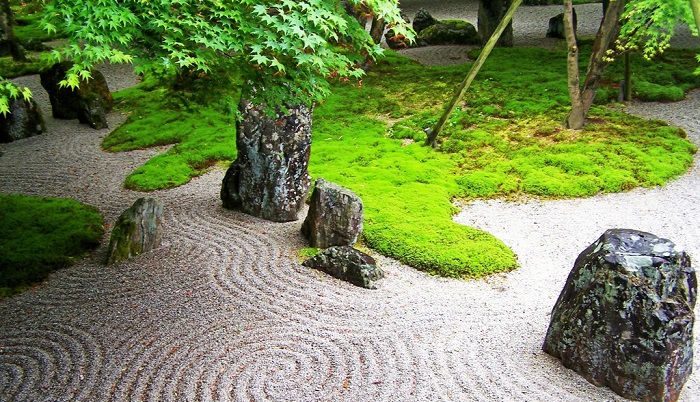
There’s a story about the famous rock garden at Ryōanji temple. The story goes that when the garden was finished, the designer showed it to the priest and asked him what he thought.

The priest was delighted. “It’s magnificent!” he said. “Especially that rock there!”

The garden designer immediately removed the rock. For him, the harmony of the whole was paramount.

Always keep on learning…

In case you missed it, my last post was The Value of Silence.