
Sideroxylon Grandiflorum and the Unintended Consequences Phenomenon:

dodo-trees

Recently, I came across the story of Sideroxylon grandiflorum (tambalacoque), a tree valued for its timber in Mauritius. In the 1970’s it was thought that this species of tree was becoming extinct. According to University of Wisconsin ornithologist Stanley Temple, there were about 13 trees remaining in Mauritius in the late 1970’s. In his account, these trees were over three hundred years old. He was puzzled by the near extinction of this species of tree. He finally “figured it out” and wrote a paper detailing his hypothesis. He concluded that the near extinction of Sideroxylon grandiflorum was caused by the extinction of the famous bird species – the Dodo. He hypothesized that the tambalacoque fruits have endocarps (shell) and the seeds germinated by passing through the digestive tracts of the Dodo bird. With the extinction of the Dodo bird, the germination of any new seeds stopped, and this was leading to the near extinction of the tambalacoque trees. Temple then tried using wild turkeys in place of the Dodo birds for germination of tambalacoque tree seeds. Even this was not ideal, since the wild turkeys were not as effective as the Dodo birds.

Stanley Temple’s paper was later contested by others, and they were able to show that the seeds could be germinated in the open without the aid of any animals or birds. They argued that the trees were not near extinction and that there were several hundred trees (some younger than three hundred years) in the wild. There was indeed a decline in the tambalacoque tree population and this was caused by large-scale deforestation for sugar cane production, and the introduction of several new species to the island.

Stanley Temple’s paper would have been the perfect case of unintended consequences if it was not challenged by peers. Still, it does give us food for thought. Unintended consequences are events or outcomes from a previous action that was not anticipated at the time of the previous action. These outcomes may sometimes be beneficial and sometimes be detrimental. An example of beneficial result is finding that aspirin, which was originally intended for pain relief, was found to be an excellent anticoagulant. An example of detrimental result is the story of the “A380 Airbus” which was touted as being the “quiet airplane”. Emirate Airline started using A380 Airbus and they received complaints from the travelers and the airline staff alike about it being too quiet. Now everyone could hear “everything” like every crying baby, snoring passenger and flushing toilet.

One of the first people to detail unintended consequences and identify the potential causes was Robert K Merton. He was an American Sociologist and Economist (1910-2003). Merton is credited with creating phrases such as “role model”, and “self-fulfilling prophecy”. He detailed five causes in his 1936 paper “The unanticipated Consequences of Purposive Social Action”;

  1. Lack of adequate knowledge – “sole barrier to correct anticipation.”
  2. Error in appraisal of the current situation – “assumption that actions which have in the past led to the desired outcome will continue to do so.”
  3. Imperious immediacy of interest – “paramount concern only with the foreseen immediate consequences which excludes the consideration of further or other consequences of the same act.”
  4. Basic Values – “no consideration of further consequences because of the felt necessity of certain action enjoined by certain fundamental values.”
  5. Self-defeating Prophecies pertaining to human conduct – public predictions of future social developments fail because the prediction itself changes the initial course of developments. This flip side of this idea was later developed by Melton as the self-fulfilling prophecy.

I have identified four ways to tackle unintended consequences;

  • Think in term of Systems:

Thinking in terms of systems helps you in anticipating the consequences. Thinking in terms of systems makes you look at the parts and how the parts interact with each other. This forces us to look at the interconnectedness of the parts and evaluate potential consequences.

  • Welcome and Encourage Diversity in Thinking:

One of the ways to deal with the unintended consequences phenomenon is to welcome diverse and varying perspectives for decision making. In Toyota Production System, Toyota talks about gaining consensus. Toyota UK Blog talks about this;

Nemawashi is the first step in the decision making process. It is sharing of information about the decisions that will be made, in order to involve all employees in the process. During the nemawashi, the company is seeking for the opinion of the employees about the decision.

  • Challenge your Mental Models:

Jay Forrester, an American Systems Scientist, argues that most social organizations, from corporations to cities, represent a far higher level of complexity and abstraction than most people can grasp on their own. And yet corporate and government leaders of all sorts persist in making decisions based on their own “mental models”. The mental models become the limitations no matter how intuitive and comforting they are. We need to challenge our current mental models and look for information challenging them.

  • Share Information, Knowledge and Wisdom:

Russel Ackoff, talks about the difference between information, knowledge and wisdom. Information is data with context, knowledge is gaining useful meaning from the information, and wisdom is knowing what to do with the knowledge in familiar and new environments. The sharing of information, knowledge and wisdom ensures that you are prepared and have a redundant support system. Keep learning and encourage learning.

I will finish off with possibly my favorite unintended consequences story. This came from Dr. Ariely;

In 1976, the average CEO’s pay was about 36 times the average employees pay. In 1993, the average CEO was paid about 131 times as much. This prompted the Federal Securities Regulators to force companies to reveal how much their top executives were being paid. The intent was that this would slow down or even reduce the increase in the top executives’ pay since this information would be public and the top executives will be pressured by the media and the citizens.

However, this had the opposite effect. When the information on the pay was made public, the CEOs started comparing their pay, and started demanding more pay. In “Predictably Irrational”, Ariely says that the average CEO now makes about 369 times the average employees pay – about three times more than when the information was made public.

Always keep on learning…

In case you missed it, my last post was The Big Picture of Problem Solving.
Ten Things I Learned from The Walking Dead

wd

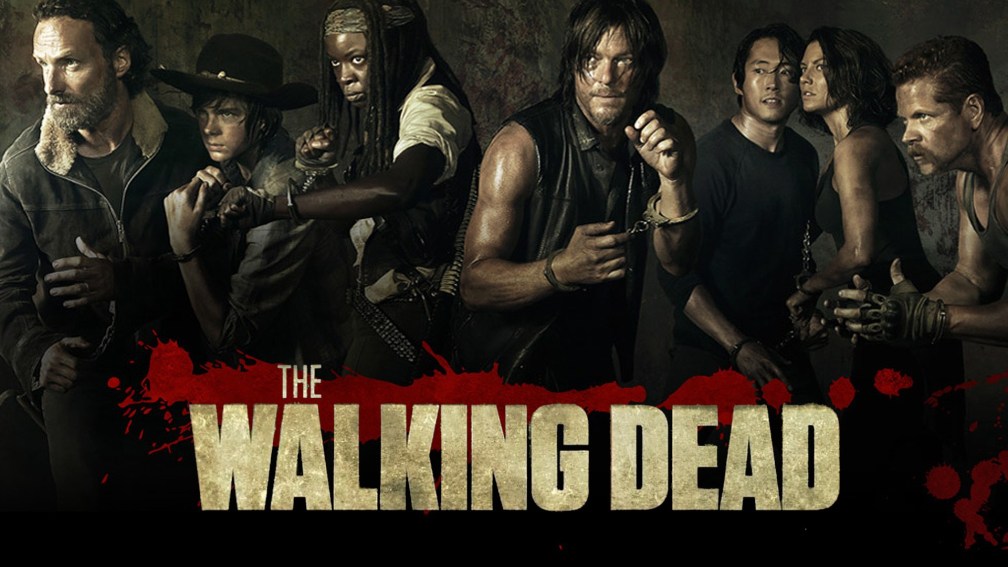
The Walking Dead is one of the most successful TV shows in America. The story follows Rick Grimes and his group of friends and family in a Zombie apocalypse. I got hooked onto it last year and binge watched all the available seasons on Netflix with my wife. I have come to realize that The Walking Dead can teach you one or two things about Management. Here is my list of 10 things I learned from The Walking Dead. I am hopeful that you can also learn to survive the “problems apocalypse” in your work or life.

  • Observe and let the patterns emerge:

The whole world is falling apart. Nobody knows what to do. Everybody is turning into zombies. It is chaos everywhere. Have you felt that sometimes at work everything is falling apart? There is one problem after the other. What is going on?

You have to let the patterns emerge to start making sense of things. At first Rick and his group thought that you have to be bitten for a person to become a zombie. It was later learned that any person once he dies becomes a zombie. Similarly, they learned that a zombie can be “killed” by destroying its brain. The group has learned to observe and let the patterns emerge! Once the patterns emerge, you can start creating basic rules to survive.

  • This too shall pass:

Rick and his group have learned the important lesson – this too shall pass. If you see a horde of zombies coming your way or if you are surrounded by zombies, panicking will not help. Understand that the problem seems insurmountable at the time, but the problem too shall pass. Each problem is an opportunity that you can learn from.

  • Learn to adapt/ keep learning new things to survive:

Rick’s group contains people from different walks of life. Glenn, a major character was a pizza delivery boy prior to the zombie apocalypse. Glenn learned the superior zombie survival skills to emerge as a leader in his group. Rick’s group had to learn to adapt to live in the new world. They had to always keep learning new things to survive, such as fighting, using guns, hunting etc. Similarly, to overcome stagnation apocalypse at your work or in life, you have to keep learning new things.

As Dr. Deming may or may not have said:

“It is not necessary to adapt/change. Survival is not mandatory.”

  • Teamwork:

The only way Rick’s group is able to keep on surviving is because of only one thing – teamwork. Each person in his group is important. They have appointed Rick as their leader, and they work together to survive. Rick’s group goes out from their haven to the outside world in order to scavenge food and necessities to survive. They risk their lives to do this, and they are able to do it only because of teamwork. Nobody tries to sub-optimize. They know that it is not about one person, and that it is about the group. Anybody trying to look out only for themselves gets killed. It is about system optimization!

  • Rotate/follow-up:

Even if you are good at what you do, you need to rotate your job. You need experts but your team thrives from cross-training. Especially on an assembly line, rotation of the job is important to stay alert. If you are not on the assembly line, request review of what you do. You will learn more that way. Give and take feedback! Remember this, when you are on a watch for zombies, always rotate for survival.

  • Ground Yourself:

Life can be stressful. Your work can be stressful. It is easy to lose hope. You need to learn to manage stress. Find joy in the little things of life. You have to learn methods to ground yourself back to your place of confidence and serenity. The lesson of grounding yourself is very important in martial arts disciplines such as Aikido. Rick’s group has enemies in both zombies and remaining predatory human survivors. Rick’s group knows that losing your cool can get yourself killed.

  • There is almost always a way:

No matter how unsolvable a problem is, there is always a way. Sometimes, there is more than one way. Rick’s group has been in several situations where they felt like there is no way out. But always they found a way out.

Something that I have always wondered while watching the show is– why not climb a tree to escape from the zombies? Zombies do not climb trees.

  • Make sure everybody knows the plan:

One thing that Rick is really good at is that he lets his group know what the plan is. This is important in order to survive. Rick has laid down the rules, and everybody is happy to adhere to the rules. In the show, whenever the leader does not share his plans (e.g. the governor, a negative character in the show) it always ends up bad for his group. When everybody is working towards the common goal, you reach your goal faster, better and cheaper. You need to let your team know the what, the why, the who, the when and the how. Keep your communication lines open and your plans transparent.

  • Develop your people:

Rick is wise to know that you need to develop your people. Almost all the members in his group started off as scared and unsure. For example Carol, a strong character and care taker in his group, was initially portrayed as meek and defenseless. Carol has become a resourceful and strong leader in her own right. She provides counsel to Rick with difficult decisions and protects the group from outside dangers.

Rick helped develop his group members to be strong and able to handle themselves in an emergency. Rick has developed his group with a strong purpose – survival of the entire group. Rick is able to let others lead when required. Rick knows that he cannot survive without his group.

  • Don’t rest on your laurels:

This is most likely the largest of Rick’s pet peeves. He hates the idea of being complacent. His group has been through a lot, but he does not want them to drop their guard. One misstep can lead to a big loss. He is keen on growing themselves and being ready for what comes next. Today’s success does not guarantee tomorrow’s success.

Always keep on learning, and remember to run for the tree when the zombies come…

Who is right?

132

I came across a great graphic that I thought I should share.

right

The graphic above shows the importance of understanding the perception of the other party involved. This helps us in understanding their viewpoint.

It is also important as a leader in your organization that when you are trying to spread your vision, to make sure you understand how your employees view your vision. The view at the top of the organization may not match the view at the bottom of the organization.

The view at the top of the organization may not match the view at the bottom of the organization.

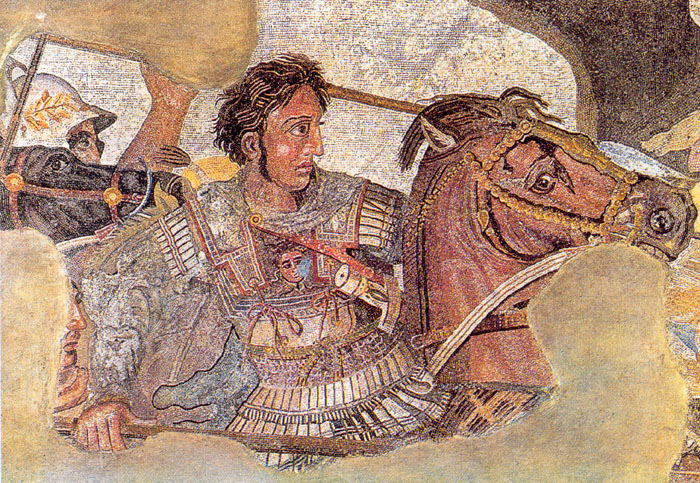
Alexander the Great and the monk:

There is a great story I heard from Devdutt Pattanaik, that explains this really well. I have paraphrased it.

Alexander the great reached India after conquering a lot of nations. On his path to conquer India, he met a monk. The monk was sitting on a rock enjoying the beauty of nature. The monk was naked, and belonged to a sect of Jainism.

Alexander watched the monk for a while. The monk was just sitting and smiling, totally oblivious of Alexander watching him.

“What are you doing?” Alexander asked the monk.

“I am enjoying being nothing.” the monk looked at Alexander, and said.

“What a fool to sit there and do nothing?” Alexander laughed at him. Alexander saw the monk as wasting his life away, doing nothing.

“What are you doing?” the monk asked Alexander.

“I am conquering the world”, Alexander replied with great pride.

Now the monk started laughing at Alexander.

“What a fool to pursue such a futile effort?” the monk thought to himself.

The next time, you face an opposing view; try to understand where the other party is coming from. What is his viewpoint? Are you the monk or Alexander?

Always keep on learning…

In case you missed it, my last post was Lean and the Mountain.