

In today’s post, I am refining my thoughts on reentry as a wonderful tool to tackle cognitive blind spots. A common saying goes that a fish does not know it is in water. The phrase is usually offered as a comment on unexamined assumptions. The fish is fully immersed in a medium that makes its life possible, and yet that very immersion renders the medium invisible. We the observers, standing outside the water, can easily point to what the fish cannot see.
The metaphor is useful, but only if we do not misunderstand what it implies. The problem is not ignorance in the sense of missing information. The problem is immersion, being inside the loop and not being aware of it. In other words, I am positing that cognitive blind spots arise not because we lack data, but because we fail to notice the conditions under which noticing itself takes place. We assume that observation is independent of the observer, and in doing so, we negate the very act that makes observation possible.
This negation is not accidental. It is built into many of our conceptual frameworks.
Cognitive Blind Spots and the Negated Observer:
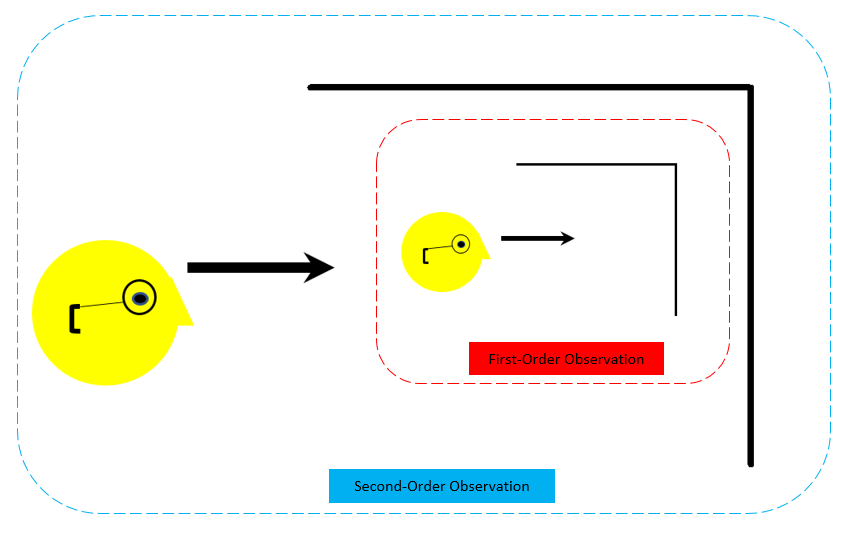
In this view, a cognitive blind spot appears when a distinction is treated as if it exists independently of the act that produced it. We speak as though there is an object “out there” and an observer “in here,” and as though the observer merely reports what is already the case. This framing quietly removes the observer from the scene by denying that the act of description must re-enter the conditions it describes.
Once the observer is negated, the distinction hardens and begins to appear as a feature of the world itself. What began as a practical cut in experience is mistaken for something given rather than constructed. At that point, the blind spot is complete. There is nothing left to question because the conditions of questioning have disappeared.
This is precisely where re-entry becomes relevant.
Re-entry as a Mechanism for Error-correction:
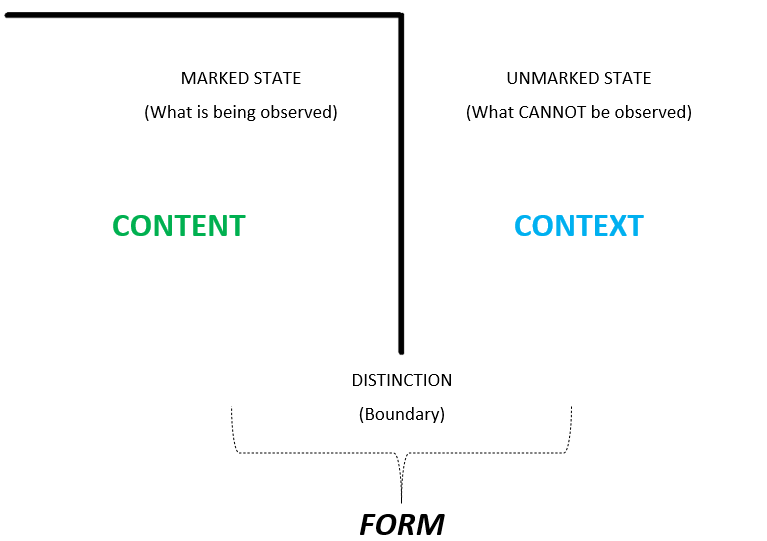
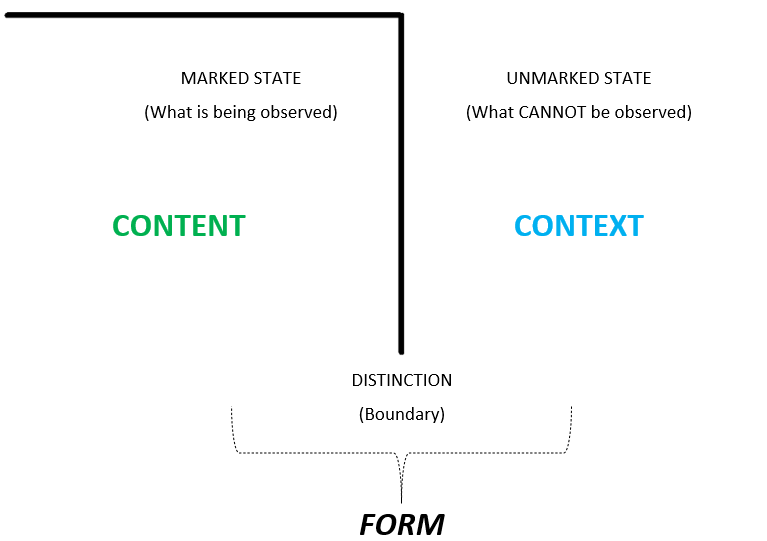
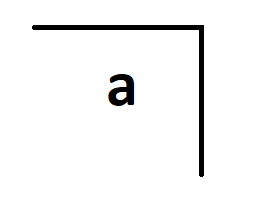
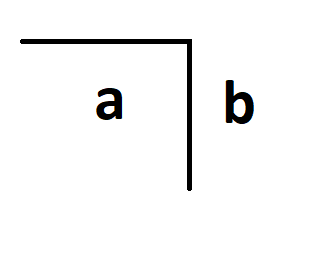
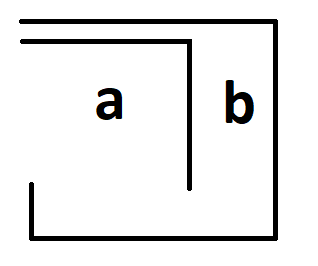
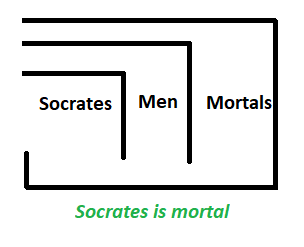
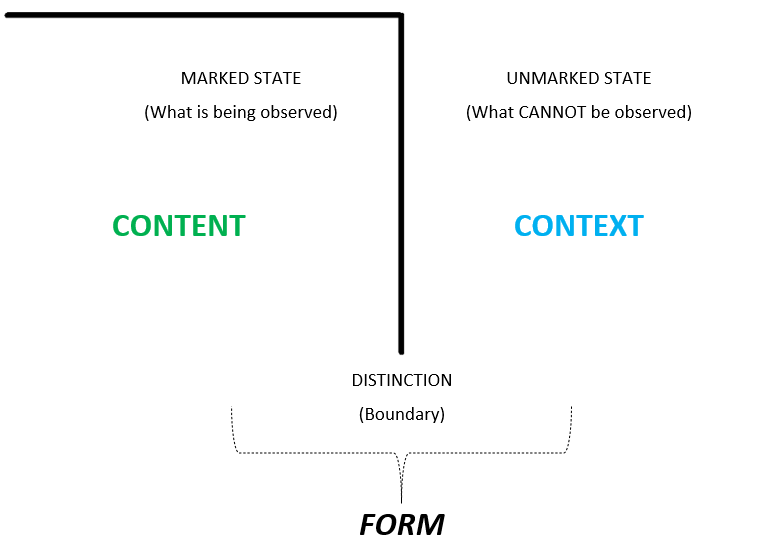
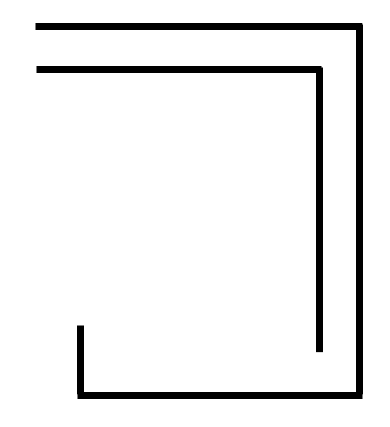
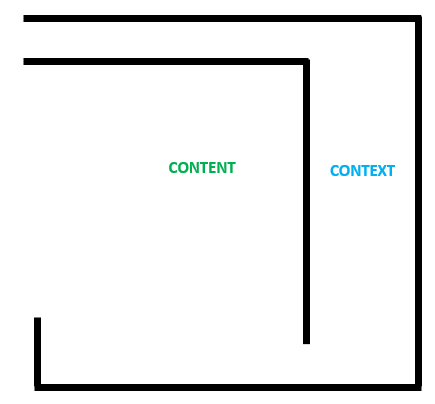
Spencer-Brown’s notion of re-entry does not simply add complexity for its own sake. It forces a distinction to turn back upon itself. A form re-enters the space it distinguishes. The marked state is no longer allowed to pretend that the unmarked state is irrelevant or absent. Reentry is an attempt to bring the act of distinction itself into view.
Re-entry is uncomfortable because it breaks the illusion of a clean separation. It exposes the fact that every distinction carries its own conditions inside it. What we thought was a stable category now reveals its dependence on an operation. This is why re-entry is such a powerful tool for revealing cognitive blind spots. It does not offer a better description of the world. It shows how our descriptions are made, and what they quietly exclude in order to function. Once this lens is applied, certain familiar structures begin to look less secure.
The Subject/Object Split and Being in the Water:
The subject/object dichotomy is one such structure that we can use to expand on this line of thinking. It assumes that there is a knowing subject on one side and a known object on the other, connected by representation. From a Heideggerian perspective, this is already a distortion. We are not subjects standing over against a world of objects. We are always already being in the world.
The fish is not first a subject and then later related to water as an object. Fish and water show up together. The relation is not secondary. It is constitutive. Remove the water and the fish does not remain as a fish that merely lacks an environment. It ceases to be what it is.
Re-entry makes this visible. When the observing system is reintroduced into the observation, the subject object split begins to collapse. What remains is participation, involvement, and structural coupling. Observation is no longer a neutral act. It is an activity performed from within the medium it seeks to describe. We will use this line of thinking to examine another familiar idea in philosophy from Charles S. Peirce.
The Triad and the Problem of Firstness:
Peirce’s triad of firstness, secondness, and thirdness is frequently described as dynamic and non-linear. However, when examined through the logic of distinction and re-entry, the triad reveals a fundamental instability. That instability is most clearly exposed in the notion of firstness.
Consider a simple example: a red apple. Its redness is firstness, the immediate quality that appears without reference or comparison. The apple itself, as a physical object that resists gravity and interacts with us, illustrates secondness. The recognition that the apple is a fruit, part of a category, and meaningful within a broader system of relations exemplifies thirdness. Even here, we see the dependence of firstness on context; its pure quality only becomes intelligible through interaction and relation.
Firstness is described as pure quality, pure possibility, or pure feeling, intended to stand prior to relation, reaction, or mediation. What follows from this is not only an empirical difficulty but also a logical one.
From a Spencer-Brown standpoint, nothing can appear without a distinction. A distinction simultaneously produces a marked state and an unmarked state. There is no marked state by itself, just as there is no distinction that does not also imply what it excludes. When one speaks of “good,” the notion of “not good” is already present as its context. “Good” by itself has no meaning. Even our most absolute categories depend on what they deny, as the invention of God quietly presupposes the invention of Evil.
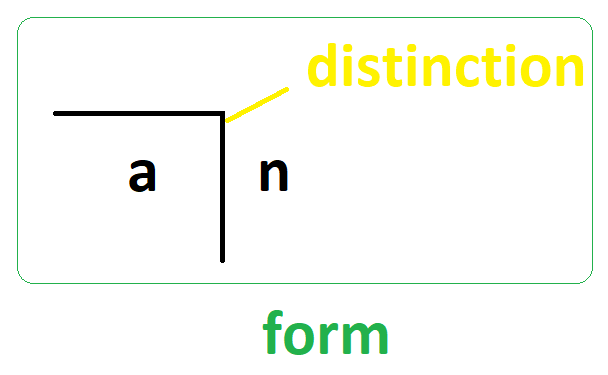
If firstness is spoken of at all, it has already been marked. The moment one says “firstness,” one has drawn a boundary around something and set it apart from what it is not. That act already presupposes contrast. It already invokes relation. It already smuggles in what Peirce would later call secondness and thirdness. The triad never leaves the water it claims to describe.
If there is no distinction, there is no information. Without contrast, there is nothing to register. Pure undifferentiated “information” is not information. It does not inform. It does not appear. It does not function. In that sense, pure firstness is not just unreachable in practice, it becomes incoherent in principle.
The problem is not one of interpretation but of structure. The triad depends on a move that collapses under re-entry. Firstness cannot exist in isolation, yet the triad requires it to.
Re-entry Exposes the Blind Spot:
Here is where the cognitive blind spot becomes “visible”. The triad purports to articulate the conditions of experience while remaining blind to the operation that makes them appear. Firstness is treated as if it could exist prior to distinction, while the very articulation of firstness performs the distinction it denies.
Re-entry forces the concept to confront its own conditions. When firstness re-enters the space of its own description, it collapses into relation. It cannot remain alone. It cannot stay pure. It cannot avoid invoking what it claims to precede.
In this sense, the triad is flatter than it appears. Not because it lacks movement, but because its movement never quite escapes the logic of classification. Re-entry reveals that the flow Peirce gestures toward is already constrained by the need to name and separate what is being described.
Final Words:
The point of this critique is not to replace one framework with another. It is to show how certain blind spots persist even in sophisticated theories. When distinctions are treated as if they precede the act of distinction, the observer disappears. When the observer disappears, responsibility disappears with it.
Re-entry restores that responsibility. It reminds us that our concepts are not mirrors of reality, but tools we use from within the world we inhabit. Like the fish in water, we do not escape the medium by describing it. We only learn to see it by noticing how our seeing works. That seems to be the deeper utility of re-entry. The goal is not to produce better categories, but to cultivate a deeper awareness of how categories emerge. It is not purity, but participation. It is not firstness untouched by relation, but the recognition that relation is always already present. Seeing the water does not mean leaving it. It means acknowledging that one was never outside it to begin with.
Stay curious and Always keep on learning…
Post script:
Further clarification on the following statement – Re-entry reveals that the flow Peirce gestures toward is already constrained by the need to name and separate what is being described.
Peirce presents the triad as something dynamic and flowing rather than static. Firstness flows into secondness, secondness into thirdness, and so on. However, when you apply re-entry, you see that this apparent flow is already limited by the act of naming the categories in the first place. The moment you say “firstness,” “secondness,” and “thirdness,” you have already separated what you claim is flowing. The movement is therefore happening inside a framework that has already been cut up by distinctions.
So the “flow” Peirce gestures toward is not free movement within experience itself. It is movement between pre-named compartments. Re-entry exposes that the triad cannot escape the logic of distinction because it depends on that logic to exist at all.
In other words, the triad looks process-oriented, but it still operates as a classificatory scheme. The flow is real only insofar as the categories have already been stabilized by naming and separation. That is the constraint.




 Harish's Notebook - My notes... Lean, Cybernetics, Quality & Data Science.