Of Mental Models and Internal Representations:

In today’s follow-up to last week’s post, I am exploring the concept of mental models and internal representations in the context of sensemaking. The term “mental model” is frequently used in business literature. I am utilizing the ideas of Martin Heidegger and Humberto Maturana to look at this deeper.

The traditional view in cognitive science has been that we construct internal representations or mental models that map external reality, and that this allows us to deal with the complexity thrown at us. Both Heidegger’s and Maturana’s ideas challenge this notion. In their view, rather than us having an internal representation, a copy of the world outside, we interact directly with the world in an embodied and experiential manner.

Heidegger’s view suggests that we are situated in this world within a specific time, space, and culture. We are beings in the world, not detached observers who construct representations to navigate it. Our primary mode of engaging with the world is practical and direct—what Heidegger terms “ready-to-hand.” For instance, consider a carpenter using a hammer. The carpenter does not mentally map the hammer’s properties while working; rather, they engage with it intuitively and fluidly for the task at hand. Representations of the hammer only arise when the hammer fails or is no longer functioning smoothly. At that point, the carpenter steps back and adopts a more reflective stance. Meaning emerges from the carpenter’s direct engagement with the hammer, which is influenced by the context of the task.

Heidegger wrote:

“The less we just stare at the hammer-thing, and the more we seize hold of it and use it, the more primordial does our relationship to it become.”

He elaborated:

“In our dealings, we experience the world not as a collection of objects and properties, but as a network of relations tied to our activity.”

This perspective emphasizes an embodied, experiential approach. Even if we detach ourselves to observe an object, our interaction with it remains experiential. In Heideggerian terms, we skillfully cope with our environment without relying on internal models or representations. The world itself becomes our model through direct engagement. Meaning is not internally calculated and then applied to the world; it emerges from our interaction with it. Our interaction is immediate and practical, not mediated by abstract mental models.

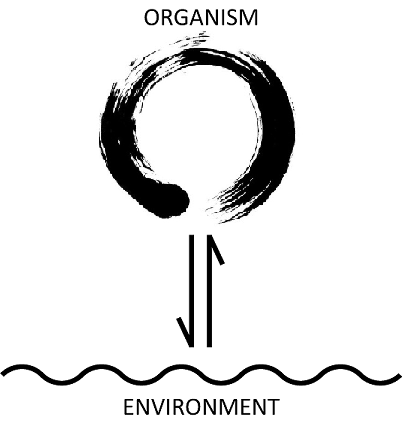
Similarly, Maturana along with Francisco Varela argue that we engage with the world based on our dynamic biological and experiential structures. Our understanding of an object like a hammer arises from past interactions. This experiential knowledge is embodied and emerges through action and interaction. Maturana and Varela reject the idea that our brains passively receive information and build representations of reality. Instead, organisms respond to environmental changes based on their internal structure, which evolves through ongoing interactions with their surroundings. This process does not rely on explicit rules or static patterns, such as in the case of mental models.

Our interpretative framework does not represent the world but operates as a closed system that continuously interacts with and updates based on the world. We respond dynamically to environmental changes, modifying our internal structure as necessary to ensure survival. Like Heidegger, Maturana and Varela emphasize that we bring forth the world through our activity rather than by constructing mental representations. Our experience of the world emerges from our embodied interactions with it.

Heidegger, Maturana and Varela reject the idea of internal representation primarily because they believe it contradicts the concept of an embodied mind. The mind is not independent of the body. They emphasize direct, embodied interaction with the world through the process of living. In fact, living itself is an act of cognition. There is no need for internal representations because meaning arises from our direct involvement in the world.

Perhaps this is one of the main reasons artificial intelligence will fall short of achieving sentience. AI relies on static internal representations and lacks the embodied, experiential living necessary for achieving sentience.

I will conclude with a quote from Maturana and Varela from their wonderful book, Tree of Knowledge:

 “We do not see what is ‘out there,’ but rather we bring forth a world through the process of living.”

Always keep on learning…

Note: Thank you Ivo Velitchkov for the corrections.

Informational Closure in the Human and the Machine:

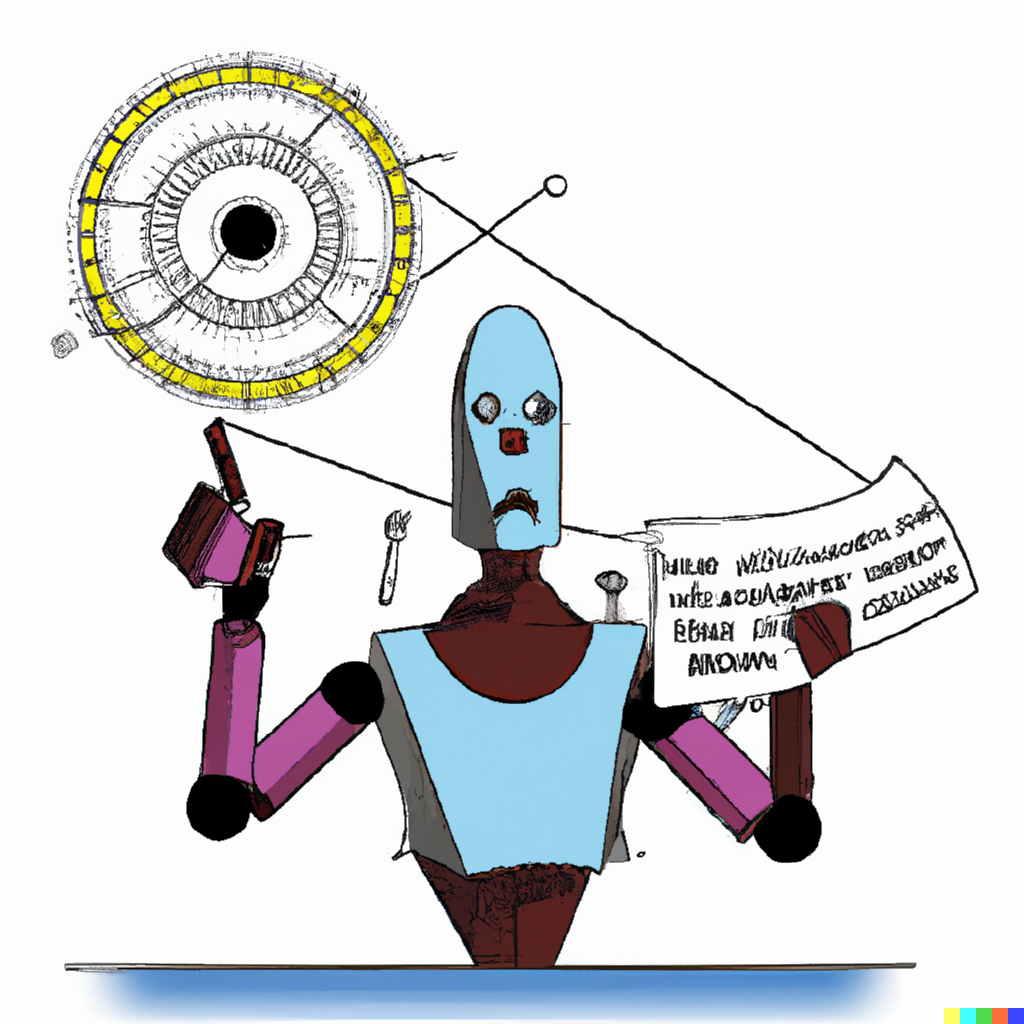
Art by Dall-E

One of the concepts that seems hard to grasp with regards to Cybernetics is the idea of “informational closure”. This idea was introduced by Ross Ashby as “informational tightness”. Ashby defined Cybernetics as the study of systems that are open to energy but closed to information and control – systems that are “information-tight”. Just like something that is described as water-tight, where water does not enter it from outside, information-tight refers to the condition where information does not enter it from outside.

Ashby also said that when a machine breaks, it changes its mind. Ashby referred to “machine” as a collection of parts that interact on one another and an “organization” as the specific way they are put together. For example, when a user pushes on a button, a door opens. The machine in this case is the button together with the wiring that can interact on the door together with the hinges. Ashby would say that Cybernetics in this case is the study of all possible actions that could have happened when the button was pushed, but did not. The cybernetician would ask why of all the possibilities, the action of the door opening happened? That specific action happened due to the specific manner the parts are connected to one another. If the parts were connected differently something else would have happened such as the door staying closed and refusing to open. I use the phrase “refusing to open” to tease the idea of the machine having a mind. As a nod to Descartes, in the case of this machine, its mind is indeed its body. It acts the way it does because of its structure. If there was a loose connection, then the machine would indeed change its mind, and refuse to open.

Here, the reader might be tempted to say that the user is providing an input or information via the press of the button. From a cybernetics standpoint, the user is actually perturbing the machine, and the machine’s behavior to this perturbation is to behave in a specific manner as dictated by its internal structure and organization. This is the reason why if there was a loose connection, the user pressing the button would result in a different behavior altogether. There is no information being received that is processed by the machine. The user could use the same pressing action on a keyboard and it would elicit an entirely different behavior, one that is consistent with the keyboard’s internal structure and organization. The machine’s mind is already made up, so to speak. If one were forced to define information in this regard, it would be something to the effect of “information is that which has the potential to elicit a response.” But here is the catch, what elicits a response is not the information, but the internal structure of the machine. In order to respond, the machine must have a closed organization. Information tight or informational closure means that the machine does not process information from outside. Instead, it is perturbed and this elicits a response based on its internal structure.

Two Chilean cyberneticians Humberto Maturana and Francesco Varela came up with the idea of autopoiesis that brought a new dimension to this. Their perspective is that humans are informationally closed as well. Maturana pointed out that prior to 1950’s, scientists and laypeople used to talk about neurons transferring or transmitting impulses. And after the advent of information theory by Claude Shannon and Warren Weaver, everything was viewed in a new light – that of information and entropy. The idea of conveying information from one person to the other, and information being processed is an attractive one. From a practical standpoint, one can see that this does not make sense. How many times have you conveyed information to another person only to have been misunderstood? As George Bernard Shaw once said, “The single biggest problem with communication is the illusion that it has taken place.”

We are obviously different than machines. We are not wired in order to be to elicited for specific responses. How we respond instead is based on a historical coherence. An easy example is how one responds to their own name. When we were infants, we were called our names, and we did not respond based on our then closed organization. With each repetition, we came to correlate the sound of the name to a response from us guided by reinforcement in the form of attention, love etc. The utterance of our name created a strong correlation in our behavior. There can still be instances where we may behave differently if our names are called such as in the case when your mother was using a stern voice. The history of interactions with others creates a stable response that we generally tend towards to. The more perturbations we have in the form of these interactions, the more we tend to respond in a particular manner. We have an embodied mind, unlike the machine. And unlike the machine, we are autonomous entities. We may still choose to change our mind for no good reason.

One of the examples that Maturana gave to further this idea is that of looking at a flower. The traditional way is to say that the light from the flower reaches our retina and this acts as information, and we see the flower. The informationally closed way is explained by Maturana as follows:

When light reflected by an object that the observer describes as external reaches the retina, an activity is initiated that is enclosed in the structure of the retina itself (and not in the structure of the source of light, nor in the structure of the world). The external world can only trigger such changes in the nervous system of an organism as are determined by the structure of the nervous system itself. The consequence is that there is no possible way, in principle, for the external world to communicate itself in its primordial, true form to the nervous system.

In other words, the flower does not inform the nervous system that it is a flower. Instead, the nervous system constructs an experiential reality of “flower” based on its own structure. It should refer to itself in order to make sense. This aligns with the view that each of us uniquely experience the world. What the color blue is? or what the sound of a hand clap is? – are all different for each of us, and this is based on our history of interactions and our closed interpretative framework. This brings attention to the essential point that what we experience is only one version of a human reality. To exist in a social realm requires us to be respectful of the other participants.

Stay safe and always keep on learning…

In case you missed it, my last post was On the Ambiguities in Complexity:

Maturana’s Aesthetic Seduction:

In today’s post, I am looking at the great cybernetician Humberto Maturana’s idea of “aesthetic seduction”. Maturana was an important biologist who was one of the creators of autopoiesis. I have written about it previously. He challenged the prevalent notion at that time that our nervous system takes in information from the environment. He proposed that our nervous system is closed. This means that there is no input of information coming in from the environment. Instead, the nervous system is reading itself. When the nervous system is perturbed by the environment, it goes through a structural change based on its current state, and this transformation is what is read by the nervous system. The perception or experience of the red color is a result of our closed nervous framework, rather than the result of the rose’s petals. The information is generated within itself. We are not information processing machines, and there is no input-output business going on. As Raf Vanderstraeten notes:

the central premise of Autopoiesis and Cognition is that systems are informationally closed. Thus, no information crosses the boundary separating the system from its environment. We do not see a world “out there” that exists apart from us. Rather, we see only what our systemic organization allows us to see. The world merely irritates; it triggers changes determined by the system’s own organization. The world cannot instruct an observing system; the world rather is constructed by the observing system. Only a closed system is able to know (the world).

As one can imagine, such an idea may seem rather strange or being “out there”. Maturana spoke of aesthetic seduction with regards to convincing others of his ideas. His stand was that he should not try to convince anyone. He wanted his ideas to speak for themselves and he wanted the beauty of his ideas to invite the readers. This is the beauty of aesthetic seduction (no pun intended). He noted:

The idea of aesthetic seduction is based on the insight that people enjoy beauty. We call something beautiful when the circumstances we find ourselves in make us feel good. Judging something as ugly and unpleasant, on the other hand, indicates displeasure because we are aware of the difference to our views of what is agreeable and pleasant. The aesthetic is harmony and pleasure, the enjoyment of what is given to us. An attractive view transforms us. A beautiful picture makes us look at it again and again, enjoy its color scheme, photograph it, perhaps even buy it. The relationship with a picture may transform the life of people because the picture has become a source of aesthetic experience.

He pointed out that there is no manipulation involved here. He really wanted the readers to enjoy the presented ideas.

I certainly never intend to seduce or persuade people in a manipulative way. Beauty would vanish if I tried to seduce in this way. Any attempt to persuade applies pressure and destroys the possibility of listening. Pressure creates resentment. Wanting to manipulate people stimulates resistance. Manipulation means exploiting our relation with other people in such a way as to give them the impression that whatever happens is beneficial and advantageous for them. But the resulting actions of the manipulated person are, in fact, useful for the manipulator. Manipulation, therefore, really means cheating people.

Maturana advises us to be respectful and engage in open conversations. Our nervous systems may be closed, but that does not mean that our minds should be too.

The only thing left to me in the way of aesthetic seduction is just to be what I am, wholly and entirely, and to admit no discrepancy whatsoever between what I am saying and what I am doing. Of course, this does not at all exclude some jumping about and playacting during a lecture. But not in order to persuade or to seduce but in order to generate the experiences that produce and make manifest what I am talking about. The persons becoming acquainted with me in this way can then decide for themselves whether they want to accept what they see before them. Only when there is no discrepancy between what is said and what is done, when there is no pretense and no pressure, aesthetic seduction may unfold. In such a situation, the people listening and debating will feel accepted to such an extent as to be able to present themselves in an uninhibited and pleasurable manner. They are not attacked, they are not forced to do things, and they can show themselves as they are, because someone else is presenting himself naked and unprotected. Such behavior is always seductive in a respectful way because all questions and fears suddenly become legitimate and completely new possibilities of encountering one another emerge.

Maturana’s words are so beautiful that I am not going to add further to it. I will leave with his words on not wanting to convince others of his ideas:

I never attempt to convince anyone. Some people become annoyed when they are confronted with my considerations. That is perfectly okay. I would never try to correct their views and then force my own ideas upon them.

Stay safe and always keep on learning…

In case you missed it, my last post was A Constructivist’s View of POSIWID:

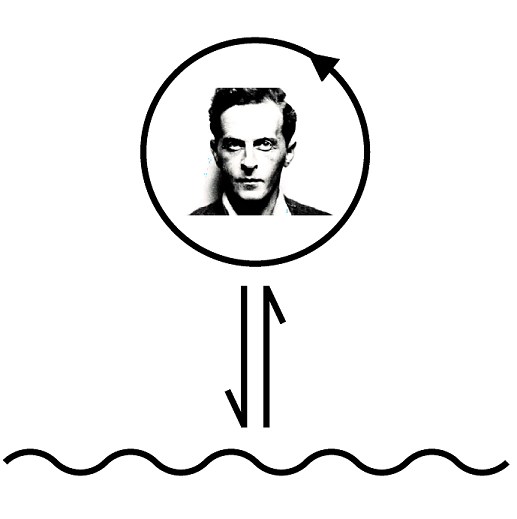
Wittgenstein and Autopoiesis:

In Tractatus Logico-Philosophicus, Wittgenstein wrote the following:

“The world of the happy man is a different one from that of the unhappy man.”

He also noted that, if a lion could talk, we would not understand him.

As a person very interested in cybernetics, I am looking at what Wittgenstein said in the light of autopoiesis. Autopoiesis is the brainchild of mainly two Chilean biologist cyberneticians Humberto Maturana and Francesco Varela. Autopoiesis was put forth as the joining of two Greek words, “auto” meaning self, and “poiesis” meaning creating. I have talked about autopoiesis here.  I am most interested in the autopoiesis’ idea of “organizational closure” for this post. An entity is organizationally closed when it is informationally tight. In other words, autopoietic entities maintain their identities by remaining informationally closed to their surroundings. We, human beings are autopoietic entities. We cannot take in information as a commodity. We generate meaning within ourselves based on experiencing external perturbations. Information does not enter from outside into our brain.

Let’s take the example of me looking at a blue light bulb. I interpret the presence of the blue light as being blue when my eyes are hit with the light. The light does not inform my brain, but rather my brain interprets the light as blue based on all my previous similar interactions I have had. There is no qualitative information coming to my brain saying that it is a blue light, but rather my brain interprets it as a blue light. It is “informative” rather than being a commodity piece of information. As cybernetician Bernard Scott noted:

…an organism does not receive “information” as something transmitted to it, rather, as a circularly organized system it interprets perturbations as being informative.

All of my previous interactions/perturbations with the light, and others explaining those interactions as being “blue light” generated a structural coupling so that my brain perceives a new similar perturbation as being “blue light”. This also brings up another interesting idea from Wittgenstein. We cannot have a private language. One person alone cannot invent a private language. All we have is public language, one that is reinterpreted and reinforced with repeat interactions. The sensation that we call “blue light” is a unique experience that is 100% unique to me as the interpreter. This supports the concept of autopoiesis as well. We cannot “open” ourselves to others so that they can see what is going on inside our head/mind.

Our interpretive framework, which we use to make sense of perturbations hitting us, is a result of all our past experiences and reinforcements. Our interpretive framework is unique to us homo sapiens. We share a similar interpretive framework, but the actual results from our interpretive framework is unique to each one of us. It is because of this that even if a lion could talk to us, we would not be able to understand it, at least not at the start. We lack the interpretive framework to understand it. The uniqueness of our interpretive framework is also the reason we feel differently regarding the same experiences. This is the reason, as a happy person, we cannot understand the world of a sad person, and vice versa.

Our brain makes sense based on the sensory perturbation and the interpretive framework it already has. A good example to think about this is the images that fall on our retina. The images are upside down, but we are able to “see” right side up. This is possible due to our structural coupling. What happens if there is a new sensory perturbation? We can only make sense of what we know. If we face a brand-new perturbation, we can make sense of it only in terms of what we know. The more we know, the more we are further able to know. As we face the same perturbation repeatedly, we are able to “better” experience it, and describe it to ourselves in a richer manner. With enough repeat interactions, we are finally able to experience it in our own unique manner. From this standpoint, there is no mind-body separation. The “mind” and “body” are both part of the same interpretive framework.

I will leave with another thought experiment to spark these ideas in the reader’s mind. There has always been talk about aliens. From what Wittgenstein taught us, when we meet the aliens, will we be able to understand each other?

I recommend the following posts to the reader expand upon this post:

If a Lion Could Talk:

The System in the Box:

A Study of “Organizational Closure” and Autopoiesis:

Please maintain social distance and wear masks. Stay safe and Always keep on learning… In case you missed it, my last post was When is a Model Not a Model?

The Map at the Gemba:

Map

This is available as part of a book offering that is free for community members of Cyb3rSynLabs. Please check here (https://www.cyb3rsynlabs.com/c/books/) for Second Order Cybernetics Essays for Silicon Valley. The e-book version is available here (https://www.cyb3rsyn.com/products/soc-book)

 Stay safe and Always keep on learning…

In case you missed it, my last post was The Cybernetics of Respect for People:

A Study of “Organizational Closure” and Autopoiesis:

autopoiesis

In today’s post, I am looking at the phrase “Organizational Closure” and the concept of autopoiesis. But before that, I would like to start with another phrase “Information Tight”. Both of these phrases are of great importance in the field of Cybernetics. I first came across the phrase “Information Tight” in Ross Ashby’s book, “An Introduction to Cybernetics”. Ross Ashby was one of the pioneers of Cybernetics. Ashby said: [1]

Cybernetics might, in fact, be defined as the study of systems that are open to energy but closed to information and control— systems that are “information‐tight”.

This statement can be confusing at first, when you look at it from the perspective of Thermodynamics. Ashby is defining “information tight” as being closed to information and control. The Cybernetician, Bernard Scott views this as: [2]

…an organism does not receive “information” as something transmitted to it, rather, as a circularly organized system it interprets perturbations as being informative.

Here the “tightness” refers to the circular causality of the internal structure of a system. This concept was later developed as “Organization Closure” by the Chilean biologists, Humberto Maturana and Francisco Varela. [3] They were trying to answer two questions:

  • What is the organization of the living?
  • What takes place in the phenomenon of perception?

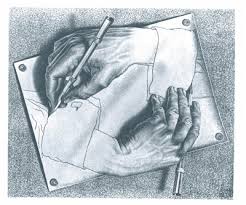
In answering these two questions, they came up with the concept of Autopoiesis. Auto – referring to self, and poiesis – referring to creation or generation. Autopoiesis means self-generation. Escher’s “Drawing Hands” is a good visualization of this concept. We exist in the continuous production of ourselves.
Escher

As British organizational theorist, John Mingers put it: [4]

Maturana and Varela developed the concept of autopoiesis in order to explain the essential characteristics of living as opposed to nonliving systems. In brief, a living system such as a cell has an autopoietic organization, that is, it is ”self-producing. ” It consists of processes of production which generate its components. These components themselves participate in the processes of production in a continual recursive re-creation of self. Autopoietic systems produce themselves and only themselves.

John H Little provides further explanation: [5]

Autopoietic systems, are self-organizing in that they produce and change their own structures but they also produce their own components… The system’s production of components is entirely internal and does not depend on an input-output relation with the system environment.

Two important principles underlying autopoiesis are “structural determinism” and “organizational closure.” To understand these principles, it is first necessary to understand the difference between “structure” and “organization” as Maturana uses these terms. “Organization” refers to the relations between components which give a system its identity. If the organization of a system changes, its identity changes. “Structure” refers to the actual components and relations between components that make up a particular example of a type of system.

Conceptually, we may understand the distinction between organization and structure by considering a simple mechanical device, such as a pencil. We generally have little difficulty recognizing a machine which is organized as a “pencil” despite the fact that pencil may be structurally built in a variety of ways and of a variety of materials. One organizational type, therefore may be manifested by any number of different structural arrangements.

Marjatta Maula provides additional information on the “organization” and “structure”, two important concepts in autopoiesis.

In autopoiesis theory, the concepts ‘organization’ and ‘structure’ of a system have a specific meaning. ‘Organization’ refers to an idea (such as an idea of airplane or a company in general). ‘Structure’ refers to the actual embodiment of the idea (such as a specific airplane or a specific company). Thus, ‘organization’ is abstract but ‘structure’ is concrete (Mingers, 1997). Over time an autopoietic system may change its components and structure but maintain its ‘organization.’ In this case, the system sustains its identity. If a system’s ‘organization’ changes, it loses its current identity (von Krogh & Roos, 1995). [6]

The most important idea that Maturana and Varela put forward was that an autopoietic system does not take in information from its environment and an external agent cannot control an autopoietic system. Autopoietic systems are organizationally (or operationally) closed. That is to say, the behavior of the system is not specified or controlled by its environment but entirely by its own structure, which specifies how the system will behave under all circumstances. It is as a consequence of this closure that living systems cannot have “inputs” or “outputs”-nor can they receive or produce information-in any sense in which these would have independent, objective reality outside the system. Put in another way, since the system determines its own behavior, there can be no “instructive interactions” by means of which something outside the system determines its behavior. A system’s responses are always determined by its structure, although they may be triggered by an environmental event.[7]

Although organizationally closed, a system is not disconnected from its environment, but in fact in constant interaction with it. Maturana and Varela (1987) call this ongoing process “structural coupling” (p. 75). System and environment (which will include other systems) act as mutual sources of perturbation for one another, triggering changes of state in one another. Over time, provided there are no destructive interactions between the system and the medium in which it realizes itself (i.e., its environment), the system will appear to an observer to adapt to its environment. What is in fact happening, though, is a process of structural “drift” occurring as the system responds to successive perturbations in the environment according to its structure at each moment. [7]

In other words, the idea of an organism as an information processing agent is a misunderstanding. When you look at it further, although it might appear as strange, little by little, it might make sense. Think about a classroom, a teacher is giving a lecture and the same “information” reaches the students. However, what type and amount of “information” is taken in depends on each individual student. Maturana explains it as the teacher makes the selection (in the form of the lecture), however, the teacher cannot make the student accept the “information” in its entirety. A loose analogy is a person pushing a button on a vending machine. The internal structure of the machine determines how to react. If the machine does not have a closed structure inside, it cannot react. The pressing of the button is viewed as a perturbation, and the vending machine reacts based on its internal structure at that point in time. If the vending machine was out of order or if there was something blocking the item, the machine will not dispense even if the external agent “desired” the machine to reach in a specific way.

According to Maturana, all systems consisting of components are structure-determined, which is to say that the actual changes within the system depend on the structure itself at that particular instant. Any change in such a system must be a structural change. If this is the case, then an environmental action cannot determine its own effect on a system. Changes, or perturbations in the environment can only trigger structural change or compensation. “It is the structure that determines both what the compensation will be and even what in the environment can or cannot act as a trigger” (Mingers, 1995, p. 30).

It is the internal structure of the system at any point in time that determines:

  1. all possible structural changes within the system that maintain the current organization, as well as those that do not, and
  2. all possible states of the environment that could trigger changes of state and whether such changes would maintain or destroy the current organization (Mingers, 1995, p. 30).[5]

As we understand the idea of autopoiesis, we start to realize that it has serious implications. Our abstract concept of a process is shown below:[5]

INPUT -> PROCESS -> OUTPUT

In light of autopoiesis, we can see that this abstraction does not make sense. An autopoietic system cannot accept inputs. We treat information and knowledge as a commodity that can be easily coded, stored and transferred. Again, in the light of autopoietic systems, we require a new paradigm. As Little continues:[5]

An organizationally closed system is one in which all possible states of activity always lead to or generate further activity within itself… Organizationally closed systems do not have external inputs that change their organization, nor do they outputs in terms of their organization. Autopoietic systems are organizationally closed and do not have inputs and outputs in terms of their organization. They may appear to have them, but that description only pertains to an observer who can see both the system and its environment, and is a mischaracterization of the system. The idea of organizational closure, however, does not imply that such systems have no interactions with their environment. Although their organization is closed, they still interact with their environment through their structure, which is open.

John Mingers provides further insight: [4]

Consider the idea that the environment does not determine, but only triggers neuronal activity. Another way of saying this is that the structure of the nervous system at a particular time determines both what can trigger it and what the outcome will be. At most, the environment can select between alter­natives that the structure allows. This is really an obvious situation of which we tend to lose sight. By analogy, consider the humming computer on my desk. Many interactions, e.g., tapping the monitor and drawing on the unit, have no effect. Even pressing keys depends on the program recognizing them, and press­ing the same key will have quite different effects depending on the computer’s current state. We say, “I’ll just save this file,” and do so with the appropriate keys as though these actions in themselves bring it about. In reality the success (or lack of it) depends entirely on our hard-earned structural coupling with the machine and its software in a wider domain, as learning a new system reminds us only too well.

Another counterintuitive idea was put forth by the German sociologist Niklas Luhmann, that further elaborates the autopoietic system’s autonomous nature and the “independence” from the external agent:

The memory function never relates to facts of the outer world . . . but only to the states of the system itself. In other words, a system can only remember itself.

An obvious question at this point is – If a system is so independent of its environment, how does it come to be so well adjusted, and how do systems come to develop such similar structures?[4]

The answer lies in Maturana’s concept of structural coupling. An autopoietic organization is realized in a particular structure. In general, this structure will be plastic, i.e., changeable, but the changes that it undergoes all maintain auto poiesis so long as the entity persists. (If it suffers an interaction which does not maintain autopoiesis, then it dies.) While such a system exists in an environ­ment which supplies it with necessities for survival, then it will have a structure suitable for that environment or autopoiesis will not continue. The system will be structurally coupled to its medium. This, however, is always a contingent matter and the particular structure that develops is determined by the system. More generally, such a system may become structurally coupled with other systems-the behavior of one becomes a trigger for the other, and vice versa.

Maturana and Varela did not extend the concept of autopoiesis to a larger level such as a society or an organization. Several others took this idea and went further. [8]

Using the tenets of autopoietic theory (Zeleny: 2005), he interprets organizations as networks of interactions, reactions and processes identified by their organization (network of rules of coordination) and differentiated by their structure (specific spatio-temporal manifestations of applying the rules of coordination under specific conditions or contexts). Following these definitions, Zeleny argues that the only way to make organizational change effective is to change the rules of behavior (the organization) first and then change processes, routines, and procedures (the structure). He explains that it is the system of the rules of coordination, rather than the processes themselves, that defines the nature of recurrent execution of coordinated action (recurrence being the necessary condition for learning to occur). He states: ‘Organization drives the structure, structure follows organization, and the observer imputes function’.

 Espejo, Schumann, Schwaninger, and Bilello (1996)adopt similar terminology, but instead of organization they refer to an organization’s identity as the element that defines any organization, explaining that it is the relationships between the participants that create the distinct identity for the network or the group. Organization is then defined as ‘a closed network of relationships with an identity of its own’. While organizations may share the same kind of identity, they are distinguished by their structures. People’s relationships form routines, involving roles, procedures, and uses of resources that constitute stable forms of interaction. These allow the integrated use and operation of the organization’s resources. The emergent routines and mechanisms of interaction then constitute the organization’s structure. Hence, just like any autopoietic entity, organizations as social phenomena are characterized by both an organization (or identity) and a structure. The rules of interaction established by the organization and the execution of the rules exhibited by the structure form a recursive bond.

Final Words:

I highly encourage the readers to pursue understanding of autopoiesis. It is an important concept that requires a shift in your thinking.

I will finish off with an example of autopoietic system that is not living. I am talking about von Neumann probes. Von Neumann probes are named after John von Neumann, one of the most prolific polymaths of last century. A von Neumann probe is an ingenious solution for fast space exploration. A von Neumann probe is a spacecraft that is loaded with an algorithm for self-replication. When it reaches a suitable celestial body, it will mine the required raw materials and build a copy of itself, complete with the algorithm for self-replication. The new spacecraft will then proceed to explore the space in a different direction. The self-replication process continues with every copy in an exponential manner. You may like this post about John von Neumann.

Always keep on learning…

In case you missed it, my last post was The Illegitimate Sensei:

[1] An Introduction to Cybernetics – Ross Ashby

[2] Second-order cybernetics: an historical introduction – Bernard Scott

[3] Autopoiesis and Cognition: The Realization of the Living – Francisco Varela and Humberto Maturana

[4] The Cognitive Theories of Maturana and Varela – John Mingers

[5] Maturana, Luhmann, and Self-Referential Government – John H Little

[6] Organizations as Learning Systems – Marjatta Maula

[7] Implications of The Theory Of Autopoiesis For The Discipline And Practice Of Information Systems – Ian Beeson