Lessons from Genkan:

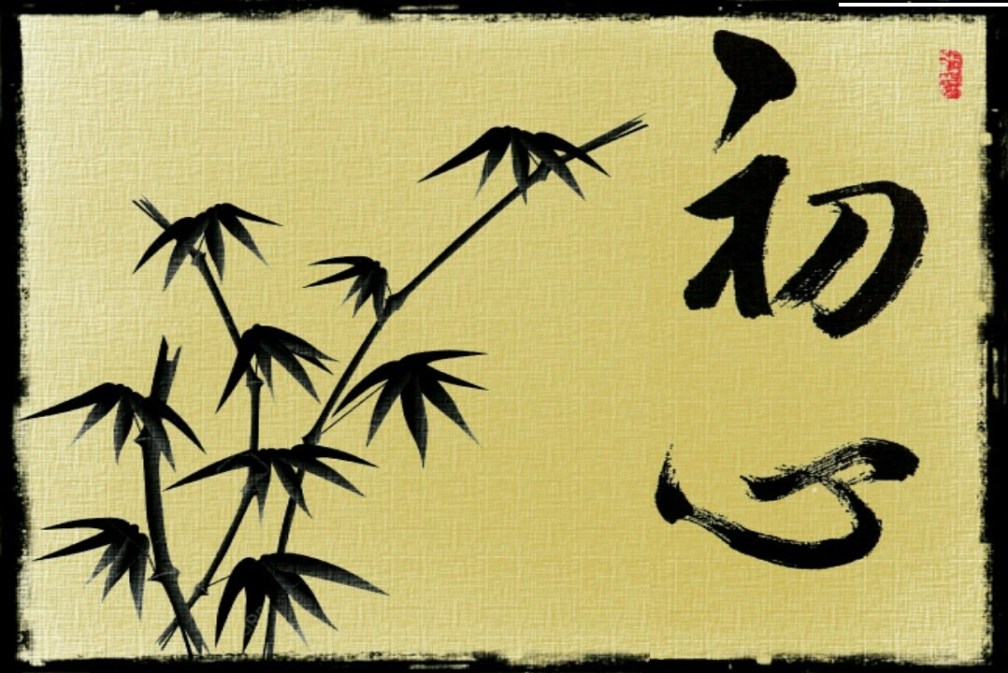
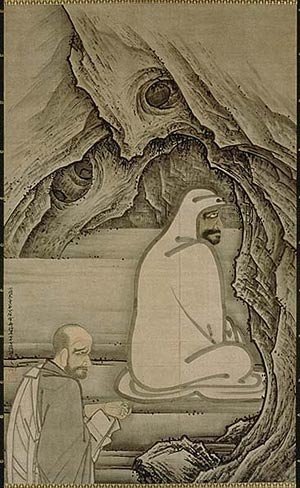
Bodhidharma.and.Huike-Sesshu.Toyo

Readers of my blog know by now that I am a “Japanophile”. Keeping up with that theme, I will be talking about “genkan” today. Genkan is a small sunken area behind the front door of a Japanese house. This vestibule has a great significance in the Japanese culture. A guest coming to a Japanese house should open the front door to enter genkan, and calls out “Gomen kudasai” (“Anybody home?”) The house owner can then come out and carry a conversation while the guest stays in the genkan. The genkan allows the opportunity to conduct any informal business like paying bills or having a short conversation. The genkan allows the opportunity to not engage in any formal etiquette that will be required if the guest enters the house. If the guest is welcomed inside the house, the guest is expected to remove his shoes while inside the genkan and have the shoes facing towards the door.

The word genkan means is made up of two characters “gen” and “kan”; “gen” stands for mysterious or profound, while “kan” stands for barrier or connection point, Genkan stands for dark and mysterious entrance. The concept of genkan comes from the Zen temples. The term genkan was used metaphorically to remind everyone entering a Zen temple that it is the path to the realm of enlightenment. When a student wishes to join a Zen temple/monastery, he is supposed to stand in the genkan in a bowing posture sometimes for days. During this period, his desire to join the monastery will be tested in many different ways. This ritual is called as “niwazume”. The concept of genkan was adopted by the samurai and included in the houses.

As Michael Lazarin explains in his paper, “A Phenomenology of Japanese Architecture: Heidegger and Derrida”:

We can see that the genkan is not simply a way of getting into or out of the house, a place for changing and storing shoes. lt serves an important social function; it provides a way of getting around the excessive formalities of Japanese social life. lt provides a way of being familiar with someone who, as visitor, is also estranged. lt de-ranges the formalities in order to arrange social communication. Without such a space, people raised according to traditional standards of politeness would be at a loss.

I was very enthralled when I learned about genkan. I loved the idea of a place where the formalities can be ignored. This idea can be of great use at a workplace. In many workplaces, innovation and creativity are stymied due to the rigid policies and procedures in place. The thinking behind the  rigid rules and procedures is that they promote standardization and structure. Unfortunately, if they cannot match the local variety needed, they will break or worse create a stymied workplace that people want to leave. The inflexibility of the procedures causes stagnation. In such a situation, we can learn from genkan. We can create an “informal” area or space where rules are not applicable, and where we can experiment safely and fail as many times as needed. The failures will be in a controlled environment and this leads to innovation, creativity and learning. This brings to my mind, the ideas of the Soviet engineer, Peter Palchinsky. Palchinsky was killed in 1929 due to his political standings. He was the focus point of the book, “The Ghost of the Executed Engineer” by Loren Graham. Tim Harford also wrote about Palchinsky in the book “Adapt”.

Peter Palchinsky’s ideas can be summarized as follows (from Tim Harford’s Adapt):

  • Seek out new ideas and try new things.
  • When trying something new, do it on a scale where failure is survivable.
  • Seek feedback and learn from your mistakes as you go along.

In “The Ghost of the Executed Engineer”, Loren Graham wrote:

Although Palchinsky praised the idea of central planning, he thought that the central plan should be very general, allowing many local variations. It should allow room for individual initiative.

Another example of having an “informal” program outside of the norm is now defunct (?) Google’s 20 percent initiative. Google’s founders Larry Page and Sergey noted in 2004: “We encourage our employees, in addition to their regular projects, to spend 20% of their time working on what they think will most benefit Google,” the pair wrote. “This empowers them to be more creative and innovative. Many of our significant advances have happened in this manner.” Several successful initiatives like Gmail and Adsense came out of this initiative.

Does your workplace have a genkan?

I will finish with the story of Dazu Huike. The custom of niwazume perhaps goes all the way back to Dazu Huike. Dazu Huike was the student of Bodhidharma. Bodhidharma, a south Indian prince, was the first Chinese patriarch for Chan Buddhism, and considered by many to be the creator of Shaolin Kungfu.

Legend has it that Bodhidharma initially refused to teach Huike. Huike stood in the snow outside Bodhidharma’s cave all night, until the snow reached his waist. In the morning Bodhidharma asked him why he was there. Huike replied that he wanted a teacher to “open the gate of the elixir of universal compassion to liberate all beings”.

Bodhidharma refused, saying, “how can you hope for true religion with little virtue, little wisdom, a shallow heart, and an arrogant mind? It would just be a waste of effort.”

Finally, to prove his resolve, Huike cut off his left arm and presented it to the First Patriarch as a token of his sincerity. Bodhidharma then accepted him as a student, and changed his name from Shenguang to Huike, which means “Wisdom and Capacity”.

Always keep on learning…

In case you missed it, my last post was Tesler’s Law of Conservation of Complexity:
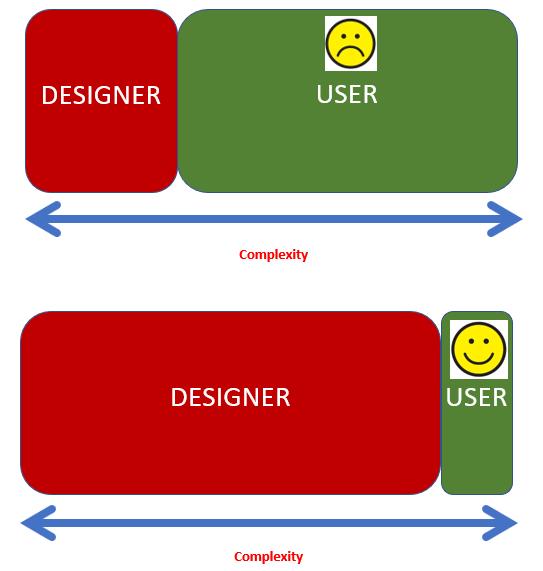
Tesler’s Law of Conservation of Complexity:
Tesler

In today’s post, I am looking at Tesler’s Law of Conservation of Complexity. Larry Tesler, who came up with the law, worked at Xerox PARC, Apple, Amazon, and Yahoo in different capacities. He was one of the brains behind “cut/copy and paste” functionality in word processors. The basic premise of the law is as follows:

“Every application has an inherent amount of irreducible complexity. The only question is: Who will have to deal with it—the user, the application developer, or the platform developer?”

This is an important idea in the user interaction with a software application. One of the best examples to explain this further comes from Dan Saffer’s excellent book, “Designing for Interaction.” Think of the email application. It needs a “From address” and a “To address”. Without either of these two items, the email cannot be sent. All, if not most, email applications will automatically populate the “From address”, thus not requiring the user to enter it all the time. This “complexity” was addressed by the software application designer. As Dan put it; The complexity isn´t gone, though – instead, some of it has been shifted to the software.

Larry Tesler was a firm believer that the user interaction is almost as important as the application itself.

In the early days of our field, when I worked at Xerox PARC, the idea of user interface consistency was new and controversial. Many of us realized that consistency would benefit not only users, but also developers, because standards could be encapsulated in shared software libraries. We made an economic argument: If we establish standards and encourage consistency, we can reduce time to market and code size.

I postulated that every application must have an inherent amount of irreducible complexity. The only question is who will have to deal with it.

Because computers back then were small, slow and expensive, programs were designed to be compact, not easy to use. The user had to deal with complexity because the programmer couldn’t. But commercial software is written once and used millions of times. If a million users each waste a minute a day dealing with complexity that an engineer could have eliminated in a week by making the software a little more complex, you are penalizing the user to make the engineer’s job easier. (Source: Dan Saffer Interview with Larry Tesler in “Designing for Interaction”)

With this law, we are not trying to make things simple. A complex situation requires that the solution is also complex. This goes back to Ross Ashby’s Requisite Variety principle – “only variety can absorb variety.” The variety is described as the number of possible states of a system. If the “problem” requires that you need 7 states, then the solution should address it by providing at least 7 states. Tesler’s law recommends that we keep this complexity away from the user and absorb it at the programmer’s side. This makes the user interaction favorable leading to a positive user experience. We should focus on making life easy for the user.

The user experience is related to the cognitive load that is placed on the user. The application should try to minimize this load to avoid any potential errors or slips. The more steps a user has to complete, the more likely an error can occur. This may not be a big problem if we are drafting an email, but if the user is a pilot, then the whole scope of the problem changes. Providing a consistent interface and eliminating unnecessary actions minimizes the cognitive load on the user, and ultimately reduces the errors and slips by the user.

This makes me think about the concept of “muri” in Lean. “Muri” refers to the unnecessary burden on the operator or the system. Muri always leads to Muda (waste). When we are designing an interface for the operator at the gemba, we should try to make that interface as user-friendly as possible in order to minimize the cognitive load on the operator. As Tesler’s law suggests, the designer should absorb the complexity so that the operator does not have to worry about it. Many of the concepts of user experience are applicable in designing a work station. The focus is not to make things “simple” but to match the complexity needed and embed it in the interface in an efficient and effective manner so as to reduce cognitive load on the user. This leads to a satisfactory experience for the user and minimizes the chance of errors. When trying to save money, don’t try to cut corners with technology. Think of it from the time saved by the operators and the minimization of cognitive loads leading to better products and processes.

The other side of the coin is an elaboration that Bruce Tognazzini made with Tesler’s law. Bruce is another great User Experience pioneer. He postulated that when we remove the complexity from the user, the user will try to attempt more complex tasks. The reduction in cognitive load on the operator leads to the user engaging in more ideas for improvements that ultimately leads to better and more efficient operator interface. This may also lead to better cross training, and increase in employee morale. There will be more interest in engaging in the improvement culture, which is at the heart of lean.

I will finish with a great Don Norman story about user experience. Don Norman is the director of The Design Lab at University of California, San Diego, and has written numerous books of designing and user experience.

Don Norman is a proponent of designing things so that the conceptual model becomes easy for the user. The conceptual model is the mental model that the user creates when interacting with a designed object. The conceptual model allows the user to understand how the object functions. Don talks about the experience his son had with the first Macintosh computers. At that time, the file storage was mainly done with floppy drives. His son was trying to save a file and got the error message. “Sorry, there is not enough room to save your file.” His son looked at the folder and saw that there were many folders within the folder and they were arranged in a haphazard fashion. His son using the conceptual model he had came up with a solution – rearrange the folder icons in the folder towards the left so that “there was lot more room on the right side.” He tried again saving, and got the same error message. He was puzzled because the folder obviously had more room now. Don stated that his son was using the wrong conceptual model. The “room” on the picture on the folder was not the same as the “room” on the floppy disc.

Always keep on learning…

In case you missed it, my last post was Kufu Eyes:

Kufu Eyes:

Huike_thinking-big-569924185f9b58eba49ede26

I came across an interesting phrase recently. I was reading Kozo Saito’s paper, “Hitozukuri and Monozukuri”, and I saw the phrase “kufu eyes”. Kufu is a Japanese word that means “to seek a way out of a dilemma.” This is very well explained in K. T. Suzuki’s wonderful book, “Zen and Japaense Culture.” Suzuki talks about kufu in three sections of the book, and each time he adds a little more detail.

“Kufu is not just thinking with the head, but the state when the whole body is involved and applied to the solving of a problem.”

 “Kufu means ‘employing oneself assiduously to discover the way to the objective.’ One may say that this is literally groping in the dark, there is nothing definite indicated… I am afraid this is as far as any master of Zen or swordsmanship can go with his disciples. He leads them until no more leading is possible, and the rest is left to their own devices. If it is a matter of intellection, the way to the goal may be ‘definitely’ prescribed… The students must resort to something very much deeper than mere intellection – something which they cannot obtain from another.”

‘‘The term kufu is the most significant word used in connection with Zen and also in the fields of mental and spiritual discipline. Generally, it means ‘to seek the way out of a dilemma’ or ‘to struggle to pass through a blind alley.’ A dilemma or a blind alley may sound somewhat intellectual, but the fact is that this is where the intellect can go no further, having come to its limit, but an inner urge still pushes one somehow to go beyond. As the intellect is powerless, we may enlist the aid of the will; but mere will, however pressing, is unable to break through the impasse. The will is closer to fundamentals than the intellect, but it is still on the surface of consciousness. One must go deeper yet, but how? This how is kufu. No teaching, no help from the outside is of any use. The solution must come from the most inner part of oneself. One must keep knocking at the door until all that makes one feel an individual being crumbles away. That is, when the ego finally surrenders itself, it finds itself. Here is a newborn baby. Kufu is a sort of spiritual birth pang. The whole being is involved. There are physicians and psychologists who offer a synthetic medicinal substance to relieve one of this pang. But we must remember that, while man is partially mechanistic or biochemical, this does not by any means exhaust his being; he still retains something that can never be reached by medicine. This is where his spirituality lies, and it is kufu that finally wakes us to our spirituality.’’

In his paper, Saito talked about kufu eyes to explain the process of having a curious scientific mind. Kufu eyes looks at the whole and uses personal intuition than just the analytical thinking process. Kufu eyes pushes you to think further perhaps through thought experiments, and to experiment to truly understand the whole picture. One interesting note I would like to make here is of the great American philosopher Dan Dennett’s “intuition pumps.” An intuition pump is a thought experiment structured to allow the thinker to use their intuition to develop an answer to a problem. Just like a mechanical device, if you can model your thought in a thought experiment, you can push on different buttons and pull on different levers and see what happens.

With kufu eyes, you can observe to gain insight. Siato talked about Taiichi Ohno, the father of Toyota Production System, to explain the concept of kufu eyes further:

… learning engineering and science is not enough. There is a third element: professional intuition, probably the most important, yet most difficult to master, but required for the engineering problem solving process. Taichi Ohno, one of the pioneers who developed Toyota Production System, once declared that the essence of TPS is to develop the well trained ‘‘eyes’’ that can see waste which is invisible to the untrained.

Taiichi Ohno took the task of catching up to the American market when the Japanese worker was assumed to be only 1/8th productive as his American counterpart. The most recent development in manufacturing at that time was the idea of mass manufacturing, which is essentially a push system that led to lots of inventory. Toyota could not afford to carry a lot of inventory. The thinking in those days was to combine similar equipment together and perform operations in isolation. Ohno rearranged the entire layout of the plant he was in charge of, so that the equipment was set to follow the process. The practice at that time was to have one operator manning one piece of equipment. Ohno had one operator man multiple equipment at a time. This led to autonomation or Jidoka. To control the amount of parts produced, Ohno came up with the idea of Kanban. Looking back, Ohno definitely had to employ himself assiduously to discover the way to his objective. He could not just rely on his analytical mind, it was more complex than that. His thinking is clearly stated when he said that efficiency must be improved at every step and at the same time, for the plant as a whole. This is the big picture view that is needed in kufu.

Saito combines the different ideas of total-unit, dedication to the team, holistic view, dialectic approach, and nonlinear thinking to explain kufu. Logic and words have limits. I am inspired by the phrase “kufu eyes”. To me, it means looking outward and inward, looking at the big picture, thinking inside and outside of the “box”, and always pushing to go to the edge of a problem. It means to look with the determination to gain insight. It also means to not fall for status-quo, and to always improve. It also means to go slow but deliberately. It means to not stop until you have solved the problem. And at the same not stop there but keep on improving. This is further explained by Suzuki.

This may be difficult , but when you go on exercising kufu toward the subject, you will after some time come to find this state of mind exercising kufu toward the subject, you will after some time come to find this state of mind actualized without noticing each step of progress. Nothing, however, can be accomplished hurriedly.

I will stop with a wonderful lesson from Suzuki’s book:

When we tie a cat, being afraid of its catching a bird, it keeps on struggling for freedom. But train the cat so that it would not mind the presence of a bird. The animal is now free and can go anywhere it likes. In a similar way, when the mind is tied up, it feels inhibited in every move it makes, and nothing will be accomplished with any sense of spontaneity.  Not only that, the work itself will be of a poor quality, or it may not be finished at all.

Always keep on learning…

In case you missed it, my last post was Hitozukuri:

Hitozukuri:

Zenmind

In today’s post, I am looking at “hitozukuri” from the famous Toyota saying, “monozukuri wa hitozukuri.” This can be translated as “making things is about making (developing) people”. To me, this encapsulates the idea of a sociotechnical system. When organizations attempt to business process reengineer, there is a tendency to focus on improving processes only from the technical standpoint. Their focus is on – How to make the process flow better or how to make the operation faster by removing waste? Toyota does focus on this, but at the same time, they also focus on developing their people. Unfortunately, as the lessons from Toyota got copied, the emphasis became more on the tools and not on the people development.

While we can translate monozukuri as craftsmanship, it also represents the spirit of creativity, doing more with less and not wasting valuable resources. Japanese culture has a strong emphasis on harmony, and this can also be seen with monozukuri. Monozukuri is the art of making things in the most harmonious way possible, with minimal waste, and maximum aesthetics. At the same time, we can also look at hitozukuri as lifelong development. Kozo Saito, Director of the Institute of Research for Technology Development at the University of Kentucky, describes hitozukuri as:

Hitozukuri … stresses a life-long process of learning. Hitozukuri emphasizes several different steps of human development, whose original form was emphasized by Confucius in his famous six different human development stages. It goes: ‘‘when I (Confucius) was fifteen years old, I decided to study; at thirty I became independent; at forty I focused; at fifty I realized my mission in my life; at sixty I became able to listen to people without bias and prejudice; finally at seventy I attained the stage that my thinking and action are harmonized with nature. Hitozukuri is a continuous life-long process of human development.

Hitozukuri aligns with the second pillar of the Toyota Way – respect for people. As part of developing people, Toyota focuses on teaching them to see waste and come up with ways to fix the problems. They are challenged with improving their processes, and in the process improve and develop themselves. This is all done in an environment of mutual respect, again based on the concept of harmony.

The technical aspects of monozukuri resides in the simple and complicated domains of order. It is like saying, follow this recipe exactly, and you will make a delicious food item. The social aspects of hitozukuri resides in the complex domain. There is no one best way of “developing” a person. As the famous saying goes, humans do not come with manuals. One heuristic that Toyota uses is – do not tell exactly how to solve a problem. As part of their development, the trainee identifies a problem. The trainer challenges the trainee to start experimenting, identifying patterns and to come up with countermeasures. The trainer provides the various concepts to help the trainee understand the problem, and works with him to find the root cause(s) and thus potential solutions.

In the delightful book, “Not Always So”, about the great Zen Teacher Shunryu Suzuki, Jusan Kanei tells a beautiful anecdote. Kanei was struggling with sitting still for meditation. Suzuki Roshi sat next to him and without saying a word rested his hands on Kanei’s shoulder. Soon, Kanei’s breath softened and lengthened, and he was able to stay with his breath. Kanei later asked Suzuki Roshi what he was doing when he had his hands on Kanei’s shoulders, and Suzuki Roshi responded, “I’m meditating with you.” Suzuki Roshi did not say to do this or do that. His touch did not say “Go over there” or “Get over here”, “Straighten Up” or “Calm down.” Kanei stated that the touch said, “I’ll be here with you wherever you are.”

This is a beautiful story that encapsulates the idea of not telling people what to do, and instead reflects on developing the person. When you have to tell someone what to do, the responsibility of their actions becomes yours. You are also stealing their opportunity to learn from the experience. We learn more from failures than from successes.

Always keep on learning…

In case you missed it, my last post was Distrust Simplicity:

Distrust Simplicity:

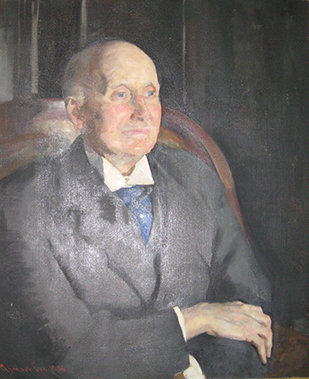
whitehead_painting

In today’s post, I will be looking at the famous quote from the famous English mathematician and philosopher, Alfred Whitehead.

“Seek simplicity, and then distrust it.”

This quote comes from his 1920 collection of lectures, The Concept of Nature. The quote is embedded in the paragraph below:

Nature appears as a complex system whose factors are dimly discerned by us. But, as I ask you, Is not this the very truth? Should we not distrust the jaunty assurance with which every age prides itself that it at last has hit upon the ultimate concepts in which all that happens can be formulated? The aim of science is to seek the simplest explanations of complex facts. We are apt to fall into the error of thinking that the facts are simple because simplicity is the goal of our quest. The guiding motto in the life of every natural philosopher should be, Seek simplicity and distrust it.

I like this idea a lot. We are all asked to keep things simple, and to not make things complicated. Whitehead is asking us to seek simplicity first, and then distrust it. Whitehead talks about “bifurcation of nature” – nature as we perceive it, and the nature as it is. Thus, our perception of reality is an abstraction or a simplification based on our perceptions. We need this abstraction to start understanding nature. However, once we start this understanding process, we should not stop. We should build upon it. This is the scientific method – plan the prototype, build it, assess the gap, and continue improving based on feedback.

As I was reading The Concept of Nature, several other concepts came to my mind. The first one was Occam’s razor – the idea that Entities should not be multiplied unnecessarily. Seek the simplest explanation, when all things are equal. At the same time, we should keep Epicurus’ Principle of Multiple Explanations in mind – If more than one theory is consistent with the observations, keep all theories. I also feel that Whitehead was talking about systems and complexity. As complexity increases, our ability to fully understand the numerous relationships decreases. As the wonderful American Systems thinker Donella Meadows said:

We can’t impose our will on a system. We can listen to what the system tells us and discover how its properties and our values can work together to bring forth something much better than could ever be produced by our will alone.

Seeking simplicity is about the attempt to have a starting point to understand complexity. We should continue to evolve our understanding and not stop at the first abstraction we developed. One of the famous Zen story is about the teacher pointing his finger at the moon. I have talked about this here. We should not look at the finger and stop there. We should look at where the finger is pointing. The finger is the road sign and not the destination itself. The simplicity is a representation and not the real thing. We should immediately distrust it because it is a weak copy. Seeking simplicity is not a bad thing but stopping there is. Simplicity is our comfort zone, and Whitehead is asking us to distrust it so that can keep improving our situation – continuous improvement. Whitehead in his later 1929 book, The Function of Reason, states:

The higher forms of life are actively engaged in modifying their environment… (to) (i) to live, (ii) to live well, (iii) to live better.

Final Words:

In seeking simplicity, we are trying to be “less wrong”. In distrusting our simplified abstraction, we are seeking to be “more right”. I will finish with a Zen story.

A Zen master lay dying. His monks had all gathered around his bed, from the most senior to the most novice monk. The senior monk leaned over to ask the dying master if he had any final words of advice for his monks.

The old master slowly opened his eyes and in a weak voice whispered, “Tell them Truth is like a river.”

The senior monk passed on this bit of wisdom in turn to the monk next to him, and it circulated around the room from one monk to another.

When the words reached the youngest monk he asked, “What does he mean, ‘Truth is like a river?’”

The question was passed back around the room to the senior monk who leaned over the bed and asked, “Master, what do you mean, ‘Truth is like a river?’” Slowly the master opened his eyes and in a weak voice whispered, “OK, truth is not like a river.”

Always keep on learning…

In case you missed it, my last post was Cannon’s Polarity Principle:

Cannon’s Polarity Principle:

arrows

I recently read the wonderful book “On the Design of Stable Systems”, by Jerry Weinberg and Daniela Weinberg. I came across a principle that I had not heard of before called “Cannon’s Polarity Principle”. Cannon’s Polarity Principle can be stated as the strategy that a system can use to overcome noise by supplying its own opposing actions. If a system relies on an uncertain environment to supply the opposing factor to one of its regulatory mechanisms, that mechanism must have a much more refined model. By supplying its own opposing factor, it can get away with a much simpler model of the environment.

This principle is one of those things that is profound yet very simple. The Weinbergs give the example of a sticky knob on a gas stove to explain this idea. If the knob is sticky then it is tricky to raise the flame to the precise point we would like it to be. Due to the “stickiness” we will try to apply much more force than needed and inadvertently overshoot, going past the desired point. The result is that the flame is at a much higher setting. When we try to turn the flame down we are still in the same situation and again go past the point where we would like to be.

What we can do instead is to use one hand to push against the direction we would like and then slowly try to turn the knob with our other hand. With this approach we can be much more refined and be at our desired position. By working “against” our own goal, we make precise adjustment possible in the face of an unknown, but small, amount of stickiness.

This got me thinking. There are several times where we apply opposing forces to slow us down, to take the time to reach the correct decision (precise adjustment). One of my favorite Toyotaism is – Go slow to go fast. This makes a lot of sense in the light of the Polarity Principle. Any time we are doing a root cause analysis, we are prone to a plethora of biases including confirmation bias – selectively looking for ideas that reinforce our thinking, and availability bias – latching on to the first idea because that was the immediate idea we came up with. These biases might make us jump to unwarranted conclusions to address symptoms, and not addressing the root problem(s). The Polarity Principle would advise us to slow down.

I will finish this short and sweet with an apt Zen saying:

The one who is good at shooting does not hit the center of the arrow.

Always keep on learning…

In case you missed it, my last post was Contextual Why:

Contextual Why:

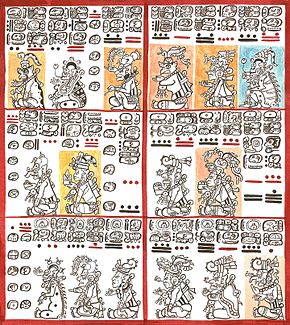
Láminas_8_y_9_del_Códice_de_Dresden

One of the scientists that I have referenced in my posts a lot is the American physicist Richard Feynman. I particularly love his imaginary depiction of Mayan astronomy. Feynman went to Mexico for his second honeymoon and came across a copy of the Dresden Codex (one of the oldest surviving books from the Americas). He was particularly interested in the bars and dots in the codex. He was able to decipher the number system that the Mayans used to depict Venus’ trajectory in the solar system. He was so good at it that he was able to find that some of the versions were actually fakes. Feynman imagined the Mayans counting and putting nuts in a pot to make predictions of where Venus would be on a given day. Feynman was curious whether the Mayans actually knew what was happening (why it was happening) or whether they were going by the rules and making predictions based on a rule-based system of counting and manipulating numbers. Feynman stated that the Mayans may have gotten really good with counting but they must not have understood how the celestial bodies worked.

The push for following rules without understanding the context is unfortunate. Yet this is very prevalent. The rigidity of the rules cannot be sustained when a complex situation arises. The rigidity of rules indicates a direct linear relationship where cause and effect are clearly noted. This is the push for standardization and having one best way of doing things. This leads to stagnation, since this stymies creativity and the push for innovation. Rigid rules always break. Another way to look at this is as the push for robustness – avoiding failure by any means. We will put redundant steps, perform multiple inspections and implement punishments for not following rules. In the complex world, we should accept that things will fail – the push should be for resilience, getting back up in a short time. The rules are dictated top-down since the rules are created by the experts. These rules do not have the requisite variety to tackle the uncertainties of day-to-day dealings. The contexts of these rules do not match the actual context where the action takes place – the context at the gemba. Context is what brings out the meaning in a situation. The focus on rules and efficiency through best practice does not lead to having the requisite variety to change the context as needed to address a problem when it arises. We are involved in complex adaptive systems on a day-to-day basis. We need to change context as needed and adapt to respond to unanticipated events. Evolution requires that we have variety. This response is not always rule-based and is developed depending upon the context. We should allow room for bottom-up heuristics, since these are based on experience and local context.

As a simple example, let’s look at 5S, one of the most commonly identified lean tools, to look into this more. 5S is translated from Japanese as Sort, Straighten, Shine, Standardize and Sustain. The rules are provided to us and they are clear cut. Similar to the Mayan story, do we actually know the context for 5S? Toyota did not have 5S. The last few S’s were added on later. This has now changed into 6S and even 7S. The “sort” step in 5S is to have only the required tools needed at the station. The “straighten” step is to identify/label the tools so that operators from other shifts or job rotations can easily find the tools. The third step is “shine” where the work station is cleaned by the operator. This allows the operator to find any spills or other signs of wear and tear that may not be seen by a cleaning crew. These three steps help the operator to identify problems as they occur, raises awareness and helps to take pride in the work. The fourth step is “standardize” and this is mainly a regulatory function to ensure that the first three steps are followed. The last step is “sustain”, which means to integrate the first three steps so that they become the normal routine and if they are not followed, one feels like something is missing. The context is to help the operator do his or her job better and be effective. The context is that a problem is made visible immediately so that it can be addressed and people can be developed. The context is not following rules. The context is not applying 5S in areas where it does not make sense. The context certainly is not policing people. When the context of what the operator does is not made clear, they do what makes sense to them in their context – at that time with the limited information they have. Empty actions do not have context and are thus meaningless and non-value adding.

Seek to understand the perspectives of your employees. Seek to understand their local context. Seek to make them understand your context, and the context of the shared goals and objectives. Heed to their stories. Develop your employees to see problems.

I will finish with an interesting question that was posed by some French researchers in the late 1970’s.

“On a boat, there are 26 sheep and 10 goats. What is the age of the captain?”

Perhaps, you might see this as a trick question. Perhaps, you may use the two numbers given and come up with the answer as 36. The answer 36 sounds right. The answer that the researchers expected was “I do not have enough information to give the answer.”

To the researchers’ surprise, very few subjects challenged the question. Most of them reasoned in their context and came up with a number that made sense in their mind. We are not trained to ask the contextual questions.

Always keep on learning and ask contextual questions…

In case you missed it, my last post was MTTF Reliability, Cricket and Baseball:

MTTF Reliability, Cricket and Baseball:

bradman last

I originally hail from India, which means that I was eating, drinking and sleeping Cricket at least for a good part of my childhood. Growing up, I used to “get sick” and stay home when the one TV channel that we had broadcasted Cricket matches. One thing I never truly understood then was how the batting average was calculated in Cricket. The formula is straightforward:

Batting average = Total Number of Runs Scored/ Total Number of Outs

Here “out” indicates that the batsman had to stop his play because he was unable to keep his wicket. In Baseball terms, this will be similar to a strike out or a catch where the player has to leave the field. The part that I could not understand was when the Cricket batsman did not get out. The runs he scored was added to the numerator but there was no changes made to the denominator. I could not see this as a true indicator of the player’s batting average.

When I started learning about Reliability Engineering, I finally understood why the batting average calculation was bothering me. The way the batting average in Cricket is calculated is very similar to the MTTF (Mean Time To Failure) calculation. MTTF is calculated as follows:

MTTF = Total time on testing/Number of failures

For a simple example, if we were testing 10 motors for 100 hours and three of them failed at 50, 60 and 70 hours respectively, we can calculate MTTF as 293.33 hours. The problem with this is that the data is a right-censored data. This means that we still have samples where the failure has not occurred and we stopped the testing. This is similar to the case where we do not include the number of innings where the batsman did not get out. A key concept to grasp here is that the MTTF or the MTBF (Mean Time Between Failure) metric is not for a single unit. There is more to this than just saying that on average a motor is going to last 293.33 hours.

When we do reliability calculations, we should be aware whether censored data is being used and use appropriate survival analysis to make a “reliability specific statement” – we can expect that 95% of the motor population will survive x hours. Another good approach is to calculate the lower bound confidence intervals based on the MTBF. A good resource is https://www.itl.nist.gov/div898/handbook/apr/section4/apr451.htm.

Ty Cobb. Don Bradman and Sachin Tendulkar:

We can compare the batting averages in Cricket to Baseball. My understanding is that the batting average in Baseball is calculated as follows:

Batting Average = Number of Hits/Number of Bats

Here the hit can be in the form of singles, home runs etc. Apparently, this statistic was initially brought up by an English statistician Henry Chadwick. Chadwick was a keen Cricket fan.

I want to now look at the greats of Baseball and Cricket, and look at a different approach to their batting capabilities. I have chosen Ty Cobb, Don Bradman and Sachin Tendulkar for my analyses. Ty Cobb has the largest Baseball batting average in American Baseball. Don Bradman, an Australian Cricketer often called the best Cricket player ever, has the largest batting average in Test Cricket. Sachin Tendulkar, an Indian Cricketer and one of the best Cricket players of recent times, has the largest number of runs scored in Test Cricket. The batting averages of the three players are shown below:

averages

As we discussed in the last post regarding calculating reliability with Bayesian approach, we can make reliability statements in place of batting averages. Based on 4191 hits in 11420 bats, we could make a statement that – with 95% confidence Ty Cobb is 36% likely to make a hit in the next bat. We can utilize the batting average concept in Baseball to Cricket. In Cricket, hitting fifty runs is a sign of a good batsman. Bradman has hit fifty or more runs on 56 occasions in 80 innings (70%). Similarly Tendulkar has hit fifty or more runs on 125 occasions in 329 innings (38%).

We could state that with 95% confidence, Bradman was 61% likely to score fifty or more runs in the next inning. Similarly, Sachin was 34% likely to score fifty runs or more in the next inning at 95% confidence level.

Final Words:

As we discussed earlier, similar to MTTF, batting average is not a good estimation for a single inning. It is an attempt for a point estimate for reliability but we need additional information regarding this. This should not be looked at it as a single metric in isolation. We cannot expect that Don Bradman would score 99.94 runs per innings. In fact, in the last very match that Bradman played, all he had to do was score 4 single runs to achieve the immaculate batting average of 100. He had been out only 69 times and he just needed four measly runs to complete 7000 runs and even if he got out on that inning, he would have achieved the spectacular batting average of 100. He was one of the best players ever. His highest score was 334. This is called “triple century” in Cricket, and this is a rare achievement. As indicated earlier, he was 61% likely to have scored fifty runs or more in the next inning. In fact, Bradman had scored more than four runs 69 times in 79 innings.

bradman last

Everyone expected Bradman to cross the 100 mark easily. As fate would have it, Bradman scored zero runs as he was bowled out (the batsman misses and the ball hits the wicket) by the English bowler Eric Hollies, in the second ball he faced. He had hit 635 fours in his career. A four is where the batsman scores four runs by hitting the ball so that it rolls over the boundary of the field. All Bradman needed was one four to achieve the “100”. Bradman proved that to be human is to be fallible. He still remains the best that ever was and his record is far from broken. At this time, the batsman with the second best batting average is 61.87.

Always keep on learning…

In case you missed it, my last post was Reliability/Sample Size Calculation Based on Bayesian Inference:

Reliability/Sample Size Calculation Based on Bayesian Inference:

Bayesian

I have written about sample size calculations many times before. One of the most common questions a statistician is asked is “how many samples do I need – is a sample size of 30 appropriate?” The appropriate answer to such a question is always – “it depends!”

In today’s post, I have attached a spreadsheet that calculates the reliability based on Bayesian Inference. Ideally, one would want to have some confidence that the widgets being produced is x% reliable, or in other words, it is x% probable that the widget would function as intended. There is the ubiquitous 90/90 or 95/95 confidence/reliability sample size table that is used for this purpose.

90-95

In Bayesian Inference, we do not assume that the parameter (the value that we are calculating like Reliability) is fixed. In the non-Bayesian (Frequentist) world, the parameter is assumed to be fixed, and we need to take many samples of data to make an inference regarding the parameter. For example, we may flip a coin 100 times and calculate the number of heads to determine the probability of heads with the coin (if we believe it is a loaded coin). In the non-Bayesian world, we may calculate confidence intervals. The confidence interval does not provide a lot of practical value. My favorite explanation for confidence interval is with the analogy of an archer. Let’s say that the archer shot an arrow and it hit the bulls-eye. We can draw a 3” circle around this and call that as our confidence interval based on the first shot. Now let’s assume that the archer shot 99 more arrows and they all missed the bull-eye. For each shot, we drew a 3” circle around the hit resulting in 100 circles. A 95% confidence interval simply means that 95 of the circles drawn contain the first bulls-eye that we drew. In other words, if we repeated the study a lot of times, 95% of the confidence intervals calculated will contain the true parameter that we are after. This would indicate that the one study we did may or may not contain the true parameter. Compared to this, in the Bayesian world, we calculate the credible interval. This practically means that we can be 95% confident that the parameter is inside the 95% credible interval we calculated.

In the Bayesian world, we can have a prior belief and make an inference based on our prior belief. However, if your prior belief is very conservative, the Bayesian inference might make a slightly liberal inference. Similarly, if your prior belief is very liberal, the inference made will be slightly conservative. As the sample size goes up, impact of this prior belief is minimized. A common method in Bayesian inference is to use the uninformed prior. This means that we are assuming equal likelihood for all the events. For a binomial distribution we can use beta distribution to model our prior belief. We will use (1, 1) to assume the uninformed prior. This is shown below:

uniform prior

For example, if we use 59 widgets as our samples and all of them met the inspection criteria, then we can calculate the 95% lower bound credible interval as 95.13%. This is assuming the (1, 1) beta values. Now let’s say that we are very confident of the process because we have historical data. Now we can assume a stronger prior belief with the beta values as (22,1). The new prior plot is shown below:

22-1 prior

Based on this, if we had 0 rejects for the 59 samples, then the 95% lower bound credible interval is 96.37%. A slightly higher reliability is estimated based on the strong prior.

We can also calculate a very conservative case of (1, 22) where we assume very low reliability to begin with. This is shown below:

1-22 Prior

Now when we have 0 rejects with 59 samples, we are pleasantly surprised because we were expecting our reliability to be around 8-10%. The newly calculated 95% lower bound credible interval is 64.9%.

I have created a spreadsheet that you can play around with. Enter the data in the yellow cells. For a stronger prior (liberal), enter a higher a_prior value. Similarly, for a conservative prior, enter a higher b_prior value. If you are unsure, retain the (1, 1) value to have a uniform prior. The spreadsheet also calculates the maximum expected rejects per million value as well.

You can download the spreadsheet here.

I will finish with my favorite confidence interval joke.

“Excuse me, professor. Why do we always calculate 95% confidence interval and not a 94% or 96% interval?”, asked the student.

“Shut up,” explained the professor.

Always keep on learning…

In case you missed it, my last post was Mismatched Complexity and KISS:

Mismatched Complexity and KISS:

mismatch

*work-in-process*

In today’s post, I will be looking at complexity from the standpoint of organizational communication and KISS. For the purpose of this post, I am defining complexity as a measure of computational effort needed to describe your intent. This idea of complexity is loosely based on Kolmogorov’s definition of “Complexity” from an algorithm standpoint.

To give a very simple example, let’s say that I would like to convey two messages, M1 and M2:

M1 = 010101

M2 = 100111

From the complexity standpoint, M2 requires more effort to explain because there is no discerning pattern in the string of numbers. M1, on the other hand, is easier to describe. I can just say, “Repeat 01 three times.” For M2, I have no choice but say the entire string of numbers. In this regard, I could say that M2 is more complex than M1.

Let’s look at another example, M3:

M3 = 1415926535

Here, it may look like there is no discerning pattern to the string of numbers. However, this can be easily described as “first 10 decimal values of pi without 3. Thus, this message also has low complexity. We can easily see a direct linear relationship or know the content just by observation/empirical evidence.

The examples so far have been examples of low complexity messages. These are easy to generate, diffuse and convey. From the complexity standpoint, these are Simple messages. If I were to create a message that explained Einstein’s relativity, it may not be easily understood if the receiver of the message does not have a good grasp of Physics and advanced math. This is an example of medium complexity or a complicated topic. The relationship is evident with all of the information available.

Now let’s say that I would like to create a message about a complex topic – solve poverty or solve global warming. There is no evident relationship here that can be manipulated with an equation to solve the problem. These are examples of wicked problems – there are no solutions to these problems. There are options but none of the options will fully solve the many intricate problems that are entangled with each other. Such a topic is unlikely to be explained in a message.

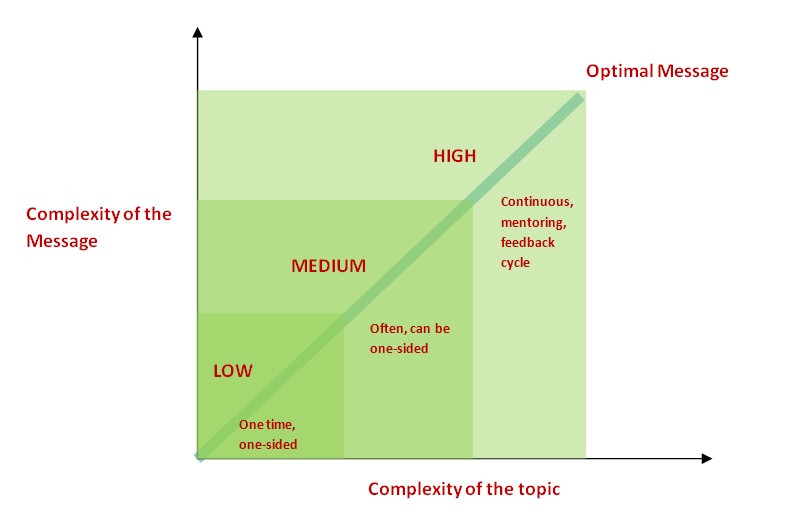
The common thread in communication or solving problems is the emphasis on KISS (Keep It Simple Stupid). However, in an effort to keeping things simple, we often engage in mismatched complexity. Complex ideas should not be exclusively conveyed as simple statements. The ideal state is that we use the optimal message – adjust complexity of the message to match the complexity of the content. This is detailed in the schematic below. The optimal message is the 45 degree line between the two axes. A highly complex topic should not be expressed using a low complex message such as a slogan or policy statement. In a similar fashion, a low complexity topic does not need a high complexity message method such as an hour-long meeting to discuss something fundamental.

message diagram

The highly complex topic can use both low and medium message methods to ensure that the complex idea is conveyed properly. The diffusion of the highly complex topic can build upon both low and medium message methods. The diffusion of a highly complex topic also requires redundancy, which means that the message must be conveyed as many times as needed and use of metaphors and analogies. One definition of “communication” from the great Gregory Bateson is – Communication is what the receiver understands, not what the sender says.

A good example to explain this is Toyota Production System. The concept of a production system for the entire plant is a complex concept. Toyota Production System was once called “the Ohno method” since it was not implemented company-wide and there was doubt as to the success of the system being a long-term plan. Ohno’s message was not written down anywhere and the employees did not learn that from a manual or a video. Ohno conveyed his ideas by being at the gemba (actual work place), implementing ideas and learning from them. He also developed employees by constantly challenging them to find a better way with less. Ohno used to draw a chalk circle on the floor for supervisors/engineers to make them see what he saw. He developed the Toyota Production System and with continuous mentoring, nurtured it together with the employees. Today there are over 1000 books at Amazon regarding “Lean Manufacturing”. When top management is looking at implementing lean, the message should match the complexity of the content. Low complex message methods like slogans or placards will not work. Medium complex message methods like newsletters, books etc will not work. This will require constant on-the-floor interactive mentoring. At the same time, slogans and newsletters can aid in the diffusion process.

Final Words:

I have always felt that KISS and Poka-Yoke have a similar story to tell from a respect-for-people standpoint. Poka-Yoke (Error proofing) was initially termed as Baka-Yoke to indicate “fool proofing”. Shigeo Shingo changed it to Poke-Yoke to indicate error proofing after an employee asked him “have I been such a fool?” In a similar fashion, KISS was initially put forth as “Keep It Simple Stupid” (without the comma). Nowadays, this has been changed to “Keep It Short and Simple” and “Keep It Simple Straightforward”.

It is good to keep things simple and to view at a problem from a 10,000 feet level. However, we should not stop there. We need to understand the context and complexity of the problem and then create this information in such a manner that it can be diffused across the organization. This can be repeated as many times as needed. Do not insist on simplicity without understanding the complexity of the problem. Asking to keep things simple is an attempt to keep round pegs in familiar square holes. When there is a mismatch of complexity it leads to incorrect solutions and setbacks. As Einstein may have said, “everything should be as simple as it can, but not simpler”.

We can also view the complexity/message diagram in the light of the Feynman (Nobel-prize winning physicist Richard Feynman) technique of studying hard subjects. Feynman came up with a method where he would start studying and making notes pretending to prepare a lecture for a class. He would use simple terms and analogies to explain the subject. When he got stuck he would go back and try to understand it even better. He would then proceed with making notes. He would repeat the steps many times until he got the concept thoroughly. Moving from High to Medium to Low in the diagram, and going back-and-forth helps to connect the dots and gain a better understanding.

I will finish with another quote, attributed to Lotfi Zadeh (father of Fuzzy Logic):

“As complexity rises, precise statements lose meaning and meaningful statements lose precision.”

Always keep on learning…

In case you missed it, my last post was Flat Earth Lean: