The System in the Box:

W

In today’s post, I am looking at the brilliant philosopher Ludwig Wittgenstein’s “The Beetle in the Box” analogy.

Wittgenstein rose to fame with his first book, Tractatus Logico-Philosophicus, in which he proposed the idea of a picture theory for words. Very loosely put, words correspond to objects in the real world, and any statement should be a picture of these objects in relation to one another. For example, “the cat is on the mat.” However, in his later years Wittgenstein turned away from his ideas. He came to see the meaning of words in how they are used. The meaning is in its use by the public. He came to realize that private language is not possible. To provide a simple explanation, we need an external reference to calibrate meanings to our words. If you are experiencing pain, all you can say is that you experience pain. While the experience of pain is private, all we have is a public language to explain it in. For example, if we experience a severe pain on Monday and decided to call it “X”. A week from that day, if you have some pain and you decide to call it “Y”, one cannot be sure if “X” was the same as “Y”.

The beetle in the box analogy is detailed in his second book released posthumously, Philosophical Investigations:

Suppose everyone had a box with something in it: we call it a ‘beetle’. No one can look into anyone else’s box, and everyone says he knows what a beetle is by looking at his beetle. Here it would be quite possible for everyone to have something different in his box. One might even imagine such a thing constantly changing. But suppose the word ‘beetle’ had a use in these people’s language? If so, it would not be used as the name of a thing. The thing in the box has no place in the language-game at all; not even as a something: for the box might even be empty. No one can ‘divide through’ by the thing in the box; it cancels out, whatever it is.

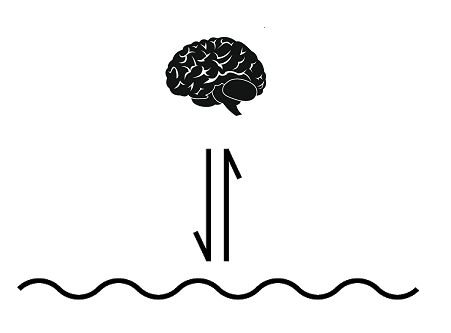
The beetle in the box is a thought experiment to show that private language is not possible. The beetle in my box is visible to only me, and I cannot see the beetle in anybody else’s box. All I can see is the box. The way that I understand the beetle or the word “beetle” is by interacting with others. I learn about the meaning only through the use of the word in conversations with others and how others use that word. This is true, even if they cannot see my beetle or if I cannot see their beetle. I can never experience and thus know their pain or any other private sensations. But we all use the same words to explain how each of us experience the world. The word beetle becomes whatever is in the box, even if the beetles are of different colors, sizes, types etc. Sometimes, the beetles could even be absent. The box in this case is the public language we use to explain the beetle which is the private experience. The meaning of the word beetle then is not what it refers to, but the meaning is determined by how it is used by all of us. It is an emergent phenomenon. And sometimes, the meaning itself changes over time. There is no way for me to know what your beetle looks like. The box comes to represent the beetle.

I love this thought experiment because we all assume that we can tell what others feel like. We talk as if we are all talking about the same world. We talk about the beetle as if everybody has the same beetle in their boxes. Everyone’s world is different, and their worlds are constructed based on their worldviews, mental models, schemas, biases etc. The construction is a dynamic and ongoing process. The construction is a recursive process in the sense, our construction influences how we interact in the world, which in turn influences the ongoing construction of the world. From this standpoint, we can see that reality is multidimensional and that there are as many realities as the number of participants. There is no one reality, and we cannot assume that our reality is the correct one. What exists is a cocreated reality with others, and this co-constructing activity is on a delicate balance. Nobody knows everything, but everybody knows something. Nobody has access to a true reality. To paraphrase Heinz von Foerster, we do not see it as it is, it is as we see it.

We all talk about systems as if we all know what they mean. We say that we need to think about the purpose of the system or that it is the system, not the people. Systems are mental constructs we create based on our worldviews to make sense of phenomena around us. Most of the time when we talk about systems, we are speaking about a “part”. For example, when we talk about the “transportation system”, we are actually meaning the bus that is running late. Similar to the beetle in the box, my system is not the same as your system. My view of the healthcare system changes when I become sick versus when I am healthy. The same system has a different meaning and purpose if you are a healthcare worker versus if you are on the board of the hospital. We cannot stipulate a purpose for the system because systems do not have an ontological status. We cannot also stipulate a purpose for a co-creator. To do so will be to assume that we can see the beetle in their box. The great Systems Thinker West Churchman said that systems approach starts when one sees the world through another person’s eyes. Wittgenstein would say that this is impossible. But I think what Churchman was getting at is to realize that our “system” is not the only system. What we need is to seek understanding. With this view, Churchman also said that, there are no experts in the systems approach. Werner Ulrich, who built upon the ideas of Churchman said the following:

The systems idea, provided we take it seriously, urges us to recognize our constant failure to think and act rationally in a comprehensive sense. Mainstream systems literature somehow always manages to have us forget the fact that a lack of comprehensive rationality is inevitably part of the conditio humana. Most authors seek to demonstrate how and why their systems approaches extend the bounds of rational explanation or design accepted in their fields. West Churchman never does. To him, the systems idea poses a challenge to critical self-reflection. It compels him to raise fundamental epistemological and ethical issues concerning the systems planner’s claim to rationality. He never pretends to have the answers; instead, he asks himself and his readers a lot of thoroughly puzzling questions.

Even though systems are not real, we still use the word to further explain our thoughts and ideas. Ulrich continues:

What matters is ultimately not that we achieve comprehensive knowledge about the system in question (an impossible feat) but rather, that we understand the reasons and implications of our inevitable lack of comprehensive knowledge.

 The crucial issue, then, is no longer “What do we know?” but rather “How do we deal with the fact that we don’t know enough?” In particular, uncertainty about the whole systems implications of our actions does not dispense us from moral responsibility; hence, “the problem of systems improvement is the problem of the ‘ethics of the whole system’.”

 A book on morals is not moral. We cannot assume full access to the real world and stipulate purposes for our fellow cocreators. The purpose of language is to not expose our thoughts, but to make them presentable. In today’s world where complexity is ever increasing due to increasing connections, the beetle in the box analogy is important to remember.

 Similar to the famous credit card ad, I ask, “What is in your box?”

Stay safe and Always keep on learning…

In case you missed it, my last post was The Map at the Gemba:

The Map at the Gemba:

Map

This is available as part of a book offering that is free for community members of Cyb3rSynLabs. Please check here (https://www.cyb3rsynlabs.com/c/books/) for Second Order Cybernetics Essays for Silicon Valley. The e-book version is available here (https://www.cyb3rsyn.com/products/soc-book)

 Stay safe and Always keep on learning…

In case you missed it, my last post was The Cybernetics of Respect for People:

Magician at the Gemba:

157281886840401048HJ

In today’s post, I will be discussing magic, one of my passions. My inspiration for today’s post comes from the great Cybernetician Heinz von Foerster, the wonderful mentalist Derren Brown and the silent partner of Penn & Teller, Raymond Teller. When I was a young kid, I believed that true magic was real. I saw the great American Illusionist David Copperfield on TV, where he did amazing illusions and as a finale act flew around the whole stage and the arena. I also heard about him vanishing the Statue of Liberty in front of spectators. These amazing feats led me to believe that magic was indeed real. I started learning about magic from that young age onward. I became disillusioned quickly when I came across the many secrets of magic. I am thankful for this early disillusionment since it made me a skeptic from a young age.

Magicians can sometimes view themselves as a God-like figure, someone who is superior and can do things that others cannot. They go into theatrics with the belief that they are improving the craft of magic. Derren Brown warns against this approach:

Magic is massively flawed as theatre… Magic is performance, and performance should have an honesty, a relevance and a resonance if it is to be offered to spectators without insulting them… The magician’s role must change from a whimsical god-figure who can click his fingers and have something change in the primary world, to a hero-figure who, with his skills and intriguing character, provides a link with a secondary world of esoteric power. He must arrange circumstances in the primary world – such, as the correct participation of his small audience – in such a way that if that precarious balance is held, a glimmer of magic (only just held under control for a while) will shine through and illuminate the primary world with wonder. That requires investment of time and energy from him and from his audience, and involves the overcoming of conflict. When the routine is over, something has shifted in the world, for both spectator and performer. There is a true sense of catharsis.

Heinz von Foerster, the Socrates of Cybernetics, was also an accomplished magician as a youth. Von Foerster provides his views on magic:

We did it (magic) in such a way that the spectator constructs a world for himself, in which what he wished for takes place. That has led me to the sentence: “The hearer, not the speaker, determines the meaning of an utterance.”

The other thing we saw is: When one succeeds in creating the world in which one can give rise to miracles, it is the fantasy, the imagination, the mind’s eye of the spectator that you support and nourish.

We are letting the spectator construct the experience of magic. We should not construct it for them. There is a difference between a magician saying, “See there is nothing in my hand,” and the spectator saying, “I see nothing in your hand.” The magic occurs in the minds of the spectator. Great magicians allow the spectator to construct the magic. There is no magic without a spectator.

At the Gemba:

How does all this matter to us at the gemba? During my undergrad studies, I first heard about this magical new production system called ‘Lean Manufacturing’. Apparently, Toyota was doing magical things with this approach and all automakers were trying to copy them. Just like with magic tricks, if one is curious enough, the secret of a trick can be found out. But that will not let you be like David Copperfield or Derren Brown. To paraphrase the Toyota veteran, Hajime Ohba, copying what Toyota does is like creating a Buddha image and forgetting to put a soul in it. Later on, when I started working, I was advised by a senior manager that the only book I need to read is ‘The Goal’ by Eliyahu Goldratt. Supposedly, the book had all the answers I would ever need. Luckily, I was already disillusioned once with magic. As I have written a lot in the past, copying Toyota’s solutions (tricks) will not help if you don’t have Toyota’s problems.  The solution to a problem should be isomorphic. That is, the key should match the lock it opens. Toyota developed its production system over decades of trial and error. We cannot simply copy the tools without understanding what problems they were trying to solve. To paraphrase another Toyotaism, Toyota’s Production System is different from the Toyota Production System (TPS).

This brings me to the idea of constructivism. I have talked about this before as well. A bad magician tries to sell the idea of a Superbeing who can do things that don’t seem to belong to the natural realm. He is trying to force his constructed reality onto others. A good magician on the other hand invites the spectator to create the magic in their mind. This is evident in the statements from Heinz von Foerster. The role of the observer is of utmost importance because he is the one doing the description of the phenomenon. What he describes is based on what he already knows. The properties of the “observed” are therefore the properties infused by the observer. The emphasis is then about epistemology (study of knowledge), not ontology (study of reality). Multiple perspectives and continued learning are important. One cannot optimize a complex system. It is dynamic, nonlinear and multidimensional. There are at least as many realities as the number of participants in the complex system. What optimization means depends upon the observer. There may never be a “perfect” answer to a complex problem. There are definitely wrong answers. There are definitely ‘less wrong’ answers. We should seek understanding and learn from multiple perspectives. Humility is a virtue. To paraphrase von Foerster: “Only when you realize you are blind can you see!” This is such a powerful statement. If we don’t know that our understanding is faulty, we cannot improve our understanding. This touches on the idea of Hansei or “self-reflection” in TPS.

We should be aware that everybody has a view of what is out there (reality). We all react to an internally constructed version of reality built of our internal schema/mental models/biases/what we know etc. We cannot be God-like and assume that our version is the true reality. We should not force our version on others as well. We should allow our cocreators/participants to co-construct our social reality together. This touches on the idea of Respect for Humanity in TPS.

To keep with the theme of this post, I will post some of my old videos of magic below, and end with a funny magician joke.

A Spanish magician told everyone he would disappear.

He said, “Uno, dos….” Poof! He disappeared without a tres.

Always keep on learning…

In case you missed it, my last post was The Free Energy Principle at the Gemba:

My performance videos from a long time ago (pardon the video quality)…

The Free Energy Principle at the Gemba:

FEP

In today’s post, I am looking at the Free Energy Principle (FEP) by the British neuroscientist, Karl Friston. The FEP basically states that in order to resist the natural tendency to disorder, adaptive agents must minimize surprise. A good example to explain this is to say successful fish typically find themselves surrounded by water, and very atypically find themselves out of water, since being out of water for an extended time will lead to a breakdown of homoeostatic (autopoietic) relations.[1]

Here the free energy refers to an information-theoretic construct:

Because the distribution of ‘surprising’ events is in general unknown and unknowable, organisms must instead minimize a tractable proxy, which according to the FEP turns out to be ‘free energy’. Free energy in this context is an information-theoretic construct that (i) provides an upper bound on the extent to which sensory data is atypical (‘surprising’) and (ii) can be evaluated by an organism, because it depends eventually only on sensory input and an internal model of the environmental causes of sensory input.[1]

In FEP, our brains are viewed as predictive engines, or also Bayesian Inference engines. This idea is built on predictive coding/processing that goes back to the German physician and physicist Hermann von Helmholtz from the 1800s. The main idea is that we have a hierarchical structure in our brain that tries to predict what is going to happen based on the previous sensory data received. As philosopher Andy Clarke explains, our brain is not a cognitive couch potato waiting for sensory input to make sense of what is going on. It is actively predicting what is going to happen next. This is why minimizing the surprise is important. For example, when we lift a closed container, we predict that it is going to have a certain weight based on our previous experiences and the visual signal of the container. We are surprised if the container is light in weight and can be lifted easily. We have similar experiences when we miss a step on the staircase. From a mathematical standpoint, we can say that when our internal model matches the sensory input, we are not surprised. This refers to the KL divergence in information theory. The lower the divergence, the better the fit between the model and the sensory input, and lower the surprise. The hierarchical model is top down. The prediction flows top down, while the sensory data flows bottom up. If the model matches the sensory data, then nothing goes up the chain. However, when there is a significant difference between the top down prediction and the bottom up incoming sensory date, the difference is raised up the chain. One of my favorite examples to explain this further is to imagine that you are in the shower with your radio playing. You can faintly hear the radio in the shower. When your favorite song plays on the radio, you feel like you can hear it better than when an unfamiliar song is played. This is because your brain is able to better predict what is going to happen and the prediction helps smooth out the incoming auditory signals. British neuroscientist Anil Seth has a great quote regarding the predictive processing idea, “perception is controlled hallucination.”

Andy Clarke explains this further:

Perception itself is a kind of controlled hallucination… [T]he sensory information here acts as feedback on your expectations. It allows you to often correct them and to refine them.

(T)o perceive the world is to successfully predict our own sensory states. The brain uses stored knowledge about the structure of the world and the probabilities of one state or event following another to generate a prediction of what the current state is likely to be, given the previous one and this body of knowledge. Mismatches between the prediction and the received signal generate error signals that nuance the prediction or (in more extreme cases) drive learning and plasticity.

Predictive coding models suggest that what emerges first is the general gist (including the general affective feel) of the scene, with the details becoming progressively filled in as the brain uses that larger context — time and task allowing — to generate finer and finer predictions of detail. There is a very real sense in which we properly perceive the forest before the trees.

What we perceive (or think we perceive) is heavily determined by what we know, and what we know (or think we know) is constantly conditioned on what we perceive (or think we perceive).

(T)he task of the perceiving brain is to account for (to accommodate or ‘explain away’) the incoming or ‘driving’ sensory signal by means of a matching top-down prediction. The better the match, the less prediction error then propagates up the hierarchy. The higher level guesses are thus acting as priors for the lower level processing, in the fashion (as remarked earlier) of so-called ‘empirical Bayes’.

The question on what happens when the prediction does not match is best explained by Friston:

“The free-energy considered here represents a bound on the surprise inherent in any exchange with the environment, under expectations encoded by its state or configuration. A system can minimize free energy by changing its configuration to change the way it samples the environment, or to change its expectations. These changes correspond to action and perception, respectively, and lead to an adaptive exchange with the environment that is characteristic of biological systems. This treatment implies that the system’s state and structure encode an implicit and probabilistic model of the environment.”

Our brains are continuously sampling the data coming in and making predictions. When there is a mismatch between the prediction and the data, we have three options.

  • Update our model to match the incoming data.
  • Attempt to change the environment so that the model matches the environment. Try resampling the data coming in.
  • Ignore and do nothing.

Option 3 is not always something that will yield positive results. Option 1 is a learning process where we are updating our internal models based on the new evidence. Option 2 show ours strong confidence in our internal model, and that we are able to change the environment. Or perhaps there is something wrong with the incoming data and we have to get more data to proceed.

The ideas from FEP can also further our understanding on our ability to balance between maintaining status quo (exploit) and going outside our comfort zones (explore). To paraphrase the English polymath Spencer Brown, the first act of cognition is to differentiate (act of distinction). We start with differentiating – Me/everything else. We experience and “bring forth” the world around us by constructing it inside our mind. This construction has to be a simpler version due to the very high complexity of the world around us. We only care about correlations that matter to us in our local environment. This matters the most for our survival and sustenance. This leads to a tension. We want to look for things that confirm our hypotheses and maintain status quo. This is a short-term vision. However, this doesn’t help in the long run with our sustenance. We also need to explore to look for things that we don’t know about. This is the long-term vision. This helps us prepare to adapt with the everchanging environment. There is a balance between the two.

The idea of FEP can go from “I model the world” to “we model the world” to “we model ourselves modelling the world.” As part of a larger human system, we can cocreate a shared model of our environment and collaborate to minimize the free energy leading to our sustenance as a society.

Final Words:

FEP is a fascinating field and I welcome the readers to check out the works of Karl Friston, Andy Clarke and others. I will finish with the insight from Friston that the idea of minimizing free energy is also a way to recognize one’s existence.

Avoiding surprises means that one has to model and anticipate a changing and itinerant world. This implies that the models used to quantify surprise must themselves embody itinerant wandering through sensory states (because they have been selected by exposure to an inconstant world): Under the free-energy principle, the agent will become an optimal (if approximate) model of its environment. This is because, mathematically, surprise is also the negative log-evidence for the model entailed by the agent. This means minimizing surprise maximizes the evidence for the agent (model). Put simply, the agent becomes a model of the environment in which it is immersed. This is exactly consistent with the Good Regulator theorem of Conant and Ashby (1970). This theorem, which is central to cybernetics, states that “every Good Regulator of a system must be a model of that system.” .. Like adaptive fitness, the free-energy formulation is not a mechanism or magic recipe for life; it is just a characterization of biological systems that exist. In fact, adaptive fitness and (negative) free energy are considered by some to be the same thing.

Always keep on learning…

In case you missed it, my last post was The Whole is ________ than the sum of its parts:

[1] The free energy principle for action and perception: A mathematical review. Christopher L. Buckley, Chang Sub Kim, Simon McGregor, Anil K. Seth (2017)

The Whole is ________ than the sum of its parts:

Rubin2

One of the common expressions depicting holistic thinking is – “the whole is larger/greater than the sum of its parts.” In today’s post I would like to look at this expression from a few different perspectives.

Kurt Koffka:

Kurt Koffka (1886 – 1941), the brilliant Gestalt psychologist said, “the whole is other than the sum of its parts.” Koffka was adamant to not misstate him as the whole being larger than the sum of its parts. He was pointing out that the whole is not merely an addition of parts, and that the whole has a separate existence. We humans tend to organize our percepts into wholes. Our mental shortcuts first make us see the whole, rather than the parts. The term “gestalt” itself refers to form or pattern. We are prone to identifying larger patterns from partial data.

Andras Angyal:

Andras Angyal (1902 – 1960) was an American psychiatrist and a Systems Theorist. He emphasized the importance of positional values of parts within a system. He did not view the whole being more than the sum of its parts.

Summation, however, is not organization, but it is of little help simply to say that a system is more than the sum of its parts…“A system is a distribution of constituents with positional values in a dimensional domain.” Functional relationship is the key concept of the reductive approach. For a systems approach a different concept, such as that of positional value, is required which expresses arrangement and compels reference of the parts back to the whole. The value of parts is what they do for the whole. Their function is its maintenance. Only a whole maintained in this way can relate to an environment. To make possible relations with an environment is the function of the whole.

An easy example is to put together three sticks of different lengths. The order of the sticks does not matter for the total length of the three sticks put together. For contrast, let’s look at a car. For a car, the positional value or the order of the parts are of utmost importance. They have to go together in a specific manner for the car to be a car.

Edgar Morin:

Edgar Morin, the brilliant French philosopher says that “the whole is less than the sum of its parts.” This is a powerful statement. The parts lose its freedom when it is constrained to be in a specific form of organization. The whole is more constrained, or has less freedom than the sum of freedoms of the parts put together. The parts give up some of its properties when it organizes to be a whole. At the same time, the whole is also more than the sum of its parts. Morin says:

In order to understand the apparent contradiction of a whole that is simultaneously more and less than the sum of its parts, I claim the heritage of the Greek philosopher Heraclitus, from the 6th century BC: when you reach a contradiction, it doesn’t necessarily mean an error, but rather that you have touched on a fundamental problem. Therefore, I believe that these contradictions should be recognized and upheld, rather than circumvented.

Additionally, Morin stated:

The whole is greater than the sum of the parts (a principle which is widely acknowledged and intuitively recognized at all macroscopic levels), since a macro-unity arises at the level of the whole, along with emergent phenomena, i.e., new qualities or properties.

The whole is less than the sum of the parts, since some of the qualities or properties of the parts are inhibited or suppressed altogether under the influence of the constraints resulting from the organization of the whole.

The whole is greater than the whole, since the whole as a whole affects the parts retroactively, while the parts in turn retroactively affect the whole (in other words, the whole is more than a global entity-it has a dynamic organization).

Morin had strong words about just using holism:

Holism is a partial, one-dimensional, and simplifying vision of the whole. It reduces all other system-related ideas to the idea of totality, whereas it should be a question of confluence. Holism thus arises from the paradigm of simplification (or reduction of the complex to a master-concept or master-category).

Final Words:

The idea that the whole is different or other than the sum of its parts is a different way of thinking. Holism can be as limiting as reductionism. One might say that thinking in terms of wholes is very much thinking in terms of parts since the whole can be construed to be a part of a larger system. The emphasis is on the observer and the purpose that the observer has with the specific perspective that he or she is taking. All humans are purposeful creatures. What one observes, depends upon the properties of the observer. This also means that the other observers, the cocreators or the participants in the system, have their own purposes. We cannot stipulate the purpose(s) for a fellow being. To paraphrase West Churchman, systems thinking begins when one sees through the eyes of another.

The idea that the whole is more important than the part should be challenged, especially when it comes to human systems. All human systems are in a delicate balance with each other, which can tip one way or the other based on emerging attractors. The individual strives for autonomy, while the larger human systems the individual is part of, strive for homonomy. One should not ignore the other.

I will finish with another lesson from Morin:

The parts are at once less and greater than the parts. The most remarkable emergent phenomena within a highly complex system, such as human society, occur not only at the level of the whole (society), but also at the level of the individuals (even especially at that level-witness the fact that self-consciousness only emerges in individuals). In this sense: The parts are sometimes greater than the whole. As Stafford Beer has noted: “[T]he most profitable control system for the parts does not exclude the bankruptcy of the whole.” “Progress” does not necessarily consist in the construction of larger and larger wholes; on the contrary, it may lie in the freedom and independence of small components. The richness of the universe is not found in its dissipative totality, but in the small reflexive entities-the deviant and peripheral units-which have self-assembled within it…

Always keep on learning…

In case you missed it, my last post was Constructivism at the Gemba:

My Recent Tweets on Cybernetics / Systems Thinking:

cybernetics tweets

Do Systems Exist?

Heinz von Foerster, Master Storyteller!

My humble take on von Foerster’s Aesthetic Imperative:

Wittgenstein’s Ruler and Models:

The Whole is NOT greater than the sum of its parts:

Autonomy, what’s the big deal?

Teaching from a Cybernetics standpoint:

My favorite translation of von Foerster’s Ethical Imperative:

The map IS the territory! Another von Foerster Gem:

Carlo Rovelli, the Systems Thinker!

Another von Foerster gem:

Heinz von Foerster’s Therapeutic Imperative:

Umpleby on Ashby’s Epistemology:

There are no such things as self-organizing systems!

What are systems again?

Systems thinking is fundamentally based on a spatial metaphor:

If you enjoyed these, please follow me on Twitter. https://twitter.com/harish_josev

In case you missed it, my last post was Wu Wei at the Gemba: