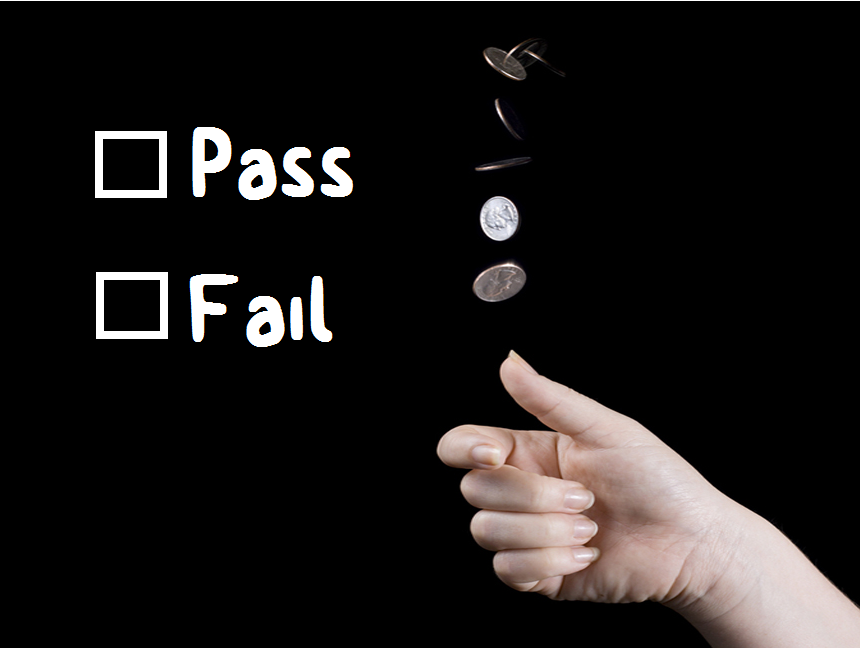
Is Inspection Value Added?

pass fail

In popular Lean circles, the idea of value-added is represented by the following two criteria;

  • Is your customer willing to pay for the activity?
  • Is the activity physically changing the shape or character of the product so that it increases the product’s value in the eyes of the customer?

In lieu of these criteria, is inspection value added? Before answering, please be aware that this is a loaded question. Also understand that the question is not “should we inspect product?”

Inspection generally does not alter the physical attributes of a product. Inspection in the traditional sense accepts or rejects the product. In this aspect, inspection should prevent a bad product from reaching the hands of the customer. Does this mean that then the inspection activity is value added?

As a customer, I would love it if the product is inspected, and reinspected ten times. But I would not want to pay for such an activity. Are we as a society of consumers wrongfully trained to think that inspection somehow increases the quality of the product?

Deming’s view:

Dr. Deming’s view of inspection is as follows;

Cease dependence on inspection to achieve quality. Eliminate the need for inspection on a mass basis by building quality into the product in the first place.

In fact, this is the third principle of his 14 key principles for management to follow for significantly improving the effectiveness of a business or organization. Deming’s view is clearly stated in his “Out of Crisis” book. “Inspection does not improve the quality, nor guarantee quality. Inspection is too late. The quality, good or bad, is already in the product.”

Shigeo Shingo’s View:

Shigeo Shingo is considered by many a powerful force behind Toyota Production System. He trained Toyota employees with his “P-courses”. Shingo was the person behind Poka-yoke (Error proof) and SMED (Single Minute Exchange of Dies). In his views, there were three types of inspection:

  • Judgment Inspection – inspections that discover defects
  • Informative Inspection – inspections that reduce defects
  • Source Inspection – inspections that eliminate defects

Judgment inspection is an inspection that is performed after the fact. The lot is produced, and then inspection is performed to determine if the lot is acceptable or not. In Shingo’s words “It (Judgment Inspection) remains inherently a kind of postmortem inspection, however, for no matter how accurately and thoroughly it is performed, it can in no way contribute to lowering the defect rate in the plant itself.” Shingo continues to state that the Judgment Inspection method is consequently of no value, if one wants to bring down defect rates within plants.

Informative Inspection is an inspection that helps in reducing defects. This method feedbacks information to the work process involved, thus allowing actions to take place to correct the process. Shingo describes three types of Informative Inspections.

  1. Statistical Quality Control Systems – This is the system with control charts where one can identify trends or out of control processes, aiding in getting the process back to stability.
  2. Successive Check Systems – This is the system where the component gets inspected by the next operator in the line. Any defect is identified and corrected almost immediately by letting the previous operator know. Please note that ideally this system uses 100% inspection.
  3. Self-check systems – This is the system where the operator can inspect the work that he/she did, and fix the problem immediately. Please note that ideally this system uses 100% inspection.

The final category is Source Inspection. In this category, the feedback loop is so short that as soon as the error occurs, the feedback kicks in preventing the error from becoming a defect.

Feedback Loop – The Key:

The key in determining value in the inspection process is the length of the feedback loop. Judgmental Inspection is the least value adding in this regards because the product lot is already built and completed. Informative Inspection is value adding, since the feedback loop is considerably shorter. Finally, the source inspection is the most value adding since the feedback loop is the shortest.

The feedback loop is shown below.
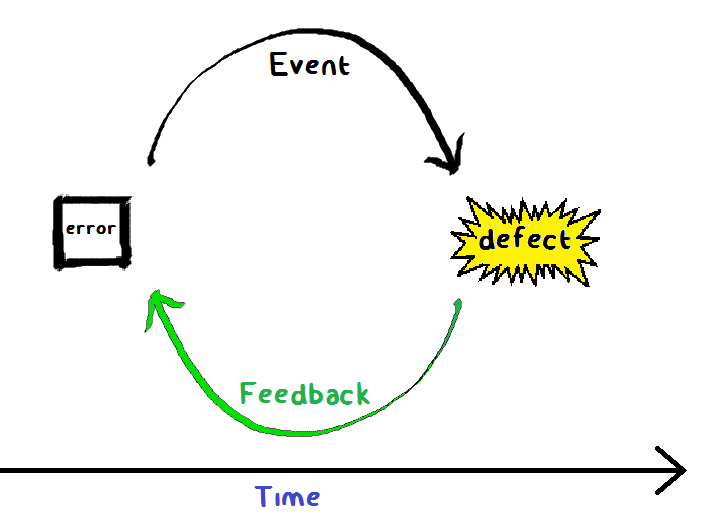
feedback loop

Thus, the shorter the feedback loop, the higher the inspection method’s value.

Final Words:

This post started with a question, Is inspection value added? Errors are inevitable. Drifts in processes are inevitable. Learning from errors is also becoming inevitable. Inspection activities that increase the system’s value are definitely value added. I used to wonder, whether kaizen is value added. Is a customer willing to pay for an organization to be a learning organization? I came to the realization that kaizen is based on a long term principle. The real value is in cultivating the long term trustful relationship with the customer.

Inspection activities that allow the organization to grow and learn are definitely value added. The table below summarizes this post.

table

Always keep on learning…

How do I do Kaizen?

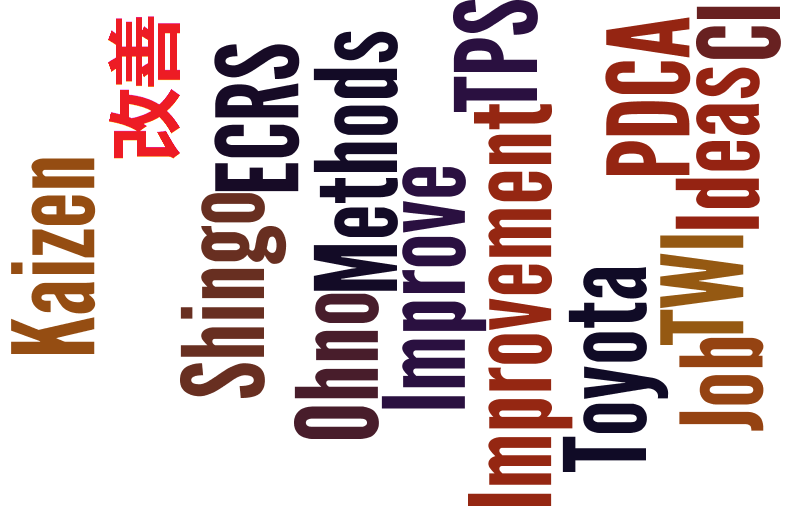
kaizen

Kaizen is most likely one of the most misused words in lean. There is a strong precedence in the lean community to call a “Kaizen Event” or “Kaizen Blitz” as “Kaizen”.

Kaizen just means incremental and continuous improvement towards the ideal state.

A Kaizen Event on the other hand, means generally a week long team-based rapid improvement activity. Thus, there is a definite start and a stop to Kaizen Events, making this almost an oxymoron since Kaizen implies a continuous and never stopping state. This post is about Kaizen and not Kaizen events.

A lot of people talk about the need for doing Kaizen. This post hopefully provides nuts and bolts on how to perform improvement activities. Please note that the first step for Kaizen is to nurture your employees so that they become aware of problems. This is a post for another day.

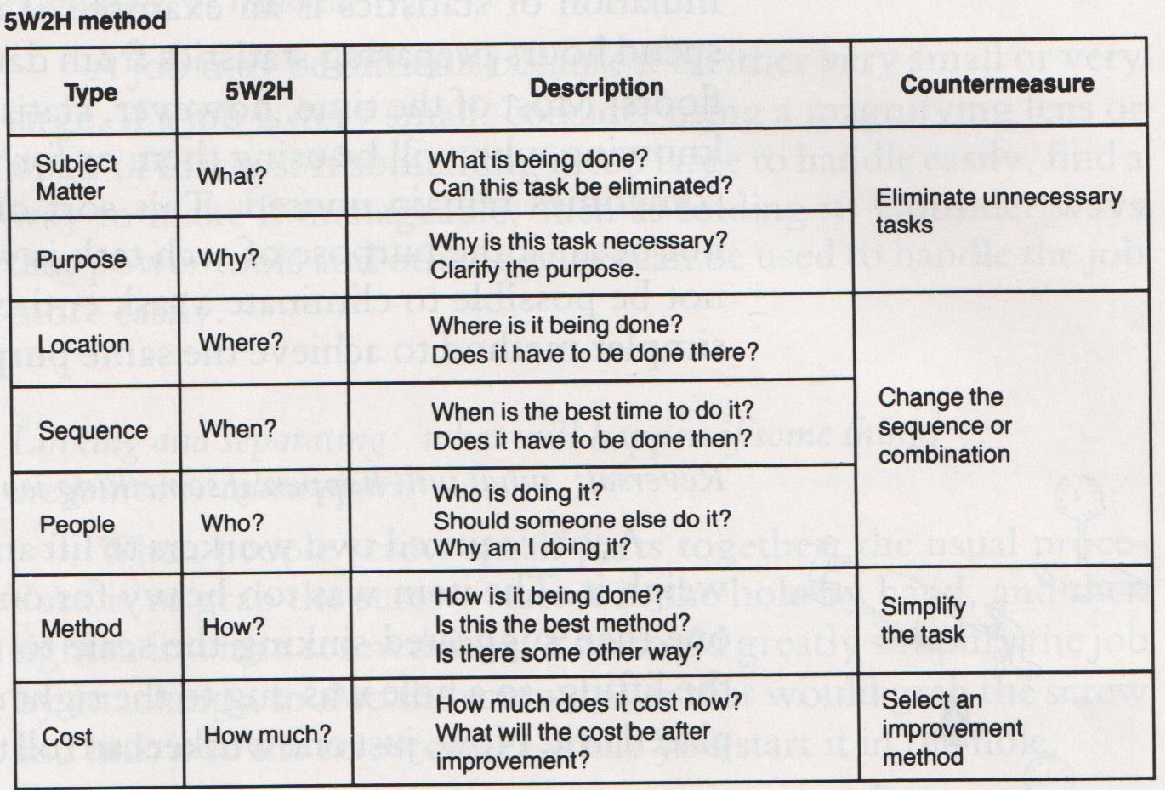
The following figure is taken from The Idea Book, edited by the Japan Human Relations Association (1980). The original title was “Kaizen Teian Handobukku” which roughly translates to “Kaizen through (Employee) Suggestions Handbook”. This figure shows how to approach improving your process. The right column is also known as the ECRS method. Going through these questions under the Description column and then following through the steps in the Countermeasure column is how one can improve a process.

tei

Figure 1 : How to Improve a process?

  • Eliminate Unnecessary Tasks: The ultimate improvement is eliminating a task altogether. The What and Why questions help us with this.
  • Combine the Steps: What are the steps that need to be done in series? Are there any steps that can be done in parallel? The Where, When and Who questions help us with combining steps to eliminate waste. Additionally, combining also reduces the number of discrete steps in the process.
  • Rearrange the Steps: Sometimes changing the sequence also allows us to take away waste from the process. The Where, When and Who questions help us with this. Can we do the current step# 3 before Step# 1? Is there any logic to the current sequence of steps? Can we rearrange to create a better sequence.
  • Simplify: Is there any task that can be simplified to make the whole process faster and better? Does the operator spend a lot of time trying to sort things or fumble with things? Can we ultimately simplify all the steps?

Please note that the steps are carried out in the order described above.

The reader should also be aware that the ECRS process and the questions have roots in USA’s Training Within Industry (TWI) movement that got started near the era that led to World War II. TWI was an emergency service by US to help nation’s war contractors and essential production. There was a need to produce a lot in a short amount of time, and this required training operators to be better within a short amount of time. C R Dooley, the Director of TWI, stated the following; “TWI’s objectives were to help contractors to get out better war production faster, so that the war might be shortened, and to help industry to lower the cost of war materials.

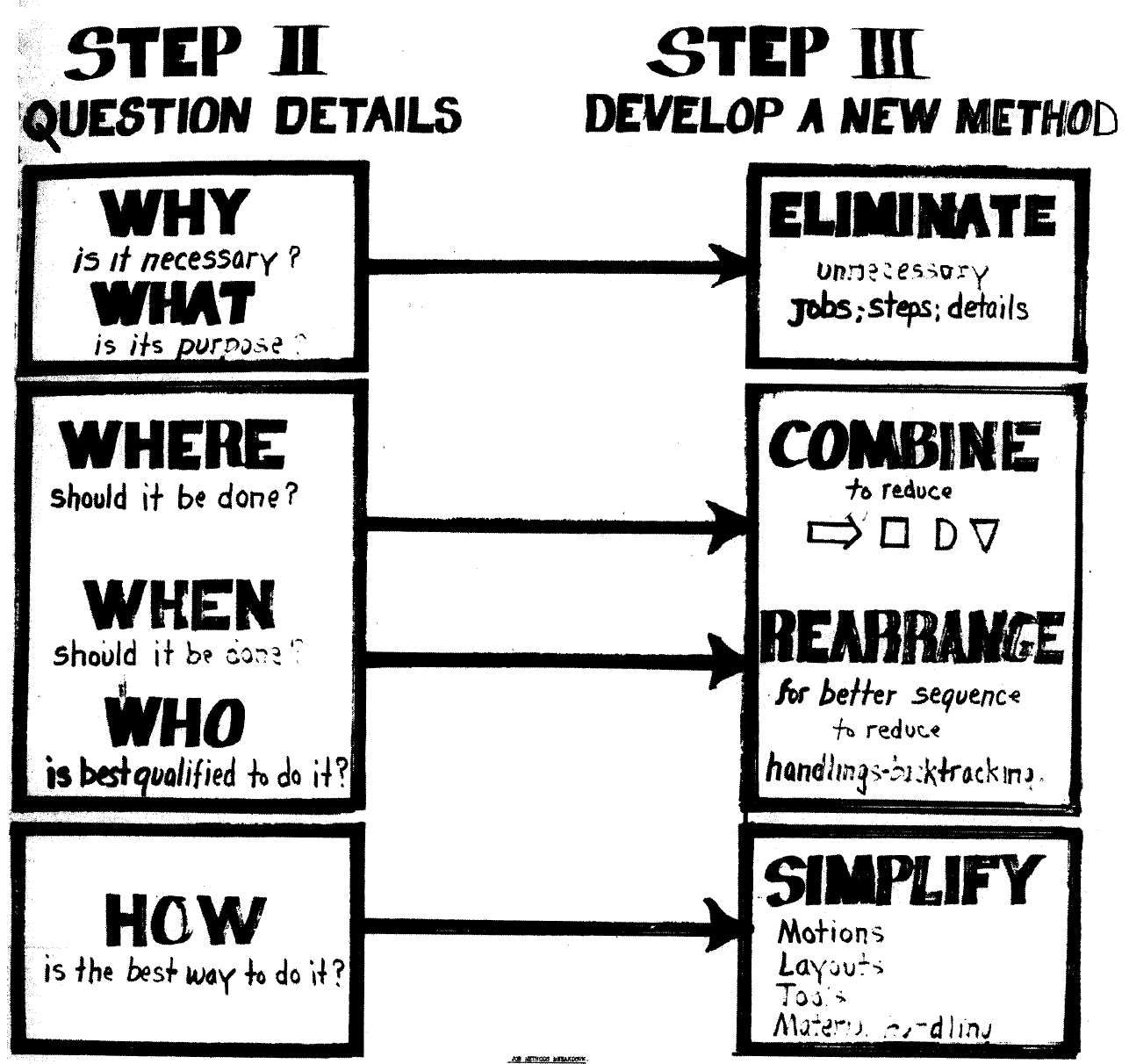
The following figure is taken from the Problem Solving Manual from TWI. The following is also part of Job Methods program.

psmanual

Figure 2: Steps 2 and 3 of Job Methods (TWI)

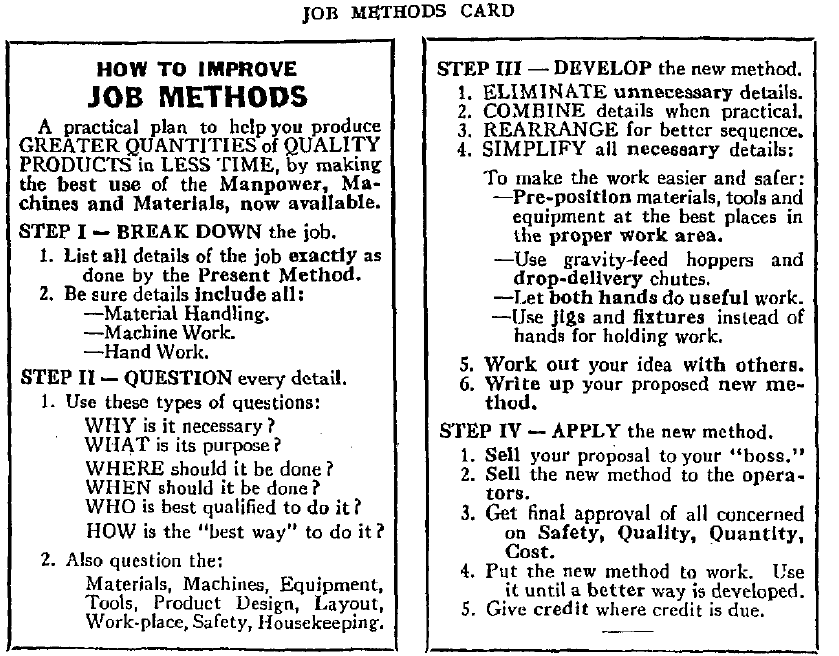
The following is a pocket card that was supplied as part of Job Methods program.

JMcard

Figure 3: Job Methods Card

A keen observer of the Job Methods can find the scientific approach of PDCA (Plan-Do-Check-Act) in it. Additionally, I would also like to bring attention to “Use the new method until a better way is developed” statement. This clearly shows that this is a continuous process.

I encourage the reader to study the Job Methods manual to get a better grasp. You can find a lot more about TWI here. http://chapters.sme.org/204/TWI_Materials/TWIPage.htm

As a side note, Toyota implemented the TWI programs in the early 1950’s. Surprisingly the first of the TWI programs that was dropped was the Job Methods program. This was replaced by Shigeo Shingo’s P-courses that added the Industrial Engineering elements to process improvement activities. Taiichi Ohno wanted to add the importance of takt time, Standard WIP, flow, and pull style production to the idea of Kaizen. (Source: Art Smalley, Isao Kato)

Nugget from the Problem Solving Manual:

The Problem Solving Manual from TWI also identified “Make Ready” and “Put Away” as “movements of material without definite work accomplishment”.

The manual also identified these as the “greatest opportunities for improvement”. It is also noteworthy that “Less than 50% of the total time is usually consumed by the ‘DO’ part of the job.” Current thinking is that the true value added activities equate to less than 5% of a general process that is untouched by any improvement activities.

value

Figure 4: Value (Problem Solving Manual)

Final Words:

Maybe it is ironic that I am going to use the introductory words of C R Dooley, the then Director of TWI, from the Job Methods manual as my final words for this post. You can clearly see the undercurrents of Respect for People and Kaizen in his words.

Most of the men with whom you will work have had years of experience. They have latent ideas which, if properly developed, will increase production, reduce lost time, prevent waste of material, and increase the use of machinery and equipment. These men command your respect because of their knowledge.

Always keep on learning…
What do you mean by “No problem is a problem”:

giphy

When I first heard of “No problem is a problem”, I thought that it was a pretty deep philosophical statement. I could understand what it meant, but I realized at that time that there is something more to that statement, some deeper layers that still need to be understood.

Taiichi Ohno, the father of Toyota Production System is behind this quote. His original version is “Having no problems is the biggest problem of all.” This idea was engrained in the TPS senseis by their senseis.

Three interpretations come to surface when you look at the quote “Having no problems is the biggest problem of all.”

  • We are always surrounded by problems.
  • We are not looking hard enough.
  • By saying “there is no problem”, we are trying to hide problems.

Actually there is more to this basic idea. How would you define the concept of “problem”? Merriam-Webster defines problem as;

  • something that is difficult to deal with : something that is a source of trouble, worry, etc.
  • difficulty in understanding something
  • a feeling of not liking or wanting to do something

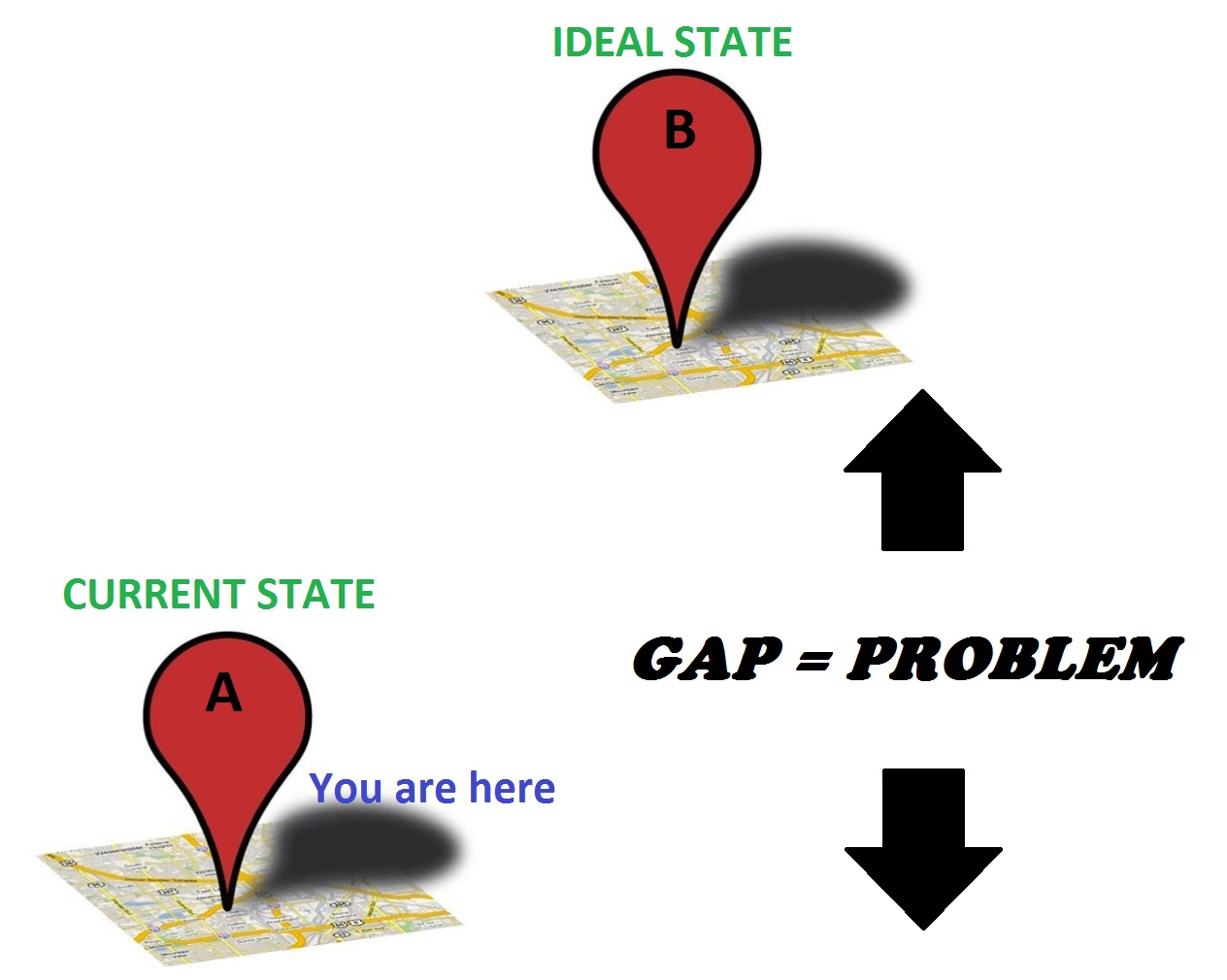
The book Kaizen Teian 2 defines “problem” as the gap between Ideal State and Current State. This is the gold nugget that will provide the deeper meaning to the statement “no problem is a problem”.

problem

At Toyota, you are trained to think of a problem as the gap between the current state and the ideal state. This way, you can start proposing countermeasures to reach the ideal state and thus address the problem. The thought process can be summarized as below.

  • What is your ideal state (goal)?
  • What is your current state?
  • Define the problem as the gap.
  • Suggest countermeasures with an understanding of the cause.
  • Implement and study the new current state.
  • If you have not reached your ideal state go back to step 4.

As you can see, this is the scientific thinking of PDCA (Plan – Do – Check – Act). With this light, and with the new definition of a problem as the gap, if you say there is no problem, it would mean that you have reached your ideal state, which is never the case.

One can thus see Kaizen (continuous improvement) as a problem solving methodology. Kaizen is the engine that chugs along towards the ideal state. This represents slow and incremental progress towards the ideal state. The reader should be aware that Kaizen does not equate fixing things. Fixing things is firefighting. Firefighting is associated with maintaining the status quo. This does not let you move towards your ideal state.

The traditional thinking is viewing problems as the fires that need to be put out. There is no continuous improvement thinking here. Putting out fires just mean that we are back where we started. This is the essence of “no problem is a problem”. By saying “I have no problems”, one is giving up on continuous improvement. By viewing “problem” as the gap, it gives motivation for continuous improvement. Think of this as Pull and putting out fires as Push. Thus, you have a better flow towards your ideal state.

The scientific method detailed above is also taught as genchi genbutsu at Toyota. This roughly translates to “go to the actual place of activity, and grasp the facts”. Interestingly, Honda uses a similar theme under san genshugi. This roughly translates to the three actualities. Honda requires their employees to go to the actual place of activity to gain firsthand information, look at the actual situation, and decide on countermeasures based on actual facts. The “gen” component of the Japanese word means real or actual. Sometimes this is spoken as “gem” as well. For example, gemba means actual place of action.

Final words:

I am at fault for not always using this thinking process. Looking at problems as what should be versus what is right now, helps us understand the problem better. Being at the actual location where the problem happened, and talking to the operator, looking at the equipment or the raw materials, and understanding the facts helps us in moving towards addressing the problem. View problems as the gap between ideal state and current state, and understand that your purpose is to move towards the ideal state. Under this idea of “problem”, you will always have opportunities to move towards the ideal state.

Always keep on learning…

Respect for People – Kin Test:

respect

I work in the field of medical devices. We use a thought experiment in our field that I like to call “the kin test”. It goes something like this. Would you let your kin, your mother, your child or your father, use this medical device we manufacture? Is the quality of this device good enough that it can be used on your dearest kin?

After writing the post about Respect for People last week, I pondered about this kin test and wondered if it is applicable for Respect for People as well.

How would you answer the question, “Would you let your kin, your mother, your child or your father, work at where you are working?” If there is a hesitation in answering this, maybe the Respect for People is something that your company needs to look at.

Everything depreciates with time or so we learn from our accounting counterparts. The equipment you just bought, the building you are in, all these have lost value since day 1. There is something that actually gains value with time – people. People actually gain value with time, their experience and knowledge increases their value with time. This is all the more reason why you should invest in your people.

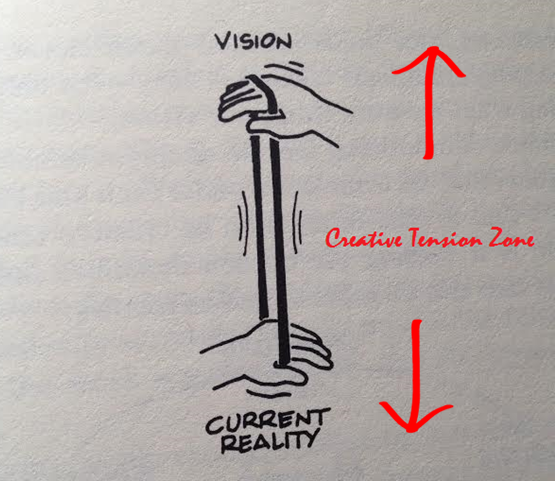
Not a lot is out there about this subject. The following interpretations are based on my research and thinking. Respect for People is not about being nice. It is not about saying “hello”. Respect for people is about nurturing accountability and ownership. Peter Senge, in his book The Fifth Discipline, talks about creative tension.

Creative tension exists when there are two opposing realities,

1) vision – where we should be, and

2) current reality – the status quo, where we are right now.

Creative tension resides in the zone between these two opposing forces. My thinking is that Respect for People also resides in this zone. This is one that nurtures accountability and ownership.

respect - creative tension

This Creative Tension idea actually aligns really well with Toyota Production System (TPS). In TPS, one is asked to understand the current state, the ideal state and the gap. This allows creation of countermeasures to reach the ideal state.

The current reality represents the struggle from middle management and lower management to maintain the status quo. The vision represents the struggle from the upper management and some portion of the middle management to recreate the status quo. This zone is ideal for Kaizen or continuous improvement. The continuous improvement is an everlasting march towards betterment and is incremental in nature.

A key point that I want to shed light on is that, in this zone, answers are never provided. The manager provides coaching and training, and nudges in the right direction such that the employee is able to reach the goal on his own. Giving the answer takes away the accountability; instead the manager mentors the employee to find the ideal solution by giving him thinking tools. This can happen only in the Creative Tension zone. Providing suggestions or answers and not getting involved is not the answer either. The manager is required to mentor the employee and advise him of things to consider to reach the vision state.

The first step for this is to coach the employee to start noticing problems. Taiichi Ohno, the creator of TPS is said to have drawn chalk circles on the factory floor and made his subordinates stand inside it and watch the process to identify problems. They were made to stand inside the circle until their list of problems matched Ohno’s.

Once the problems are identified, the employee is coached to find causes and propose countermeasures. The final step is empowering the employees to make decisions and implement the countermeasures.

These steps are very well described in the book Kaizen Teian 1, as four levels of employee involvement in continuous improvement.

  • Level 0 – Zero energy, zero interest and zero responsibility
  • Level 1 – Noticing and pointing out problems
  • Level 2 – Finding causes of problems, raising ideas and proposing countermeasures
  • Level 3 – Making decisions, implementation and effects

Final Thoughts:

Creating a culture of Respect for People is everybody’s job. What level would you say you are in at your current job?

ct2

As indicated in the figure above, the Respect for People increases as the number of levels goes up. Level 3 clearly results in a culture of Respect for People, and a path well aligned to reach the Vision State. This does not represent a workplace where the employee is asked to leave his brains outside. Nor does it represent a workplace where the employee does not feel empowered. You are creating the most value in a level 3 workplace. This in turn will make the employees feel valued. The level 3 workplace is a workplace that will pass the kin test with flying colors.

Always keep on learning…
Continuous Improvement Inhibitors and ‘Respect for People’:

respect

I recently reread Deming’s Out of Crisis book. I came across a list that caught my eye – perhaps I overread it last time, or did not pay enough attention to it. This list is based on a conversation with 45 production workers. According to them, these inhibitors stood in their way to improvement of quality and productivity. Bear in mind that this book came out first in 1982. After more than thirty years, how many of the items in the list are still valid today? How many of these inhibitors do you have at your workplace?

  • Inadequate training
  • Delays and shortages of components
  • Inadequate documentation on how to do the job
  • Rush jobs (bad planning)
  • Outdated drawings
  • Inadequate design
  • Foremen do not have sufficient knowledge to give leadership
  • Inadequate and wrong tools and instruments
  • No lines of communication between production and management
  • Poor working environment
  • Poor performance measurements
  • Defective components at incoming
  • Struggle to get technical help from Engineers

It is said that Deming helped complete Toyota Production System with the introduction of the PDCA cycle as part of Kaizen. If I look at the list above, I realize that majority of the items are to do with Respect for People.

Maybe it is not by accident that the Toyota Way consists of ‘Continuous Improvement’ and ‘Respect for People’.

respect2

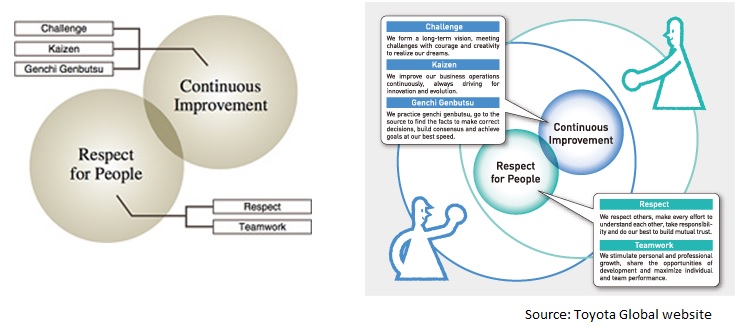
The Toyota Global website states the following;

The Toyota Way is supported by two main pillars: ‘Continuous Improvement’ and ‘Respect for People’. We are never satisfied with where we are and always work to improve our business by putting forward new ideas and working to the best of our abilities. We respect all Toyota stakeholders, and believe the success of our business is created by individual effort and good teamwork.

http://www.toyota-global.com/company/history_of_toyota/75years/data/conditions/philosophy/toyotaway2001.html

There is a saying from Toyota “Monozukuri wa hitozukuri,” which roughly translates to “making things is about making people.”

Deming did not talk specifically about ‘Respect for People’. However, his fourteen key principles to managers for transforming business effectiveness were very much about ‘Respect for People’. I have highlighted the sections that I believe applies to ‘Respect for People’.

  1. Create constancy of purpose toward improvement of product and service.
  2. Adopt the new philosophy. We are in a new economic age.
  3. Cease dependence on mass inspection.
  4. End the practice of awarding business on the basis of a price tag alone(This is about long-term relationship of loyalty and trust with your supplier base).
  5. Improve constantly and forever the system of production and service.
  6. Institute training.
  7. Adopt and institute leadership.
  8. Drive out fear.
  9. Break down barriers between staff areas
  10. Eliminate slogans, exhortations, and targets for the work force.
  11. Eliminate numerical quotas for the work force. Eliminate numerical goals for people in management.
  12. Remove barriers that rob people of pride of workmanship.
  13. Encourage education and self-improvement for everyone.
  14. Take action to accomplish the transformation. The transformation is everybody’s job.

Final Thoughts:

A lot of people before me have tried to define what ‘Respect for People’ mean to them. Jon Miller at GembaPantarei has further clarified that a better translation is Respect for Humanness or Humanity.

http://gembapantarei.com/2008/02/exploring_the_respect_for_people_principle_of_the/

To me, ‘Respect for People’ determines why I come to work today and tomorrow. My view is that by creating the equation making things is making people, Toyota has placed people development as a value added activity.

My view is that by creating the equation making things is making people, Toyota has placed people development as a value added activity.

If you agreed with the list of continuous improvement inhibitors, and if you believe that all, if not some, of the inhibitors are applicable to your organization, you may need to look at ‘Respect for People’.

Always keep on learning…
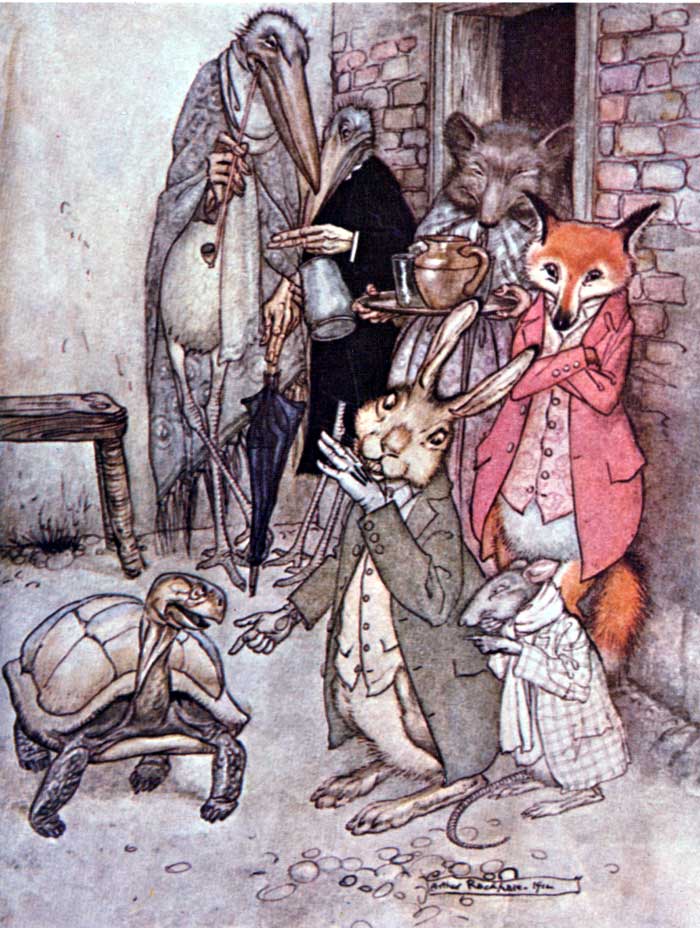
Rethinking Tortoise and Hare fable:

01hare

Taiichi Ohno, creator of the Toyota Production System wrote in his book “Toyota Production System – Beyond Large-Scale Production” that “The Toyota Production System can be realized only when all the workers become tortoises”. He was referencing the Tortoise and the Hare fable.

There are more references to this in Toyota Production System. Some of them are given below:

  • Heijunka – Leveling the load. The heijunka system uses the theme of “steady”. The production schedule is rearranged where daily production matches daily demand. This allows flexibility in your plant and reduces your inventory. Most importantly, it reduces Muri (overburdening) on your people.
  • Go slow to go fast” – unknown. Taiichi Ohno has stated “The slower but consistent tortoise causes less waste and is much more desirable than the speedy hare that races ahead and then stops occasionally to doze” in his book “Toyota Production System – Beyond Large-Scale Production.” The idea is that slowing down helps to see the big picture, and eliminates making mistakes and reworks. Thus in the long run, going slow and steady makes you fast. A corollary to this quote is “Haste makes waste.”

I remember reading the Aesop’s fable about the Tortoise and the Hare, and trying to understand the moral “Slow and steady wins the race”. I did not get the moral from the story. In my eyes, the hare lost simply because he slept during the race. The tortoise did not do anything special. As an adult, I feel that a better moral would be “Do not sleep at your job” or “Keep your eye on the goal”.

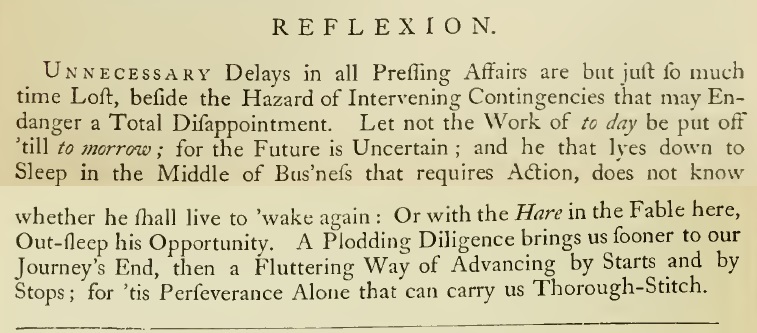
I did some research on the origins of the fable, and came across “Fables of Aesop and other Eminent Mythologists: With Morals and Reflections” written by Sir Roger L’Estrange (1669). Interestingly, the moral of the fable was a little different.

moral

Up and be doing, is an edifying text; for action is the business of life, and there’s no thought of ever coming to the end of our journey in time, if we sleep by the way.

The last section of “Reflection” is indeed a little more familiar.

reflection

A plodding diligence brings us sooner to our journey’s end than a fluttering way of advancing by starts and stops; for it is perseverance alone that can carry us through stitch.”

My take:

My take on the fable is that the race was actually a “long” race and the persistent tortoise had a long term plan (get to the end of the race at any cost), while the hare only was looking at short term gains (food, sleep etc.). Curiously, this aligns with the first principle in Jeff Liker’s Toyota Way.

“Base your management decisions on a long-term philosophy, even at the expense of short-term financial goals.”

Thus, in my view, the moral of the Tortoise and the Hare fable is to operate from a long term philosophy to win the race, without looking at short term gains.

Always keep on learning…
A look at Causality:

combined

As an Engineer, I am very interested in Cause and Effect phenomenon. We have always been trained to understand that correlation does not mean causality. But then how does one establish causality? The most common method is to use randomized blind studies.

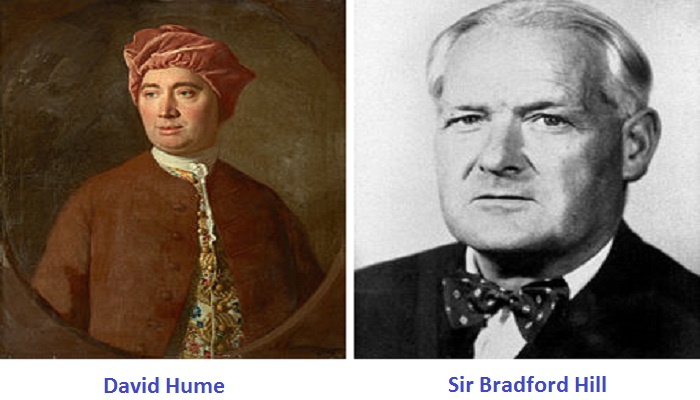
In this post I want to highlight two pioneers who have established paradigms for understanding cause and effect. They are David Fume and Sir Bradford Hill. Understanding their approaches provides a deeper philosophical understanding on cause and effect.

David Hume:

David Hume (1711 – 1776) was a great Scottish Philosopher who authored “A treatise of human nature.” In this, he gives eight rules to clearly determine cause and effect. I have paraphrased some of them for clarity.

  1. The cause and effect must be contiguous in space and time.
  2. The cause must be prior to the effect.
  3. There must be a constant union between the cause and effect. It is chiefly this quality that constitutes the relation.
  4. The same cause always produces the same effect, and the same effect arises from the same cause.
  5. To add to rule 4, where several different objects produce the same effect, it must be by means of some quality, which we discover to be common amongst them.
  6. The difference in the effects of two resembling objects must proceed from that particular, in which they differ. For as like causes always produce like effects, when in any instance we find our expectation to be disappointed, we must conclude that this irregularity proceeds from some difference in the causes.
  7. When any object increases or diminishes with the increase or diminution of its cause, it is to be regarded as a compounded effect, derived from the union of several different effects, which arise from the several different parts of the cause. The absence or presence of one part of the cause is supposed to always be matched with the absence or presence of a proportional part of the effect. This constant conjunction sufficiently proves that the one part is the cause of the other.
  8. An object, which exists for any time in its full perfection without any effect, is not the sole cause of that effect, but requires to be assisted by some other principle, which may forward its influence and operation. For as like effects necessarily follow from like causes, and in a contiguous time and place, their separation for a moment shows, that these causes are not complete ones.

The particular section of Hume’s treatise is available here. https://ebooks.adelaide.edu.au/h/hume/david/h92t/B1.3.15.html

Sir Bradford Hill:

Sir Bradford Hill (1897–1991) is most famous for the Hill criteria in epidemiology. The hill criteria, described first in his paper “The Environment and Disease: Association or Causation”, again provides a list of rules to determine causality. As a side note, his paper used smoking-cancer link as an example, and this was refuted strongly by Sir Ronald Fischer. That will be a post for another day.

The Hill criteria consist of 9 rules, and there are some overlaps with Hume’s rules. Hill has given the following background for his criteria.

“None of these nine viewpoints can bring indisputable evidence for or against a cause and effect hypothesis …. What they can do, with greater or less strength, is to help answer the fundamental question—is there any other way of explaining the set of facts before us, is there any other answer equally, or more, likely than cause and effect?”

  1. Strength: A strong correlation is a pre-requisite to consider causality.
  2. Consistency: To quote Hill “Has it been repeatedly observed by different persons, in different places, circumstances and times?” This answers the reproducibility question. Is the effect reproducible under different set of criteria?
  3. Specificity: Ideally, in epidemiology, an effect is linked with one specific cause. In Hill’s eyes, the more specific the association to a specific cause, the stronger the argument is in favor of causation. In his words, “If the association is limited to specific workers and to particular sites and types of disease and there is no association between the work and other modes of dying, then clearly that is a strong argument in favor of causation.”
  4. Temporality: Hill presented this criterion as a question – which is the cart (effect) and which is the horse (cause)? As noted before, the cause must always come before the effect, on a timeline.
  5. Biological gradient: The keyword here is “gradient”. Is there a comparable increase in effect, with an increase in the cause factor? In his paper, Hill gave the example of death rate to number of cigarettes smoked in a day. This is a kind of feedback loop.
  6. Plausibility: This is my favorite criterion in the list. Is the cause and effect theory likely to happen from a logic stand point? I was very excited when I saw that Hill actually quoted Sherlock Holmes in his paper. “In short, the association we observe may be one new to science or medicine and we must not dismiss it too light-heartedly as just too odd. As Sherlock Holmes advised Dr Watson, ‘when you have eliminated the impossible, whatever remains, however improbable, must be the truth.’”
  7. Coherence: To expand upon criterion 6, Hill wanted to make sure that the cause and effect theory did not go against existing theories. There is always more buy-in when the theory does not conflict with existing knowledge.
  8. Experiment: One must always provide experimental evidence to back up the cause and effect theory.
  9. Analogy: If there is supporting evidence on similar factors, it makes it easier to establish causality.

Bradford Hill’s seminal paper is available here. http://www.ncbi.nlm.nih.gov/pmc/articles/PMC1898525/pdf/procrsmed00196-0010.pdf

Final words:

One must learn from great thinkers from other fields. In your next problem solving project, when you are trying to perform root cause analysis, will you be able to use Hume’s rules or Hill’s criteria?

Always keep on learning…
The greatest barrier to scientific thinking:

confirmation-bias

If one were to ask me, what I am afraid of as an Engineer, I will unequivocally declare “Confirmation Bias”.

“The human understanding when it has once adopted an opinion (either as being the received opinion or as being agreeable to itself) draws all things else to support and agree with it.”

– Francis Bacon, Novum Organum, 1620

Confirmation bias is part of everybody’s thinking process. When confronted with a problem, one has to determine how to solve it. The first step is to analyze the problem, and this requires looking inward and finding the mental model that might explain the problem at hand. If one such pattern is available, then he tries to fit the problem into the model, as if it is a suit tailored to fit the body of the problem. This is a form of deductive thinking.

In the absence of a pattern, he tries to gather further information to form a mental model. The newly created model may fit the problem much better. This is a form of inductive thinking.

Sometimes, in the absence of a pattern, one might try to find multiple mental models and see which model fits the problem the best. This is a form of abductive thinking.

No matter what form of thinking is used, the problem occurs when one tries to find evidence to prove the model, and ignores any evidence that might otherwise prove it wrong. This is the curse of confirmation bias. It can create blind spot that sometimes is large enough to hide an elephant!

“When men wish to construct or support a theory, how they torture facts into their service!”

John Mackay, Extraordinary Popular Delusions and the Madness of Crowds, 1852

This creates quite a challenge for any form of activity involving brain functioning like problem solving or decision making. I have attempted to create a list of steps that one can use to minimize the impact of confirmation bias. I will be the first person to tell you that this is a daily struggle for me.

  • Be aware that confirmation bias exists:

The first step is to be aware that confirmation bias is part of what we are. Just being aware of this can help us in asking the right questions.

  • Walk the process:

Walking the process allows us to understand the big picture, and helps us in seeing the problem from other people’s perspective. If a problem is identified on the floor during assembly, it helps to walk the process with the component starting at the receiving dock all the way to the assembly on the floor. This helps to slow us down, and we may see things counter to our initial hypothesis that we may have missed otherwise.

  • Can you turn the problem on and off?:

When a problem occurs, either in the field or on the production floor, I always try to see if I can turn the problem on and off. This helps to clarify my mental model and validate my thinking. The cause alone does not result in the effect. The cause, in the presence of enabling conditions creates the effect. Understanding the enabling conditions help us to turn the problem on and off.

  • Challenge yourself to disprove your model:

Challenging yourself to disprove your own model is probably the most challenging yet most effective way to combat confirmation bias. It is after all, easier to disprove a theory than prove it. This helps to purify one’s thinking.

In a recent conversation with my brother-in-law, he talked about the “tenth man” scene from the movie “World War Z”. In the movie, the whole world is under attack from a zombie virus. Israel had built a wall around the nation that prevented the outbreak up to a certain point in the movie. This was achieved through a policy referred to as “tenth man”. It basically states that if 9 out of 10 people in a council agree on something, the tenth person has to take the opposite side, no matter how improbable it might seem.

  • Understanding the void:

My first blog post here was about understanding the void. This is similar to the negative space idea in designing. The information that is not there or not obvious can sometimes be valuable. Looking for the negative space again helps us in looking at the big picture.

In the short story “Silver Blaze”, Sherlock Holmes talks about the “curious incident about the dog.” Holmes was able to solve the mystery that the crime was committed by somebody that the dog knew.

Gregory (Scotland Yard detective): “Is there any other point to which you would wish to draw my attention?”

Holmes: “To the curious incident of the dog in the night-time.”

Gregory: “The dog did nothing in the night-time.”

Holmes: “That was the curious incident.”

I will finish this post off with a Zen story.

There was a great Zen teacher. Some of his disciples came to him one day to complain about the villagers.

They told him that the villagers were spreading rumors that the teacher was immoral, and that his followers were not good people. They asked him what they should do.

“First, my friends,” he responded, “you should definitely consider whether what they say is true or not.”

Always keep on learning…
Meditating with the Cat and Toyota Production System

bodhidharma.350

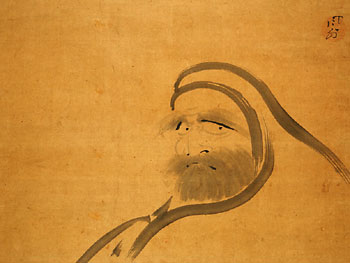
There once lived a Zen master who was renowned for his profound wisdom. He had many disciples under him. He was said to be a great teacher of meditation.

One day, one of his disciples brought him a kitten. The master was pleased with such a gentle, curious creature. That day, it was time for the meditation class, and the master started his meditation.

Just then, the kitten jumped on his lap and started purring. This distracted the master. He ordered the cat to be tied to the chair next to him. The kitten being the gentle creature that it was, thought it was a good time to sleep while being tied to the chair. This continued every day and every day, the kitten would disrupt the master during meditation, and would get tied to the chair.

Years went by, and the cat was now regularly tied to the chair during meditation time. People from all over would come to learn from the master, and would notice the cat being tied to the chair during meditation.

The master soon died, and the new master continued this practice. Soon the cat died as well. The monastery then got a new kitten, and it got tied to the chair as well. Scholars started writing about this superior method of meditation and how this was better than “regular meditation”. People everywhere started buying cats to improve their meditation skills…

I read this story a while back, and rewrote it for this post. This post is similar to the “Spirit of Buddha” post I made earlier. It has become common to start off lean journeys by mindlessly copying the tools that are used at Toyota. Toyota has crafted the Toyota Production System over decades of trial and error. Each tool they developed or borrowed was to address a specific problem they faced. One should not copy Toyota. The cat was tied to the chair to address a specific problem faced by the master. The cat story is a good example of how we sometimes blindly follow methodologies without understanding the origins.

Shigeo Shingo, in one of the best books on Toyota Production System – “A Study of the Toyota Production System” states the following;

“It must be understood, though, one of its (Toyota Production Management System) prime features is that it is permeated with its own advanced concepts and special techniques. This does not necessarily mean, however, that one can simply copy the distinctive external techniques of the Toyota Production System in another manufacturing environment.

In the same light, Satoshi Hino in his book, “Inside the mind of Toyota” has written the following;

“Unless we could grasp the structure of their minds, then even though we might be able to copy the Toyota Production System, we wouldn’t be able to work out methods for going beyond it and we would never prevail.”

To paraphrase Alan Mulally, former President and CEO of Ford, “If you copy someone, you can only come second. You cannot come first.”

Always keep on learning…

Defining “worst-case” for Medical Device packaging

Sterile-Eo

I have an ongoing interest in Medical Device packaging. When I started at my current job a while back, my manager told me that the packaging operation is most critical operation for a sterile Medical Device. The product quality does not matter if the device is not provided sterile for the end user. The qualifications of new packaging configuration and the packaging process soon became my areas of interest.

The concept of “worst-case” is rooted in product reliability and good product design practices. The applicable industry standards for packaging Medical Devices are ISO 11607 parts 1 and 2. ISO 11607 part 1 has the following section detailing the use of “worst-case” product configuration for qualifying a packaging system.

“When similar medical devices use the same packaging system, a rationale for establishing similarities and identifying the worst-case configuration shall be documented. As a minimum, the worst-case configuration shall be used to determine compliance with this part of ISO 11607.”

For a Medical device design engineer or a packaging engineer, this determination of the worst-case comes natural. It is based on engineering judgment and intuition. However, one might find it easier if this can be documented objectively. The following matrix might be useful to document the worst-case configuration. Perhaps one can utilize a scoring system (1 through 5, where 1 -> Best case, and 5 -> Worst case) for each of the items detailed in the table below. Thus, the product with the highest score can be determined to be the worst-case configuration.

# Item Comments
1 Sterilization 2X sterilized represents worst case
2 Sealing Low setting or edge of failure represent worst case
3 Mass Heaviest product represents worst case
4 Size Bulkiest represents worst case
5 Product geometry Sharp corners represents worst case
6 IFU Largest, heaviest, stapled IFU represents worst case
7 Product configuration Most number of components inside represents worst case
8 Shipper quantity Most number of units in the shipper represents worst case
9 Shipper compactness Maximum room for pouches to move around represents worst case
10 Number of pouches inside sterile barrier Maximum number of pouches represents worst case
11 Compactness inside sterile barrier Maximum room inside between product and sterile barrier represents worst case
12 Pouch Used Largest Pouch (largest pouch has largest seal area) represents worst case
13 Shipper Box Burst Strength Low strength shipper box represents worst case

Please note the worst-case for qualification tests may not always represent real life scenarios. However, qualifying using the worst-case provides assurance that the product can meet real life scenarios.

The scoring sheet sample can be downloaded here (worst-case score sheet).

Disclaimer: Please note that this post is purely based on my opinion and not to be used as advice. I shall not be responsible for any possible outcomes. Please use at your own discretion.