
My Recent Tweets on Cybernetics / Systems Thinking:

cybernetics tweets

Do Systems Exist?

Heinz von Foerster, Master Storyteller!

My humble take on von Foerster’s Aesthetic Imperative:

Wittgenstein’s Ruler and Models:

The Whole is NOT greater than the sum of its parts:

Autonomy, what’s the big deal?

Teaching from a Cybernetics standpoint:

My favorite translation of von Foerster’s Ethical Imperative:

The map IS the territory! Another von Foerster Gem:

Carlo Rovelli, the Systems Thinker!

Another von Foerster gem:

Heinz von Foerster’s Therapeutic Imperative:

Umpleby on Ashby’s Epistemology:

There are no such things as self-organizing systems!

What are systems again?

Systems thinking is fundamentally based on a spatial metaphor:

If you enjoyed these, please follow me on Twitter. https://twitter.com/harish_josev

In case you missed it, my last post was Wu Wei at the Gemba:
Nurikabe strikes again…

Haven’t written for a while. Now having writer’s block. Reminds me of Nurikabe yokai. Yōkai are a class of supernatural monsters, spirits, and demons in Japanese folklore. Per Wiki – Nurikabe is said to manifest as an invisible wall impeding travelers; quite tall to prevent people from climbing over it, and wide enough to dampen any attempts to go around it.

I have several posts pending. Just need to write. 😐

My Recent Tweets:

tweets

Here is a selection of my recent tweets:

Real Lean:

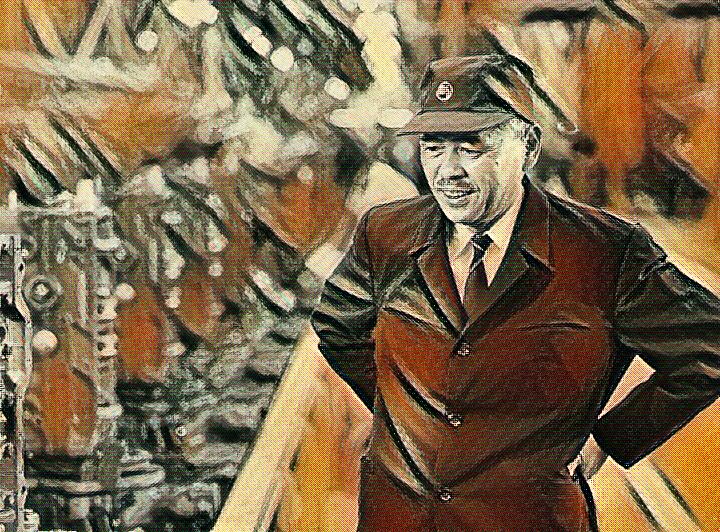
Ohno

In today’s post, I am looking at Lean through “realism”. Realism in philosophy has the view that things exist in the real world, independent of us, and that we can mirror reality in our mind. Through perception and our senses, we can gain knowledge about reality, albeit incomplete and imperfect. This stands in direct contrast against idealism in philosophy. Idealism has the view that the ultimate foundation of reality is completely inside the mind.

Taiichi Ohno, the father of Toyota Production System, put a lot of emphasis on what is real. His viewpoints were influenced by the Eastern philosophies of Zen and Confucianism, as well as by the scientific realism approaches proposed by Taylor, Ford, Lillian and Frank Gilbreths etc. Zen teaches to observe and grasp reality as-is; being here and now. Confucianism emphasizes virtue, benevolence and humanness. Taylor’s scientific management pursued the best way to make the operation more efficient. Ford’s ideas put emphasis on assembly lines and mass production. The Gilbreths focused on time and motion studies, and adapted teaching techniques so that the operators were able to learn better and understand the “why” and the “how”. Lilian Gilbreth championed for the “human element” in the production system.

Ohno’s thinking was based on reality – what is happening on the production floor. Ohno’s favorite word, in my opinion, would had been “genba”. The “gen” part in “genba” stands for actual or real. Genba is thus, the actual or real place where the action is. This would be the production floor for Ohno. Ohno viewed genba as the greatest teacher to learn from. His main line of thinking was to identify problem and take action; and by doing this again and again, get better at it. Additionally, he mentored and trained others to do the same. Ohno proposed that the basis of Toyota Production System was complete elimination of waste. Ohno even came up with seven types of wastes to help others. Ohno’s message was always kaizen – improve continuously. He taught at the genba, and had his team stand on the production floor in a chalk-drawn circle to see the waste. Ohno said that unless we actually try, we will never learn.

…Just try it. Try it, and if there are two opinions, let them each try it for one day. [1]

Ohno also said that even if your idea worked out, you should not just be satisfied with a verbal report. You should go to the genba and see for yourself. Go see with your own eyes, and you will understand very well what things were tried and what things were not included in your calculations.

Ohno was not a believer in simply copying and pasting. He said:

Even if we could see and copy what another company was doing, if we did not change it further we would only be as good as the company we had seen.

Ohno put a lot of emphasis on facts, and the source for the facts had to be genba, nowhere else. This is realism in action. It is said that Ohno hated written reports, and it is also said that he did not keep a lot of paperwork at his desk. [2] Ohno trusted only the things that he could see with his own eyes. Ohno advised that waiting till you got data from the genba is not good. It would be late by then. The horse is out of the barn by then. You have to take action on the spot at the genba. You have to go to the source to gather the data.

The andon lamps [which light up when employees pull the line-stop cord to indicate trouble] tell you where the problems are happening. You need to go to those places and examine the processes carefully. If you watch carefully, you’ll see what’s causing the problems. Then, you can do your kaizen improvements. Doing that again and again is how you raise productivity.[2]

Ohno was by no means an idealist and he was not a big fan of conjectures unless they could be put into action. Ohno believed that unless you felt the “squeeze”, your wits wont work. He kept challenging the supervisors and operators to do more with less. This was not always about cost savings, it was about developing them so that they become autonomous – see the problem, fix the problem. They were given the authority to stop the line, if there was any problem so that appropriate counteractions could be taken. If everything was running fine, Ohno would purposefully create conditions for learning by asking to remove an operator. Ohno also said that in order to make others feel the squeeze, you have to feel the squeeze yourself.

It may be easy to view Lean as a set of tools which can be copied into your organization. And it may even be possible to achieve a production system where everything flows and the production goals are met. Ohno would still not be happy with this scenario. Ohno would look at the well-run operations, and then look at the operators. If the operators are not able to continuously improve, Ohno would not be happy.

Anyone can gain knowledge through study. But wisdom is something else again. And what we need in the workplace is wisdom. We need to foster people who possess wisdom. The only way to do that is to set our goals high and force people to accomplish more than they might have thought possible. Once people really resolve to do something, the necessary wisdom arises. The people grow, and they assert new capabilities.

The most important thing for people in manufacturing is to keep one foot in the production workplace and take a good look at things there before making decisions. People who excel at anything tend to be people who insist on seeing things for themselves. That’s because the facts are in the things that we can actually see, and we can only get at the truth through the facts. Just thinking about things in your own head won’t [lead you to the truth].

All that I have written so far can be condensed into – Genchi Genbutsu. “Genchi” means actual place, and “Genbutsu” means actual parts. Genchi Genbutsu is often explained as “Go and see for yourself”, “Grasp the current condition” etc. In addition, there is also a third “gen” word – “Genjitsu”, which means actual data or facts. Collectively, the three “gens” are referred to as Sangen shugi or Three Reals Philosophy.

I will finish with an Ohno quote that might put an additional twist on what I have been saying so far. I had indicated that Ohno came up with seven wastes earlier and this is documented in his book, “Toyota Production System.”

I don’t know who came up with it but people often talk about “the seven types of waste.” This might have started when the book came out, but waste is not limited to seven types. There’s an old expression: “He without bad habits has seven,” meaning even if you think there’s no waste you will find at lease seven types. So I came up with overproduction, waiting, etc., but that doesn’t mean there are only seven types. So don’t bother thinking about “what type of waste is this?” Just get on with it and do kaizen.

Perhaps Ohno is saying that you should not just read his book and gain knowledge for the sake of it. We should start from need and practice. We should not be bound by what now is conventional wisdom. Ohno is challenging us to go to genba and solve our own problems, and in the process develop ourselves and others.

I should also note that there is a wonderful and insightful series of books written by Bob Emiliani called “Real Lean.” I encourage the reader to check them out.

Please also note that genba and gemba are used interchangeably. I have chosen to use genba to emphasize the “gen” part.

Always keep on learning…

In case you missed it, my last post was Ohno and VUT:

[1] Workplace Management, Taiichi Ohno

[2] Birth of Lean, The Lean Enterprise Institute

My Recent Tweets:

tweets

I will be posting soon… Meanwhile, here are some of my recent tweets that may be of interest to you.

#cybernetics #Lean #SystemsThinking #philosophy

Always keep on learning…

Entropy in the Manufacturing World:

ukiyoe

In today’s post, I will be looking at Entropy in the Manufacturing world. Entropy is generally defined as disorder. This general definition can sometimes be inadequate. Let’s look at the example of a desk in an office; One could say that if the desk appears to be in order (neat and tidy), then it has low entropy. However, the concept of orderliness is very subjective. Entropy can be referred to as the measure of disorderliness. To me, if I am able to know where everything is, and I can access each item quickly, then my desk has low entropy. It may not seem “ordered” to an outsider, and he may conclude that my desk has high entropy. The second law of Thermodynamics can be loosely stated as – the entropy always increases. Thus, a desk will always get messier. There is a probability aspect to entropy. There are many different ways the things on my desk can be arranged, and only a very small number of those arrangements can be concluded as “ordered”. There is a multitude of more ways a desk can be seen more disorderly than the small number of ways it can be seen as orderly. Thus, from a probability standpoint, it is always likely that a desk is messy unless there is a consistent process in place to keep it back to the “ordered” state at frequent intervals. This line of thinking also shows that the more things you have on your desk, your desk is always most likely to be in a state of “messiness”. Interestingly, 5S in Lean requires you to limit the number of items in an area to only those items that are needed. All of the extra items are encouraged to be removed.

Entropy can also be explained in terms of the element of surprise. For example, a brand new deck of playing cards in order has low entropy because one knows exactly where every card is. There is minimal element of surprise. If one were to riffle shuffle the cards once, there is still some form or order maintained in the cards. For example, the order of the cards from Ace to King is not disturbed. There may be some different cards in between, but the Three of Hearts is still above Four of Hearts, even though there may be other suit cards in between them. This concept is known to magicians and used in several magic tricks. When the cards are shuffled again and again, the knowledge of any form of order is lost, and the entropy thus increases. With a good shuffled deck of cards, any card presents an element of surprise – new information. With the same logic used in the previous paragraph, it is very unlikely that continuous shuffling will bring a deck back to the original new deck order. There is always more ways for the deck to be in a different order than a new deck order. In the new deck order, if you are required to produce the King of Hearts, it is simple to do it since you know the order of the cards. You can do this fairly quickly. However, when the deck is shuffled, this becomes harder. You will need more time to look through every single card until you get to the King of Hearts. Although it is not exactly the same, it is stated that as entropy increases, it causes decaying of energy. In other words, the useable energy becomes less and less. Thus if one were to put the concept of value with regards to entropy, one could say that high entropy states do not yield value. Jeremy Campbell, in his wonderful book “Grammatical Man” states;

“At the heart of the second law (of Thermodynamics) is the insight has order has value.”

From this light, one can understand the need to maintain order in the manufacturing plant. The management strives to maintain low entropy within the manufacturing system, and they surely do not appreciate elements of surprises. From their viewpoint, painting all cars black does make sense. Producing the same item in big numbers using the principles of mass manufacturing is an attractive proposition for management. More number of products and components bring disorder and increase in entropy. Thus minimizing the variety of products manufactured also will be an attractive proposition for management.

However, the world has become smaller globally, and the market is asking for variety. From a Complexity Science standpoint, one can say that the manufacturing processes are ordered or complicated. There are good cause and effect relationships, and these can be easily controlled. However, the complexity outside a manufacturing plant is increasing with the advent of the information age. A manufacturer in China can sell his goods in America, and vice-versa easier. The demand for variety from the market is increasing and the manufacturer cannot make only black cars anymore to stay in business.

The management has to realize that the organizations are not technical systems, but sociotechnical systems. When you treat an organization as a technical system you assume that direct, linear cause and effect relationships exist, and that it is able to control the system through hierarchy. The most important requirement in this case becomes to minimize entropy. Entropy has a negative relationship with efficiency in mechanical (technical) systems. The goal of a sociotechnical system is not primarily to lower the entropy at all times. Complexity lies between low entropy and high entropy. Complex problems require complex dynamic solutions. Organizations should become complex adaptive systems and be able to move between phases in order to thrive. “Everything changes” is the reality, and thus the organization should be able to change and adapt the actions to meet the needs posed by the environment. The idea of order implies a state of permanence. The organization has to go through phases of permanence and impermanence to be able to thrive. Analogically, this is similar to the idea of kaizen in the Toyota Production System, where kaizen requires standards. Kaizen, the idea of change to improve, requires order (standards).  This is also the going back and forth between permanence and impermanence. In the complex world today, nothing should be set in stone.

I will finish with a wonderful lesson from Shunryū Suzuki-roshi;

“Suzuki Roshi, I’ve been listening to your lectures for years,” a student said during the question and answer session following a lecture, “but I just don’t understand. Could you just please put it in a nutshell? Can you reduce Buddhism to one phrase?”

Everyone laughed. Suzuki laughed.

“Everything changes,” he said. Then he asked for another question.

Always keep on learning…

In case you missed it, my last post was Minimal Critical Specification.

Minimal Critical Specification:

bur

In today’s post, I will be looking at Cherns’ second principle of Sociotechnical Design – Minimal Critical Specification. Albert Cherns, the late famous social scientist who founded the Department of Social Sciences at Loughborough University, documented nine principles for designing a sociotechnical system (1976). I discussed one of these nine principles, the Forth Bridge principle earlier here.

The principle of Minimal Critical Specification has two aspects, negative and positive, according to Cherns;

  1. The negative aspect states that no more should be specified than is absolutely essential.
  2. The positive aspect states that we need to identify what is essential.

Cherns continued – “While it may be necessary to be quite precise about what has to be done, it is rarely necessary to be precise about how it is to be done… It is a mistake to specify more than is needed because by doing so options are closed that could be kept open.”

This is quite an enlightening lesson from Cherns. A common misconception about leadership and managers is that it is the manager’s responsibility to determine what needs to be done, and then tell the employees exactly what needs to be done. This type of thinking is a leftover from Tayloristic Management from the turn of Twentieth century. Frederick Taylor’s brilliant contribution that worked at the time, was to focus on the labor activities and improve efficiency by streamlining motion and eliminating wasted motions. An unavoidable consequence from this was to view the operator as any other equipment. This meant that the operator was asked to bring his pair of hands to work and not his brains. The brains were provided by the managers and engineers. From a complexity science standpoint, this is using the perspective of a complicated system. There is some form of a cause and effect relationship, and with the help of experts we can control how the complicated system works. In other words, this is viewing an organization as a technical system in some regards. This leads to relying on a small group of experts to determine how the system should be designed. This worked at that point in time because, to put simplistically, the world was not complex then or not as complex as it is currently. The demand for variety from the market was easily attained by the variety that was able to be offered by the manufacturing plants. Tayloristic thinking paved the way to mass manufacturing and great hikes in productivity. However, the information age changed the world landscape, and the use of complicated thinking did not seem to work anymore. There came a realization that all organizations are sociotechnical systems. In Cherns’ words, the realization was that the organizational objectives were best met not by the optimization of the technical system, and the adaptation of a social system to it, but by the joint optimization of the technical and the social aspects.

It is said that the management style at Toyota is not to tell the subordinate exactly what needs to be done. The manager’s role is to develop the subordinate by allowing him to come up with solutions, and in turn develop oneself through the process. This concept aligns neatly with the principle of Minimal Critical Specification. Telling exactly what needs to be done is managing people, however developing them by giving them the minimal critical specification is managing the interactions that act on the subordinate. Russell Ackoff, the great American Systems Thinker, advises us that the most important role of a manager is not to manage people, but to manage the interactions between the people, making it easy for them to do their job. Toyota also talks about their production system as the Thinking Production System. Toyota does not see their employees simply as a pair of hands, but as a valuable resource which allows Toyota to grow.

Another aspect that Cherns talked about with the principle of Minimal Critical Specification was regarding bureaucracy. He complained that most organizations have too much specificity regarding how things should be conducted. He even says that “working to rule” can bring the whole system to a grinding halt and that employees have to contrive to get the job done despite of the rules.  Dave Snowden, the great thinker of modern times and creator of the Cynefin Framework, has talked about the dangers of using too many constraints on an ordered system where there is a strong cause and effect relationships. The employees create informal structures and processes to work around the strict constraints. This means that the problems, when they arise, do not always come to the surface. They stay hidden from the top management. Unfortunately, this means that when the system ultimately breaks down, it is generally catastrophic because the system is not prepared and the informal structures are simply not capable.

I will finish with a Zen story;

Zen teachers train their young pupils to express themselves. Two Zen temples each had a child protégé. One child, going to obtain vegetables each morning, would meet the other on the way.

“Where are you going?” asked the one.

“I am going wherever my feet go,” the other responded.

This reply puzzled the first child who went to his teacher for help. “Tomorrow morning,” the teacher told him, “when you meet that little fellow, ask him the same question. He will give you the same answer, and then you ask him: ‘Suppose you have no feet, then where are you going?’ That will fix him.”

The children met again the following morning.

“Where are you going?” asked the first child.

“I am going wherever the wind blows,” answered the other.

This again nonplussed the youngster, who took his defeat to his teacher.

“Ask him where he is going if there is no wind,” suggested the teacher.

The next day the children met a third time.

“Where are you going?” asked the first child.

“I am going to the market to buy vegetables,” the other replied.

 Always keep on learning…

In case you missed it, my last post was The Incomplete Solution.

Three Reminders for 2017:

whch-horse

As 2017 is unfolding, I wanted to write a post to remind myself of three pieces of advices for this year. They are from Epictetus (55-135 AD), Marcus Aurelius (121 – 180 AD) and George Pólya (1887-1985). Epictetus and Aurelius are two famous Stoic philosophers of the past, and Pólya is a famous Hungarian mathematician.

1) Epictetus:

Epictetus spent his youth as a slave which laid the backdrop for his stoicism. His original name is unknown. The name “Epictetus” in Greek means “acquired”. Epictetus himself has not written any books, however his follower, Arrian, wrote down his teachings. One of the most famous quotes attributed to him is;

“It’s not what happens to you, but how you react to it that matters.”

Epictetus’ famous work, The Enchiridion (Translated by Elizabeth Carter), starts off as;

“Some things are in our control and others not. Things in our control are opinion, pursuit, desire, aversion, and, in a word, whatever are our own actions. Things not in our control are body, property, reputation, command, and, in one word, whatever are not our own actions.”

In the same book, Epictetus continues;

“With every accident, ask yourself what abilities you have for making a proper use of it.”

My thoughts:

The above quotes gel together to form an important lesson. Not all of my ventures are going to be successful this year. There may be several setbacks. However, all setbacks are experiences to learn from. They provide lessons that I can only learn from the school of life. They increase my knowledge and prepare me for the next harder setback. My triumphs are built on the setbacks I faced before. The setbacks provide an opportunity for reflection. To loosely paraphrase a lesson from Information Theory, failures have more information content. They provide a reason to challenge our hypothesis. Successes do not necessarily challenge us to take a second look at our hypothesis. We thus learn more from failures. The point is to not look for failures, but to keep an open mind. This is a great lesson to remember as a new year starts.

2) Marcus Aurelius:

Marcus Aurelius, on the other hand, was a Roman Emperor. His famous work is “Meditations”.  My lesson from this book, translated by Maxwell Staniforth, is as follows;

“Were you to live three thousand years, or even thirty thousand, remember that the sole life which a man can lose is that which he is living at the moment; and furthermore he can have no other life except the one he loses. This means that the longest life and the shortest amount to the same thing. For the passing minute is every man’s equal possession, but what has once gone by is not ours.”

My Thoughts:

Far too often, we let the past dictate our present actions. Either we stay complacent and stay in our comfort zones by relying on our past victories; or we let our past failures control our actions and we remain in the comfort zone. Both these thought processes keep ourselves from taking risks or venturing outside our comfort zone. The past is past and the future is not yet here; what we truly have is the present moment. This Zen-like teaching is an important lesson for this year. We can only change the present moment by taking the right action. Of course, not all of our actions will lead to tremendous successes. This is covered under the first lesson above.

3) George Pólya:

George Pólya was born in Hungary and later came to America and taught at Stanford University.  One of the famous quotes attributed to him is;

“If you can’t solve a problem, then there is an easier problem you can’t solve: find it.”

This quote was written by the famous Mathematician John H Conway in the Foreword to a 2004 printing of Polya’s book “How to Solve It”.

My Thoughts:

“How to Solve It” is a gem of a book written in 1945 by Pólya. The above quote attributed to Pólya is a great lesson when we are trying to solve a problem and we get stuck. Pólya offers two different plans of action. One is to find a similar but easier problem to solve. He says;

If you cannot solve the proposed problem do not let this failure afflict you too much but try to find consolation with some easier success, try to solve first some related problem; then you may find courage to attack your original problem again. Do not forget that human superiority consists in going around an obstacle that cannot be overcome directly, in devising some suitable auxiliary problem when the original one appears insoluble.

The second plan of action he offers is called as the Inventor’s Paradox. Loosely put; to prove what you want, try proving more than what you want so that you get the flow of information to work properly. George says that “the more ambitious plan may have more chances of success”. This idea is quite paradoxical. He advises that going to a more general problem is going to create more questions that may be easier to answer than just one question. This approach may lend us a new view at the problem that will help us solve the more general problem along with the original problem.

The two plans lead us to step back from the current problem and look at the problem from a different light. Pólya points to us the importance of “some vision of things beyond those immediately present”.

Final words:

The three lessons above have a common theme – obstacles. We can be certain that this year will come with obstacles; it is up to us to decide how to treat them. I wish all of you a great year, one that will make you a better person.

I will finish off with a great lesson in Zen from the great Zen Master Shunryu Suzuki Roshi. In his book, “Zen Mind, Beginner’s Mind”, Suzuki Roshi talks about the story of four horses. He recalls the story from Samyuktagama Sutra. It is said that there are four kinds of horses: excellent horses, good horses, poor horses and bad horses. The best horse will run as his master wishes before it sees the shadow of the whip. It can run fast and slow, right and left and always at the master’s will. The second best horse runs as well as the best horse and he does that just before the whip reaches its skin. The third best will run when it feels the pain on its body. Finally the fourth one will run after the pain penetrates to the marrow of its bones. You can imagine how difficult it is for the fourth one to learn how to run!

Almost all of us want to be the best horse. If that is not possible we want to be the second best horse, and so on. However, in Zen this is the wrong approach. When you are determined to practice zazen (a form of sitting meditation), it is valuable to be the worst one. In your imperfections you will find the basis for your firm, way-seeking mind. Suzuki Roshi continues that those who can sit perfectly physically usually takes the most amount of time to obtain the true way of Zen. But those who find great difficulties will find more meaning in it and thus obtain the actual feeling of Zen – the marrow of Zen. Thus the “worst one” may be the best student.

Always keep on learning…

In case you missed it, my last post was Clause for Santa – A Look at Bounded Rationality.

The Value of Silence:

quarter-rests

Today’s post is an introspective post for me. I will be looking at “silence”, its cultural implications in Japan, its use as a form of self-improvement and some stories about silence in the Toyota Production System. I was in a meeting recently, and during my self-reflection time at night, I observed that I did not learn or try to understand the perspective in the meeting. I was not listening because I was trying to prove my knowledge to the other side. I was not being silent or listening. Perhaps, I am a harsh critic of myself. But I have made up my mind that I will be practicing silence more.

One of my favorite sayings about silence is;

Knowledge speaks and wisdom listens.”

This is sometimes attributed to the great musician Jimi Hendrix. However, there is no proof that he did say this. There is a similar quote by Oliver Wendell Holmes;

“It is the province of knowledge to speak and it is the privilege of wisdom to listen.”

I am an avid fan of Japanese Culture and interestingly, silence is an important facet in Japanese culture. It is said that it is tough to negotiate with Japanese businessmen since they employ long periods of silence that others are not used to. In the West, silence is generally unbearable. It is viewed as a break in communication. In Japanese culture, silence is viewed as a communicative act. Silence can be effectively utilized in negotiations since it can make the other side nervous. In the Japanese culture, however, silence has several positive attributes which includes being respectful and polite, and avoiding confrontation.

I am looking at silence in four regards as a practice of self-improvement;

  • Respect for others:

Stephen Covey said “Seek first to understand and then to be understood.” He identified this as the fifth habit of his Seven Habits of Highly Effective People. In Zen, there is a great lesson that you are given two ears and one mouth, and that their use must be in the same ratio – listen two times more than you speak.

  • Self Reflection:

Engaging in silence is a pre-requisite for self-reflection. This allows the mental fog to clear out and the mind to organize better. Think of silence as an act of clearing up space in your mind to allow deep-felt thoughts to come in.

  • Teaching:

Being silent sometimes prompts the other side to keep on talking and perhaps encourage them to come out of their comfort zone. This can have the effect of being a good sounding board for their ideas. This is similar to the Socratic teaching method of asking questions. But in this case, remaining silent allows the other side to focus on their thoughts more and find the solutions to the problems at hand.

  • Effectively Communicating:

This may seem counterintuitive, but engaging in silence can improve your communication. In Japanese calligraphy, the empty space is as important as the written words. This empty space is quite similar to the “negative space” in design. It is the valleys that point our attention at the hills. The same is applicable for the use of effective silence in communication.

Silence in the Toyota Literature:

There are two instances I have seen where “silence” jumped out at me. The first one was in Masaaki Sato’s “Toyota Leaders”, where Sato talked about the ex-President and Chairman of Toyota. Eiji was a person who employed silence in his communication; he considered each question seriously and provided responses after much thought. EIji is hailed by Forbes as the creator of the Modern Version of Toyota. EIji was also a strong supporter of Taiichi Ohno, the father of Toyota Production System, and his “out of the ordinary” methods.

The second instance is from the book “Just-In-Time For Today and Tomorrow”, co-authored by Taiichi Ohno. In the book, Ohno talked about how the other employees were against his methods that would later become the Toyota Production System. All the hate and resentment were absorbed by his two managers, Eiji Toyoda and Saito Naichi. They both allowed Ohno to continue with his methods and to find ways of reducing manufacturing costs. Ohno referred to their relationship as a silent relationship of mutual trust. They both did not question Ohno and in turn Ohno did not ask for their approvals.

“I knew all too well how they worried about me and what I was doing. Yet they never said “Do This!” or “Do that!” For my part, I never had to say “I’d like to do this” or “Please let me do that.”I just did everything I thought had to be done. Had I asked permission, my resolve would have weakened because of the pressure to prove what I was doing. Had either side said anything, the relationship would have collapsed.”

Final Words:

This post was written as a reminder to myself to use silence more. I will finish with a great Zen story on silence;

There once was a monastery that was very strict. Following a vow of silence, no one was allowed to speak at all. But there was one exception to this rule. Every ten years, the monks were permitted to speak just two words. After spending his first ten years at the monastery, one monk went to the head monk. “It has been ten years,” said the head monk. “What are the two words you would like to speak?”

“Bed… hard…” said the monk.

“I see,” replied the head monk.

Ten years later, the monk returned to the head monk’s office. “It has been ten more years,” said the head monk. “What are the two words you would like to speak?”

“Food… stinks…” said the monk.

“I see,” replied the head monk.

Yet another ten years passed and the monk once again met with the head monk who asked, “What are your two words now, after these ten years?”

“I… quit!” said the monk.

“Well, I can see why,” replied the head monk. “All you ever do is complain.”

Always keep on learning…

In case you missed it, my last post was The Spirit of Mottainai in Lean.