
The Anatomy of an Isolated Incident:

challenger

I read about the death of Bob Ebeling today. He was a NASA contract Engineer from Morton Thiokol who tried to stop the launch of the space shuttle Challenger in 1986. On January 26, 1986 soon after the launch, the Challenger was engulfed in flames. All seven crew members lost their lives in this terrible accident. Famous Nobel laureate Richard Feynman was part of Rogers Commission which investigated the Challenger accident.  Feynman wrote about this investigation in depth in his 1988 book “What Do You Care What Other People Think?”

In today’s post, I will be looking at Isolated Incidents. There are times in my career where I am taken aback by isolated events.  These events happen very rarely, and thus it is not easy to understand the root causes. I will use the Challenger accident as the primary example to look at this. There have been 135 NASA space shuttle missions between 1981 and 2011. Of the 135 missions, 133 flights went as planned, with two ending in disaster.

The O-Ring Fiasco:

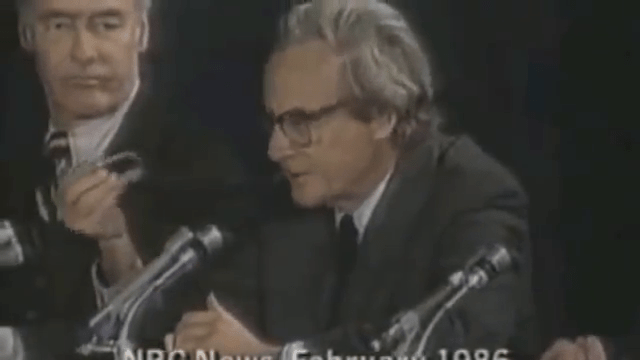
The Roger Commission identified that the Challenger accident was caused by a failure in the O-rings that were used to seal a joint on the right solid rocket booster. Bob Ebeling was among the group of Engineers who had warned NASA against the launch based on his concerns about the seals. The O-rings were not proven to work under cold conditions. It was noted that the temperature was below freezing on the day of the launch. Feynman famously demonstrated this by immersing an O-ring in a glass of ice water, and demonstrating that the O-rings were less resilient and that it retained its shape for a very short amount of time. This lack of resilience caused the failure of the seals leading to the Challenger catastrophe.
vlcsnap-2016-03-20-14h56m01s705

The Roger Commission indicated the following issues led to the Challenger accident:

  • Improper material used for the O-ring.
  • Lack of robust testing – the O-ring material was not determined to function as intended by NASA. Even though the O-ring manufacturer gave data to prove the lack of functionality at low temperatures, NASA management did not heed this.
  • Lack of understanding of risk from NASA management.
  • Potential push from management to launch the space shuttle to meet a rush deadline.

Feynman also wrote about the great disparity in the view of risk by the NASA management and the engineers. NASA management assigned a probability of 1 in 100,000 for a failure with loss of vehicle. However, when Feynman asked the engineers, he got values as low as 1 in 100. Feynman reviewed the NASA document that discussed the risk analysis of the space shuttle and was surprised to see extremely low probability values for failures. In his words;

The whole paper was quantifying everything. Just about every nut and bolt was in there. “The chance that a HPHTP pipe will burst is 10-7”. You can’t estimate things like that; a probability of 1 in 10,000,000 is almost impossible to estimate. It was clear that the numbers for each part of the engine were chosen so that when you put everything together you get 1 in 100,000.

Feynman also talked about an engineer being candid with him about his probability value of 1 in 300. He said that he calculated the risk as 1 in 300. However, he did not want to tell Feynman how he got his number!

The Anatomy of an Isolated Incident:

I have come to view the Isolated Incident cause-effect relationship as an equation. This is shown below.

Isolated Incident = Cause(s) + System weak points + Enabling Conditions

The Challenger Accident can be summarized:

Challenger Accident = Material limitation of the O-ring + NASA Management Policies + Cold conditions

The System Weak Point(s) are internal in nature. The enabling conditions, on the other hand, are external in nature. When you combine all the three factors in a perfect storm, you get an isolated incident. If we do not know all of the three factors, we are not able to solve the isolated incident. By itself alone, none of the factors above may cause the problem.

Another example is – when demand goes up, and production doubles. If the process is not robust enough to handle the spike in production, then isolated events can happen.

Pontiac’s Allergy to Vanilla Ice Cream:

I will finish this post with a fantastic story I read from Snopes:

The Pontiac division of General Motors received a complaint in the form of a letter. The letter was from a frustrated customer. He had been trying to contact the company for a while.

He wrote in the letter that he and his family were used to buying ice cream after dinner on a frequent basis. The type of ice cream that is purchased depended upon the mood of the family. He had recently purchased a new Pontiac car, and he had been having issues on his ice cream trips. He had figured out that the new car is allergic to vanilla ice cream.

If he purchased any other flavor, his car would start with no problem. However, if he purchased vanilla ice cream, his car will not start.

“What is there about a Pontiac that makes it not start when I get vanilla ice cream, and easy to start whenever I get any other kind?”, he asked in the letter.

The letter was delivered to the Pontiac President who was very amused by it. He sent an engineer to investigate the fantastic problem. The engineer went with the family three nights to get ice cream in the new car. The first night the family got chocolate ice cream, and the car started with no problem. The second night, they got strawberry. The car again was fine. On the third day, the family got vanilla ice cream; lo and behold the car would not start.

This was repeated on multiple days, and the results were always the same. The engineer was a logical man, and this stumped him. He took notes of everything. The only thing that he could see was time. The family always took the shortest amount of time when they purchased vanilla ice cream. This was because of the store layout. The vanilla ice cream was quite popular and was kept at the front of the store. Suddenly, the engineer identified why the isolated incident happened. “Vapor lock”, he exclaimed. For all the other flavors, the longer time allowed the engine to cool down sufficiently to start without any issues. When the vanilla ice cream was bought, the engine was still too hot for the vapor lock to dissipate.

Always keep on learning…

In case you missed it, my last post was Kintsukuroi and Kaizen.
Wizard of Oz, Camel’s Nose and Being a Change Agent:

oz

In my last post, I talked about learning from Dr. Seuss’ quotes. In his “Greens Eggs and Ham” book, one of the characters(Sam) tries to persuade the other character to eat green eggs and ham. “Try it, try it, you may like it”, Sam says.

Aldean Jakeman commented on this post and stated that the “Green Eggs and Ham” book was her first change management book. This got me thinking about the “Wizard of Oz” story, and the story of the camel’s nose.

Learning from the Wizard of Oz:

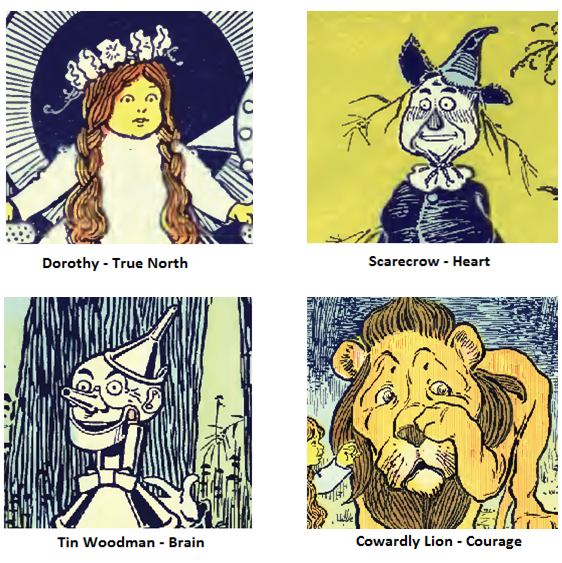
There are four main characters in “Wizard of Oz”, written by Frank Baum. These four characters represent a quality characteristic that every change agent needs:

  • Dorothy – the main protagonist of the story. She was swept into the wonderful fantasy land of Oz by a cyclone. All she wants is to go back home to Kansas.
  • Scarecrow – the first friend Dorothy makes on her journey home.
  • Tin Woodman – a character who originally was a real human, but now is completely made of tin. Tin Woodman is the second friend that Dorothy makes.
  • Cowardly Lion – the third and final member of Dorothy’s team.

True North (Home):

“True North” is a strong concept in Toyota Production System (TPS). True North depicts our ideal state. True North is what we are striving towards. We are trying to reach True North. In a TPS/Lean way, Dorothy represents the characteristic of True North, our ideal state. All she wants is to go home (True North). A change agent should form his/her team, like Dorothy did, to reach their goal (true north).

Heart:

The scarecrow represents the quality of “the heart”. A change agent should have his/her heart in the game. This allows you to think from the other person’s viewpoint. Having the heart characteristic makes you realize that this is a win-win, non-zero sum game. The heart represents empathy and compassion, without which you cannot gain the buy-in from your team. You should be open for suggestions and ideas for improvements. Toyota has identified “Respect for Humanity” as one of the two pillars of Toyota Way.

Brain:

Tin Woodman represents “the brain” characteristic. A change agent should never stop learning. You should be smart enough to try things out and learn from your mistakes. You should also be smart enough to realize that you need to train and develop more change agents. A change agent should know how to approach when he/she is trying to implement a change. Here, Brain represents both knowledge and wisdom. A wise change agent will request his/her team to try things out at first. The “for trial only” approach eases them into the actual implementation.

Courage:

Cowardly Lion represents “courage”. A change agent should be brave enough to look back at himself/herself with a critical eye and challenge assumptions. A change agent should be open about the problems, and transparent in communication. At Toyota, they talk about the importance of “Hansei”. “Hansei”, a Japanese term, loosely translated means “self reflection”. This can act as a strong and effective feedback loop that will steer you back on course towards True North. Having courage also means that you are capable of saying “No”. Ultimately, a change agent should be brave enough to stand up for what he/she thinks is right. Winston Churchill, the former UK prime minister, said the following about courage:

“Courage is what it takes to stand up and speak; courage is also what it takes to sit down and listen.”

Final Words:

I will finish off with an Arabian story that goes by the name “The Camel’s Nose”. The story has created the phrase “camel’s nose” in English language that is a metaphor for allowing a larger change in the pretense of small incremental changes. This phrase has a negative connotation since the change represents something that is not desirable. Here, I will be presenting it as a tactic for a change agent to encourage their team to implement the change. This story is about a wise camel, and the importance of implementing a change little by little at a time.

It was an unusually cold night in the desert. The camel was outside, tied to the tent. The master was inside the tent, comfortable and getting ready to sleep.

“Master,” the camel said putting his nose under the flap, “it is so cold outside. Can I at least put my nose inside the tent?”

“Sure,” the kind master replied, and rolled over.

A little later, the master rolled over and found that the camel had his whole head inside the tent.

“Master, it feels so nice here. Can I please put my front legs inside the tent too?”, the camel asked.

“Okay, you may”, the master said moving a little toward the edge since the tent was small.

The master again rolled over trying to sleep. A little while later, the camel again said “Master, Master, can I come inside the tent all the way? I will stand inside. It is very cold outside.”

“Yes,” the master said unwittingly. The master went back to sleep.

The next time the master woke up, he found himself outside the tent and cold.

I am not suggesting here that the change agents should be the camel kicking out the master. I am presenting the story to show the importance of taking things a small step at a time.

Always keep on learning…

In case you missed it, my last post was Learning from Dr. Seuss.

Learning From Dr. Seuss:

drseuss

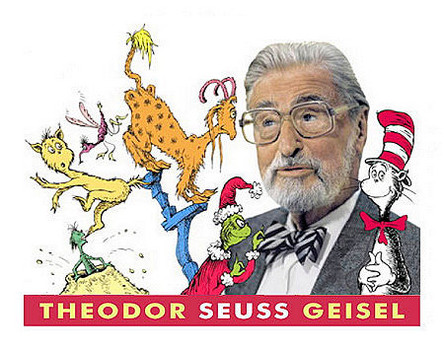
Dr. Seuss (Theodor Seuss Geisel), the renowned children’s book author, was born on this date (March 2nd) in 1904. Interestingly, he used “Dr.” in his pen name since his parents really wanted him to be a doctor. In today’s post, I will look at eight great quotes from him to learn from.

I immigrated to America from India. I did not know Dr. Seuss until I met my wife here in America. I grew up with Enid Blyton, the English author. I very much enjoyed reading the Dr. Seuss books with my kids because of his unique writing style. As I was introducing my three children to his books, I was also learning from Dr. Seuss at the same time.

Here are eight lessons from Dr. Seuss:

  • From there to here, and here to there, funny things are everywhere.(Source – One Fish, Two Fish, Red Fish, Blue Fish)

As Lean practitioners, we can translate this as “from there to here, and here to there, wastes are everywhere”! The funny things are the different wastes! Everything we do has waste in it. Taiichi Ohno is a big proponent of eliminating waste. He made managers stand inside a circle and look for wastes. Wastes forces us to be non-value adding, and increases overall cost.

  • Why fit in when you were born to stand out? (Source – Unknown)

If you try to copy the best, you will only come in second. Trying to copy Toyota does not make sense unless you have the same problems as Toyota. You should try to create your own system – Company XYZ Production System rather than a frail copy of Toyota Production System. Understand your problems and then address them, creating your own production system.

  • Sometimes the questions are complicated and the answers are simple. (Source – Looking Tall by Standing Next to Short People)

This is a true gem. The insurmountable problems become ant hills once they are solved. This is akin to Occam’s razor in some sense. Occam’s razor can be loosely stated as “the simplest answers provide the best explanations”. We have a tendency to complicate things. As an Engineer, I can vouch for this. At Toyota, they talk about using automation as the last resort to improve a process. They push for simple solutions.

  • You have brains in your head. You have feet in your shoes. You can steer yourself in any direction you choose. You’re on your own, and you know what you know. And you are the guy who’ll decide where to go.” (Source – “Oh, the Places You’ll Go!)

You have brains in your head – you need to use them. You have feet in your shoes – you need to go to the Gemba. This is a perfect summation of Genchi Genbutsu – going to the Gemba to learn the actual facts. You have to go to the source, where the action takes place and see for yourself.

  • You’ll miss the best things if you keep your eyes shut.(Source – I Can Read With My Eyes Shut!)

You have to keep your eyes open but you have to observe. Seeing and observing are two different things. When you keep your eyes open, you start to see things. When you see more things, you start to observe things. When you observe things more, you start to understand things more.

  • “It is better to know how to learn than to know. (Source – Unknown)

It’s not the tools system, it is the thinking system. To know and to understand are two different things. To know something makes you rigid in your thinking. To understand something makes you flexible in your thinking.

  • How did it get so late so soon?(Source – Poem by Dr. Seuss)

There is no better time than now to start improving and to start learning. Do not wait for the best idea to happen. Do not wait for the new and improved machine. Do not wait for next month. Now is indeed the right time. As Hillel the Elder said, “If not now, when?”

  • Try them, try them, and you may! Try them and you may, I say.(Source – Green Eggs and Ham)

This is the best way to implement process improvement activities. You can say “try them, try them, you may like them”. All you need them to do is to try the idea out. Once tried, they will provide ideas to improve and make them better. The lesson here is that you should not try to force your ideas, rather ask them to try it out. After all, what is the harm in trying it out? Brian Fitzpatrick, and Ben Collins-Sussman recommends saying “let’s try this for 30 days. If this does not work, we will go back to the way it was.” This approach helps in getting buy-in. Almost always, they will start using the new method. If they do not, at least you will get feedback as to why the new method does not work.

Thank you Dr. Seuss for everything you have done.

Happy Birthday!

Always keep on learning…

In case you missed it, my last post was Be an Amateur at the Gemba.

Ten Things I Learned from The Walking Dead

wd

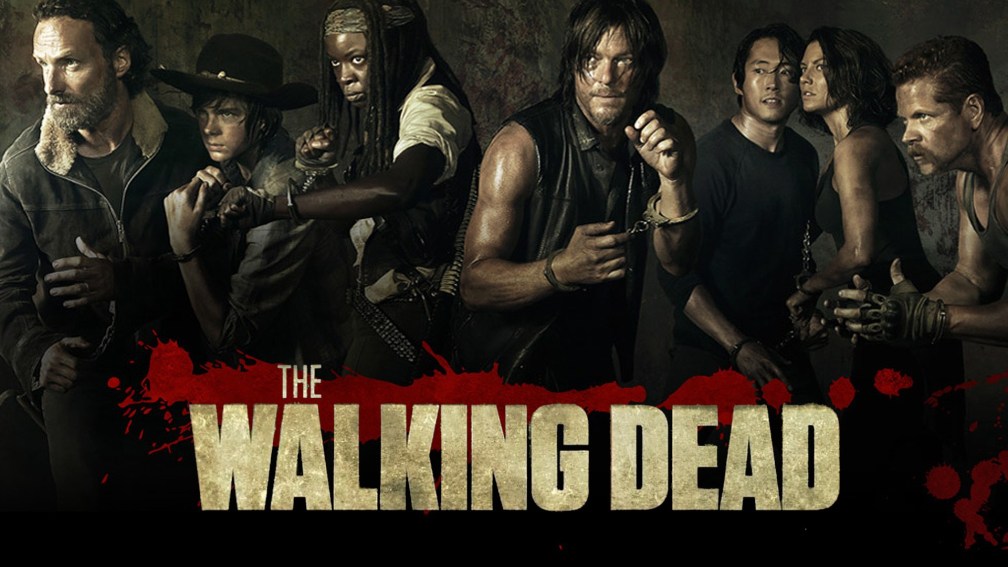
The Walking Dead is one of the most successful TV shows in America. The story follows Rick Grimes and his group of friends and family in a Zombie apocalypse. I got hooked onto it last year and binge watched all the available seasons on Netflix with my wife. I have come to realize that The Walking Dead can teach you one or two things about Management. Here is my list of 10 things I learned from The Walking Dead. I am hopeful that you can also learn to survive the “problems apocalypse” in your work or life.

  • Observe and let the patterns emerge:

The whole world is falling apart. Nobody knows what to do. Everybody is turning into zombies. It is chaos everywhere. Have you felt that sometimes at work everything is falling apart? There is one problem after the other. What is going on?

You have to let the patterns emerge to start making sense of things. At first Rick and his group thought that you have to be bitten for a person to become a zombie. It was later learned that any person once he dies becomes a zombie. Similarly, they learned that a zombie can be “killed” by destroying its brain. The group has learned to observe and let the patterns emerge! Once the patterns emerge, you can start creating basic rules to survive.

  • This too shall pass:

Rick and his group have learned the important lesson – this too shall pass. If you see a horde of zombies coming your way or if you are surrounded by zombies, panicking will not help. Understand that the problem seems insurmountable at the time, but the problem too shall pass. Each problem is an opportunity that you can learn from.

  • Learn to adapt/ keep learning new things to survive:

Rick’s group contains people from different walks of life. Glenn, a major character was a pizza delivery boy prior to the zombie apocalypse. Glenn learned the superior zombie survival skills to emerge as a leader in his group. Rick’s group had to learn to adapt to live in the new world. They had to always keep learning new things to survive, such as fighting, using guns, hunting etc. Similarly, to overcome stagnation apocalypse at your work or in life, you have to keep learning new things.

As Dr. Deming may or may not have said:

“It is not necessary to adapt/change. Survival is not mandatory.”

  • Teamwork:

The only way Rick’s group is able to keep on surviving is because of only one thing – teamwork. Each person in his group is important. They have appointed Rick as their leader, and they work together to survive. Rick’s group goes out from their haven to the outside world in order to scavenge food and necessities to survive. They risk their lives to do this, and they are able to do it only because of teamwork. Nobody tries to sub-optimize. They know that it is not about one person, and that it is about the group. Anybody trying to look out only for themselves gets killed. It is about system optimization!

  • Rotate/follow-up:

Even if you are good at what you do, you need to rotate your job. You need experts but your team thrives from cross-training. Especially on an assembly line, rotation of the job is important to stay alert. If you are not on the assembly line, request review of what you do. You will learn more that way. Give and take feedback! Remember this, when you are on a watch for zombies, always rotate for survival.

  • Ground Yourself:

Life can be stressful. Your work can be stressful. It is easy to lose hope. You need to learn to manage stress. Find joy in the little things of life. You have to learn methods to ground yourself back to your place of confidence and serenity. The lesson of grounding yourself is very important in martial arts disciplines such as Aikido. Rick’s group has enemies in both zombies and remaining predatory human survivors. Rick’s group knows that losing your cool can get yourself killed.

  • There is almost always a way:

No matter how unsolvable a problem is, there is always a way. Sometimes, there is more than one way. Rick’s group has been in several situations where they felt like there is no way out. But always they found a way out.

Something that I have always wondered while watching the show is– why not climb a tree to escape from the zombies? Zombies do not climb trees.

  • Make sure everybody knows the plan:

One thing that Rick is really good at is that he lets his group know what the plan is. This is important in order to survive. Rick has laid down the rules, and everybody is happy to adhere to the rules. In the show, whenever the leader does not share his plans (e.g. the governor, a negative character in the show) it always ends up bad for his group. When everybody is working towards the common goal, you reach your goal faster, better and cheaper. You need to let your team know the what, the why, the who, the when and the how. Keep your communication lines open and your plans transparent.

  • Develop your people:

Rick is wise to know that you need to develop your people. Almost all the members in his group started off as scared and unsure. For example Carol, a strong character and care taker in his group, was initially portrayed as meek and defenseless. Carol has become a resourceful and strong leader in her own right. She provides counsel to Rick with difficult decisions and protects the group from outside dangers.

Rick helped develop his group members to be strong and able to handle themselves in an emergency. Rick has developed his group with a strong purpose – survival of the entire group. Rick is able to let others lead when required. Rick knows that he cannot survive without his group.

  • Don’t rest on your laurels:

This is most likely the largest of Rick’s pet peeves. He hates the idea of being complacent. His group has been through a lot, but he does not want them to drop their guard. One misstep can lead to a big loss. He is keen on growing themselves and being ready for what comes next. Today’s success does not guarantee tomorrow’s success.

Always keep on learning, and remember to run for the tree when the zombies come…

8 Things I learned from Spock

Spock_vulcan-salute

Spock (Leonard Nimoy) is no more. The character of Spock from Star Trek has had a huge impact on many peoples’ lives. Leonard Nimoy will be deeply missed.

Here are 8 things that I learned from Spock.

1) If you do not have enough information, say that you do not have enough information or that your hypothesis is based on the limited information. As a Science Officer, he very well knew that he had to give the best possible opinion at all times. But he was open about his lack of information to form an effective hypothesis. For example, Spock would respond “I simply do not have enough data to form an opinion”, to Kirk’s “Opinion, Mr. Spock?” question. Kirk would then follow up with “Speculation, Mr. Spock.”.

2) Do not mix emotions with your hypothesis. In other words, try to eliminate or minimize confirmation bias. This was what separated Spock from Bones in the show.

3) Always have an open mind. Spock always remarked “Fascinating” anytime he came across something new. This also tells us to minimize our confirmation bias.

4) Look for patterns to form your hypothesis. After all, that is the role of a Science Officer.

5) Try to think rationally. Spock put a lot of emphasis on logic.

6) Always be abreast with the latest in your field. This was essential for Spock as a Science Officer. Always keep on learning.

7) Things are not always black and white. Spock learned this from Kirk. Kirk was always willing to challenge the status quo.

8) Improbable things can happen. As Spock said “It would be illogical to assume all conditions remain stable.” With enough iterations, even highly unlikely events can happen.

Thank you and Good Bye, dear Leonard Nimoy.

Keep on learning…