Meditations at the Gemba:

Aurelius

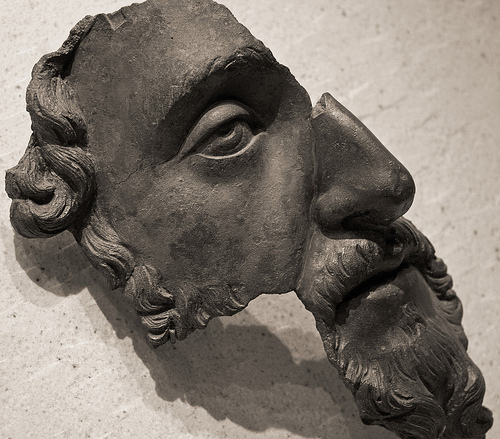
In today’s post, I am looking at Marcus Aurelius’ “Meditations” and how it relates to us today. Marcus Aurelius, Emperor of Rome from 161 to 180 AD, was a follower of Stoicism, a type of philosophy that extols a way of life based on moral virtue. It emphasizes logic and rationality, and views man as a microcosm corresponding to the macrocosm of the universe. Man has to use his reason to discern the universal order present in nature and he is obligated to live his life in accordance with nature [1].  I have identified 10 lessons from “Meditations” that I hope will be valuable to the lean leader. I have used the translation of “Meditations” by George Long for my notes[2].

1) Make Time for Contemplation:

“We ought to remember not only that our life is daily wasting away and a smaller part of it is left, but also that if a man should live longer, it is quite uncertain whether his mind will stay strong enough to understand things, and retain the power of contemplation to strive after knowledge of the divine and human.”

Marcus believes in making time for contemplation. He encourages us to “retire” into ourselves to recharge on a frequent basis. This is similar to the concept of “Hansei” in Lean. He continues;

“It is in your power, whenever you shall choose, to retire into yourself.”

Marcus talks of cleansing your soul so that you are free of discontentment and this allows you to return to the “stale things” with a refreshed mind. He reminds the reader that things cannot touch your soul since they are external to you, and that our perturbations come from our own opinions and viewpoints. This too shall pass.

2) Observe the Small Things in the Light of the Big Picture:

“We ought to observe also that even the small characteristics of things produced according to nature have something in them pleasing and attractive.”

Marcus believed that everything must be aligned with nature. Even the smallest detail has its own charm and beauty in the big picture. Marcus talks about the example of the cracks in the surface of a loaf of bread. In his eyes, they are beautiful even though they were not designed or intentionally added by the baker. They are visually appealing and stimulate the appetite. Observing small details in relation to the bigger picture is a beautiful thought. On the contrary, small characteristics are not pleasing and attractive when they are not according to nature. This is an important lesson for us at the Gemba – Why is the operator reaching out to get his retracted tool every time? Small characteristics not according to nature indicate all of the wasteful motions which can have a negative impact on a rational natural process.

3) Labor Not Unwillingly:

“Labor not unwillingly, nor without regard to the common interest, nor without due consideration, nor with distraction”.

When we do something, do we pay attention to the purpose? How many times do we catch ourselves doing things without thought, just to realize that we have wasted away a whole weekend. Does my action do anything to improve the common betterment of my organization, my family, or my neighborhood?

Marcus continues;

“On every occasion a man should ask himself, ‘Is this one of the unnecessary things?’”

Tim Ferriss talks about a Not-To-Do list [3], which is a list of things not to be done instead of a list of thing that needs to be done. This different approach trains our minds to pay attention to the habits that secretly steal valuable time away from us.

Marcus also advises us to “Do every act with a purpose.”

4) Don’t Jump to Conclusions:

“Honor the faculty which produces opinion. On this faculty it entirely depends whether there exists in your ruling part any opinion inconsistent with nature and the constitution of a rational being. And this faculty urges freedom from hasty judgment.”

Marcus clearly explains why we should not jump to conclusions. We need to recognize the faculty to ensure that the opinion is consistent with nature (virtuous) and rational.

Marcus continues;

“Make for yourself a definition or description of every object presented to you, so as to see distinctly what it is in its own naked substance, complete, and entire.”

Marcus is advising us to use a methodical approach to give us a rational and virtuous opinion when a situation presents itself to us the next time at the Gemba.

5) Be Virtuous:

“Whatever you do, do it as befits that character of goodness in the sense in which a man is rightfully supposed to be good. Hold this rule in every act.”

Virtue is a key theme in Stoicism. Virtue is getting the human mind aligned with nature.

Marcus continues;

“To a rational being the act that is according to nature is according to reason.”

The natural life is one controlled by reason. Stoics believe that happiness is found in virtue. How would you apply this in your organization? Are people happy in your organization? Does your organization provide happiness to your neighborhood? For example, one of Toyota’s Guiding Principles is –  “Dedicate our business to providing clean and safe products and to enhancing the quality of life everywhere through all of our activities.”

6) Pursuit of Rationality:

“Always hasten by the short way: and the short way is the natural one. Say and do everything in conformity with sound reason. For such a rule frees a man from trouble and strife and artifice and ostentatious display.”

Marcus is advising that the easy way is not necessarily the shortest way. The path chosen with sound reason, in alignment with nature is the short one. In the first manual of Toyota Production System, there was a concept that was introduced as the “pursuit of rationality”. Marcus has explained this really well. It is not always about efficiency, but about effectiveness. We should pay more attention to effectiveness than efficiency.

7) Staying Calm:

“You can pass your life in a calm flow of happiness, if you can take the right way, and think and act in the right way. The two things common to the soul of God and to the soul of man, and to the soul of every rational being, are not be hindered in their purpose by another; and to holds good the disposition of justice and the practice of it, and in this to let your desire find its satisfaction.”

Stoics are expected to remain calm in all situations, like an emotionless being. This is not exactly true. Stoics are expected to express emotions like being startled by a loud sound, but they are not to dwell on the emotion. They find calmness and happiness when they do not let the opinions and emotions control them. They do not get distracted by the acts of others or by things that are beyond their control, as long as they stay on their path. This is similar to the Serenity Prayer[4].

Marcus continues;

“I do my duty. Other things do not trouble me, for they are either things without life or things without reason, or things that have wandered and know not the way.”

“No man can hinder you from living according to reason of your own nature; nothing will happen to you contrary to the reason of the universal nature.”

Things can go against your way on a frequent basis at the Gemba. To be a good leader, heed Marcus’ advice.

8) Holistic View:

“Consider frequently the connection of all things in the universe and their relation to one another.”

 “All parts in the universe are interwoven with one another, and the bond is sacred. Nothing is unconnected with some other thing.”

“Observe the continuous spinning of the thread and the single texture of the web.”

Marcus believed in the grand scheme of things and the natural order. He advises us to look at everything from a systems standpoint. Everything is connected to one another. Changing one thing here can cause changes at another end, and sometimes we cannot anticipate the extent of the consequences.

“That which is not good for the swarm, is not good for the single bee.”

He also advises us to look at the optimization from a system standpoint and not from a local optimization standpoint.

9) Respect:

“He who acts unjustly acts irreverently. For since the universal nature has made rational animals for the sake of one another, to help one another according to their worth, but in no way to injure one another.”

“First, do nothing thoughtlessly or without a purpose. Secondly, see that your acts are directed to a social end.”

Being rational in Stoicism means to work towards a  common good in accordance with nature. This also indicates that you should allow everybody to reach their greatest potential, which is the rational thing to do. Harmony is a key theme in Stoicism, and this means being harmonious with nature as well as with other human beings. There is a lot of similarities between the concept of “Wa” in the Japanese culture. I have talked about it here [5].

Marcus also talked about being willing to request help from others.

“Be not ashamed to take help… Stand erect or be helped to stand erect.”

10) Change Must Happen:

“Is anyone afraid of change? Why, what can be done without change?”

Marcus advises us that change is inevitable. Marcus continues;

“Life is more like wrestling than dancing, in that it should stand ready and firm to meet onsets, however unexpected.”

We must be ready to wrestle while being rational. We should pursue rationality, engage in contemplation on a regular basis, do things that are only just, and be prepared.

Final Words:

Marcus Aurelius did not write “Meditations” in the hopes that it would be read by generations to come. He wrote these passages as part of his journal. The book does not have any particular organized structure to it. It is also strange that the title that Marcus gave to the book did not mean “Meditations”. In Greek, it meant “To Himself”. The title was given by an anonymous person much later.

My favorite section from the book also captures the essence of the book:

“Where every act must be performed in accord with the reason which is common to gods and men, we have nothing to fear; when we can profit by activity which is successful and in harmony with our nature, need suspect no harm.

Everywhere and at all times it is in your power to accept reverently your present condition, to behave justly to those about you, and to exert your skill to control your thoughts, that nothing shall steal into them without being well examined.”

Always keep on learning…

In case you missed it, my last post was Gemba Playlist:

[1] Ethics: The Study of Moral Values – Mortimer J Adler and Seymour Cain

[2]Marcus Aurelius and His Times by Walter J Black Inc.

[3] https://www.linkedin.com/pulse/not-to-do-list-9-habits-stop-now-tim-ferriss

[4] https://en.wikipedia.org/wiki/Serenity_Prayer

[5] https://harishsnotebook.wordpress.com/2016/05/15/the-idea-of-wa-in-nemawashi/
Kenjutsu, Ohno and Polanyi:

ken

Taiichi Ohno, the father of Toyota Production System, has a way with his words. I was rereading his great book, “Toyota Production System – Beyond Large-Scale Production”, and I came across the section where he talked about “In an art form, action is requried.” [1]

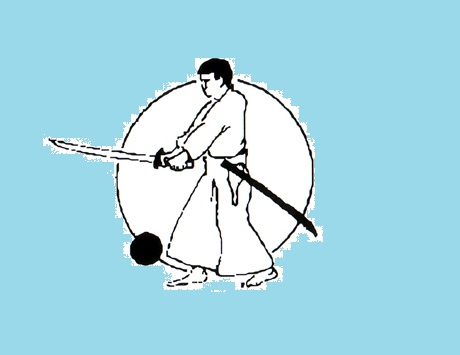
In the section Ohno talked about the progression of swordsmanship from “gekken”, to “kenjutsu” to “kendo”. Ohno wrote that during the era of brute force fighting, “gekken” was about having the strongest swordsman win over the weaker opponent. As time progressed, it was recognized that there is a structure to the swordsmanship, and “kenjustu” was developed. Kenjutsu is translated as “art of sword”. With this, a weaker opponent could strike down the physically stronger opponent. As time went on, there was no longer a need to carry sword around, and “kendo” was developed in its place. Kendo means “the way of the sword”. The etymology is similar to “judo” which means “the gentle way”. The “-do” stands for “the way of”. “Ken” stands for “sword”. Thus, kendo stands for “the way of the sword”. Kendo utilizes a bamboo sword called a “shinai”. Kendo is a martial art and has become very well known in Japan and outside Japan.

Ohno went on to state that he believed that swordsmanship advanced the most during the era of kenjustsu. The “jutsu” part stands for “the art of”. Ohno points out that “jutsu” is created by inserting the character “require” into the character “action”. Thus, kenjutsu advanced swordsmanship the most because it required action. Ohno continues to state that “real action is what counts”. Talking about technology and actually practicing it are two different things.

This is a great lesson from Ohno and I was reminded of tacit knowledge when he talked about “requiring action”. Tacit knowledge is the brain child of Michael Polanyi, a Hungarian-British polymath [2]. Tacit knowledge may be loosely described as the knowledge that is hard to codify and part of which cannot be codified. Polanyi stated that “we know more than we can tell”. “Tacit knowledge” is generally contrasted against “Explicit knowledge”. Explicit knowledge is the knowledge that is present in the codified form like written procedures, manuals etc. However, it is wrong to state that Tacit and Explicit knowledge are mutually exclusive and that all Tacit knowledge can be transformed to Explicit knowledge.

Polanyi believed that all knowledge is either tacit or rooted in tacit knowledge, including explicit knowledge. In Polanyi’s words;

                “While tacit knowledge can be possessed by itself, explicit knowledge must rely on being tacitly understood and applied. Hence all knowledge is either tacit or rooted in tacit knowledge. A wholly explicit knowledge is unthinkable.”

While it might be possible to codify some parts of tacit knowledge, not all tacit knowledge can be codified. Some of the examples that Polanyi gave were riding a bicycle and facial recognition. It is not easy to explain in written form how to ride a bicycle or how to recognize a person through facial recognition. With the advancement in Machine Learning, both these activities can now be performed by AI (Artificial Intelligence). However, even the AI has to perform the action and learn from errors to be somewhat successful in it. The tacit portion of the knowledge still requires action. One of the ways to teach facial recognition to AI is to give a large amount of pictures with proper identification to allow the AI to learn from the correct data first. Based on this, the AI will start performing facial recognition tasks, and every wrong answer gets corrected which adds to the learning. Once the supervised learning is complete, a new dataset with unidentified pictures are given, and the accuracy rate determined. Every attempt at recognizing a picture is a lesson that reinforces the facial recognition knowledge.

Polanyi’s theory of knowledge was based on his objections against the prevalent “objectivism” in the scientific method. Objectivism is the belief that all knowledge is posteriori (after the fact) and is derived only based on the perception of the results with senses. Thus, the knowledge is based on quantitative measures using only perception. Polanyi’s objection to this was objectivism ignored the role of the observer or the experimenter. Polanyi thought that discovery must be arrived at by the tacit powers of the mind and its content. The role of the knower is very important in the formation of knowledge. Polanyi’s ideas of tacit knowing were derived from Gestalt psychology and the part-whole perception model which requires coherence between focal and subsidiary awareness. A face is able to be recognized because of all the particularities of the face (relative position of nose, lips, eyes etc, size of the eyes, color of the eyes etc.) combined into a coherent image through subsidiary and focal awareness. There is lot more to tacit knowledge that cannot be contained in this post. I encourage the readers to read upon Michael Polanyi for more. There is a lot more to tacit knowledge than what can be written down here (no pun intended).

The tacit knowledge can only be acquired by carefully observing the expert, and performing the functions under his or her watchful eyes. In other words, tacit knowledge requires action. Even the expert may not be aware of all parts of the tacit knowledge. The tacit knowledge can be acquired only through “close interaction and buildup of shared understanding and trust”. Polanyi has said that “all knowing is personal knowing”. Explicit knowledge can be stored in hardware (computer, books discs etc.) Explicit knowledge can be thus “transferred”. This is not possible for tacit knowledge. Some Knowledge Management practitioners have argued that all tacit knowledge can be transformed to explicit knowledge. An example is the SECI model by Nonaka and Takeuchi [3]. I do not believe this is possible since I believe that tacit knowledge can be acquired only through action and personal interaction with the experts.

I will finish off with a story I read from Harry Collins’ book, Tacit and Explicit Knowledge [4].

A guy walked into a pub that he has never been to before and sat down for a few drinks. He was puzzled by the action of the locals at the bar. Every now and then one of them would shout out a number and everybody would break out into laughter. This continued for a while, and the guy was very curious about it. He went to the pub owner and quizzed him about the strange actions. The pub owner explained to him that the locals have been coming here for so long and that they have been telling the same jokes over and over that they started assigning them numbers. So now, all they have to do is just call out the number and everybody would know the joke. Armed with this information, the new guy started calling out numbers and each time he was met with silence. The pub owner felt sorry for him, and explained to him “It’s not the joke my friend, it’s how you tell it.

Always keep on learning…

In case you missed it, my last post was Shisa Kanko, a Different Kind of Checklist:

[1] https://www.amazon.com/Toyota-Production-System-Beyond-Large-Scale/dp/0915299143

[2] https://en.wikipedia.org/wiki/Michael_Polanyi

[3] https://en.wikipedia.org/wiki/SECI_model_of_knowledge_dimensions

[4] https://www.amazon.com/Tacit-Explicit-Knowledge-Harry-Collins/dp/022600421X/ref=mt_paperback?_encoding=UTF8&me=

Concept of Constraints in Facing Problems:

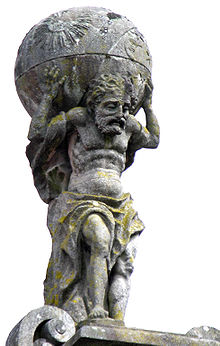
220px-Atlas_Santiago_Toural_GFDL

In today’s post, I will be looking at the concept of constraints in facing problems. Please note that I did not state “solving problems”. This is because not all problems are solvable. There are certain problems, referred to as “wicked problems” or complex problems that are not solvable. These problems have different approaches and none of the approaches can solve the problems completely. Some of the alternatives are better than the others, but at the same time they may have their own unintended consequences. Some examples of this are global warming and poverty.

My post is related to the Manufacturing world. Generally in the manufacturing world, most of the problems are solvable. These problems have a clear cause and effect relationships. They can be solved by using the best practice or a good practice. The best practice is used for obvious problems, when the cause and effect relationship is very clear, and there is truly one real solution. A good practice is employed where the cause and effect relationship is evident only with the help of subject-matter-experts. These are called “complicated problems”. There are also complex problems where the cause and effect relationships are not evident. These may be understood only after-the-fact. An example for this is launching a new product and ensuring a successful launch. Most of the time, the failures are studied and the reasons for the failure are “determined” after the fact.

The first step in tackling these problems is to understand what type of problem it is. Sometimes, the method to solve a problem is prescribed before the problem is understood. Some of the methods assume that the problem has a linear cause and effect relationship. An example is 5 why. 5 why assumes that there is a linear relationship between cause and effect. This is evident in the question – “why did x happen?”  This works fine for the obvious problems. This may not work that well for complicated problems and never for a complex problem. One key thing to understand is that the problems can be composite problems, some aspects may be obvious while some aspects may be complicated. Using a prescribed method can be ineffective in these cases.

The concept of constraints is tightly related to the concept of variety. The best resource for this is Ross Ashby’s “An Introduction to Cybernetics” [1]. Ashby defined variety as the number of distinct elements in a set of distinguishable elements or as the logarithm to base 2 of the number of distinct elements. Thus, we can say that the variety of genders is 2 (male or female) or as 1 bit (based on the logarithm calculation). Ashby defined constraint as a relation between two sets. Constraint only exists when one set’s variety is lower than the other set’s variety. Ashby gives the axample of a school that only admits boys. Compared to the set of gender (boys and girls), the school’s variety is less (only boys). Thus the school has a constraint imposed on itself.

A great resource for this is Dave Snowden and his excellent Cynefin framework [2]. Snowden says that ontology precedes epistemology or in other words data precedes framework. The fundamental properties of the problem must be understood before choosing a “tool” to address the problem. Prescribing a standard tool to use in all situations is constraining oneself and this will lead to ineffective attempts at finding a solution. When the leader says we need to use lean or six sigma, this is an attempt to add constraints by removing variety. Toyota’s methodologies referred to as Toyota Production System, was developed for their problems. They identified the problems and then proceeded to find ways to address them. They did not have a framework to go by. They created the framework based on decades of experience and tweaking. Thus blindly copying their methodologies are applying constraints on yourself that may be unnecessary. As the size or scope of a project increases, it tends to increase the complexity of the project. Thus enterprise wide applications of “prescribed solutions” are not generally effective since the cause-effect relationships cannot be completely predicted leading to unintended consequences, inefficiency and ineffectiveness. On the other hand, Ashby advises to take note of any existing constraints in a system, and to take advantage of the constraints to improve efficiency and effectiveness.

A leader should thus first understand the problem to determine the approach to proceed. Sometimes, one may have to use a composite of tools. One needs to be open for modifications by having a closed loop(s) with a feedback mechanism so that the approach can be modified as needed. It is also advisable to use heuristics like genchi genbutsu since they are general guidelines or rules of thumb. This does not pose a constraint. Once a methodology is chosen, then a constraint is being applied since the available number of tools to use (variety) has now diminished.  This thinking in terms of constraints prevents the urge to treat everything as a nail when your preferred tool is a hammer.

I will finish with a great story from the great Zen master Huangbo Xiyun;

Huangbo once addressed the assembly of gathered Zen students and said; “You are all partakers of brewer’s grain. If you go on studying Zen like that, you will never finish it. Do you know that in all the land of T’ang there is no Zen teacher?”
Then a monk came forward and said, “But surely there are those who teach disciples and preside over the assemblies. What about that?”
Huangbo said, “I do not say that there is no Zen, but that there is no Zen teacher…”

Always keep on learning…

In case you missed it, my last post was Jidoka, the Governing Principle for Built-in-Quality:

[1] https://www.amazon.com/Introduction-Cybernetics-W-Ross-Ashby/dp/1614277656

[2] http://cognitive-edge.com/blog/part-two-origins-of-cynefin/

Kant and Respect for Humanity:

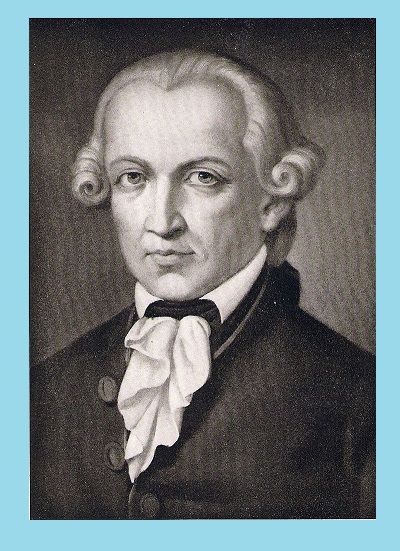
Kant

In today’s post, I will be looking at the concept of Respect of Humanity from a “Kantian philosophy standpoint”. “Respect for Humanity” is one of the two pillars of the “Toyota Way”. Yoshio Ishizaka defined Toyota Way as – Toyota’s implicit knowledge put in statutory form in 2001 [1]. I have written about Respect for People many times in this blog before [2].

Immanuel Kant (1724 – 1804) is a giant in modern philosophy. Kant wrote about the Categorical Imperative in his 1785 book, Groundwork of the Metaphysics of Morals [3]. Kant defined the Categorical Imperative as a universal moral law or principle that must be followed at all times, no matter what the circumstance or what our natural inclinations or desires are. Our focus is on Kant’s second formulation of the Categorical Imperative;

Act so that you use humanity, as much in your own person as in the person of every other, always at the same time as end and never merely as means.’’

Kant viewed humans as rational beings and accordingly rational beings cannot be treated merely (solely) as a means to ends, but as ends themselves.  A rational person will not subject himself to be treated as a mere means to an end, thus it is only rational to treat others the same way, in a universal manner. This thinking is applicable to oneself as well. One of the examples that Kant gave to explain this concept, is of a man who does not try to develop his natural talent. The man in the example is content with where he is, and in Kant’s eyes this means that the man is not respecting himself. Kant said, it is not enough that the action does not conflict with humanity in our person as end in itself; it must also harmonize with it (humanity).

Kant used the term “menschlichkeit”, a German word to explain his ideas regarding humanity. He viewed humanity as possessing a “rational nature” [3]. Humanity, through which we have the rational capacities to set ends, use means to them, and organize them into a whole. And as a rational being, at the heart of this is the capacity for autonomy or the ability to self-govern. The word “autonomy” from Greek means autos = self, nomos = law. This ability for self-governing, morally forces us to view each other with respect.

The concept of Respect for People does not begin or end with “being nice” to others. From a Kantian standpoint, respect is about morality. Morality is not about consequences – what others would think about me, but about intentions – it is rational to be respectful to others. Kant does not have a problem with using a person as a means to an end. For example, when an operator comes to work, he is being used to produce a product (means to an end). Kant’s problem is when a person is used as a “mere means” to an end. If the operator is seen only as a pair of hands, and if his or her input is not valued, then he or she is being used as a “mere means”. This adds a dimensionality to the relationship with the operator. It goes both ways, from the manager to the operator and the operator to the manager. The operator in turn should not view the job as a mere paycheck.

From a Kantian perspective, Respect for People means to ensure that everybody is capable of being valuable. There are opportunities for development of talent, and in Kant’s words, a chance to harmonize with humanity. How does one increase the worth of an employee? You can increase their worth by developing the employee to understand the value in his work. You can increase their worth by training him to look for gaps between the ideal state and the current state. By understanding this gap, you can further develop him to take countermeasures and corrective actions to move closer to the ideal state. Ideally, the employee would now be able to train the employees underneath him. The employee is now at a stage to be making decisions and implementing improvements on his own. In other words, he is empowered.

Final Words:

Kant was ahead of his time with his thinking. Kant spent his entire life in his hometown (Königsberg, the then capital of Prussia), and is said to have never set his foot outside a 100 mile radius from his house. Most of his famous works came later in his life. He famously said that David Hume, the great Scottish philosopher, woke him up from his dogmatic slumber.  As I was reading upon Kant as part of my personal journey through philosophy, I came upon his Categorical Imperative and it struck me how much the second formulation aligned itself well with the Respect of Humanity theme of the Toyota Way.

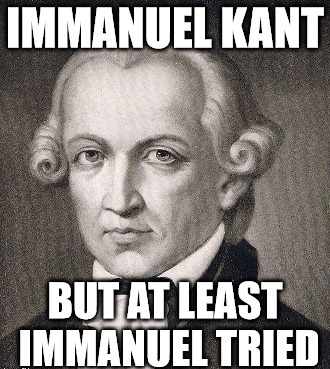
There are many play-on-words with Kant’s name. One of my favorite memes is below:

Kant_Meme

I will finish with an anecdote about Kant.

Kant was a firm believer in rules. He had set a rule for himself to not smoke more than one pipe a day. Smoking was Kant’s time to think and reflect. As time went on, Kant wanted to spend more time smoking. However, he did not want to break his own rule. His way out was to get a larger pipe. It is said that as time went on, the size of the bowls of his pipes grew in size considerably.

Always keep on learning…

In case you missed it, my last post was Process Validation and the Problem of Induction:

[1] https://www.amazon.com/Toyota-Way-Sales-Marketing/dp/1926537084/ref=sr_1_1_twi_pap_2?s=books&ie=UTF8&qid=1494183905&sr=1-1&keywords=The+Toyota+Way+in+Sales+and+Marketing

[2] https://harishsnotebook.wordpress.com/?s=respect+for+people

[3] https://www.amazon.com/Groundwork-Metaphysics-Morals-Immanuel-Kant/dp/0300094868

Process Validation and the Problem of Induction:

EPSON MFP image

From “The Simpsons”

Marge: I smell beer. Did you go to Moe’s?

Homer: Every time I have beer on my breath, you assume I’ve been drinking.[1]

In today’s post, I will be looking at process validation and the problem of induction.  I have looked at process validation through another philosophical angle by using the lesson of the Ship of Theseus [4] in an earlier post.

US FDA defines process validation [2] as;

“The collection and evaluation of data, from the process design stage through commercial production, which establishes scientific evidence that a process is capable of consistently delivering quality product.”

My emphases on FDA’s definition are the two words – “capability” and “consistency”. One of the misconceptions about process validation is that once the process is validated, then it achieves almost an immaculate status. One of the horror stories I have heard from my friends in the Medical Devices field is that the manufacturer stopped inspecting the product since the process was validated. The problem with validation is the problem of induction. Induction is a process in philosophy – a means to obtain knowledge by looking for patterns from observations and coming to a conclusion. For example, the swans that I have seen so far are white, thus I conclude that ALL swans are white. This is a famous example to show the problem of induction because black swans do exist. However, the data I collected showed that all of the swans in my sample were white. My process of collection and evaluation of the data appears capable and the output consistent.

The misconception that the manufacturer had in the example above was the assumption that the process is going to remain the same and thus the output also will remain the same. This is the assumption that the future and present are going to resemble the past. This type of thinking is termed the assumption of “uniformity of nature” in philosophy. This problem of induction was first thoroughly questioned and looked at by the great Scottish philosopher David Hume (1711-1776). He was an empiricist who believed that knowledge should be based on one’s sense based experience.

One way of looking at process validation is to view the validation as a means to develop a process where it is optimized such that it can withstand the variations of the inputs. Validation is strictly based on the inputs at the time of validation. The 6 inputs – man, machine, method, materials, inspection process and the environment, all can suffer variation as time goes on. These variations reveal the problem of induction – the results are not going to stay the same. There is no uniformity of nature. The uniformities observed in the past are not going to hold for the present and future as well.

In general, when we are doing induction, we should try to meet five conditions;

  1. Use a large sample size that is statistically valid
  2. Make observations under different and extreme circumstances
  3. Ensure that none of the observations/data points contradict
  4. Try to make predictions based on your model
  5. Look for ways and test your model to fail

The use of statistics is considered as a must for process validation. The use of a statistically valid sample size ensures that we make meaningful inferences from the data. The use of different and extreme circumstances is the gist of operational qualification or OQ. OQ is the second qualification phase of process validation. Above all, we should understand how the model works. This helps us to predict how the process works and thus any contradicting data point must be evaluated. This helps us to listen to the process when it is talking. We should keep looking for ways to see where it fails in order to understand the boundary conditions. Ultimately, the more you try to make your model to fail, the better and more refined it becomes.

The FDA’s guidance on process validation [2] and the GHTF (Global Harmonized Task Force) [3] guidance on process validation both try to address the problem of induction through “Continued Process Verification” and “Maintaining a State of Validation”. We should continue monitoring the process to ensure that it remains in a state of validation. Anytime any of the inputs are changed, or if the outputs show a trend of decline, we should evaluate the possibility of revalidation as a remedy for the problem of induction. This brings into mind the quote “Trust but verify”. It is said that Ronald Reagan got this quote from Suzanne Massie, a Russian writer. The original quote is “Doveryai, no proveryai”.

I will finish off with a story from the great Indian epic Mahabharata, which points to the lack of uniformity in nature.

Once a beggar asked for some help from Yudhishthir, the eldest of the Pandavas. Yudhishthir told him to come on the next day. The beggar went away. At the time of this conversation, Yudhishthir’s younger brother Bhima was present. He took one big drum and started walking towards the city, beating the drum furiously. Yudhishthir was surprised.

He asked the reason for this. Bhima told him:
“I want to declare that our revered Yudhishthir has won the battle against time (Kaala). You told that beggar to come the next day. How do you know that you will be there tomorrow? How do you know that beggar would still be alive tomorrow? Even if you both are alive, you might not be in a position to give anything. Or, the beggar might not even need anything tomorrow. How did you know that you both can even meet tomorrow? You are the first person in this world who has won the time. I want to tell the people of Indraprastha about this.”

Yudhishthir got the message behind this talk and called that beggar right away to give the necessary help.

Always keep on learning…

In case you missed it, my last post was If a Lion Could Talk:

[1] The Simpsons – Season 27; Episode 575; Every Man’s Dream

[2] https://www.fda.gov/downloads/drugs/guidances/ucm070336.pdf

[3] https://www.fda.gov/OHRMS/DOCKETS/98fr/04d-0001-bkg0001-10-sg3_n99-10_edition2.pdf

[4] https://harishsnotebook.wordpress.com/2015/03/08/ship-of-theseus-and-process-validation/

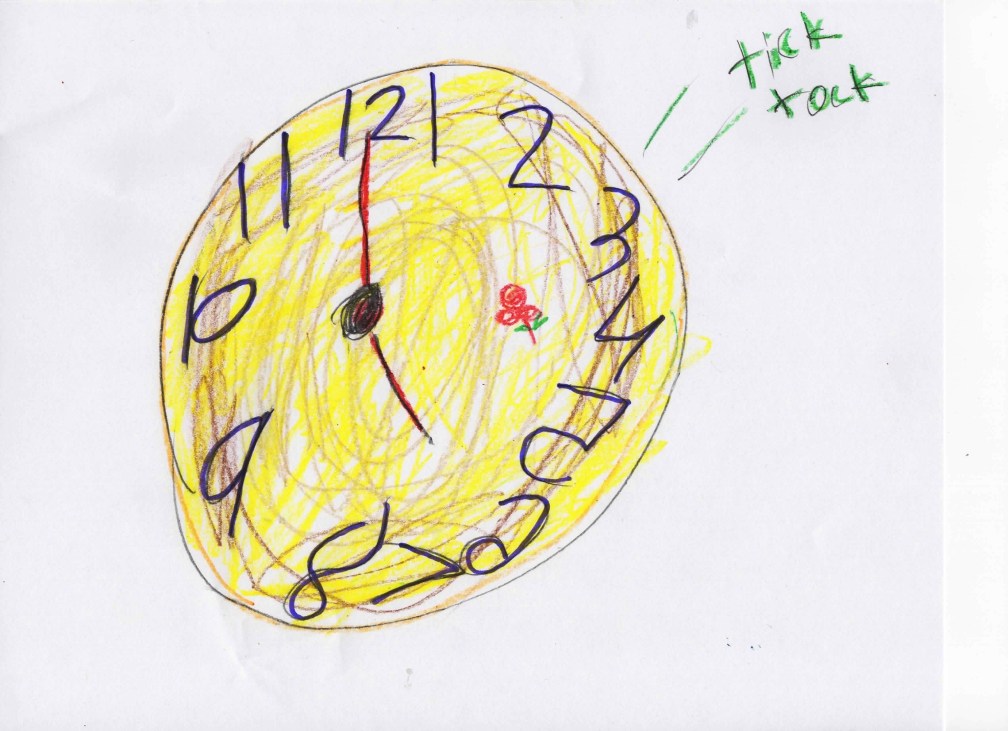
[5] Non-uniformity of Nature Clock drawing by Annie Jose

If a Lion Could Talk:

EPSON MFP image

In today’s post, I am continuing with the theme of being inspired by philosophy. This post is inspired by the famous Austrian/British philosopher Ludwig Wittgenstein [1]. In his posthumously published book “Philosophical Investigations” [2], Wittgenstein wrote;

If a lion could talk, we could not understand him.

One of the interpretations of this statement is that a lion has a totally different worldview than us, thus his values would be entirely different. Even though, we may have a common language, the intentions and interpretations would be completely different. A lion does not share a common frame of reference with us. The mutual understanding also depends upon whether we are interested in actively listening. Another aspect to think about is the non-verbal communication. The majority of human communication is non-verbal so simply talking does not convey the entire meaning. The meaning of a word depends upon the use of it within the context of a shared understanding.

When I was pondering about this, I started wondering whether we would understand if our process or gemba is “talking” to us. In some regards, they do talk to us through the visual controls we have in place. The visual controls lets us know how the process is going – but do we understand it?

The purpose of a visual control is to immediately make any abnormality, waste, or deviation visible so that we can immediately take action. Notice that I used “immediately” twice. This is how we should understand it. This sets the tone for how gemba talks to us. There are several ways that we fail to understand what the gemba is saying to us. A great resource for Visual controls is a collection of articles compiled from NKS Factory Management Journal, available in the form of the book “Visual Control Systems.” [3] Some of the ways Visual Controls can fail are;

1) A failure to understand what the visual controls are for:

One of the examples given of inadequate implementation of visual controls is to treat visual controls as a mere extension of 5S. The purpose of visual controls is, as noted above, to make abnormalities immediately visible. Additionally, action must be taken to address the problem.

2) Low problem consciousness among the employees:

If the employee is failing to make the abnormality visible, or if the supervisor / group leader or management is failing to take action immediately, the purpose of visual controls is being defeated. This leads to “business-as-usual” thinking.

3) Inadequate Visual Control Tools:

If there is no daily production board used, then any metric tracked is going to lead only to a delayed response. No timely action that can be taken. In a similar note, if the daily production board is located in a place that is not easy to see, the operators will not use it because of the inconvenience.

4) Lack of established standards for the visual controls:

In order to have the visual controls operate successfully, the establishment and dissemination of the rules of the visual controls must be performed. Everybody should know how to understand the visual control – what is the norm, what is good versus bad, signs something is abnormal etc.

I will finish off with a great Zen story that relates to the lack of understanding.

Provided he makes and wins an argument about Buddhism with those who live there, any wandering monk can remain in a Zen temple. If he is defeated, he has to move on. In a temple in the northern part of Japan two brother monks were dwelling together. The elder one was learned, but the younger one was stupid and had but one eye. A wandering monk came and asked for lodging, properly challenging them to a debate about the sublime teaching. The elder brother, tired that day from much studying, told the younger one to take his place. “Go and request the dialogue in silence,” he cautioned.

So the young monk and the stranger went to the shrine and sat down. Shortly afterwards the traveler rose and went in to the elder brother and said: “Your young brother is a wonderful fellow. He defeated me.”
“Relate the dialogue to me,” said the elder one.
“Well,” explained the traveler, “first I held up one finger, representing Buddha, the enlightened one. So he held up two fingers, signifying Buddha and his teaching. I held up three fingers, representing Buddha, his teaching, and his followers, living the harmonious life. Then he shook his clenched fist in my face, indicating that all three come from one realization. Thus he won and so I have no right to remain here.” With this, the traveler left.

“Where is that fellow?” asked the younger one, running in to his elder brother.
“I understand you won the debate.”
“Won nothing. I’m going to beat him up.”
“Tell me the subject of the debate,” asked the elder one.
“Why, the minute he saw me he held up one finger, insulting me by insinuating that I have only one eye. Since he was a stranger I thought I would be polite to him, so I held up two fingers, congratulating him that he has two eyes. Then the impolite wretch held up three fingers, suggesting that between us we only have three eyes. So I got mad and got ready to punch him, but he ran out and that ended it!”

Always keep on learning…

In case you missed it, my last post was Ehipassiko – Come and See:

[1] https://en.wikipedia.org/wiki/Ludwig_Wittgenstein

[2] https://www.amazon.com/Philosophical-Investigations-Ludwig-Wittgenstein/dp/1405159286

[3] https://www.amazon.com/Control-Systems-Innovations-Advanced-Companie/dp/1563271435

[4] Lion drawing by Audrey Jose

Ehipassiko – Come and See:

Einstein Poster

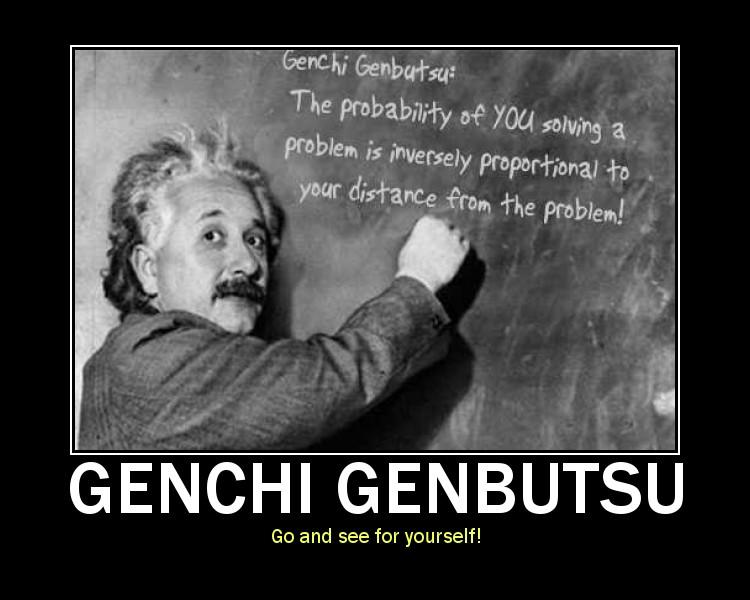
As I noted in my last post, I have been reading upon philosophy, both Western and Eastern. One of the terms that I came across in Eastern Philosophy is from Buddhism. The term is “ehipassiko”. This is a phrase from the Pali language, that Buddha used. This term is derived from the Sanskrit phrase “ehi, paśya”. Ehipassiko is loosely translated as “come and see for yourself”. One of the tenets of Toyota Production System is “Genchi Genbutsu” or “Go and See”. Genchi Genbutsu means to go to the source and grasp the facts.

Ehipassiko is a teaching by Buddha to not accept things based on what you hear. He is asking you to come and see for yourself. It is an invitation to come to the source and test things out empirically – to check out the nature of reality for yourself. I could not help but draw comparisons to Genchi Genbutsu when I read about ehipassiko. The teachings of Buddha are very well accepted and received in Japan. It may not be that Genchi Genbutsu was derived from ehipassiko, but there are similarities there.

Similar to Genchi Genbutsu in Toyota Production System, Honda also has a concept called “sangen shugi” or the three realities (3 gens). The Sangen shugi are;

  • Genba – the real spot, where the action takes place. This is also termed as Gemba by English translators.
  • Genbutsu – the actual part, the source of the problem
  • Genjitsu – the actual facts, to base your decision on reality and not opinions.

As Jeffrey Rothfeder writes in his 2015 book[1], “Driving Honda”, genba is where the knowledge begins; after maturing during genbutsu this knowledge serves as the footing for genjitsu where decisions are arrived at based on firsthand understanding. In turn, the facts that emerge during genjitsu organically inform the blossoming of the new information at future genba.

It is said that Buddha started teaching once he became Buddha, the awakened one. However, he did not want people to just take his words on authority. He wanted them to test it out for themselves – ehipassiko. I will finish this post with a story about Buddha;

Buddha was at a village called Kesaputta teaching. The villagers told Buddha that they were confused as to whose teaching is correct. Many teachers visited their village telling them that all the other teachings are wrong. Buddha then told them about ehipassiko.

He told them[2], “Do not go upon what has been acquired by repeated hearing; nor upon tradition; nor upon rumor; nor upon what is in a scripture; nor upon surmise; nor upon an axiom; nor upon specious reasoning; nor upon a bias towards a notion that has been pondered over; nor upon another’s seeming ability; nor upon the consideration that the person is our teacher.”

He asked them to be not passive about what they hear from the wise, but to actively question and test out to confirm the reality.

Always keep on learning…

In case you missed it, my last post was Popper’s Circle:

[1] https://www.amazon.com/Driving-Honda-Inside-Innovative-Company/dp/1591847974/ref=tmm_pap_swatch_0?_encoding=UTF8&qid=1492015964&sr=1-1

[2] “Kalama Sutta: The Buddha’s Charter of Free Inquiry”, translated from the Pali by Soma Thera. Access to Insight (Legacy Edition), 30 November 2013, http://www.accesstoinsight.org/lib/authors/soma/wheel008.html.

Popper’s Circle:

karl_popper_jpg_800x600_q85

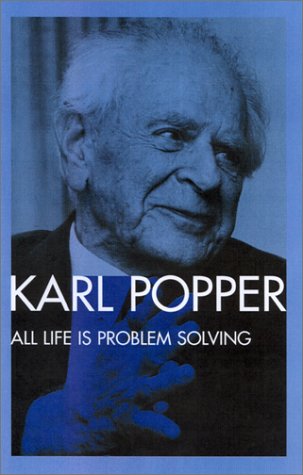
I have been reading a lot these days about Western Philosophy. The most recent book that I have been reading is from one of the great Philosophers of the twentieth century, Karl Popper – All Life is Problem Solving. This is a collection of Popper’s writings. One of the great teachings from Popper is the concept of “falsification”, which means that as a scientist one should always try to disprove his theory rather than trying to confirm it. A classic example is the case of black swans (not Nicholas Taleb’s black swan) – if one were to say that all swans are white based on the empirical evidence of his observations of only white swans, he is looking to only confirm his theory. He is not actively trying to disprove his theory. When a black swan is discovered, his theory now breaks down. Loosely put, falsification should lead to attempts to disprove or challenge one’s theory. The more survival of attempts to falsify the theory, the more “reliable” the theory becomes. An extreme example is if I claim that I have the psychic ability to have my coin turn heads on all tosses. I can toss a thousand times and show one thousand heads. However, if I refuse to look at both sides of the coins to see if it is a two-headed coin, I am not looking to reject my claim. I am only looking for evidence that supports my claim.

My post today is not about falsification, but about Karl Popper’s advice on observation. Taiichi Ohno, the father of Toyota Production System, was said to have drawn a chalk circle on the factory floor and asked a supervisor or manager to stand inside the circle and observe an operation on the floor. The task he had was to find as much waste as possible by observing the operation. This has come to be termed as “Ohno’s circle” in the Lean world.

When I came across a section in the book, All Life is Problem Solving, where Popper also talked about observation as part of his three step scientific methodology, I was very interested. His three step model is as follows;

  1. Problem
  2. Attempted solutions
  3. Elimination

In Popper’s words, the first step, “problem” arises when some kind of disturbance takes place – a disturbance either of innate expectations or of expectations that have been discovered or learnt through trial and error. The second stage in our model consists of “attempted solutions” – that is, attempts to solve the problem. The third stage in our model is the “elimination” of unsuccessful solutions.

Popper had strong words about observation;

The old theory of science taught, and still teaches, that the starting point for science is our sense perception or sensory observation. This sounds at first thoroughly reasonable and persuasive, but it is fundamentally wrong. One can easily show this by stating the thesis: without a problem, no observation. If I asked you: ‘Please, observe!’, then linguistic usage would require you to answer by asking me: ‘Yes, but what? What am I supposed to observe?’ In other words, you ask me to set you a problem that can be solved through your observation; and if I do not give you a problem but only an object, that is already something but it is by no means enough. For instance, if I say to you: ‘Please look at your watch’, you will still not know what I actually want to have observed. But things are different once I set you the most trivial problem. Perhaps you will not be interested in the problem, but at least you will know what you are supposed to find out through your perception or observation.

The standards on the production floor are an important aspect for observation. They tell us what the sequence of operations is, what the takt time is, and what the standard work-in-process should be. Another important aspect to look out for is muri or overburden. If an operator is doing an operation where he is required to lift heavy loads or if he has to reach out to grab something, then it is an opportunity to improve the work. Popper’s advice brings into mind that when we are out on floor and observing, we need to know what we should be looking for.

I will finish off with another great twentieth century philosopher Bertrand Russell’s somber Turkey story, that I have paraphrased;

There was once a turkey that lived on a farm, and the turkey was scientifically oriented. He observed that the farmer gives him food everyday at 7:00 AM. Since he was a smart turkey, he knew that he needed to take a lot of data points. He is observations were made on cloudy days, rainy days, sunny days, weekdays, weekends and all kind of days. Months go by, and by now the turkey feels that he has enough data now and feels confident that tomorrow the farmer is going to feed him at 7:00 AM. However, the next day was Christmas Eve and the turkey was not fed but instead had his throat cut.

Always keep on learning…

In case you missed it, my last post was The Effectiveness of Automation:


The Effectiveness of Automation:

robot-arm

In today’s post, I will be looking at automation. Stephen Hawking, perhaps the most famous Scientist alive today, warned us about automation and Artificial Intelligence (AI) in his column on The Guardian. He said;

The automation of factories has already decimated jobs in traditional manufacturing, and the rise of artificial intelligence is likely to extend this job destruction deep into the middle classes, with only the most caring, creative or supervisory roles remaining.

Bill Gates recently talked about the concept of taxing robots who are taking away the manufacturing jobs. Interestingly, these concerns are not new. Lillian Gilbreth talked about “The Human Side of Automation” in a 1957 speech at the Society of Women Engineers National Convention. She put forth the need to evaluate the responsibilities of the engineers doing the automation. She advised relying on the scientific method and ethics, and proposed adding “human resources” to the definition of automation. Her concept of automation is about the removal of “drudgery” from work. However, she warned that there are different ways someone views what drudgery is.

In my mind, the main question that needs to be answered is the effectiveness of automation. The aspect of making a job easier to do is part of continuous improvement activities. Frederick Taylor, often cited as the father of Scientific Management, changed the manufacturing world by pushing the concept of finding the one standard way of doing the job. He pushed the concept of time and motion studies with the help of the Gilbreths. The wasted motions were eliminated and this surged the productivity in the plants. The pursuit of wasted motions is as valid today as it was back when Taylorism was around. The consequences of Taylorism were the focus on only efficiency and the reliance on a small group of experts, which paved the way to mass manufacturing with the assembly lines. The “experts” designed the manufacturing floors and the work, sometimes with minimal input from the operators. This continued until, Toyota came into the picture with the ideas of Toyota Production System. Toyota also pursued efficiency; however they realized the lessons of Lillian Gilbreth as well. The employees are invaluable resources, and they focused on the Thinking Production System (TPS) where the employees were asked to bring not only their pairs of hands but also their brains. The Toyota Way, Toyota’s attempt to codify the implicit knowledge, was written with the two pillars of Toyota as “Continuous Improvement” and “Respect for People”. Unfortunately, when TPS was reinterpreted as Lean, sometimes the focus was put back on efficiency alone which led to the pejorative definition of LEAN as “Less Employees Are Needed” or what Mark Graban calls as LAME. Lillian Gilbreth, in her 1957 speech advises us to keep this in mind when improvement activities are performed – What happens to the employees? This impacts the company culture.

Russell Ackoff, the great American Systems Thinker, when talking about Toyota asked an important question about effectiveness. He asked why the focus is not on improving the environment since cars can cause pollution. This is the big picture question. Toyota has been working on zero emissions and recently launched Mirai, which is a hydrogen fuel cell vehicle. The question of effectiveness is about the betterment of human kind.

Automation can replace only those portions of the jobs which are ordered or complicated – which means there are strong cause and effect relationships, and have repeatable operations. This is almost as if following a script- if this happens, then do this. Automation cannot handle complexity at this point in time. In Complex situations, there are no straightforward cause and effect relationships. Every situation is unique. Artificial Intelligence has not been able to make strides in these areas. The concept of efficiency is strong in complicated regions and the concept of effectiveness is strong in the complex regions. Creativity and continuous improvement are not repeatable activities. A robot with a melted candy bar in its pocket next to a magnetron cannot invent the next microwave oven, at least not yet.

The push for automation can again put us back into the mass manufacturing era. We can start making things for the sake of not keeping the robot idle. We can start making things that people do not want to purchase. We can keep making the wrong things. The push for automation for the sake of cost reduction which leads to loss of jobs is not pursuing effectiveness. There is no easy answer to this. We do need automation to replace “drudgery”. However, the betterment of humanity must be the focus at all times.

I will finish off with a story that Mrs. Lillian Gilbreth told in her speech;

Lillian was at a factory with her husband Frank. Frank had arranged for a trolley to move the iron back and forth so that the woman operator did not have not to do any heavy lifting. Frank asked the operator, “Mary, how do you do like this nice little trolley I made for your iron?”

The operator looked at him straight in the eyes and asked, “Do you really want me to tell you?”

Lillian knew the answer was not going to be good and wanted to move on. But Frank persisted for an answer.

Mary said, “Well, I think it is the work of a big, fat, lazy man.”

Lillian concluded in her speech that by creating the trolley, Frank had taken away all the satisfaction from Mary’s work. Mary was the only one strong enough to do what she did and she took pride in what she did. Now it was a job anybody could do. Lillian also noted that they should have been “intelligent” enough to notice that what seemed drudgery to them was not necessarily the case to Mary. They should had asked for input and better defined what drudgery actually was.

Always keep on learning…

In case you missed it, my last post was Practicing Lean, a review:

Entropy in the Manufacturing World:

ukiyoe

In today’s post, I will be looking at Entropy in the Manufacturing world. Entropy is generally defined as disorder. This general definition can sometimes be inadequate. Let’s look at the example of a desk in an office; One could say that if the desk appears to be in order (neat and tidy), then it has low entropy. However, the concept of orderliness is very subjective. Entropy can be referred to as the measure of disorderliness. To me, if I am able to know where everything is, and I can access each item quickly, then my desk has low entropy. It may not seem “ordered” to an outsider, and he may conclude that my desk has high entropy. The second law of Thermodynamics can be loosely stated as – the entropy always increases. Thus, a desk will always get messier. There is a probability aspect to entropy. There are many different ways the things on my desk can be arranged, and only a very small number of those arrangements can be concluded as “ordered”. There is a multitude of more ways a desk can be seen more disorderly than the small number of ways it can be seen as orderly. Thus, from a probability standpoint, it is always likely that a desk is messy unless there is a consistent process in place to keep it back to the “ordered” state at frequent intervals. This line of thinking also shows that the more things you have on your desk, your desk is always most likely to be in a state of “messiness”. Interestingly, 5S in Lean requires you to limit the number of items in an area to only those items that are needed. All of the extra items are encouraged to be removed.

Entropy can also be explained in terms of the element of surprise. For example, a brand new deck of playing cards in order has low entropy because one knows exactly where every card is. There is minimal element of surprise. If one were to riffle shuffle the cards once, there is still some form or order maintained in the cards. For example, the order of the cards from Ace to King is not disturbed. There may be some different cards in between, but the Three of Hearts is still above Four of Hearts, even though there may be other suit cards in between them. This concept is known to magicians and used in several magic tricks. When the cards are shuffled again and again, the knowledge of any form of order is lost, and the entropy thus increases. With a good shuffled deck of cards, any card presents an element of surprise – new information. With the same logic used in the previous paragraph, it is very unlikely that continuous shuffling will bring a deck back to the original new deck order. There is always more ways for the deck to be in a different order than a new deck order. In the new deck order, if you are required to produce the King of Hearts, it is simple to do it since you know the order of the cards. You can do this fairly quickly. However, when the deck is shuffled, this becomes harder. You will need more time to look through every single card until you get to the King of Hearts. Although it is not exactly the same, it is stated that as entropy increases, it causes decaying of energy. In other words, the useable energy becomes less and less. Thus if one were to put the concept of value with regards to entropy, one could say that high entropy states do not yield value. Jeremy Campbell, in his wonderful book “Grammatical Man” states;

“At the heart of the second law (of Thermodynamics) is the insight has order has value.”

From this light, one can understand the need to maintain order in the manufacturing plant. The management strives to maintain low entropy within the manufacturing system, and they surely do not appreciate elements of surprises. From their viewpoint, painting all cars black does make sense. Producing the same item in big numbers using the principles of mass manufacturing is an attractive proposition for management. More number of products and components bring disorder and increase in entropy. Thus minimizing the variety of products manufactured also will be an attractive proposition for management.

However, the world has become smaller globally, and the market is asking for variety. From a Complexity Science standpoint, one can say that the manufacturing processes are ordered or complicated. There are good cause and effect relationships, and these can be easily controlled. However, the complexity outside a manufacturing plant is increasing with the advent of the information age. A manufacturer in China can sell his goods in America, and vice-versa easier. The demand for variety from the market is increasing and the manufacturer cannot make only black cars anymore to stay in business.

The management has to realize that the organizations are not technical systems, but sociotechnical systems. When you treat an organization as a technical system you assume that direct, linear cause and effect relationships exist, and that it is able to control the system through hierarchy. The most important requirement in this case becomes to minimize entropy. Entropy has a negative relationship with efficiency in mechanical (technical) systems. The goal of a sociotechnical system is not primarily to lower the entropy at all times. Complexity lies between low entropy and high entropy. Complex problems require complex dynamic solutions. Organizations should become complex adaptive systems and be able to move between phases in order to thrive. “Everything changes” is the reality, and thus the organization should be able to change and adapt the actions to meet the needs posed by the environment. The idea of order implies a state of permanence. The organization has to go through phases of permanence and impermanence to be able to thrive. Analogically, this is similar to the idea of kaizen in the Toyota Production System, where kaizen requires standards. Kaizen, the idea of change to improve, requires order (standards).  This is also the going back and forth between permanence and impermanence. In the complex world today, nothing should be set in stone.

I will finish with a wonderful lesson from Shunryū Suzuki-roshi;

“Suzuki Roshi, I’ve been listening to your lectures for years,” a student said during the question and answer session following a lecture, “but I just don’t understand. Could you just please put it in a nutshell? Can you reduce Buddhism to one phrase?”

Everyone laughed. Suzuki laughed.

“Everything changes,” he said. Then he asked for another question.

Always keep on learning…

In case you missed it, my last post was Minimal Critical Specification.