Talking Trash:

ごみ

In today’s post, I will be looking at how trash and waste are handled in Japan, and lessons in lean from this. There are not many public trash cans available in Japan. Yet, the cities in Japan are mostly clean. This is an interesting contrast when compared to America, where public trash cans are readily available in order to keep the streets clean.

The Lack of Trash Cans:

Japan has very limited space or land available for landfills. The main method of dealing with trash is incineration. It is estimated that about 80% of the garbage collected ends up in incinerators. In order to reduce garbage, Japanese officials in various towns and cities started implementing programs to increase recycling. This led to an interesting development. To aid recycling, the officials pushed the sorting to the source – the people. They introduced categories for sorting. Slowly the number of categories increased to double digit numbers. For example, the town of Kakimatsu in Shikoku has 44 different garbage categories. The sorting policies were strictly implemented, and those who did not comply were looked down upon. This led to public trash cans and garbage cans getting filled as part of people not wanting to sort. This may have led to the removal of several trash and garbage cans from the Japanese streets. The following is taken from the 2005 NYTimes article;

In Yokohama, after a few neighborhoods started sorting last year, some residents stopped throwing away their trash at home. Garbage bins at parks and convenience stores began filling up mysteriously with unsorted trash.

“So we stopped putting garbage bins in the parks,” said Masaki Fujihira, who oversees the promotion of trash sorting at Yokohama City’s family garbage division.

The garbage program is dealt with strictly. The peer pressure and the culture to fit in ensure that the program runs effectively. Additionally, there are “volunteers” who act as “leaders” and nudge the offenders to follow the program. It is encouraged that the trash bags are clear so that the trash is made visible. There is a cultural push to clean up after yourself and to be responsible.

Final Words:

Waste is a central theme in Lean. We are advised to eliminate waste in lean. There are many lessons that we can learn from the garbage program in Japan.

  • Everything should be based on a need- The program was put in place due to a lack of landfill space.
  • Tackle the problem at the source- The program put the responsibility at the source (the person throwing away the trash).
  • Auditing is an important aspect of any system (by your next customer or from an outside person)- For a system to sustain the auditing function is an important step.
  • Anticipate how the program can fail- the removal of public trash cans was done in response to people bringing trash from home and putting them in the public bins.
  • Any program requires people to participate in order to succeed.

As a side note, Toyota has been pursuing a zero landfill goal. As part of this, Toyota Engineering and Manufacturing of North America took away trash cans from its 1400 employees. This was described as a learning curve for the employees. The outcome of this move was that it created awareness about waste and a change in attitude.

The purging of the waste cans was a small but significant step toward Toyota’s zero-landfill goal. And Toyota has indeed achieved the goal (zero landfill is defined as diverting at least 95 percent of all waste away from landfills and into recycling or reuse).  It was one thing to reach the goal at the TEMA offices in Erlanger, where most people work at desk jobs.  Quite another to go zero landfill at its 12 manufacturing plants in North America, where they make cars, engines, auto parts and other things traditionally thought of as dirty manufacturing. Toyota has achieved that at all but two of its plants, and those  two are 97 percent of the way there. (From the article)

The other side of this is the point-of-use approach used widely elsewhere in the USA. Philadelphia is introducing a bill to require trash cans within 10 feet from the entrance of any business that sells prepared food for consumption off-premises. This is being done as a means to tackle the waste problem in the city. These seemingly two different approaches to tackle trash are interesting to say the least. The point-of-use is also an important tool used in lean to ensure that the operator has everything he needs in his reach.

I will finish off with an anecdote about Walt Disney. It is said that the average distance between two trash cans in any parks operated by Disney is 30 feet. This is based on the “study” performed by Walt Disney himself. As part of the planning he did for his parks, he ate a hot dog and he found that he took 30 steps before he was all done. He came to the conclusion that to meet the customers’ needs, he needed a trash can every 30 steps. This way the customer did not have to hold onto the trash.

Always keep on learning…

If you enjoyed this post, you can read more here.

In case you missed it, my last post was Take Pride in Your Work – Ji Kotei Kanketsu.

Take Pride in Your Work – Ji Kotei Kanketsu:

Customer

As a Quality professional, I am always interested in how “Quality” is handled in the Toyota Production System. A “Quality model” that Toyota uses is “Ji Kotei Kanketsu” or JKK. “Ji” in Japanese means “self”, “kotei” means “process” and “kanketsu” means “completion”. Putting all the words together, JKK means “Completion of your own work”. JKK has also been translated as “taking pride in what you are doing”, “not passing defects along to the next process”, or “next process is your customer”. The idea that the next process is your customer was something that Kaoru Ishikawa, the Japanese Quality Master, talked about a lot as part of the Total Quality Control movement.

Customer First:

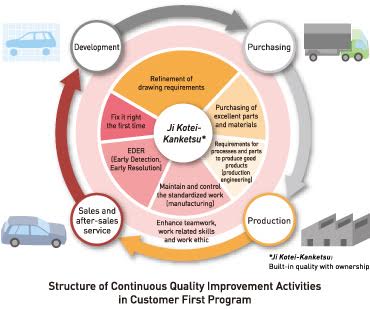
JKK was initiated by Toyota as a means to increase employee awareness about quality. Every process after your process depends on your level of quality. They are all your customers. The concept of JKK is present in all facets of Toyota. JKK starts with the Engineering group through the product design and specifications – the best possible design. This is followed by Purchasing – ensuring quality components from suppliers. This is then followed by Production – maintaining and controlling the standardized work. Finally, Sales and Marketing – early detection and resolution of any potential problems. The model below is taken from the Toyota website.

Toyota

Toyota describes the EDER (Early Detection, Early Resolution) program as follows;

EDER is a communication system for quickly detecting quality issues, immediately resolving issues, and swiftly providing results of rectification and kaizen feedback to customers.

Toyota teaches JKK as part of kaizen, continuous improvement. By focusing on your process and looking at the weak points in the process, you are identifying areas for improvement. JKK is practiced by the following four steps;

  1. First, clarify target and objective of task
  2. Clarify detailed procedure of task
  3. Clarify Ryohin jyoken (quality points)
  4. Immediately contact your supervisor, if a problem and/or delay may occur (pull Andon) and repeat Kaizen.

The Big Picture:

There is a counterintuitive aspect to JKK. By focusing on your own operation, you are required to focus on the next process – to ensure that the next process is successful. Thus, JKK is instilling a big picture mindset – a system approach in the employees.

Final Words:

The concept of Jidoka, is embedded in JKK. The ability to stop the line to fix the problem is the basis of building in quality. JKK is ensuring Quality Assurance in everybody’s work. Quality is defined as meeting customer’s requirements. Thus, customer satisfaction is the outcome of quality. In this regard, every Quality professional can be viewed as a customer service personnel.

I will finish off with an anecdote from the late founder of Matsushita Electric Industries, Konosuke Matsushita.

Matsushita was having a conversation with a western executive, and the discussion led to customers and treating customers like kings.

“No, that is wrong”, Matsushita said. “The customer is a god. Because, a king is a human, and thus capable of making mistakes. But a god does not make mistakes!”

Source: The Shift to JIT, Ichiro Majima.

Always keep on learning…

In case you missed it, my last post was Giving Time for Kaizen to Work.

Giving Time for Kaizen to Work:

time for kaizen

In today’s post I will look at kaizen and the need to allow time for an improvement to work. I am sometimes at fault about needing things to work immediately. This is a form of instant gratification – the desire to experience the results immediately. There are mainly two forms of kaizen discussed in lean literature – kaizen (small improvements) and innovation (drastic change usually involving equipment or technology). There are also medium sized improvements, and most of the time these do not result in an improvement in productivity immediately.

Shigeo Shingo and Lillian Gilbreth:

Shigeo Shingo was a consultant trainer at Toyota, and he specialized in Industrial Engineering. Shingo has written several books regarding TPS. In his book, “Key Strategies for Plant Improvement” he talked about the importance of allowing time for improvement activities to work. He referenced the “tabletop experiments” by Lillian Gilbreth as part of this. Alan Robinson along with his wife Margaret, wrote a great paper on the tabletop experiments called “On the Tabletop Improvement Experiments of Japan”. This paper talked about the contributions of Lillian Gilbreth and how her training materials were extensively used by the Japanese, and eventually by Shingo as part of his training at Toyota.

Shingo’s thinking was that the operators need to be familiar with the operation to truly feel that they are easy to do. If the steps are not familiar they have to exert their mind to think of what to do next, and this leads to mental fatigue, and thus may not result in an improvement in productivity.

Shingo discussed two experiments (Lillian had created more experiments) in his book. In the first experiment, the operator was required to write “production engineering” on 15 cards. This was a familiar phrase for the operator, and the productivity remained stable – all the cards took about the same time. The second experiment required the operator to skip every other letter, thus he was to write “poutoegneig”. The only stipulation was that he could not look at his previous work. From a work load standpoint, the number of letters were now about halved, thus it should had been a lot easier. However, the operator took a lot more time than the first experiment initially since he had to exert more time to think. After seven trials, he was able to write the word faster since he grew familiar with the phrase. The fifteenth card took about half the time as the first experiment.

Final Words:

The more I learn about Lillian Gilbreth, the more admiration I have for her. I have written about her before. The improvements may not immediately result in an increase in productivity. It is important that you understand that as part of kaizen, a certain amount of time is needed for practice to truly result in the improvement. The challenge here is – the old ways appear easier since the operator is familiar with it. Thus he may oppose the change even if it might actually reduce the work content and reduces the non-value added activities. It might be beneficial to have a standard amount of time for “sticking with the kaizen” to try it out. Rely on your data collected at the Gemba.

I will finish off with a Zen story I like a lot. This story is about how we perceive our experiences;

A student went to see his meditation teacher and said, “My situation is horrible! I feel so distracted most of the time, or my legs ache, or I’m repeatedly falling asleep. It’s terrible.” Said the teacher matter-of-factly, “It will pass.”

A week later, the student returned to his teacher. “My meditation is wonderful! I feel so ecstatically joyous and alive!” The teacher told him, “It will pass.”

Always keep on learning…

In case you missed it, my last post was PDCA and the Roads to Rome.

PDCA and the Roads to Rome:

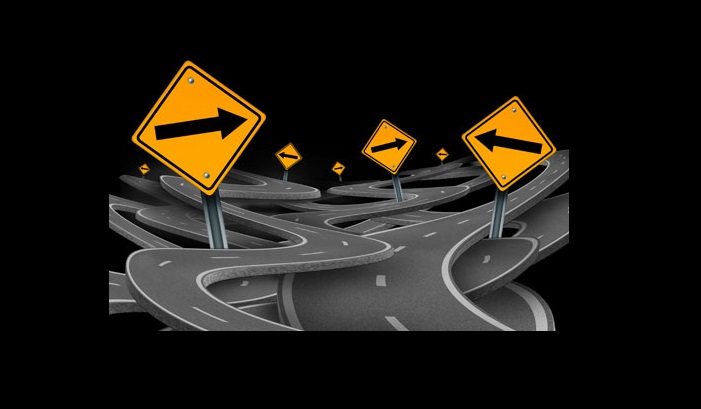
Different roads to take, decision to make

In today’s post, I will be trying to look at the concept of equifinality in relationship to the scientific method PDCA. In Systems Theory, the concept of equifinality is defined as reaching the same end, no matter what the starting point was. This is applicable only in an open system. An open system is a system that interacts with its environment (external). This could be in the form of information, material or energy.

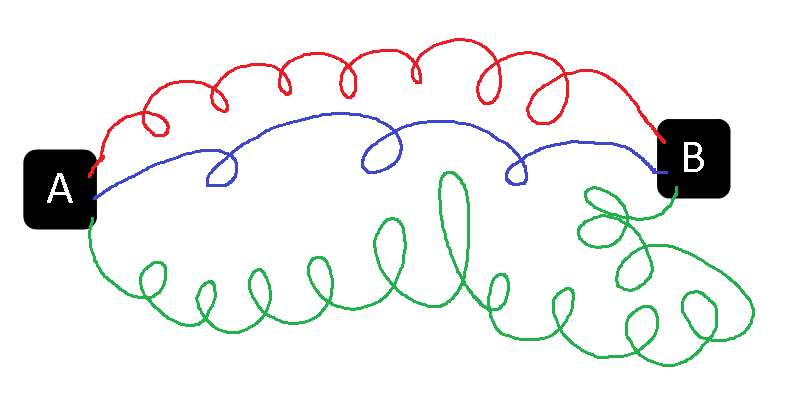
I wanted to look at the repeatability of the PDCA process. PDCA stands for the Plan-Do-Check-Act cycle, and is the framework for the scientific method. If three different people, with different ways of thinking, are facing the same problem, can all three reach the same end goal using the PDCA process? This would imply that equifinality is possible. This concept is shown below. Point A is the initial condition, and point B is the final desired condition. The three different colored lines depicts the three different thinking styles (the different thinking styles indicates the different starting points).

equi

Iterative Nature of PDCA:

The most important point about PDCA is the iterative nature of the cycle. Each cycle of PDCA leads to a new cycle that is more refined. The practitioner learns from each step of the PDCA cycle. The practitioner observes the effect of each step on the problem. Every action is an opportunity to observe the system more. The results of his experiments lead to more experiments, and yield a better understanding of multiple cause-effect chains in the system.

If the scientific method is followed properly, it is highly likely that the three different practitioners can ultimately reach the same destination. The number of iterations would vary from person to person due to different thinking styles. However, the iterative nature of the scientific method ensures that the each step corrects itself based on the feedback. This type of steering mechanism based on feedback loops is the basis of the PDCA process. This idea of multiple ways or methods to have the same final performance result is equifinality. This is akin to the saying “all roads lead to Rome”. This idea of “steering” is a fundamental concept of Cybernetics. I will be writing about this fascinating field in the future.

Final Words:

This post was inspired by the following thought – can a lean purist and a six sigma purist reach the same final answer to a problem if they pursued the iterative nature of the scientific method? There has been a lot of discussion about which method is better. The solution, in my opinion, is in being open and learning from the feedback loops from the problem at hand.

I will finish this post with a neat mathematical card trick that explains the idea of equifinality further. This trick is based on a principle called Kruskal Count.

The Effect:

The spectator is asked to shuffle the deck of cards to his heart’s content. Once the spectator is convinced that the deck is thoroughly shuffled, the magician explains the rules. The Ace is counted as 1, and all the face cards (Jack, Queen and King) are counted as 5. The number cards have the same values as the number on the card.

The spectator is asked to think of any number from 1 to 10. He is then directed to hold the cards face down, and then deal cards face up in a pile. He should deal the amount of cards equal to the number he chose in his mind. The spectator takes a note of the value of the final card dealt. The spectator is directed to deal those many cards face up on the already dealt cards.

deck_discardThis is repeated until the spectator has reached a card at which point there are not enough cards to deal. For example, the card was 8 of Hearts, and there are only six cards remaining. This card is his selected card. He then puts the face up cards on the table on top of the cards he has on his hand. They do all of this while you have your back turned. You easily find their selected card.


The Secret:

All roads lead to Rome. This trick has an over 80% success rate.

The secret is to repeat exactly what the spectator did. You also choose a random number between 1 and 10, and start dealing as described above. Just like the concept of equifinality, no matter which number you chose as your starting position, as you go through the process, you will choose the same set of cards at the end resulting in the same selected card! Try it for yourself. Here is a link to a good paper on this.

Always keep on learning…

In case you missed it, my last post was If the Learner Has Not Learned, Point at the Moon.

If the Learner Has Not Learned, Point at the Moon:

point at the moon

In today’s post I will be looking at the role of teaching in lean and I will try to look at the role of the student in learning. “If the learner has not learned, then the teacher has not taught.” This has come to be a common expression in Lean. This saying was introduced as part of Training Within Industry’s Job Instruction (JI) program. The original expression in the JI Program manual was “If the worker hasn’t learned, the instructor hasn’t taught.” The JI card carried the statement “If the learner hasn’t learned, the teacher hasn’t taught.”

My favorite record of this statement is from the 1942 November issue of “The Rotarian” magazine. The Albert E Wiggam’s article was titled “Foremen in 10 hours” and it talked about the Job Instruction Training program (JIT). According to the article, The purpose of the JI program was to enable the foremen to have the “show’em how” – the ability to pass the “know-how” to the new-comers in ten hours.

Rotarian

The implication in the statement “If the learner hasn’t learned…” is that the responsibility of the student’s learning rests solely with the instructor. It is my view that the student has the responsibility to be willing as well. My favorite quote regarding this comes from the most famous Japanese Samurai Miyamoto Musashi (1584 – 1645).

“Let the teacher be as a needle, the student as a thread.”

The student has to follow the teacher like a thread that follows the needle. This is a beautiful expression. The focus of the JI program is to show how to prepare the student and how to explain “the why” and “the how” of each step. It also focused on having the student repeat the operation, and to ensure that the instructor follows-up and provides the required feedback creating a closed learning loop.

 “The Ackoff Model”:

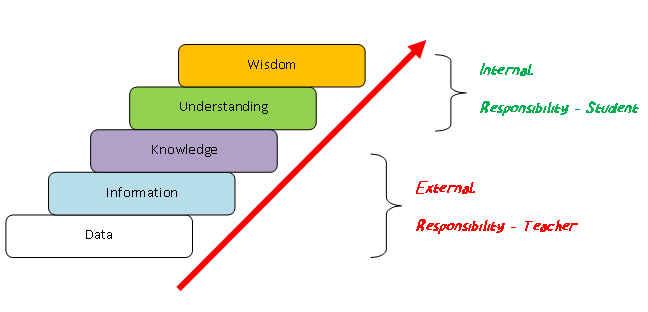
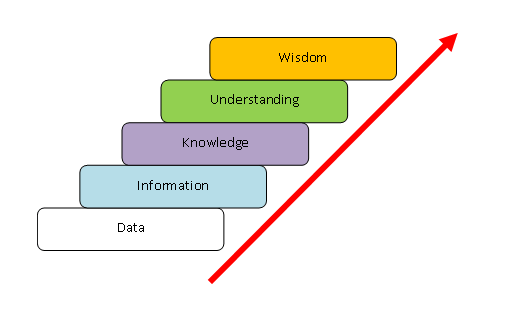
My favorite model of Knowledge Management is the DIKUW model made popular by the famous Management Science professor Russell Ackoff. This is shown below:

ackoff

The five components in the order of importance are;

  1. Data – discrete packets or values. An example for this is just a set of numbers and nouns.
  2. Information – data with context. Answers to questions such as Who, What, When, How many etc.
  3. Knowledge – answer to the question How?
  4. Understanding – answer to the question Why in a global level?
  5. Wisdom – ability to understand the situation to know what to do and execution with results

I will be using this model to further explain my thoughts. Data, information and knowledge can be imparted, and are external to the student. However, understanding and wisdom cannot be imparted and are internal to the student. The teacher can only guide the student and it is the student’s responsibility to practice and learn on his own to achieve understanding and wisdom. Perhaps, the intent of the JI is to impart knowledge to the worker on how to properly perform the operation. But the understanding and wisdom to improve one’s work (kaizen thinking) should come from the operator.

The teacher has to ensure that the student has achieved knowledge, and the student has to ensure that he achieves understanding and wisdom.

My favorite expression describing the difference between knowledge and wisdom (inspired by Peter Drucker) is;

Knowledge is doing things right and wisdom is doing the right things.

The above expression indicates that knowledge has to do with being efficient, and wisdom has to do with being effective.

The Role of the Sensei:

“Sensei” is a Japanese word that has roots in Chinese and the literal meaning in Japanese is “lives (born) before”. Sensei has come to mean “Teacher”. The term is connected with martial arts training. There are four criteria that a sensei should possess;

  1. Technical ability – understanding of the technical aspects of the subject and ability to keep on polishing/learning
  2. Taking Responsibility – ensuring that the sensei passes along his knowledge so that the “chain” does not get broken
  3. Ability to communicate – the sensei must be able to communicate his mastery to his students of all levels of aptitude
  4. Understanding – the sensei should be understanding of his students

The Role of the Student:

There is a notion in Zen that “when the student is ready, the teacher will appear”. The implication here is that the student has to be ready first and pursuing learning, only then will the teacher appear. The student can learn from everything around him only if he is receptive to learning. The student has the responsibility to present himself with humility and determination to understand and practice the skill. The student must be eager to learn and willing to “forget” what he has learned before.  My favorite account for this is an anecdote I have heard before:

A student went to a teacher and asked him “can you teach me how to meditate” and the teacher said “No. I might let you learn under me.”

 My Final Words:

It is the responsibility of the teacher to help the student attain knowledge, and it is the responsibility of the student to reach wisdom from there. Both the teacher and student have to be willing to give and receive learning. The student has to surpass the teacher. The student cannot do this simply by copying the teacher. The student has to build upon the teacher’s teachings and find wisdom on his own, leapfrogging the teacher.

teacher - student

I will finish this off with a Zen story about pointing at the moon – don’t mistake the finger for the moon.

The Buddha says “my teaching is not a dogma or a doctrine, but no doubt some people will take it as such.” The Buddha goes on to say “I must state clearly that my teaching is a method to experience reality and not reality itself, just as a finger pointing at the moon is not the moon itself. A thinking person makes use of the finger to see the moon. A person who only looks at the finger and mistakes it for the moon will never see the real moon.”

To see the moon you have to look beyond the finger.

Always keep on learning…

You may like my newer post on the cybernetic aspects of teaching and learning. If the teacher hasn’t learned, the teacher hasn’t taught.

In case you missed it, my last post was The Many Flavors of Kaizen.

The Many Flavors of Kaizen:

flavors

In today’s post I will be writing about the many flavors of kaizen. I have been writing for over a year now. It seems that I keep coming back to kaizen. Kaizen is the spirit of lean, and can be translated from Japanese as “change for the better”. What is today is not good enough, and everything can be improved in small or big steps.

There are mainly five flavors that I have identified regarding kaizen. They are;

  1. Kaizen – small incremental improvement activities
  2. Kaizen Teian – Employee Suggestion Program
  3. QC Circles
  4. Jishuken
  5. Kaizen Blitz/Event or Rapid Improvement Activity

Kaizen – Small Incremental Improvement:

Taiichi Ohno said “where there is no standard, there can be no kaizen”. His intent was that you keep improving your standard towards the ideal state. This is the essence of the Job Method program that was taught as part of the Training Within Industry program. This is where employees are encouraged to ask why a step is done in a specific manner and how an operation can be improved. Job Method program provides specific steps to do this. Ohno modified this to suit Toyota. The Job Method program was replaced by Shigeo Shingo’s P-Courses that had time and motion studies, and process and operation analysis. These courses were derived strongly from the courses taught by the Gilbreths in the early 1900’s. This type of activity is generally performed at the individual level and is thus local. These can be viewed as bottom-up kaizen.

Kaizen Teian – Employee Suggestion Program:

Eiji Toyoda went to America to learn from Ford in the 1950’s. Although he was not impressed with many things, one thing really caught his attention. This was Ford’s employee suggestion program. He brought that back to Japan and implemented it at Toyota. This really took hold in Toyota. Toyota became famous for the company with 20 million ideas in 40 years. The ideas that the employees suggest are specific to their jobs, and everybody participates in this. This type of activity is generally at the individual level and is thus local. These can be viewed as bottom-up kaizen.

QC Circles:

QC Circles are small groups of employees who voluntarily meet after work to focus on specific problems related to quality or processes. QC Circles were developed as part of the Total Quality Movement. Masao Nemoto, who is considered to be the strong force behind establishing the Quality Control program at Toyota, has indicated that the goal of QC Circles was to raise consciousness of line workers towards quality. There were a lot of improvement activities that resulted from the QC Circle activities. This type of activity is team based and generally led by a local leader like a supervisor. These can be viewed as bottom-up kaizen.

Jishuken:

Jishuken started off as a program by Toyota around 1975 for teaching suppliers how to do kaizen or implement TPS. This became a medium for training managers and other leaders in middle management. Jishuken is loosely translated as “self-study groups”. This activity generally tackles a hard project, and is seen as way to provide learning and being exposed to the gemba.  Jishuken events are also sometimes referred to as management driven kaizen activities. There is some flexibility regarding the duration of the event. There are some similarities to Kaizen events – these are team based and cross-functional in nature. These can be viewed as top-down kaizen.

Kaizen Events:

This is perhaps the most common “kaizen” identified by lean practitioners outside of Toyota. As with many things in Lean, Toyota does not practice kaizen events. This is generally a weeklong event comprising of a cross-functional team. This can be viewed as top-down kaizen.

Final Words:

It is an interesting question as to whether kaizen should be top-down or bottom-up. My thinking on this is that top management should lay the framework for kaizen to be present across the organization. The responsibility and duty for ensuring bottom-up kaizen lies with top management. Ultimately, the end goal is to get everybody to execute improvement activities so that the organization itself improves systematically. Every improvement activity should align with the organization goals and vision.I will finish off with an anecdote from Taiichi Ohno that looks at the unique relationship of top-down and bottom-up management and the need for a strong change-agent who is also a visionary.

Taiichi Ohno is the father of Toyota Production System. He first started implementing his ideas locally in his department. He faced a lot of resistance. His ideas were very counterintuitive and were against the common wisdom at that time.

Ohno was just a middle level manager. In this regard, what he did can be considered to be bottom-up. However, he had strong support from Eiji Toyoda and Saito Naichi, under whom Ohno worked for 35 years. Ohno later on talked about the positive phenomenon of the silent relationship between them in his book “Just-In-Time For Today and Tomorrow”.

There were a lot of people, including those in management who were against Ohno. However, all this anger and resentment were absorbed by Eiji and Saito. They acted as a buffer between Ohno and the factory. They never mentioned anything to Ohno. They wanted Ohno to keep on going with his improvement activities to reduce manufacturing costs. It was initially called as Ohno System since “Toyota” was not completely on board yet.  Eiji, Saito and Ohno were bound by an invisible thread of mutual trust. Ohno said the following about this;

“I knew all too well how they worried about me and what I was doing. Yet they never said “Do this!” or “Do that!”. For my part, I never had to say “I’d like to do this” or “Please let me do that.” I just did everything I thought had to be done. Had I asked permission, my resolve would have weakened because of the pressure to prove what I was doing. Had either side said anything, the relationship would have collapsed.”

Always keep on learning…

In case you missed it, my last post was Reflecting on Hansei.

Reflecting on Hansei:

hansei

In today’s post I will be looking at “Hansei”. “Hansei” is a Japanese word and has some significance in Toyota Production System. Generally I have seen this to be translated as “introspection” or “self-reflection”. I will be looking at Hansei from the Japanese culture standpoint and will try to add to the understanding of this concept.

Hansei in Japanese Culture:

The term “hansei” is related to the word “shame” in Japanese culture. However, the term does not have the undesirable emotion that we might associate with in the Western world. The term does not result in undermining oneself in the Japanese culture. The meaning speaks to making you aware that there is room for improvement and humility. There is a positive notation behind the term hansei. It is an action of criticizing oneself so that one understands the gap in their performance and thus corrects this in the future. In Japanese schools, the children are trained to perform hansei on a regular basis, generally daily. The following section is taken from the paper, “Condoned or Condemned: The Situational Affordance of Anger and Shame in the US and Japan” by Michael Boiger and Batja Mesquita;

Although shame is perceived as an unpleasant emotion in Japan, its negative valence is less pronounced than in the US (Romney, Moore, & Rusch, 1997)—possibly because it is considered conducive to self-improvement and perspective-taking (cf. Heine et al., 1999). Shame is encouraged in children: For instance, schools foster shame by the practice of hansei (critical self-reflection), a scheduled time to think about areas of self-improvement at the end of the school day (Lewis, 1995). Being aware of one’s shortcomings, and actively correcting them, affirms interdependence and helps individuals re-align with social norms and expectations.

When children do something bad, the parents say “hansei shinasai” or “do hansei”. Although this is done as part of scolding, the child is also made to realize that he can improve as an individual and this is a motivation for him to do so.

This is an opportunity for them to do the following in the correct order;

  1. Feel really sorry about what they did (recognition of what you did)
  2. Assume responsibility
  3. Understand what went wrong
  4. Correct their thinking, so that this does not repeat (desire to improve)

Through hansei we understand our shortcomings so that we can improve ourselves to be better. Kaizen (change for the better) can happen through hansei. Daily practice of hansei helps us to assume responsibility to see problems and keeps us open for improvements. Humility is one of the cherished virtues in the Eastern world. Daily hansei is an exercise to promote humility and be a life-long learner.

Hansei Shimasu” is one of several forms of apology in the Japanese language. This is used when someone has done something pretty bad and is used to show sincere apology, deep regret and determination to not repeat the act.

In the adult life, hansei also includes an introspection of “what went right” along with “what went wrong / what could be improved”. At the end of projects, they hold “hansei-kai” – meetings to do hansei. The purpose is to learn from each other what went wrong, and what went right. These two perspectives allow an opportunity for everybody to learn. They learn from others mistakes, and they also learn from others about how to do things right – sort of a benchmarking process. There might be slightly more focus on what went wrong since they provide the real opportunity to learn.

Toyota and Hansei:

Toyota has become a learning organization and this is one of the reasons why Toyota has become so successful. Hansei has a strong role in being a learning organization. In Toyota, hansei is often viewed as a precursor to kaizen, and a pre-requisite to being a learning organization. This is best explained as below (taken from Toyota-Global website);

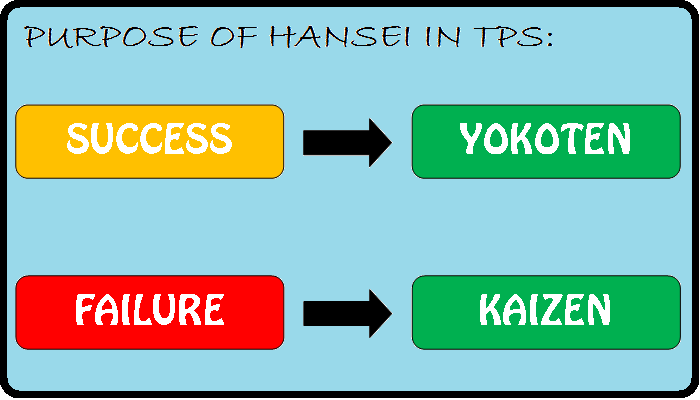
Hansei is both an intellectual and emotional introspection. The individual must recognize the gap between the current situation and the ideal, take responsibility for finding solutions, and commit to a course of action. The examination involves a review of successes and failures, to determine what works and what needs to be improved. Hansei leads to ideas for kaizen and yokoten, the sharing of best practices from one location to another.

“Yokoten” can be translated from Japanese as “horizontal deployment”. This is summarized in the graphic below:

hansei

Final Words:

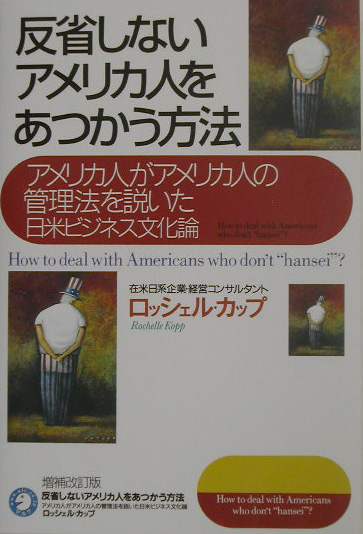
It is true that hansei forces us to look at what went wrong. However, the intent is not to place the blame, the intent is to make the person aware of the problem, and make him motivated to address the problem and not repeat it. Hansei is seen as a good thing. In the process of doing research for this article, I came across a book in Japanese titled “How to deal with Americans who don’t do hansei?” 🙂 It is an interesting title for sure!

20150830204248b22

I will finish this post with an anecdote on road rage in Japan. (Source: Asia Pacific Memo).

Psychologists working for the National Police Academy in Japan have incorporated a personal inventory test in the curriculum of the officially certified driving schools. This inventory was adapted from the Minnesota Personality Inventory, which was developed as a means to evaluate military recruits during World War I.

The purpose of this test is not to fail anybody due to their specific traits. Nobody can fail this test. The purpose of the test is to make them aware of the traits so that they can do hansei. The point is to encourage self-reflection (hansei), according to psychologists at one testing company. They believe that self-reflection among student drivers will allow them to modify their behavior or take special precautions. Those who score high on the “sensitivity” scale may be expected to adopt a zen-like attitude of tolerance and not assume that the acts of other drivers are provocations. Those who score low on the “emotional stability” scale are exhorted to focus on driving only.

There has been no evidence that this has worked. But this shows the cultural significance of hansei in Japan.

Always keep on learning…

In case you missed it, my last post was Improving the Understanding of Kaizen.

Improving the Understanding of Kaizen:

better

Kaizen is probably one of the most versatile terms in Lean. I have written several posts on kaizen. In today’s post, I will be looking at improving the understanding of kaizen. In Japanese, the word “kaizen” means to change for the better. Kaizen has come to mean several things – from “continuous improvement” to “kaizen events”. I will be sticking with the idea of change for the better.

From a philosophical standpoint, kaizen can happen two ways;

  • Problem solving kaizen – improvement through solving a problem
  • Kaizen – improvement through making things better

1 – Problem Solving Kaizen:

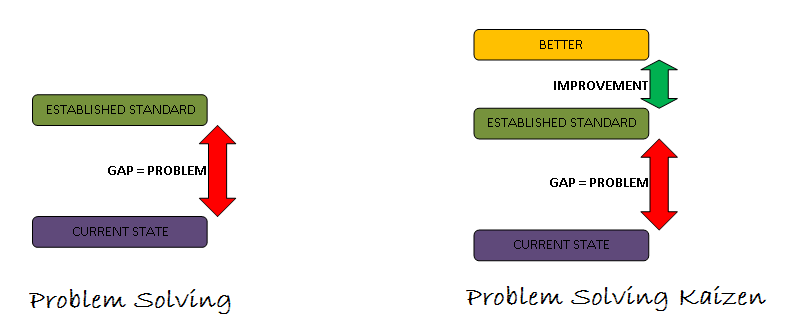
In the lean world, a problem is always defined as a deviation from the established standard. It is the gap between the current state (what it is now) and the ideal state (what it should be = established standard). As part of solving the problem, you may find a better way to surpass the established standard to a better state. This is shown below:

problemsolving kaizen

If you stop at just reaching the established standard, you may have solved the problem, but you have not made it better. Once you go higher, you have made an improvement.

2 – Kaizen – Making Things Better:

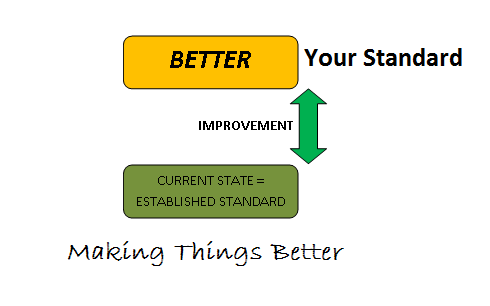
The established standard is never the best state. It is simply the state that was determined to be the acceptable standard. If we are at that level, we can expect to be performing as intended.

Making things better

Improving from the state of current standard is actually a hard task. From a production standpoint, the current state matches the established standard. However, your desired standard is higher than the established standard. This very much depends upon you and this is a hard skill to master. The extent of the kaizen depends upon the gap between the established standard and your desired standard. You can achieve this only through the belief that the current established standard is not acceptable.

This type of kaizen can be achieved by;

  1. Developing an attitude that the established standard is not acceptable.
  2. Going to the Gemba (the actual workplace). Gemba is your teacher.
  3. Understanding the current standard.
  4. Looking for waste and putting countermeasures in place.
  5. Developing others to practice steps 1 through 4.

There are several stories about Taiichi Ohno (the founder of Toyota Production System) drawing a chalk circle on the floor and asking the supervisor to stand in the circle and observe. The supervisor would stand in the circle for hours until Ohno was satisfied that the supervisor is able to see the wastes.

No task is 100% value added and free of waste. In Japanese, the term for waste is “muda”. Muda means “no value” (mu = no, da = value). Thus, muda represents non-value adding tasks. This itself has a deeper meaning. A component that is produced from a CNC machine has value. However, if the component that is produced is not needed right now by the next station, then it does not have any value. Thus, this excess inventory is identified as a form of waste in lean.

Final Words:

I have seen that the best kind of kaizen comes when you are either very lazy or very dissatisfied with something. Both of these paths lead to “there must be a better way of doing this”.

I will finish off with a story about my four year old nephew, Aaron, and how he did some problem solving on his own.

My brother has an Ipad that he allows my nephew to play games on. One day my brother and sister-in-law realized that Aaron had been watching Disney cartoons on the YouTube app. Aaron was three at the time and did not truly know how to spell words. They were surprised that he was able to find the cartoons on his own.

My brother and my sister-in-law could not figure out how Aaron was able to find the Disney cartoons on YouTube since he could not type any words to search. Aaron was not in the mood to explain how he did it either. My brother decided to watch Aaron the next time he was playing on the Ipad. Finally my brother understood what was going on. Aaron was clicking on the microphone button on the keyboard and saying the words aloud. Aaron had figured out that he could use the microphone to search. Aaron had solved the problem all by himself.

Always keep on learning…

In case you missed it, my last post was The Idea of Wa in Nemawashi.

The Idea of Wa in Nemawashi:

wa

In today’s post, I will be looking at Nemawashi and the idea of “Wa”. “Nemawashi” literally means to “dig around the roots” so that you can successfully transplant a plant from one location to the other. Nemawashi is considered to be an important part of Hoshin Kanri (Policy Deployment) as a means to get group consensus. Toyota puts great emphasis on building consensus. In fact, Toyota defines “Genchi Genbutsu” as “go to the source to find the facts to make correct decisions, build consensus and achieve goals at our best speed.”

Why is building consensus such an important thing? One logical answer is that if you do not have consensus then you do not have buy-in from everybody, and your goals will not be achieved. My best understanding is that this is all about “Wa”. “Wa” can be translated from Japanese as “group harmony”. This is a very important cultural concept for the Japanese. The idea of “wa” is so important to them that the term “wa-fu” means “Japanese-Style”.

Dig Around the Roots:

The idea of nemawashi comes from the world of gardening. The gardener transplants a plant with great care. This would mean that the dirt around each root is carefully moved so that the act of transplanting does not shock the plant. This is an act of care and attention.

Nemawashi serves the most important role of not disrupting harmony in the organization. Nemawashi is a process of building consensus. The main idea of nemawashi is to get buy-in from everybody involved and this can be often done “before” the idea is formally introduced in a larger group setting. This can be done as a one-on-one casual chat over lunch or playing golf, or as an informal sub-group meeting with 2 or 3 people. These kinds of conversations are open and allows for the voices of both parties to be heard. The proposal can be polished based on the initial feedback so that when it is officially presented, it does not get rejected. A good nemawashi would have feedback from all of the key influencers before the idea is introduced in a formal group setting. A good nemawashi goes through several iterations so that each feedback, concern or hesitation, is carefully addressed. Sometimes one has to go back to the drawing board based on the strong opposition from a key-player. All of this is done before the idea is formally introduced. The “roots are loosened” through this process so that the idea (plant) can be safely transferred to be deployed. The nemawashi process can be a lengthy process since each person making the decision is given a chance to separately weigh in, and the appropriate modifications are made and consensus is again obtained.

It is interesting to note that in the Japanese culture, there are few surprises allowed in a meeting. This is against the idea of wa. The meeting is conducted to formally agree on things that are already informally agreed upon, and to report/share statuses. The key players in the meeting are already made aware of all the important matters in advance of the meeting. This clearly shows the respect for wa. In contrast, in the western world, the meeting is a means for people to talk about things and sometimes debate. This approach in the Japanese world would make everybody uncomfortable since they are debating in the open and the harmony is disrupted. All the discussion and debate is done offline in a much smaller group setting. This way nobody has to publically concede or compromise.

One of the systems used to document the nemawashi process is the Ringi system that uses an A3 size document. This document clearly states the purpose of the project, the current state, the ideal state, the proposed countermeasures, the cost information etc. All of this is contained in the A3 size paper. This is not the same as the A3 thinking in Lean. The Ringi system is simply a proposal approval system.  This is also referred to as Ringi-sho system.

Final Words:

My purpose for today’s post was to give some background on the concept of nemawashi and to explain the philosophical and cultural importance of nemawashi in Japan. The concept of nemawashi is strongly rooted in the concept of wa – group harmony. I will finish this post with an interesting anecdote (in his words) from Don George at National Geographic that further explains the idea of wa.

In my lecture I’d recounted one experience I had at the very beginning of the trip after checking into our hotel in Kyoto. I was in the lobby elevator, headed for my room on the ninth floor, when two beautiful kimono-clad Japanese women entered and pressed the button for the fifth floor. As the elevator rose, we exchanged pleasantries in Japanese. When it stopped on their floor and the door opened, they both bowed to me and one said, “O saki ni, shitsurei shimasu”—essentially, “Excuse me for leaving the elevator before you.”

My unspoken reaction at the time had been, “Well, since your room is on the fifth floor and mine is on the ninth, you really don’t need to apologize for getting out before me.” But of course, that was beside the point. We were sharing the experience of being in the elevator together, and they were breaking that happy harmony by departing before I did. And so in consideration of that, it was only proper to apologize.

Always keep on learning…

In case you missed it, my last post was The Goal of Lean.

The Goal of Lean:

journey

I was talking to my friend at work, who I consider to be very knowledgeable and wise. He told me something that I have not heard before.

“Good, better, best. Never let it rest. ‘Til your good is better, and your better is best.”

I looked this up, and I saw that this quote is attributed to St. Jerome (347-420 A.D). This succinctly summarizes the idea of kaizen. Kaizen is Japanese for “change for the better”. It is not asking you to change from good to best, overnight. It is asking you to change from good to better, and then from better to best. The advice of “never let it rest” indicates that it is an ongoing process. The best is always yet to come.

It is a Journey:

I have often heard about lean being a journey and not a destination. This means that you are not to look at lean as an end goal. It is about improving little by little and is never ending. It is an ongoing journey where your goal is to simply improve from the day before. Counter-intuitively the goal of lean is not to set a goal that is attained and to stop doing lean. The goal of lean is to just do lean.

In this regard, lean does not talk about setting goals. It focuses on creating a self-sustaining system – a never-stopping engine that keeps moving towards the ideal state. Lean is based on long term thinking, and in reality it never reaches the ideal state. However, the ideal state (true north) gives lean a direction to move towards.

I have written about “continuous improvement = kaizen + wisdom”. Instead of setting goals, we should focus on developing our people so that they are engaged in the continuous improvement philosophy. We should focus on setting up processes to ensure kaizen – working smarter and not harder. Develop your people to be aware of waste, and challenge them to improve their processes from where it was yesterday. This single system ensures that your organization keeps on moving towards the ideal state, referred to as True North by Toyota.

It is your job to lay the framework to make them good. Then it becomes their job to make it better. Finally it is both of your jobs to make it the best.

The Story of the Boy and the Jelly Beans:

I will finish this post with a modified version of a story I read a while back:

Once a boy went to a grocery store with his mother. The boy was very well behaved. The shopkeeper was very impressed with his gentle nature. He looked at the boy and pointed towards the glass jar of jelly beans and said.

“Dear child, you can take a handful of jelly beans out of this jar.”

The boy was very fond of jelly beans. He was very happy. He reached in the jar and grabbed a handful. He thanked the shopkeeper politely.

The next week, the boy again returned with his mother. He was again very well behaved. This time too, the shopkeeper invited the boy to take a handful of jelly beans. This time the boy hesitated and looked at his mother. His mother also said, “Take the sweets dear.” The young boy still did not do anything. He simply pointed at his mother. His mother thought that he was being shy and grabbed a handful for the child, and gave the handful to him. The child started smiling again, and thanked the shopkeeper.

Another week went by, and the boy returned to the shop with his mother again. The shopkeeper saw him and offered the jelly beans again. This time too, the boy did nothing. His mother offered to grab a handful. The boy stood still and then shook his head. Seeing this, the shopkeeper offered to grab a handful, and the boy slowly put out both his hands. The shopkeeper gave him a handful of jelly beans. The boy was again smiling and thanked the shopkeeper.

His mother was very curious about the boy’s behavior since she knew how much he loved jelly beans. When they got home, his mother asked him to explain his behavior over the weeks.

“The first time I grabbed a handful, and held your hand I realized that your hand is much larger than mine. I knew I would get more if you grabbed a handful.”

“This time, I saw that the shopkeeper had a larger hand than yours. So I waited until, he would give me a handful. See how much more jelly beans I got?”

Always keep on learning…

In case you missed it, my last post was The Mother of Modern Management.