
Stop Asking Why:

why_s

We have been trained to ask “why” a lot in lean. Today’s post is about asking “why”.

My friend was doing data analysis of ERP transactions, and he noticed that the material handler was creating transactions in two different programs for dock-to-stock components. This process created double entries and did not seem to add value. He asked the question “why” and the material handler reported that she was doing it because it was the way she was trained, and because it was the way they had always done it.

I was always curious about the “5 why” method. English is my second language, and in my native language (Malayalam), I cannot ask the “why” question because it means more than one thing.

For example, let’s look at the following question;

Why are you doing double transactions?

The same question has two different layers. You can get very different answers depending upon how the “why” question is perceived;

  • What causes you to do the double transactions?

The answer could be that the operator was trained to do that or that it is in the procedure.

  • What is the purpose of doing the double transactions?

The answer to this question now makes the waste visible. There is no need for doing the double transaction.

In the Malayalam language, I have to ask each question the way it is written above. The question cannot be perceived in a different manner. It is very direct. I believe that this is where the “5 Why” method in Lean does not get the same results for everybody. The “why” question has more than one meaning, as explained above.

First Question (What Caused):

The first question (what caused) is extrinsic in nature and this is valuable in a root cause investigation. We start from a phenomenon -> cause ->effect view. Thus, the effect happened due to the presence of a cause. The “why” question is a “what caused” question. It would help if the question is asked as a “what caused” question. This type of thinking is also evident in the P-M Analysis method at Toyota. I will discuss about this more in a future post.

As an example, let’s look at a problem where the operator was missing a step. There is a big difference between “why did the operator miss the step?” and “what caused the operator to miss the step?” The first question might lead down a rabbit hole that puts the blame on the operator (needs more training, operator is lazy, etc.). The second question focuses the spotlight on the process or the system (needs error proofing, needs more defined structure etc.). Jon Miller from Gemba Academy has talked about using “what caused” in place of “why” as part of the Practical Problem Solving process.

Second Question (What is the purpose):

The second question (what is the purpose) is intrinsic in nature and this is valuable in a continuous improvement activity or during gemba walks. We start from an “operation yields value” viewpoint.

We should train the employees to ask this question on their processes. This is how we can develop our employees.

As a leader in your organization, you should ask the right question to properly develop your employees.

Story of the Ham and the story of the Can of Beans:

The reader may be aware of the story of the ham. It goes something like this:

ham

The newlywed wife was making her first major dinner for her husband. She was cooking ham. The husband was helping his wife in the kitchen. He noticed that she was cutting the ends of the ham.

“Why are you cutting the ends of the ham?” asked the husband curiously.

“This is how I learned watching my mother” answered the wife.

Now the husband was more curious. He asked his wife to call up her mother to verify the answer. The wife called her mother inquiring about the cutting.

“Hmmm, that is how I learned watching my mother” answered her mother.

Now the wife was also curious, so she called up her grandmother and probed her about the curious cutting of the ham.

The grandmother started laughing.

“Back in the day, we could only afford a small stove. Our roasting pan was small and we cooked the ends separately.”

There is a similar story about opening cans:

can

In this story, the husband notices that the wife opens the cans upside down. The wife tells him that she learned that by watching her mother. A short phone call solved the mystery. Her mother used to store the cans in a dusty cellar. Instead of cleaning the top of the cans, she found it easy to just turn it upside down and then open it.

Next time, instead of asking “why”, ask “what caused” or “what is the purpose”.

Always keep on learning…

In case you missed it, my last post was Who is Right?

 

Lean, Six Sigma, Theory of Constraints and the Mountain:

Matterhorn_Riffelsee_2005-06-11 - Copy.jpg

Recently there have been a lot of discussions about which is best – Lean, Six Sigma or Theory of Constraints? Is Lean Six Sigma better than Lean or Six Sigma?

In this brief post, I will try to view this question from my viewpoint. There is a saying based on the 9th century Zen Buddhist teacher Qingyuan Weixin which I have paraphrased loosely below;

“At first I saw the mountain as a mountain. Then when I learned more and more, I realized that the mountain is not a mountain. But now that I have learned it even more, I see that the mountain is a mountain again.”

If you change the term mountain with “Lean” and “a set of tools”, we can paraphrase it as follows;

“At first I saw Lean as a set of tools. Then I learned more and more, I realized that Lean is not a set of tools. But now that I have learned it even more, I see Lean as a set of tools again.”

You can change Lean to any other philosophy in the above saying. I was taken aback by the saying when I first read it. But gradually it made more sense.

When we first learn about Lean, you hear about the tools. You perceive it as a solid and fixed set of tools. This could include 5S, SMED, Poka Yoke, VSM etc. This kind of categorization and labeling makes us believe that Lean is a set of tools and something that is static. It makes us feel that we know it.

Lean = 5S + SMED + Poka-yoke + VSM +…….

Once we learn more and more, we come to realize that it is not static but dynamic. There is no “one size fits all” solution. There is no magic bullet. The strategy that worked for one company does not work for the other. Then we start to see Lean as not a set of tools.

Lean = Eliminate Waste

However, once we learn more and more, and start applying Lean, we gain a new awareness. We realize that Lean has an overall form and yet is free flowing. You realize that you need to understand the problem first, and then address the problem using the appropriate tool. You become spontaneous and you just know which tool to use when and how. Now, Lean has become a set of tools again.

Lean = Understand the context of the problem, and address the problem using the right tool

Always keep on learning…

In case you missed it, my last post was Chewbacca, Poka-Yoke and Respect for People.

Chewbacca, Poka-Yoke and Respect for People:

Sir Chewbacca

One of key concepts in Toyota Production System with respect to Quality (other than Jidoka/Autonomation) is Poka-Yoke (ポカヨケ), or Error Proofing. “Yokeru” in Japanese means “to avoid”. “Poka” means “error” or “blunder”. The story behind Poka-Yoke has an underlying theme of respect for people.

Baka to Poka:

The concept of Poka-Yoke was made famous by Shigeo Shingo, perhaps one of the best Industrial Engineers. He coined it as “Baka-Yoke”. “Baka” in Japanese means “idiot” or “fool”. Thus, Baka-Yoke means “fool proof”.

Around 1963, Arakawa Auto Body adopted a fool proofing device as part of a Baka-Yoke program. This device prevented seat parts from being spot welded backwards. The story goes that one of the part–time workers started crying when the supervisor explained about the fool-proofing device because the workers were sometimes mixing up left and right handed parts.

“Have I really been such a fool”, she asked. She ended up staying home that day. The supervisor had to go to her home to convince her to come back by explaining that she is not a fool. The device was being used because anybody can make inadvertent mistakes.

Shingo was told this story, and after some thought he changed the name to “Poka-Yoke”. Thus choosing a term that communicates more respect for the worker.

Poka-Yoke and Respect for People (RFP):

The story above shows that Shingo was being respectful and the new name of Poka-Yoke is certainly more meaningful since it does not put any blame on the employee. I have heard this story being used to explain Respect for People. But more than the story, I feel that the concept of Poka-Yoke is a part of Respect for People. You may have heard that things go wrong sometimes, especially when the operator is doing a highly repetitive activity. The big red book of Poka-Yoke by Nikkan Kogyo Shimbun states the following;

The idea behind Poka-Yoke is to respect the intelligence of the workers. By taking over repetitive tasks or actions that depend on vigilance or memory, Poka-Yoke can free a worker’s time and mind to pursue more creative and value-adding activities.

Extrinsic and Intrinsic Respect for People:

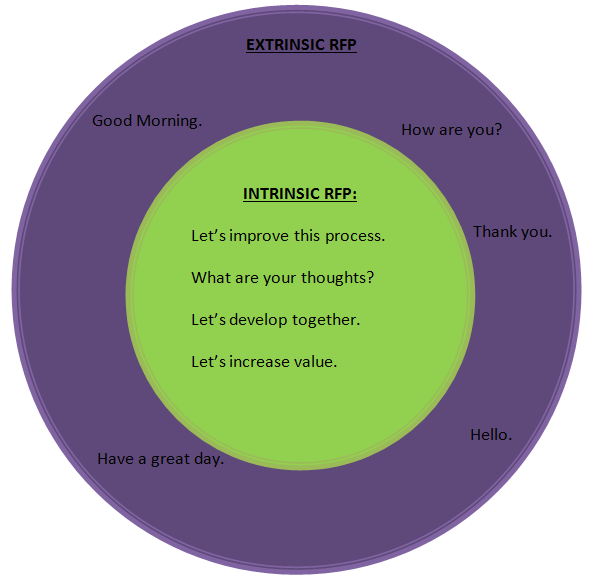
The more I read about TPS and Respect for People, I am coming to view Respect for People as Extrinsic and Intrinsic RFPs.

extrinsic and intrinsic

The Extrinsic RFP is superficial in nature. This is the basic respect you give to your fellow human beings. This is you being nice to people, the basic manners!

The Intrinsic RFP is the meat and potatoes or the true essence of Respect for People. As a leader in your organization you ensure that the work performed by an employee is value added. As the leader of your organization, it should be your job to develop your employees and ensure that they remain valuable assets. Toyota says that they believe in making people before making cars. Respect for people means that the organization is providing an environment where the employees are doing only value added activities.

How does one increase the worth of an employee? You can increase their worth by developing the employee to understand the value in his work. You can increase the worth by training him to look for gaps between the ideal state and current state. By understanding this gap, you can further develop him to take countermeasures and corrective actions to move closer to the ideal state. Ideally, the employee would now be able to train the employees underneath him. The employee is now at a stage to be making decisions and implementing the improvements on his own. In other words, he is empowered.

You might wonder whether Respect for People is value added. The traditional notion of value added activity is that the activity is something that the customer is willing to pay for. My view is that by creating the equation making things is making people, Toyota has transformed people development as a value added activity.

Chewbacca’s Connection to Baka:

I came across an article that suggested that maybe George Lucas created the name Chewbacca from the Japanese phrase “Chū baka” which means “Medium Stupid/Fool” or “Average Idiot”. There is of course no conclusive evidence for this. George has admitted that he was influenced by Japanese culture and movies while making Star Wars. I thought this was a nice story with relation to Poka-Yoke and Respect for People. Let Chewbacca remind you the need for Poka-Yoke as opposed to Baka-Yoke, and Respect for People.

Always keep on learning…

Image Credit – Sir Chewbacca (mcfeezy )

In case you missed it, my last post was “Would Ohno Change the term ‘Lean’”.

Would Ohno Change the Term “Lean”?

vlcsnap-2016-01-10-15h31m11s593

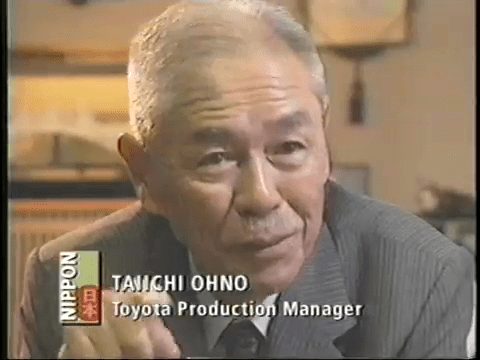
Taiichi Ohno is the father of Toyota Production System. Lean Manufacturing is based on Toyota Production System. The term “Lean” was coined by John Krafcik in his MIT Sloan 1988 Fall paper “Triumph of the Lean Production System”. His terminology was “Lean Production” or simply “Lean”. He noted that;

“Plants operating with a “lean” production policy are able to manufacture a wide range of models, yet maintain high levels of quality and productivity”.

There have been many discussions about whether “Lean” is the correct terminology or not. Lean is supposed to have a negative connotation with it. There is a tendency to assume that Lean indicates reduction – reduction in inventory, reduction in cycle time, reduction in costs etc.

I was pleasantly surprised when I came across Taiichi Ohno’s thoughts on “Lean” Management. As indicated in my last post, Ohno started a consultancy group soon after leaving Toyota. This group was called the New Production System Research Association. Isao Shinohara wrote a book on this called “New Production System – JIT Crossing Industry Boundaries”, in 1985. The main theme of this book is that the TPS ideas are applicable across multiple industries. This book also had a section with an interview with Taiichi Ohno.

Limited, Not Leaner, Management:

In Ohno’s words;

“The idea is to produce only what can be sold and no more. The idea is to limit, not necessarily to reduce, the quantity. The important thing is to keep production costs low whle limiting the production level. It is meaningless to say that producing 15,000 units will reduce production costs when you can only sell 10,000 units.”

He continues;

“The essence of limited management (genryo keiei) and limited production (genryo seisan) is to produce what can be sold at the lowest possible cost.”

My favorite section of the interview was when Ohno was asked about reducing or eliminating inventory.

“Shinohara – Many people think that Toyota Production System is a method for reducing inventory or eliminating inventory altogether.

Ohno – That is not right. I’ve said this so many times, but people don’t seem to understand. The Toyota production system is a philosophy of changing the production and management flows.”

Analogy of a Boxer:

boxer

Taiichi Ohno compares limited production to the regimen of a boxer in his book “Workplace Management”. The boxer has to be in a specific weight classification. If he misses a few training sessions and he puts on weight, he can no longer compete in his class. He would then have to diet to slim down and maintain his weight. This is akin to a company trying to reduce inventory. If he loses more than his intended weight, he will run out of energy and lose the fight. This sort of slimming down is undesirable. Ohno advises against going on a diet for a company without thorough understanding. He calls it a dangerous idea to trim down so much that the essential meat of the company is cut into.

Always keep on learning…

In case you missed it, my last post was “Don’t Strive for Perfection – 60% is good enough”.

60% is Good Enough

AN00222094_001_m

It is 2016! It is a new year and it is time for New Year’s resolutions.

I have been thinking about what I should write for New Year’s. I wanted this post to be something personal.

Pursuit of Rationality:

I came across the phrase “Pursuit of Rationality” in “Toyota Production System – First Textbook”, an internal document at Toyota from the 1970’s. The loose English translation of the relevant section is given below;

“Through thorough observation and pursuit of rationality, we can lay the strong foundation upon which we can build the strong castle of improvement”.

My interest piqued at the phrase “pursuit of rationality”. This has a strong resemblance to “pursuit of excellence or perfection”. It is explained in Taiichi Ohno’s book, Toyota Production System – Beyond Large Scale Production, that rationalization in Japanese writings indicate activities undertaken to upgrade technology, improve quality, and reduce costs. Being rational is being value adding, and not producing waste.

My message to myself and to the readers of my blog is also about pursuit – the pursuit of excellence while pursuing rationality. This may be better explained in Ohno’s thought process as well. Soon after leaving Toyota, Ohno founded the New Production System Research Association, a consulting group with his friends. This group had 25 doctrines that they also pursued. I am focusing on one of these for this New Year!

 Don’t seek perfection. 60 percent is good enough!

We spend a lot of time sharpening our axes, and never strike the tree. We try to get everything just perfect to start doing something, write a post, write a book, start coding etc. We wait and wait, and we end up never doing what we wanted. So let’s pursue rationality this year, and take action. We can always make it better, once we have started it. Let’s plan a little and then DO a little.

Step by Step:

The following is a story I heard from India.

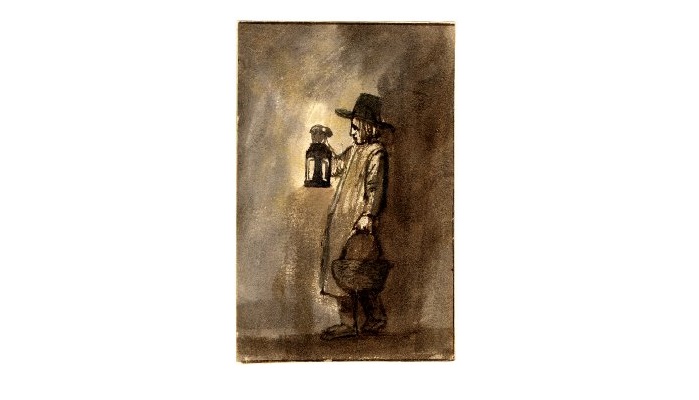
It was pitch dark, and a man had to go to the next town miles away. All he had was a small lantern, and this could light only a few steps in front of him. The man just stood there not knowing what to do. The journey seemed so long and the night seemed very dark. He became sad and depressed.

A monk saw the man standing in front of his house, and asked the man what he was doing.

“I have to go to the next town, and I am packed for the trip. I do not know what to do. The journey seems long, and the night seems dark,” the man responded. “All I have is this small lantern.”

“You do not need a big lamp to illuminate the whole way,” the monk explained. “As you move, the light will move in front of you so that the next few steps are always clear. All you need to do is to hold on to this light and start walking. As the darkness clears with the rising of the sun, if you keep walking you will reach your destination”.

Always keep on learning…

I wish all my readers a prosperous and a rational 2016!

In case you missed it, my last post was about The Rashomon Effect at the Gemba.”

The Rashomon Effect at the Gemba

R

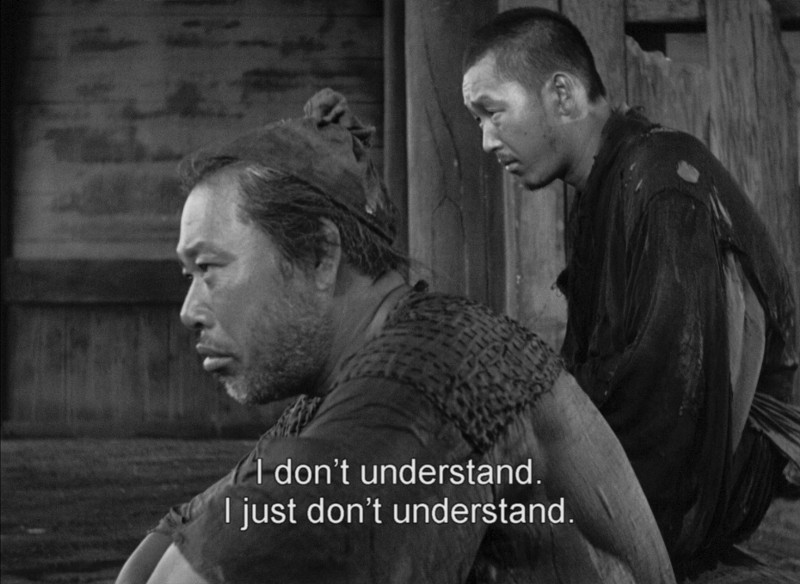
“Rashomon” is a classic Akiro Kurosawa film, based on the story “In a Grove” by Ryūnosuke Akutagawa. In the movie, the same series of events are described by four people from different backgrounds. Each version of the story varies differently than the others. All of the four characters saw and experienced the same events, yet they all tell different versions of how things unfolded and who did what. This has come to be called as “Rashomon Effect” in pop culture. The opening line of the movie is “I don’t understand. I just don’t understand”, and this lays the groundwork of the whole movie.

This type of “Rashomon Effect” can also happen at the gemba. One of the great stories about Taiichi Ohno, the father of Toyota Production System, is about the Ohno Circle. The story goes that Taiichi Ohno would take the Engineer or the supervisor to the floor, and if Ohno feels that the supervisor does not see what he sees or that the supervisor does not understand his viewpoint, he would draw a circle on the production floor and ask the supervisor to stand inside it. The supervisor has to stand inside the circle until he starts to see the operational wastes. Then his job is to immediately fix the problems. Ohno is seeing all the waste and problems on the floor. The same activity is also being seen by the engineer. He does not see any of the wastes that Ohno sees. Ohno is said to have been short tempered with this and would scold the engineers. Ohno would return to the floor sometimes 6-8 hours later and would ask what they saw after standing in the circle.

ohno

As I was reading through “Toyota Production System (Kanban) Book”, an internal Toyota document from 1970’s, I came across a paragraph about the Ohno Circle. The rough translation is as follows;

It is expected that the supervisors were scolded by Ohno on the floor. Ohno would make them stand on the floor by drawing a circle. This is similar to being scolded by teacher at school as in “go stand in the hallway!” At school, the purpose is quite different, which is to exclude the student from the classroom. On the floor, the supervisor has to see the problem and improve it. This problem can come into view only by continuous observation in that position, inside the circle.

“Why, why, why, why, why”, ask why five times. This is therefore referred to as the observation method.

I enjoyed that the document tries to differentiate between standing in the hallway and standing on the production floor.

The Ohno Circle exercise is just that – an exercise to strengthen your waste sensors. The more you look, the more you observe. The more you observe, the more you become aware of things differently. Why are there three bins of components on the table? Why does the operator spend time picking the “right” component for assembly? Why does the operator check the component 4-5 times? And so on. Pretty soon the Rashomon effect erodes away. Now the waste becomes visible. Once the waste is identified, then Ohno instructs to ask why again and again, until the root cause can be identified and the issue is fixed.

Bicycle Riders – a Zen Story:

The Rashomon effect reminds me of a Zen story I heard:

A Zen Teacher saw five of his students return from the market, riding their bicycles. When they had dismounted, the teacher asked the students,

“Why are you riding your bicycles?”

The first student replied, “The bicycle is carrying this sack of potatoes. I am glad that I do not have to carry them on my back!”

The teacher praised the student, saying, “You are a smart boy. When you grow old, you will not walk hunched over, as I do.”

The second student replied, “I love to watch the trees and fields pass by as I roll down the path.”

The teacher commended the student, “Your eyes are open and you see the world.”

The third student replied, “When I ride my bicycle, I am content to chant.”

The teacher gave praise to the third student, “Your mind will roll with the ease of a newly tuned wheel.”

The fourth student answered, “Riding my bicycle, I live in harmony with all beings.”

The teacher was pleased and said, “You are riding on the golden path of non-harming.”

The fifth student replied, “I ride my bicycle to ride my bicycle.”

The teacher went and sat at the feet of the fifth student, and said, “I am your disciple”.

Always keep on learning…

In case you missed it, my last post was about “Brooks’ Law – Mythical Man Month”.

Respect for Humanity (An early theme in Toyota Production System):

people1

This post is mainly about Respect for People in Toyota Production System, to show that this idea has been an integral part of Toyota Production System from the early days on.

“Toyota Production System – The foundation is respect for human rights”.

This is a quotation from a Toyota Production System book. Respect for people got famous with the famous Toyota Way document in 2001. This principle has been included within Toyota Production System for a long a time. In fact, the quotation I have cited is from “Toyota Production System First Textbook”. This is one of the early documents created within Toyota in the early 1970’s. An interesting trivia is that some of the text was written by Fujio Cho, the very person behind the Toyota Way 2001 document.

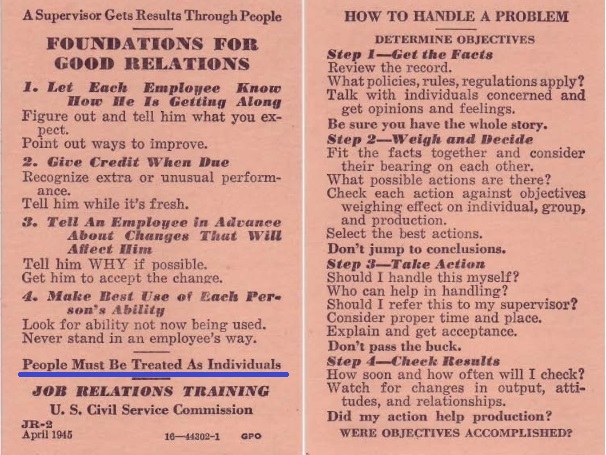
Section 5 of this document is titled “Man-Hour Reduction and Human Relations”. This section calls out TWI (Training Within Industry) Job Relations manual and cites “People must be treated as individuals” phrase from the Job Relations manual.

JR

I have written about TWI previously here. TWI was an emergency service by US to help nation’s war contractors and essential production. There was a need to produce a lot in a short amount of time, and this required training operators to be better within a short amount of time. C R Dooley, the Director of TWI, stated the following; “TWI’s objectives were to help contractors to get out better war production faster, so that the war might be shortened, and to help industry to lower the cost of war materials.” Job Relations is one of the manuals of the TWI program. In the foreword of this manual, C R Dooley stated that “Giving workers technical skill alone is not enough. Supervisors must give every man and woman at work the leadership that enlists cooperation and teamwork.” Toyota added Job Relations to its internal training curriculum in 1951.

The “Toyota Way 2001” document made “Respect for People” the new thing in lean. This theme was not at all present in any of the western books on Lean or Toyota Production System. Naturally, this theme got a lot of attention fast.

Yasuhiro Monden’s Write-up on Respect for Humanity:

Respect for people also goes by Respect for Humanity. In my opinion, this was best described by Prof. Yasuhiro Monden in his 1983 book “Toyota Production System”. He wrote;

“At Toyota, respect for humanity is a matter of allying human energy with meaningful, effective operations by abolishing wasteful operations. If a worker feels that his job is important and his work significant, his morale will be high; if he sees that his time is wasted on insignificant jobs, his morale will suffer as well as his work.”

Prof. Monden also links to the ability of the worker to stop the line in case of a problem with Respect for Humanity. He states “Since quality control based on autonomation (Jidoka) calls immediate attention to defects or problems in the production process, it stimulates improvement activities and thus increases respect for humanity.”

Prof. Monden also gives two rules to follow when making job improvements;

  • Give the worker valuable jobs – the job performed by the worker (operator) should not be riddled with non-value added activities.
  • Keep the lines of communication within the organization open – A relationship of trust and credibility needed for improvement activities need open lines of communication.

One of the mantras at Toyota is “Monozukuri wa hitozukuri” or “Developing products is about developing people”. This idea is underlined by Prof Monden. He has identified three sub-goals for Toyota Production System. They are:

  • Quantity Control – The ability of the system to adapt to daily and monthly fluctuations in demand in terms of quantity and variety.
  • Quality Assurance – Assurance that each process will supply only good units to subsequent processes.
  • Respect for Humanity – Cultivating Respect for Humanity while the system utilizes the human resources to attain its cost objectives.

Final Thoughts:

I will finish with an amusing article on Walmart. In this year’s shareholder meeting, Wal-Mart announced that they will stop playing Celine Dion and Justin Beiber in an effort to boost employee morale. Apparently, the stores were playing a CD with Celine Dion and Justin Beiber non-stop driving the employees crazy. This notorious playlist has been replaced with Wal-Mart Radio. This announcement received the most cheers from the crowd! This was based on multiple feedback from the employees.

Always keep on learning…

Spirit of Buddha – Why do lean implementations fail?

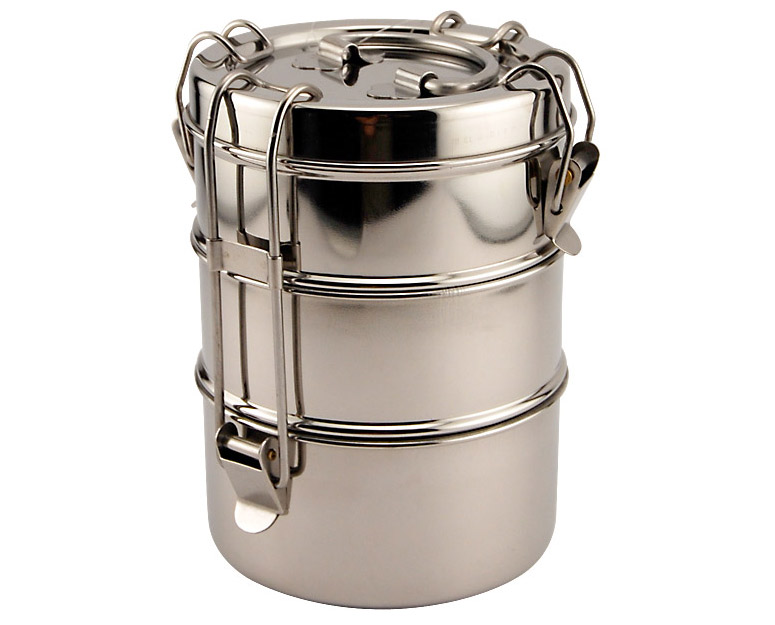
tiffin box

There have been multiple studies about why lean implementations fail. Why is it so hard for organizations to replicate Toyota’s success when implementing its Toyota Production System?

Hajime Oba, a Toyota veteran was once asked why other organizations cannot replicate Toyota’s success. He responded with an analogy that it is like trying to create a Buddha image without having the spirit of Buddha inside. In other words, other companies are trying to create a system of Lean or Toyota Production System that appears the same but does not have “the soul” in it. They recreate the elements including Kanban, JIT, Jidoka, one piece flow etc. but they simply cannot recreate the spirit or the soul. This is a great analogy.

What is the spirit or the soul of lean implementation? In my thinking, this is the culture. The culture is the cement that brings all the elements of the system together, completely aligned in one direction, which is the company’s vision. This is homogenous in nature, meaning that if you take a sample from anywhere in the company (upper management, middle management, etc.), you will get the same vision. The common goal is engrained in everybody’s mind. If you ask the operator on the floor or the CEO, you get the same answer. Everybody has the spirit within them. They do not strive for local optimization. They strive for the system optimization.

This can be also explained, in a way, with correlation and causation. As it is repeated again and again, correlation does not imply causation. There is a high correlation  with the presence of all the tools like Kanban, JIT, Jidoka, Kaizen thinking etc. with many successful companies. However, this does not imply that the success is caused by those tools. In other words, a correlation marked by the presence of the tools does not imply causation for success. What is missing? The culture, or the spirit, or as Mr. Oba put it – the spirit of Buddha. This is like having the body of a car without its engine, the driving force.

This brings to my mind the accomplishments of one amazing organization. This organization performs 400,000+ transactions a day. The total number of employees is approximately 5000. They have not had any strike in their 120+ years of existence. They have a minimal attrition rate. Their error rate is 1 in 16 million (better than six sigma). They do not use any of the new technologies like an ERP system or bar coding. What they do have is a manual coding of all containers. They get a 100% customer satisfaction rating, year after year. This is the Mumbai Dabbawala Association. They are as they call themselves, a flat organization with no silos. The spirit is very much alive in their organization. Their goal is bring the “lunch box” to the customer and back, on a daily basis at the specified time and location. Come rain or shine, traffic or no traffic in one of the most populated cities in the world. Each employee knows their vision and purpose, and works towards that. You can learn about them more here and here or here.

Keep on learning and keep the spirit alive…