A Tale of a Thousand Models:

In today’s post, I am further exploring the notion of models and mental models. We often speak of mental models as though they are neat packages of knowledge stored somewhere in the mind. These models are typically treated as internal blueprints and as simplified representations of the world that help us navigate and make decisions. But what exactly do we mean when we call something a model? And are we always speaking about the same kind of thing?

The term model, in both technical and informal contexts, carries more ambiguity than we often acknowledge. In classical cybernetics, W. Ross Ashby gave the concept a central role. For Ashby, a model was a representation that could simulate the behavior of a system. A good regulator, he argued, must contain a model of the system it seeks to control. This model did not need to be a literal image or a complete mirror. It simply needed to have the right kind of functional correspondence with just enough structure to predict and act upon.

Ashby’s definition is rigorous and functional. The model need not share the same physical form or medium as the system it regulates. What matters is not material resemblance but structural correspondence across selected variables. The model must preserve the relations and transformations that enable viable regulation. Ashby called this ‘isomorphism’. This isomorphism does not demand total replication. It requires that the model preserve only those relations necessary for viable control. This is the basic premise of First Order Cybernetics.

This isomorphic correspondence is what makes the model useful for regulation. The regulator can manipulate the model, run it forward, test interventions, explore possibilities, and trust that the results will map back to the actual system. The model becomes a kind of structural analogue: a way of capturing pattern without requiring material similarity.

When we look deeper, something about this view of models can feel distant. It risks separating the observer from the observed, the knower from the known. It tends toward a view of knowledge that is separated from lived experience. What does it mean for an organism to contain a model of its world, if that organism is not a computer but a living, breathing being?

This is where the Thousand Brains Hypothesis (TBH) offers a helpful contrast. Jeff Hawkins, in developing this hypothesis, suggests that intelligence arises not from a single unified model of the world, but from many partial models working in parallel. Here, however, Hawkins seems to use ‘model’ in a markedly different sense than Ashby’s isomorphic structures. For Hawkins, a cortical column’s model is not a representation that stands apart from experience but a learned pattern of prediction embedded within sensorimotor engagement itself.

Each cortical column builds what Hawkins calls a model of objects in the world, but this model is constituted by the column’s capacity to predict sensory sequences as the body moves through space. The column does not store a picture of a coffee cup. Instead, it develops expectations about what sensations will follow from particular movements when encountering cup-like patterns. Some of these may be visual, some tactile, while others may be of a different sense altogether. The model is not a static thing, but a dynamic process. It is a way of being attuned to specific sensorimotor regularities.

While Hawkins retains the term “model,” his usage stretches its meaning. These patterns may not be models in the traditional sense at all. When we say a cortical column builds a model or learns expectations, we may still be trapped in representational thinking. The cortical column does not store information about objects. It maintains patterns of connectivity shaped by experience. These patterns do not represent the world per se. Instead, they enact a way of being responsive to it. A column’s knowledge of a coffee cup is not a stored description, but a readiness to engage with cup-like affordances. This is the key nuance I would like to offer.

This view of modeling resonates with Heidegger’s phenomenological understanding of being-in-the-world. Heidegger once noted that a hammer is not first known through its shape or composition, but through its use. It becomes present to us as ready-to-hand, as something we know by doing. Similarly, a cortical column knows an object by interacting with it, not by storing a detached image of it. As Heinz von Foerster once said, if you want to see, learn how to act.

In earlier reflections, I explored the limitations of treating mental models as internal representations. When we interact with a system or object, we are not retrieving stored pictures. Instead, we are drawing upon a history of lived engagement. Our orientation is not merely cognitive, but bodily and situated. The notion of a model here becomes something that reveals itself through action, not inspection. The Thousand Brains Hypothesis reinforces this idea by showing how perception and prediction are distributed. A single cortical column may only know part of an object in a specific sensory dimension, but through movement and integration with other columns, it participates in a kind of collective intelligence. There is no master map but only partial perspectives constantly updating and coordinating with one another. The columns are not comparing models. They are participating in a dynamic process of mutual constraint and coordination. This is what Maturana and Varela would recognize as structural coupling. Each column’s activity is shaped by its coupling with other columns, with the body, and with the environment. The result is a network of mutual specification rather than a collection of independent representations.

Intelligence, in this view, emerges not from the integration of discrete models but from the ongoing attunement of multiple sensorimotor streams. This attunement is guided not by accuracy but by viability. Viability is the organism’s capacity to maintain its structure and continue its pattern of living. It is often misunderstood that accuracy directly correlates with viability. The external world presents more complexity than any cognitive system can represent in full. The response, shaped by both constraint and energetic efficiency, is not to build exhaustive models but to maintain abstractions that are good enough. These are not symbolic summaries, but embodied dispositions formed through recurrent interaction.

This is not a flaw, but a feature of adaptive beings. Cognitive structures are not designed to capture the world exhaustively, but to filter it selectively. The principle of structural coupling rests on repetition. It rests on the organism’s ability to reinforce useful patterns over time. What endures are not accurate representations but habits of orientation that have proven viable. Cortical columns do not construct truthful depictions of the world. They cultivate ways of engaging that preserve continuity and coherence within the organism’s domain of living.

This stands in contrast to the classical view where the model is assumed to be singular, coherent, and representational. The model is not something we hold apart from the world, but something we become a part of through interaction with it*. This framing aligns with the constructivist view that organisms are informationally closed. An organism does not passively receive information from an objective world. It brings forth a world through its own structural coupling. What we call a model, then, is not a mirror of external reality but a structure of engagement, a dynamic fit between the organism and its environment.

The language of structure is important. Rather than thinking of models as things organisms have, we might think of them as patterns organisms are. A cortical column’s responsiveness to a coffee cup is not something it possesses but something it enacts. The pattern of connectivity is not a representation of the cup, but a way of being coupled to the cup’s affordances. Whether we call these models, structures of prediction, or patterns of skilled engagement, what unites them is that they are not static descriptions. They are emergent dispositions, formed through repeated interaction. Each term foregrounds a different aspect such as structure, process, or habit. However, they all point to intelligence as enacted rather than mirrored.

This is not to dismiss Ashby’s insight. His use of the term model was never about mirroring for its own sake. It was about enabling viable regulation and constructing just enough structure to explain and act. Perhaps it is more accurate to think of such models as habits of expectation. They are not representations but anticipations. They do not describe the world as it is but orient us toward what is likely to come. They are pragmatic, situated, and always in motion. Or perhaps the term model itself is too burdened. What we call a model may be better understood as a form of skilled attunement. It becomes a pattern of responsiveness that is cultivated through history, shaped by constraints, and sustained by viability. The cortical column does not model the coffee cup. It simply becomes responsive to it.

This reframing opens up deeper questions. If intelligence is not the construction of better representations but the cultivation of more viable engagements, what does this mean for artificial intelligence? Can machines learn to be responsive rather than simply predictive? Can they participate in the world, rather than map it?

The Thousand Brains Hypothesis, interpreted through the lens of structural coupling and lived engagement, suggests that intelligence emerges not from central models but from richly distributed interactions. It implies that robust intelligence does not require more accurate representations, but more diverse ways of being coupled to the world.

To model, in this deeper sense, is to engage. It is to live into a world that reveals itself not all at once, but gradually through action, adjustment, and care. Perhaps, the real power of what we call a model may not lie in what it represents, but in what it enables us to do. Or more accurately, in what it allows us to become.

Final Words:

This shift from models as internal representations to models as patterns of skilled engagement challenges deeply held assumptions about knowledge, cognition, and intelligence. It is not merely a technical redefinition. It is a philosophical turning. If cognition is not about mirroring the world but about maintaining a viable relation to it, then intelligence becomes a matter of fitting rather than mapping. It is not about what we store, but about how we respond. Even this post is not free of modeling. It draws distinctions, frames structures, and builds conceptual pathways. But it does so with an orientation toward viability, not toward finality. The second order reflexive nature of this inquiry (modeling the limits of models) underscores the point. Intelligence is not found in having the final answer, but in remaining open to reframing, recoupling, and reengaging as the world shifts around us.

This reframing also casts new light on the ambitions of artificial intelligence. If intelligence is not the construction of better representations but the cultivation of more viable engagements, then it becomes clear that AI systems, as currently conceived, may be fundamentally limited. The limitation is not merely technical. It is existential. Intelligence, in this deeper sense, emerges from embodied interaction, historical coupling, and recursive responsiveness to a world that matters. Machines that manipulate symbols or detect statistical regularities may approximate aspects of intelligent behavior, but they remain ungrounded in the affective, bodily, and experiential dynamics that make living cognition what it is. Responsiveness is not a product of prediction alone. It emerges from vulnerability, concern, and the need to maintain coherence amid complexity.

Without changes in their environment shaping how they persist, machines may simulate participation, but they do not truly engage. They act without inhabiting. They process without perspective. Perhaps this is one of the main reasons artificial intelligence may fall short of achieving sentience. It relies on static internal representations and lacks the embodied, experiential living necessary for understanding, concern, or care. Without lived coupling, there may be behavior, but not presence. There may be processing, but not perspective.

While navigating complexity, my hope is that this reframing offers both humility and hope. Humility, because it reminds us that our understanding is always partial and situated. Hope, because it suggests that intelligence is not a fixed capacity, but a living process which is co-created, and transformed through our engagements with the world and with each other in a social realm. I will finish with an excellent quote from Di Paolo, Rhohde and De Jaegher:

Organisms do not passively receive information from their environments, which they then translate into internal representations. Natural cognitive systems are simply not in the business of accessing their world in order to build accurate pictures of it. They participate in the generation of meaning through their bodies and action often engaging in transformational and not merely informational interactions; they enact a world.

Always keep learning…

* Hat tip to Heinz von Foerster’s wonderful quote. Am I apart from the universe or am I a part of the universe?
The Arbitrariness of Objectivism:

The readers of my blog might be aware that I appreciate the nuances of cybernetic constructivism. Cybernetic constructivism rejects the idea that we have access to an objective reality. It does not deny that there is an external reality independent of an observer. However, we do not have direct access to it. Additionally, the external world is more complex than us. As part of staying viable, we construct a version of reality that is unique to our interpretative framework. This takes place in a social realm, and error corrections happen because the construction occurs in the social realm.

Heinz von Foerster, the Socrates of Cybernetics, formulated two imperatives that provide insight into this framework. The first is the ethical imperative that states “act so as to increase the number of choices.” The second is the aesthetical imperative that states “if you desire to see, learn how to act.” I welcome the reader to check out previous posts on these concepts. This worldview supports pluralism, the idea that there can be multiple valid versions of reality. This emerges primarily because the external world being more complex than our cognitive apparatus, we maintain viability by constructing particular versions of reality rather than accessing reality directly.

Common Mischaracterizations:

A primary criticism I encounter involves misrepresenting this worldview as relativism or solipsism. Critics suggest that acknowledging multiple perspectives means that anything goes, or that nothing is shared between observers. This represents a caricature rather than a substantive critique.

Precision is necessary here. Some forms of relativism claim that all views are equally valid, including contradictory ones. In that model, if claim A asserts “only A is valid,” then relativism must also treat that assertion as valid. It has no mechanism for comparison or critique. The result is a flattening of all claims into mere equivalence, where strength, coherence, or context carry no weight.

Solipsism advances an even more extreme position. It claims that only one’s own mind is knowable, denying shared reality altogether. It discards the very possibility of meaningful intersubjectivity. No systems thinker, and certainly no pluralist, takes this position seriously.

Pluralism as a Distinct Position:

Pluralism is neither relativism nor solipsism. It does not claim all views are valid. Rather, it asserts that no view is valid by default. Pluralism insists that perspectives must be made visible, situated in context, and evaluated through dialogue. It resists automatic authority, including authority derived from its own assertions.

Consider what objectivism accomplishes by contrast. It selects a single claim and declares that only this claim is valid while all others are not. But on what basis does it make this selection? Often, no external justification is offered. The grounding remains internal, context-bound, or inherited, yet it is presented as if it were neutral, universal, and self-evident.

This selection process reveals a potential arbitrariness of objectivist claims. The view appears arbitrary because its assumptions may remain hidden from examination. Without transparent justification for why one view should be privileged, objectivism risks the appearance of arbitrariness. What presents itself as necessity may simply be preference in disguise. From a pluralist standpoint, this represents concealment rather than clarity.

The Paradox of Objectivist Authority:

Paradoxically, this form of objectivism begins to mirror the very relativism it claims to oppose. Relativism declares that all claims are valid, including any particular claim A. Objectivism declares that only claim A is valid while offering no method to interrogate why this should be so. Each approach shuts down evaluation through different mechanisms. Relativism dissolves differences into sameness. Objectivism excludes all but one view from consideration at the outset.

This dynamic reveal what objectivism risks becoming, not solipsism in the strict philosophical sense, but functional solipsism. When a worldview refuses to acknowledge its own perspective and denies legitimacy to all others, it ceases to see the world. It sees only itself, reflected and reinforced. This represents the erasure of other ways of seeing under the illusion that one’s own interpretative lens is the world itself.

The Hidden Nature of Objectivist Claims:

The danger of objectivism lies in its method: selecting a single view, designating it as truth, and treating alternatives as error, noise, or confusion. It dresses up a personal, historical, and situated position as universal and eternal. This approach is not more objective than pluralism. It is simply better concealed.

Frameworks that prioritize ontology over epistemology tend to overlook the epistemic humility that characterizes pluralism. When we claim to know what reality is before examining how we come to know it, we bypass the very process of inquiry that might reveal the limitations and situatedness of our perspective. This ontological presumption becomes particularly problematic when it denies its own epistemological foundations.

Pluralism does not collapse into solipsism. Objectivism risks this collapse precisely when it denies that it operates from a particular perspective. The refusal to acknowledge one’s interpretative framework does not eliminate that framework. It merely renders it invisible to examination.

Pluralism is not weakness, indecision, or relativistic drift. It represents a disciplined humility and a refusal to collapse complexity into certainty prematurely. It does not reject standards but demands that they be made visible, questioned, and held accountable to the context in which they arise.

Pluralism increases the space for dialogue, choice, and possibility. It reminds us that what we do not question becomes invisible, not because it is true, but because it hides within the taken-for-granted assumptions of our frameworks.

In a world increasingly polarized between loud certainties and quiet disillusionment, pluralism offers something increasingly rare: the courage to remain open, to ask how we know what we claim to know, and to stay in conversation with perspectives we might otherwise reject.

Final Words:

Not everything is permissible under pluralism. But no single view should escape questioning. The cybernetic constructivist position maintains that our constructions of reality emerge from our particular biological, cognitive, and social constraints. These constructions prove viable not because they correspond to an objective reality we cannot access, but because they enable us to navigate the complexity we encounter.

I will finish with a quote from Heinz von Foerster:

Objectivity is the delusion that observations could be made without an observer.

The task before us is not to eliminate the observer but to acknowledge the observer’s role in every observation. This acknowledgment does not lead to relativism or solipsism. It leads to a more rigorous understanding of how knowledge emerges from the interaction between observer and observed within particular contexts and constraints.

Always keep learning.

The Ethics of Choice: Ackoff Meets von Foerster

In today’s post I am exploring the need for ethics in Systems Thinking using the ideas of Heinz von Foerster and Russell Ackoff. Russell Ackoff and Heinz von Foerster came from different traditions within systems thinking. Ackoff comes from operations research and organizational design, and von Foerster comes from physics and second-order cybernetics. Yet, in their mature work, they both arrived at a strikingly similar ethical stance: that “systems” ought to be structured in ways that expand the capacity of their parts to choose, act, and develop.

Von Foerster’s ethical imperative is deceptively simple: “Act always so as to increase the number of choices“. It is easy to misread this as a general appeal to openness, ambiguity, or liberal tolerance. But that would miss its depth. For von Foerster, the notion of “choices” is rooted in constructivism. We are not passive recipients of a pre-given world. We are active participants in the construction of our realities. Therefore, every action we take contributes to shaping the world that others, too, will inhabit.

I have written about my corollary to Heinz von Foerster’s ethical imperative before: always opt for situations that preserve and expand future possibilities.

To increase the number of choices is not merely to keep options open. It is to take responsibility for the kind of world we are helping bring into being. It is to recognize that our models, narratives, and designs are not neutral. They create constraints or possibilities. The ethical dimension emerges from this constructivist insight. If we are the ones constructing meaning and order, then we are also responsible for ensuring that others can participate in that construction.

Russell Ackoff, coming from a different intellectual lineage, spoke in similar terms about purposeful systems. In his view, a social system, unlike a machine or an organism, is composed of parts that have purposes of their own. This is not just a descriptive claim. It is a normative one. To treat an enterprise as a social system is to treat its people as agents. That means enabling them to select both ends and means relevant to them. It means expanding the variety of behaviors available to the parts of the system. And it means refusing to reduce individuals to roles, procedures, or interchangeable units.

As Ackoff said: [1]

An enterprise conceptualized as a social system should serve the purposes of both its parts and the system of which it is a part. It should enable its parts and its containing systems to do things they could not otherwise do. They enable their parts to participate directly or indirectly in the selection of both ends and means that are relevant to them. This means that enterprises conceptualized as social systems increase the variety of both the means and ends available to their parts, and this, in turn, increases the variety of behavior available to them.

Ackoff does not describe freedom in abstract terms. Instead, he frames it in terms of viable behavior. If systems are to be purposeful and adaptive, they must support the ability of their parts to choose and act. This is not a luxury. It is an imperative in turbulent environments. Ackoff continues:

The parts of a completely democratic system must be capable of more than reactive or responsive behavior. They must be able to act. Active behavior is behavior for which no other event is either necessary or sufficient. Acts, therefore, are completely self-determined, the result of choice. Choice is essential for purposeful behavior. Therefore, if the parts of a system are to be treated as purposeful, they must be given the freedom to choose, to act.

This parallels von Foerster’s call to increase choices. It also deepens it. Ackoff is not only speaking of choice as a moral principle. He is showing that without choice, systems cannot act purposefully. They can only react. In complex systems, where change is constant, such reactivity is insufficient.

Though Ackoff and von Foerster rarely cited one another, their parallel conclusions suggest a convergence shaped by a shared moral sensitivity to the role of agency in system design.

Von Foerster’s imperative finds its most serious grounding in historical trauma. His insistence on the responsibility of the observer was not theoretical. He lived through the Nazi era when many claimed they “had no choice”. His ethical imperative arose in opposition to this very notion. The idea that one was simply “following orders” was, to him, a denial of personhood. To say “I had no choice” is not merely an evasion. It is a collapse of moral responsibility. It turns the observer into an automaton and ethics into compliance.

Ackoff, like von Foerster, saw how ethical collapse begins when systems are designed to remove agency under the guise of order. When systems are designed to remove or suppress choice, they not only become unethical but also incapable of long-term success. The suppression of choice results in stagnation, in the inability to deal with novelty, and in the eventual failure to match the variety of the environment.

As he explained:

Enterprises conceptualized and managed as social systems, and their parts, can respond to the unpredictable changes inherent in turbulent environments and can deal effectively with increasing complexity. They can expand the variety of their behavior to match or exceed the variety of the behavior of their environments because of the freedom of choice that pervades them. They are capable not only of rapid and effective passive adaptation to change but also of active adaptation. They can innovate by perceiving and exploiting opportunities for change that are internally, not externally, stimulated.

This ability to innovate from within is exactly what von Foerster meant by ethical action. It is not enough to survive. We must be able to imagine alternatives, to create futures. That can happen only when participants are seen as observers and constructors, not as passive components.

Ackoff takes this one step further by reminding us that systems have multiple levels of purpose.

The social-systemic view of an enterprise is based on considering three ‘levels’ of purpose: the purposes of the larger system of which an enterprise is a part, the purposes of the enterprise itself, and the purposes of its parts.

The ethical task is not to enforce alignment but to cultivate conditions where these levels support and enhance one another. That means making space for new forms of participation. It means resisting the urge to simplify or to eliminate tensions.

Both thinkers were concerned with the future. Ackoff warned:

Today, however, we frequently make decisions that reduce the range of choices that will be available to those who will occupy the future.

For example, future options are significantly reduced by destruction and pollution of our physical environment, extinction of species of plants and animals, and exhaustion of limited natural resources. War – perhaps the most destructive of human activities – removes some or all future options for many. We have no right to deprive future generations of the things they might need or desire, however much we may need or desire them.

Here again, von Foerster would agree. The responsibility of the observer extends through time. Ethics is primarily oriented toward the future. To act ethically is to preserve and enlarge the set of future choices, not just present ones.

This is the intersection between Ackoff and von Foerster. It is not primarily about designing for freedom, as Stafford Beer might have framed it, but about cultivating the ethical awareness that we are always shaping what freedom becomes. Ethical systems are not those that impose order from above. They are those that create the conditions for others to choose, to act, and to become.

To act ethically, then, is to act in a way that enlarges the scope of agency around us. It is to refuse the claim that “there was no other way.” It is to question not only the actions of individuals but also the design of systems that make those actions seem inevitable. Von Foerster challenges us to build systems that do not foreclose choice but rather multiply it. Ackoff challenges us to design organizations in which people can act with purpose, both their own and that of the larger system.

The convergence of these two thinkers gives us a powerful way to think about ethics in complexity. It is not about controlling outcomes. It is about enabling emergence. It is not about defending what is. It is about creating the conditions for what could be.

What is common between them is not method, but ethos. They both believed that how we think about systems shapes how we act within them. And how we act, in turn, shapes what becomes possible for others. In a world increasingly constrained by the consequences of past decisions, we must always opt for situations that preserve and expand future possibilities.

Final Words:

Heinz von Foerster knew too well the cost of systems that suppress choice. His ethical imperative was not a poetic suggestion but a moral demand born from lived experience. For him, the statement “I had no choice” was a warning sign. It was a marker of ethical blindness. To live ethically, he believed, was to remain aware that we are always constructing reality, whether we recognize it or not.

Ethics, then, is not a separate layer added to action. It is embedded in every decision, every design, every interpretation. By increasing the number of choices for others, we resist systems that close down alternatives and silence difference. We push back against the machinery of obedience. We make space for novelty, for learning, and for the dignity of self-determined action.

Von Foerster did not ask us to design perfect “systems”. He asked us to remain awake to our role within them. To be a responsible observer is to see how our ways of seeing shape what is possible. That is the ethical task he left us. Not to necessarily control the future, but to leave it open.

I will finish with a very wise quote from Ackoff:

The righter we do the wrong thing, the wronger we become.

Always keep learning…

[1] The Democratic Corporation, Russell L. Ackoff (1994)

When is a ‘System’?

In today’s post, I would like to explore the question, “When is a system?” and reflect on how cybernetics invites us to think differently about systems. This shift in phrasing may seem minor, but it opens up a deeper understanding of what we are truly doing when we speak of systems.

The Cybernetic Shift:

Cybernetics offers a different path. Rather than asking, “What is a system?”, it invites us to ask, “When is a system?” As a student of Cybernetics, I came across Herbert Brün’s question, “When is Cybernetics?”. He was challenging the obsession with an observer devoid pursuit of knowledge. When we ask “What is..” questions, we are focusing on reification. As Paul Pangaro notes[1]:

Let me show this by first asking the question, ‘What is a rock?’ The question as phrased and by its nature implies that rocks exist and that they can be known and defined. This existence stands on its own to such an extent that an answer can be given, ‘A rock is — dot dot dot’; and this description is given as independent of time, context, and observer. The act of providing an answer is to buy into the position that there is a reality that can be expressed in this independence.

Of course the reality is in one sense in the description, not any ‘object itself.’ We do invest in the description as a thing, an ‘objectification’ that exists on its own, which is what we call knowledge. The contribution of personal experience is lost or elided. What is left is the dead description, devoid of a maker and the context and purpose in which it is made.

This change in perspective alters everything. It reminds us that systems are not found in the world as pre-existing objects. They are drawn into being. They do not exist without a point of view, without a purpose, and without a participant. A system is not discovered; it is declared. It does not precede our involvement. Instead, it arises with it.

Consider a simple example: When is healthcare a system? For a hospital administrator, healthcare becomes a system when she tracks patient flow, bed occupancy, and discharge rates. For a public health researcher, healthcare becomes a system when he maps disease patterns, social determinants, and community interventions. For a patient with chronic illness, it becomes a system when they navigate insurance approvals, specialist referrals, and medication management. The same collection of clinics, professionals, and treatments becomes different systems depending on who is looking and why.

Beyond Fixed Definitions:

In this way, cybernetics is not about systems as fixed or definable things. It is about how we observe, how we construct, and how we participate in interrelated processes. As Paul Pangaro explained, the “What is …?” question leads us into traps. When we ask “What is a rock?” we imply that rocks exist independently and can be known and defined outside of time, context, and observer. This creates a “dead description, devoid of a maker and the context and purpose in which it is made.” The act of asking “What is…?” itself creates an investment in notions of absolute reality that cybernetics seeks to question.

Cybernetics is better understood as a way of thinking rather than a field of things. Herbert Brün’s insight, substitute “When is…?” for “What is…?”, captures the essence of the cybernetic act: taking an apparent absolute and providing necessities for taking it as a relative. This shift makes the relativity of knowing explicit, relativity that exists as a function of ever different contexts: time, the observer, purpose. Cybernetics draws our attention to the fact that observation changes what is observed. Descriptions are never neutral. They arise from somewhere and from someone. Meaning does not reside in isolation. It arises through interaction.

The Moment of System-Drawing:

This is why the question “When is a system?” is important. It makes visible the choices we make when we describe a situation as systemic. It pushes us to be aware of our own cognitive blind spots and promotes epistemic humility. It reminds us that the context, including who is asking, when, and for what purpose, decisively shapes what we call “the system.”

As Herbert Brün emphasized:[1]

The by far most important, most significant context, overriding in power every other[,] even ever[-]so-blatantly[-]perceivable context, the context decisive in the beginning and in the end, in the speaker and in the receiver, the context which gives its meaning to a statement, the context in which a statement is most undebatably made, is that context which we call “The person who makes the statement.” And let the period after the quotation mark be legal. For to be quoted is not my statement but “The person who makes the statement” and the context he is, not I make.

Systems come into being when we draw boundaries. They begin to make sense when we ask certain questions. They become stable or unstable, depending on who is involved and what they are trying to do.

This insight was central to the work of C. West Churchman, who reminded us that the systems approach begins when one is open to see the world through another’s eyes. This does not mean agreement. It means recognizing that what we call “the system” already reflects a point of view. What seems essential to me may seem irrelevant to you. What I include, you may exclude.

We are recognizing the observer dependent quality of systems, noting that different observers of the same phenomena might conceptualize them into different systems entirely. For one person, a transportation system may refer to trains, roads, and schedules: the physical infrastructure that moves people from point A to point B. For another, it may refer to access, fairness, and opportunity: who can get where, when, and at what cost. For yet another, it may mean emissions, energy use, and ecological impact. The” system is not one thing. It is always many, depending on how one looks.

The Ethical Dimension:

This orientation opens an ethical space. Cybernetics, epecially second order cybernetics, teaches us that we do not stand outside the world we describe. We bring forth a world through our living, through our speaking, and through our caring. Werner Ulrich took this further by asking us to consider who gets excluded when a system is drawn. The question is not only “What is the system?” or “When is the system?” It is also “Who decides?” and “Who is left out?”

When a city planning department draws the boundaries of a “transportation system” around roads and parking meters, they may inadvertently exclude sidewalks, bike lanes, and public transit, effectively marginalizing pedestrians, cyclists, and those who cannot afford cars. When a hospital defines its “patient care system” in terms of clinical procedures and bed management, it might exclude the experiences of family members, community health workers, or the social determinants that brought patients there in the first place.

To declare a system is to draw a boundary. To draw a boundary is to make a choice. With that choice comes responsibility. Cybernetics is not simply a science of regulation or control. It is a reflection on participation and perspective. It is a reminder that the observer is always part of what is observed.

Final Words:

So when is a system?

A system is whenever someone chooses to see one. It is when relationships are noticed, when patterns are made meaningful, when intentions begin to shape perception. It is not a thing in the world. It is an event in understanding.

To speak of systems, then, is to accept the weight of that declaration. It is to notice that every system includes and excludes. It frames some possibilities and hides others. Cybernetics does not eliminate this fact. It simply asks us to be honest about it.

This awareness changes how we approach systems work. Instead of searching for the “right” system, we might ask: What system-drawing serves our purposes? Whose perspectives are we including or excluding? What becomes visible when we draw the boundaries here rather than there? How might our system-drawing empower or marginalize different groups?

We may never define a system in final terms. But we can choose to be thoughtful in how and when we draw them. We can remain attentive to the ethical and practical consequences of those drawings. And we can remember that every system boundary is a hypothesis about what matters, one that can be questioned, revised, and redrawn as our understanding deepens.

I will finish with a quote from West Churchman that provides further food for thought:

The problem of systems improvement is the problem of the ‘ethics of the whole system’.

Always keep learning…

[1] New Order from Old: The Rise of Second-Order Cybernetics and Implications for Machine Intelligence. A Play in 25 Turns – Paul Pangaro, 1988

Cybernetics of Kindness – 2

In today’s post, I want to explore what I have been thinking of as the Cybernetics of Kindness. In my recent reflections, I have been drawn to the quiet power of compassion and kindness, particularly in a world increasingly fascinated by toughness, dominance, and the mythology of machismo. I want to step back from all that noise, and spend some time examining what actually helps us hold together. What allows systems to remain viable. What allows people to remain human.

Ross Ashby, one of the early pioneers of Cybernetics, gave us the Law of Requisite Variety (LRV). LRV states only variety can absorb variety. Variety, in this context, refers to the number of distinguishable states a system can occupy. A coin, for instance, has a variety of two: heads or tails. It can help resolve a binary choice. But if the number of options increases, say to six, a single coin is no longer sufficient. You need more variety, such as a six-sided die.

This idea anchors a fundamental principle in cybernetics: in order to regulate a system, the controller must match or exceed the complexity of the disturbances it encounters. Otherwise, essential variables, those tied to the survival of the system, start to drift beyond safe limits.

Ashby’s insight was later extended by Aulin-Ahmavaara, who formalized the dynamics of regulation as follows:

H(E) ≥ H(D) − H(A) + H(A|D) − B

Here:

H(E) is the entropy of the essential variables, representing the uncertainty we seek to minimize.

H(D) is the entropy of external disturbances, representing the variety the system must absorb.

H(A) is the entropy of the actions available to the controller.

H(A|D) represents the uncertainty in selecting the right action for a given disturbance, reflecting our ignorance, in a sense.

B is the buffering capacity, representing our passive resilience, such as slack or social safety nets.

Setting aside the formal nature of the equation, this inequality makes something quite clear. If we want to maintain low H(E), to keep our core variables stable and viable, we must either reduce external disturbances H(D), increase the range of available actions H(A), reduce the uncertainty in choosing the appropriate response H(A|D), or increase our buffer (B). When H(E) rises, we begin to lose grip on the things that matter most.

So what does all of this have to do with compassion and kindness?

Kindness as a Variety Amplifier:

There is often a temptation to reach for control by enforcing uniformity through rules, rigid processes, standardization or exclusion. It can offer a sense of order, especially in the short term. But over time, such enforced uniformity reduces H(A), the range of meaningful action within the system. What emerges may appear efficient, but it is brittle. It lacks depth and cannot adapt when disturbances grow or shift. This brittleness becomes visible in bureaucracies that crumble under stress, in supply chains that falter when pushed, in institutions that sacrificed resilience for efficiency.

Systemically speaking, callousness acts as a suppressor of H(A). It narrows the range of potential responses, disconnects individuals, and isolates perspectives. And when we limit the possibilities available to others, we also limit the future options available to ourselves. The adjacent possible, the wellspring of creativity, regeneration, and learning, starts to shrink.

Compassion, in contrast, expands H(A). When we approach others with care, humility, and openness, we create space for more configurations of interaction. This means more ways to respond and more chances to adapt. This kind of engaged kindness also reduces H(A|D), the uncertainty in deciding what to do, because trust and mutual respect improve our collective sensemaking. In addition, compassionate action builds B. It contributes to buffering. A kind gesture, a moment of patience, a willingness to listen: these are not just social niceties. They accumulate into a resilient web of support that makes systems more robust.

Compassion is not soft in the sense of being weak. It is structural. It is a systemic resource that allows viable systems to emerge and sustain themselves without relying on dominance or top-down control.

When we encourage horizontal variety, diversity distributed across people, perspectives, and functions, we enable innovation and responsiveness.

In the Viable System Model (VSM), systems must manage variety along both horizontal and vertical dimensions. Horizontally, we encounter differences between teams, roles, or individuals. Vertically, we deal with differences between operational reality and strategic guidance. Compassion has a place in both. Horizontally, it enables coordination without coercion. Vertically, it allows for meaningful feedback from the front lines to reach decision-makers, and for leadership to guide with empathy and contextual awareness.

Rigid hierarchies may seem to reduce complexity, but they do so at the cost of resilience. They simplify often by silencing. Compassionate engagement, by contrast, helps absorb variety rather than suppressing it. It preserves individuality while allowing for coherence. It creates a connective tissue that allows people to remain distinct without becoming divided.

This is a subtle but important distinction in the VSM. Horizontal variety contributes to richness and adaptability without overloading the center. Vertical variety, meanwhile, requires a capacity for transduction, the ability to translate and make sense of signals across levels of the system. Here again, compassionate attention matters. It reduces the friction and distortion that often creep into communication. It allows transduction to occur more fluidly, because when people feel heard and valued, they are more likely to share what matters, and more likely to hear what is offered in return. Compassion, in this framing, enhances coherence.

A Reentry Perspective: Second-Order Responsibility:

In Spencer-Brown’s Laws of Form, the act of drawing a distinction is the basic move through which meaning arises. But once distinctions reenter their own space, the system becomes reflexive. It observes itself. This is the moment where second-order cybernetics begins, when the observer becomes part of the system.

From this perspective, callousness often begins when we treat people as problems to be solved, rather than as observers with their own valid distinctions. Callousness denies reentry. It insists on fixed categories. It treats systems as closed, and boundaries as final. This increases H(A|D) not only by generating fear or confusion, but by disabling the our ability to learn from observing ourselves. It blinds us to emergent intelligence.

Compassion, in contrast, is a form of second-order responsibility. It allows reentry to take place with integrity. It treats others not as objects to be managed, but as co-observers. It creates space for us to learn from the distinctions others draw. It is, at its core, an epistemic stance, an ethics of perception.

Final Words:

Heinz von Foerster’s ethical imperative states – act always so as to increase the number of choices. My corollary to this is – always opt for situations that preserve and expand future possibilities.

When we increase H(A), we are expanding our collective capacity to act. This is not just about having more tools; it is about having more meaningful responses under pressure. Compassionate leadership creates conditions where people are more likely to contribute, collaborate, and improvise. In a team where people feel psychologically safe, resilience emerges naturally. In a society where people are not afraid to speak up or to try something new, new pathways remain available. Kindness encourages shared authorship. It distributes ownership and allows us to carry forward together rather than collapse under the weight alone.

When we reduce H(A|D), we decrease collective uncertainty. When people are isolated, fearful, or in survival mode, they second-guess themselves. Even when the right response is available, it may go unrecognized or unused. Compassionate engagement, through listening, transparency, and acknowledgment, cuts through this fog.

When we build B, we create shared capacity to absorb the shocks that are always coming. Buffering is not about hoarding resources. It is about building slack and forgiveness into our relationships and institutions. It is the margin that allows recovery. Acts of kindness add this margin. They offer redundancy that may appear inefficient in the short term, but becomes critical when crises hit. You do not build the buffer when the blow arrives. You build it in advance, through everyday acts of care and connection.

And when we keep H(E) low, we protect what we cannot afford to lose. Essential variables like trust, legitimacy, health, and integrity are not self-sustaining. They require ongoing attention. Compassion helps anchor these values. It reduces volatility, grants time to recalibrate, and holds the space within which people and systems can breathe. We do not wait for collapse. We act now, in small, steady ways, to keep the core intact.

Compassion and kindness, in this light, are not optional. They are strategic capacities.

It is how we expand our range of action, instead of retreating into helplessness. It is how we align perception, rather than drown in confusion. It is how we absorb impact, instead of breaking under it. It is how we hold on to what matters, even when the terrain is shifting. It is how we remain in relationship with the future.

I will finish with a quote from Heinz von Foerster:

A is better off, when B is better off.

Always keep learning…

The Form of Decency

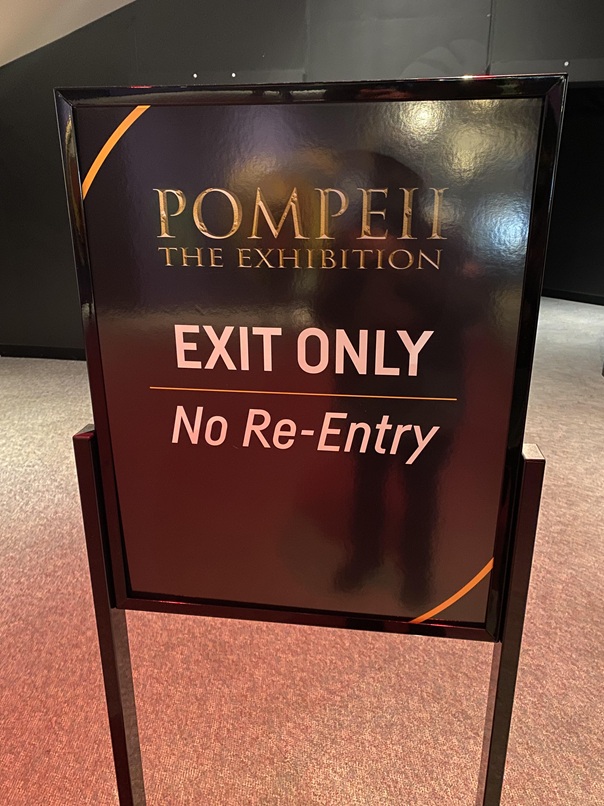
At a recent exhibition, I saw a sign that read: “Exit Only. No Re-Entry.” It seemed not just as a logistical instruction but as a metaphor. Around the same time, I came across a photo of a sign demanding that people speak the local dialect. What struck out to me was that the sign was written in English. These moments echoed something I have long been thinking about: the contradictions that arise when our distinctions fold back on themselves, what George Spencer-Brown called “reentry.”

I am a longtime admirer of Spencer-Brown’s Laws of Form, and in today’s post, I explore how his notion of reentry helps illuminate the paradoxes and blind spots in modern ideologies, especially the rise of xenophobia and extreme nationalism. These rigid ideologies depend on distinctions between us versus them, lawful versus unlawful that appear neat but collapse under their own logic when viewed recursively. We pretend we are only exiting, drawing sharp lines, while ignoring the inevitability and necessity of reentry in our sensemaking.

Drawing Distinctions

Spencer Brown opened his mathematical-philosophical treatise with a simple instruction: Draw a distinction. This simple act of marking a boundary between “this” and “that” forms the foundation of how we structure knowledge, meaning, and identity. We create categories and define what is “in” and what is “out.” This is how form arises through distinction.

In Laws of Form, he also introduced the notion of reentry: the act of folding a distinction back into itself. Simply put, this is a self-referential act. By doing this, the tidy separations we created begin to blur. This move, abstract as it sounds, has powerful consequences for how we think, live, and treat each other. Especially in a world torn by polarization, nationalism, and fear of the “other,” reentry reveals the paradoxes that rigid ideologies try to hide and points us toward a more humane way of navigating complexity.

The Pot and the Form

Let us use a simple example to understand the form better. Consider a pot of boiling water. Here, we can make three identifications:

  • Pot = the mark, or the distinction
  • Water inside the pot = what is indicated, the marked space, the inside
  • Outside the pot = the unmarked space, the outside

Together, all three constitute the form. The pot, as a boundary, plays the role of the mark in Spencer-Brown’s terms. It creates a distinction between what is inside and what is outside. The pot itself is not part of what is inside; it is what makes “inside” possible by drawing a boundary. The mark exists in a meta-position: it defines inside and outside but cannot be reduced to either. It is the operation of drawing the distinction. The pot allows us to interact with what is inside and allows what is inside to interact with the surroundings.

We can use the same example to introduce reentry. Imagine placing that pot inside another pot, creating a double boiler. The inner pot is held by the outer one. The boundary remains, but now it is nested and refers to something beyond itself. This is reentry: when a form does not just define something but begins to refer to its own act of defining. This becomes an act of second-order observation. In the double boiler metaphor, the inner pot (the reentered form) exists within the outer pot (the original distinction), creating a ‘system’ that is both distinct and self-contained.

Reentry challenges the simplicity of binary logic, revealing that ‘systems’ can be self-referential and dynamic. This concept is pivotal in understanding complex systems, where elements influence and are influenced by themselves.

The Purpose of Reentry: Revealing Cognitive Blind Spots

We love binaries: true/false, us/them, lawful/unlawful. But reentry destabilizes these neat categories. Who defines what is “lawful”? The law itself. When the law governs the making of laws (as in constitutional law), we enter a recursive loop. What is legal becomes a matter of interpretation, not clarity. The binary collapses into ambiguity. Reentry shows us that binaries are useful simplifications, not absolute truths. Dogmatic ideas rely on such binaries, and reentry becomes an effective tool for challenging dogma.

Similarly, in language, terms like “normal” are defined by cultural norms, which are themselves shaped by collective perceptions of normality. This circularity demonstrates how meanings are not fixed but evolve through self-reference. Reentry is not merely a logical twist. It reveals something crucial about how we construct meaning.

When we draw a distinction between “lawful” and “unlawful,” we assume clarity. But as soon as we ask who defines the law and realize it is the law itself, we see that the boundary is recursive. It defines itself. This is not a flaw but a feature of complexity.

The Second-Order View: Observing Observation

This leads us to second-order thinking: the act of observing the act of observing. In logic, when a ‘system’ includes itself in its model, it can become unstable. However, it also owns its position. Blind spots can be revealed, opening the door to creativity, paradox, and deeper understanding. Reentry is how we shift from first-order systems (clear categories, fixed forms) to second-order ones (reflexivity, contradiction, emergence). It is how we move from saying “we are right” to asking “how do we know?”

As the cybernetician Heinz von Foerster observed: “The observer must be included in the observed system.”

This represents the leap from first-order thinking (observing the world) to second-order thinking (observing how we observe). Reentry is the mechanism of that leap. Recognizing and thinking along the lines of reentry is deeply needed today because some of the most dangerous ideas we face rely on distinctions that collapse under their own logic.

Reentry and the Illogic of Xenophobia

Xenophobic ideologies often define “us” versus “them,” asserting superiority or purity. However, when these distinctions undergo reentry, when the criteria for inclusion are applied to the in-group, they often fail to hold consistently. Similar to the sign that demanded the use of the local dialect but was written in English, xenophobic logic contradicts itself when examined through reentry.

What does it mean to be a person from country “X”? Is it geography? Culture? Language? Legal status? Values? The more we examine these criteria, the fuzzier they become. Yet we use such labels as if they were clean boundaries, pots that perfectly contain identity. Reentry challenges this assumption by turning the form inward.

If being from country “X” means standing for freedom, justice, and decency, how can one uphold those values while treating outsiders with cruelty? If your culture preaches respect, how can you use that culture to justify disrespect? If your national identity is built on moral ideals, then those ideals must apply to how you treat everyone, not just those inside your imaginary boundaries.

Bigotry collapses under reentry. Its internal logic folds in on itself. The principle violates the practice. The mirror reflects itself and reveals the contradiction. Racism, xenophobia, and nationalism, when examined through the lens of reentry, are not just morally wrong. They are logically incoherent.

The Ethical Need for Redundancy

In complex systems, one of the most powerful safeguards is redundancy. In engineering, redundancy prevents collapse. In ethics, it serves the same function.

Hope is redundancy in action, as are other humanistic notions such as kindness, compassion, and forgiveness. These are not luxuries; they are second-order buffers. They activate when logic stalls. They hold the ‘system’ together when paradox threatens to tear it apart. Reentry exposes the instability of our forms. Redundancy helps us live with that instability.

Ethical redundancy functions like the inner pot in a double boiler. It buffers the heat. It allows care to emerge where rigidity would cause harm. It creates space for ambiguity, reflection, and repair. This is why, in the face of bigotry and rigid ideologies, we must design for ethical reentry. We must build in second chances. We must speak gently even when the logic breaks.

Final Words

In a world obsessed with efficiency, clarity, and being right, reentry is a radical act. It turns the ‘system’ inward. It reveals our blind spots. It shows us where our ideals betray themselves. But reentry does more than expose contradictions; it opens pathways to wisdom. When we embrace reentry, we move from the arrogance of first-order certainty to the humility of second-order inquiry.

The rise of extreme nationalism and xenophobia reflects our collective failure to practice reentry. These ideologies thrive on the illusion of clear boundaries, pure identities, and simple answers. They collapse when subjected to their own logic, but only if we have the courage to apply that logic. Only if we are willing to let our mirrors reflect.

Reentry teaches us that our most cherished distinctions are provisional, our certainties are constructed, and our boundaries are more porous than we dare admit. This is not cause for despair but for hope. It means we can rebuild. We can redesign. We can choose compassion over cruelty, and in that act, we can stay human.

In the end, reentry invites us to remain human and to include kindness as a design principle, building ‘systems’ that can reflect on themselves without breaking. It asks us to hold our beliefs lightly enough that they do not harden into weapons, yet firmly enough that they can guide us toward justice. This is the form of decency: recursive and reflective.

Always keep learning…

Get a Grip on It:

Complexity is a matter of degree and not a kind. – Glenda Eoyang

In today’s post, I am exploring the importance of incorporating diversity when navigating complex environments. I have written previously about the seductive appeal of efficiency and how its blind pursuit can leave us exposed. Efficiency asks us to optimize for known outcomes. It assumes a world where inputs are controlled and variation is minimized. But reality is rarely that generous. It is textured, layered, and in motion. It offers few clean edges and rarely repeats itself in neat loops. As leaders, we are asked to shape structures that can stay viable in this kind of world. The overuse of efficiency in such contexts does not make us leaner or smarter—it often makes us brittle.

We often design as though the ground is level. As if everyone begins from the same place, with the same tools, the same reach, the same slack. But the ground is not level. It has never been. Some people begin with more; more access, more time, more tolerance from the structure. Others begin already contending with friction. Not because they lack capability, but because the design was not shaped with them in mind. This is not just an ethical issue. It is a design one.

In complexity, uniformity fails fast. In simple, symbolic systems—code, logic, procedures—uniformity can be a virtue. The terrain is controlled. The inputs are known. The environment is stable enough to reward sameness. But in complexity—where causes are fuzzy, signals are noisy, and context moves mid-sentence—we need something else. We need grip.

Reality Requires Grip

Reality rarely presents itself in tidy ways. It offers no singular handle for us to grab. Instead, it throws contradictions, mismatched signals, and unexpected constraints. We cannot hold it with one kind of mind, one kind of framework, or one kind of experience. The more varied the terrain, the more varied our grasp must be.

That grip—our capacity to make meaningful contact with complexity—comes from difference. It comes from a range of perspectives, a mix of sensibilities, a spread of lived experiences. It comes from people who notice different things, who ask different questions, who move through the world in different ways. This does come with a cost. Uniform structures may look clean and run fast, but they tend to crack under pressure. Diverse structures take longer to build, but they flex, adapt, and hold when things shift.

Ross Ashby reminded us that only variety can absorb variety. If the environment can surprise us in a hundred ways, then our ‘systems’ must be able to respond in at least a hundred ways. If not, the environment ‘wins’.

We often treat diversity as an accessory, something to be added after the main frame is in place. But in complexity, diversity is not decorative. It becomes load-bearing. The differences give the structure grip, not inward but outward, allowing it to hold against the irregularities of reality. They create structural tension and enable edge awareness. This awareness helps us notice early signals, those subtle cues that something is shifting. The presence of difference prevents the system from becoming complacent, blind, or brittle. Diversity introduces stretch that resists premature closure, while expanding the system’s capacity to perceive what is happening at its limits, where breakdowns often tend to begin.

A monoculture in nature may appear efficient. For example, fields of identical crops may offer predictability, ease of control, and optimized yield when conditions remain stable. But this sameness introduces a hidden fragility. A single disease, an unexpected frost, or a sudden shift in climate can cause the entire network to fail, because uniformity amplifies vulnerability. In contrast, a wild field may seem chaotic or inefficient, yet its diversity in root structures, growth patterns, and tolerances create resilience. When conditions change, not everything is affected in the same way. Some parts fail, while others adapt. The ‘system’ bends, but it does not break.

This is more than an ecological insight. It is a way of thinking about how we organize and sustain ourselves. When a team, a community, or a structure relies on sameness, it may function smoothly in predictable conditions, but it lacks the range to respond when reality becomes more complex. Diversity—cognitive, experiential, and demographic—broadens a group’s capacity to interpret change, adjust course, and stay viable over time. In environments where uncertainty is the rule and control is limited, it is this range that gives the whole arrangement a better grip on reality.

Designing From the Blind Spot

We tend to build from what is visible, measurable, and familiar. We optimize for what is easy to test. But what gets left out often matters more than what gets built in. And too often, the people left out are the ones already carrying the most structural friction. We tend to think of inclusion as a moral gesture. A choice to be kind or fair. When we design only for those already well-positioned, we do not just exclude, we weaken the design itself.

We create brittle solutions, ones that quietly assume access, literacy, capacity, forgiveness. We optimize for efficiency and familiarity, and miss the parts that strain under real-world pressure. But when we start from the edges—from those who live with constraint—we see what the structure hides. We start to notice the steps that are too steep, and that the protocols assume too much. Fixing for them is not just being humane. It becomes diagnostic work. It is how we surface the assumptions that compromise integrity. It is how we build arrangements that do not crack when things get uneven, which they always do.

Final Words

Heinz v on Foerster said:

Act always so as to increase the number of choices.

Maybe the corollary to that is:

Design as if you might be the one with the least choice.

That is not a political statement. It is a practical one. When we build for those with the least slack, we tend to uncover the most insight. And when we design from the blind spot, we do not just fill a gap—we often strengthen the whole. Designing for the most vulnerable builds in the redundancy that makes a structure resilient. When you build in space for the person who cannot read the form, who does not have time to wait, who misses the signal the first time—we are not just helping them. We are making the whole arrangement more resilient.

This is because the real world is not clean. Things fail, contexts shift and people miss a step. And if our design cannot bend in those moments, it will break.

In complex arrangements, redundancy is what keeps the structure whole. Not all paths will be smooth. Not all users will match the ideal profile. Not all steps will land perfectly the first time. This means that we should build space for detours, retries, and second chances. That is not inefficiency. That is how we build resilience. Redundancy is not the opposite of elegance or efficiency. It is the thing that lets the design bend without breaking.

I will finish with one of my favorite quotes from Doctor Who:

Human progress is not measured by industry. It is measured by the value you place on a life. An unimportant life. A life without privilege. The boy who died on the river, that boy’s value is your value. That is what defines an age, that is… what defines a species.

Always keep learning…

When Cybernetics Replaced Philosophy – Heideggerian Insights into Systems Thinking – Part 3:

SPIEGEL: And what now takes the place of philosophy?

Heidegger: Cybernetics. [1]

In today’s post, I am wrapping up the series of posts on the Heideggerian insights by tying his later ideas with Cybernetics. You can view my earlier posts here and here.

Heidegger realized that the reliance of modern times on technology is leading humanity away from thinking itself. He went on to say that cybernetics has replaced philosophy. Cybernetics, particularly in its early days (first-order cybernetics), proposed the idea that the world could be understood and controlled through feedback loops, systems, and control mechanisms. This approach brought about the view that systems could be analyzed and optimized by focusing on information flow, communication, and control.

For Heidegger, this shift was significant because it represented a transformation from philosophical reflection on being to technological thinking that prioritizes efficiency, control, and calculation. The concern was that cybernetics, as a science and as a philosophy of systems, would replace the deeper, reflective inquiry into human existence, nature, and being. Instead of focusing on the questions of meaning, existence, and our relationship to the world, cybernetics focuses on problem-solving, control, and optimization.

Cybernetics and the “Standing-Reserve”

Heidegger’s main critique of technology is that it reduces everything (nature, people, even time itself) to a “standing-reserve” (Bestand), something to be used, optimized, and controlled. Cybernetics (especially first order cybernetics), as a way of organizing systems (whether biological, mechanical, or social), fits perfectly into this framing.

In this context, cybernetics offers a model of system control, where everything is measured, processed, and optimized. Heidegger feared that this would become the dominant worldview, replacing the deeper ontological reflections of philosophy with purely functional, instrumental thinking. The philosophical inquiry into what it means ‘to-be’ would be overshadowed by the technological mindset, where the world is treated not as a place for human reflection but as a set of interlocking systems to be controlled. It has become quite normal to consider humans as resources. It would be abnormal to not have a human resources department in any organization.

Heidegger believed that the core of philosophy, especially in the existential tradition, was to ask questions about being, meaning, and human existence. It was about understanding the world in a way that was not reducible to mere calculations or control. Cybernetics, in his view, represents a shift towards quantitative, calculative thinking that bypasses deeper reflections on human existence. When Heidegger says that cybernetics could replace philosophy, he warns that the dominant mode of thought in the future might be one that prioritizes instrumental control over reflection. By doing this, we are reducing human life to a set of inputs and outputs rather than exploring the more profound questions of existence and meaning.

Philosophy’s traditional role, the search for wisdom, would be replaced by functional, managerial thinking: “How do we optimize? How do we stabilize systems? How do we predict outcomes?” In that world, humans themselves risk becoming just another kind of standing-reserve, resources to be managed, data points in systems, not beings questioning their existence. This brings in questions about ethical thinking that is rarely considered in terms of managerial thinking. Here is where second order cybernetics comes into play. Second order cybernetics aligns very well with the later ideas of Heidegger.

The World as a Picture

Heidegger argues that modernity transforms the world into a representable object: a picture that stands before a human subject.

The fundamental event of the modern age is the conquest of the world as picture.[2]

This transformation does not just add new tools; it redefines what the world is. Everything becomes a resource, available for control and calculation. Cybernetics, particularly in its first order form, mirrors this tendency. It maps systems, constructs models, and aims for control. But second order cybernetics, which emerged in the 1970s, turns inward, asking: “Who is doing the observing? What does it mean to know?”

Second order cybernetics, shaped by thinkers like Heinz von Foerster and Humberto Maturana, breaks from the God’s-eye view. The observer is no longer external to the system. They are part of it. Observation itself becomes an action, a construction, an intervention. We are not out there looking into a pre-given world; rather, we are disclosing the world through care, through being-in-the-world. Knowledge, then, is not correspondence but involvement. It is not about having a picture in the head, but about being attuned to a situation, about knowing how to go on in the world.

We do not navigate life by carrying internal maps. We act skillfully because we are already attuned to the world, through our bodily presence and history of engagement. We are always already involved in what we observe. There is no “view from nowhere”.

Von Foerster – The Map Is All We Have

Von Foerster sharpened this critique of representation when he said, “The map is all we have”. This was a nod to Alfred Korzybski’s famous dictum – “the map is not the territory”. von Foerster goes further with this and says that there is no access to the territory outside of our mappings. However, this does not imply that we carry mental blueprints.

Instead, cognition is about structural coupling. When a system is perturbed by its environment and it responds according to its structure and its history of past interactions. This knowledge did not arise from accurate representation, but from historically tuned participation. We are bringing forth a world through interaction, not mirroring it.

This is also why von Foerster said: “If you want to see, learn how to act”. Understanding emerges from doing. Seeing is not prior to action. It is shaped by how we move, respond, and care. Like Heidegger’s hammer that is ready-to-hand, our understanding is practical, not theoretical. The “map” then is a trace of engagement, not a neutral diagram or mental map. This brings up the keen ethical insight of constructivism – we are responsible for the worlds we bring forth. There is no neutral observation, only involvement. We do not just see; we enact distinctions, and those choices matter.

How to Proceed?

Heidegger’s answer to technological enframing is releasement (Gelassenheit). This is not withdrawal but a posture of openness—a “letting-be” of beings. It is both a refusal to dominate and a readiness to engage differently.

Releasement echoes the ethic of second order cybernetics – a recognition that control is never total, that knowing is always situated, and that ‘systems’ are too rich to be fully grasped. It is a call to humility, responsibility, and care. We do not stand apart from the world, looking at it as if it is just “out there” and complete, just waiting to be ‘represented’ in our minds. Instead, we bring forth the world through our involvement, through practical activity, care, concerns and relationships.

When we place Heidegger and second order cybernetics side by side, a powerful ethical sensibility emerges that is often missing from modern managerial thinking. We should act as an observer who matters. Our observations shape what becomes real. We must opt for situations where future possibilities are protected. Freedom is about future possibilities. We must resist the reduction of everything to resources. We must balance calculative and meditative thinking. Cybernetics may offer powerful tools, but it must be nested within deeper questions of meaning. We should learn to dwell and not to dominate. Our task is not to master the world but to participate wisely in it.

Final Words:

In his 1966 Der Spiegel interview [1] (published posthumously), Heidegger made his famous statement:

Only a god can save us.

He was not advocating that we should pray for divine intervention. He was imploring us to realize that we need a fundamental shift in how we think, see, and act. And perhaps second order cybernetics, rightly understood, can help us return to that question. Treating the world as picture blinds us to other modes of revealing—poetic, responsive, ethical. Second order cybernetics, in turn, reminds us that every act of observation is also an act of construction. This reframes truth, not as correspondence, but as coherence within a relational, historical process. Meaning arises from engagement, not representation. We ultimately bear responsibility for how the world comes into view. Both Heidegger and cybernetics are inviting us to move beyond prediction and control—toward participation, humility, and care.

Always keep learning…

[1] “Only a God Can Save Us”: The Spiegel Interview (1966)

[2] The Question Concerning Technology and Other Essays, M. Heidegger, translated by William Lovitt, 1977.

Note:

In referencing the work of Martin Heidegger, I want to acknowledge the deeply troubling fact of his affiliation with the Nazi party. This aspect of his life casts a long and painful shadow over his legacy. While I draw on specific philosophical ideas that I find thought-provoking or useful, this is not an endorsement of the man or his actions. Engaging with his work requires ethical vigilance, and I remain mindful of the responsibility to not separate ideas from the broader context in which they were formed.

All Communication is Miscommunication:

The title of this post is a nod to the French psychoanalyst, Jacques Lacan[1]. In today’s post, I am looking at the idea of communication. The etymology of “communication” goes back to the Latin words, com and munus. The basic meaning of communication is to make something common. “Com” means “together” while “munus” means “service”, “gift” etc. A closely related word to “communication” is “information”. Similar to “communication”, the etymology of “information” also goes back to its Latin roots. The two Latin words are “in” and “formare”. Taken together, the meaning of “information” is something like – to give shape or form to something. In the context of “information”, this would be – to give shape or form to knowledge or a set of ideas.

In Cybernetics, a core concept is the idea of informational closure. This means that a system such as each one of us is informally closed. Information does not enter into the system. Instead, the system is perturbed by the external world, and based on its interpretative framework, the system finds the perturbation informative.

Informationally closed means that all we have access to is our internal states. For example, when we see a flower, the light hitting the retina of our eyes does not bring in the information that what we are seeing is a flower. Instead, our retinal cells undergo a change of state from the light hitting them. There is nothing qualitative about this interaction. Based on our past interactions and the stability of our experiential knowledge we see the perturbation as informative, and we represent that as “flower”.  The word is used to describe a sliver of our experiential reality.

Now this presents a fascinating idea – if we are informationally closed how does communication take place? There can be no direct transfer of information happening between two interacting agents. All that is happening is a relay of perturbations mainly.  In order to posit the possibility of communication, the interacting agents should have access to a common set of meanings. When a message is transmitted, both the transmitter and the receiver should be working with a set of possible messages that are contextual. This allows the receiver to choose the most meaningful messages from the set of possible messages. For example, if my friend says that he has a chocolate lab, and I take it to mean that he has a lab where he crafts delectable chocolate creations, then from my friend’s standpoint a miscommunication has occurred. A person more familiar with dogs would have immediately started talking about dogs.

Communication takes place in the form of verbal and nonverbal communication. This adds to the complexity of communication. All communication takes place in a social realm in the background of history of past interactions, cultural norms, language norms, inside jokes etc. Language, as Wittgenstein would say, lies in the public realm. In other words, our private experiences can only be described in terms of public language. Being informationally closed means that we have to indeed work hard at getting good at this communication business. Language is dynamic and ever evolving, and this makes communication even more challenging. Our communication will always be lacking.

I will finish with the wise words of William H. Whyte:

The great enemy of communication, we find, is the illusion of it… we have failed to concede the immense complexity of our society–and thus the great gaps between ourselves and those with whom we seek understanding.

Always keep on learning…

My last post was Absurdity in Systems Thinking

[1] The Democracy of the Objects, Levy Bryant