On Probability…

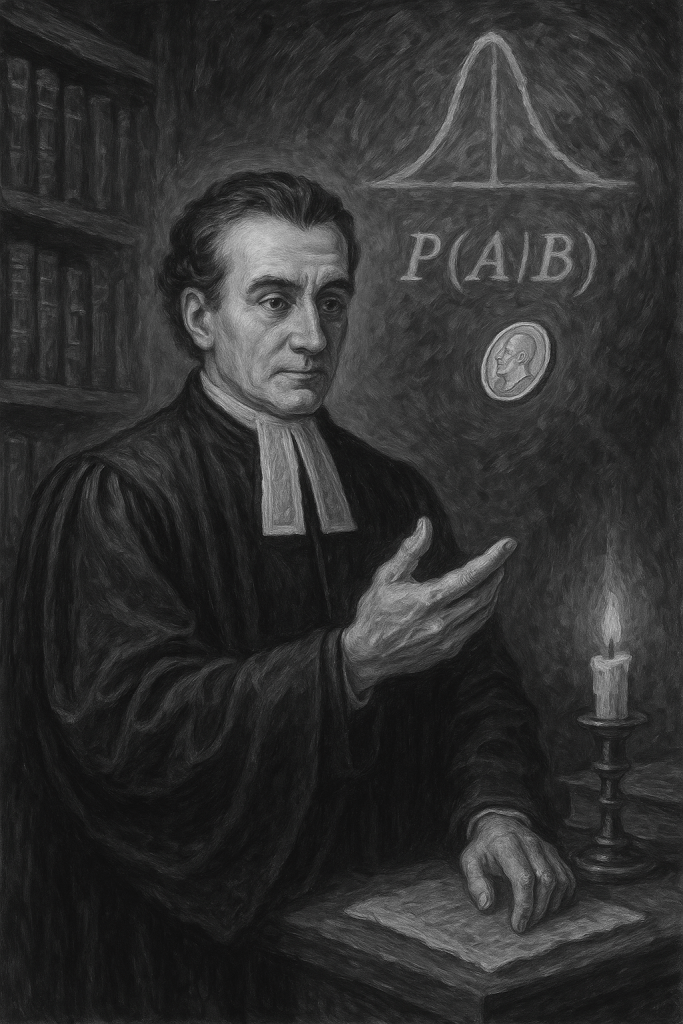
In today’s post, I am exploring the nature of probability. Is probability an intrinsic feature of events that evolves over time, or is it something else entirely? My view is that probability is best understood as a measure of an observer’s uncertainty that can change as new information becomes available, rather than as a property that events themselves possess.

Probability is not an intrinsic property of events that evolves over time. It is a measure of an observer’s uncertainty that changes as the observer gains new information.

This insight becomes clear when we consider what happens before and after an event of interest occurs. You might assign a 35% probability that your favorite team will win their championship match in 2025 based on their team, coaching staff, recent performance, and other factors. When your team does indeed win the championship in 2025, you no longer speak of a 35% chance afterward. You know they won, so your uncertainty about whether your team would capture the 2025 title is gone. The event itself has not changed. What has changed is simply your information about it.

This example reveals something fascinating. The event does not have a probability that flows through time. Your favorite team winning the 2025 championship does not possess an inherent “35% chance property” that somehow transforms into a “100% chance property” when they claim victory. Rather, probability expresses your epistemic state. It expresses what you know and do not know about the event. As your knowledge updates, so does the probability you assign.

Before the season, the probability of 35% captured your uncertainty given incomplete information about how this specific championship race would unfold. After they win, your uncertainty about whether your team won the 2025 championship disappears because you have complete information about this particular outcome. The players were competing and making decisions throughout the season, but your knowledge of the final result was incomplete and then became complete. Probability tracks this change in knowledge, not a change in the event itself.

Your favorite team winning the 2025 championship is a singular, unrepeatable event. This singularity principle applies to every event, whether it is the outcome of a coin toss or whether you miss a train. Even when we consider the 2026 championship, that represents a completely separate event requiring its own probability assessment. You might again assign some probability to your team winning in 2026, but this concerns a different season with different players, different opponents, and different circumstances. The fact that your team won in 2025 provides information that might influence your assessment of their 2026 chances, but each championship stands as a distinct event with its own associated uncertainty.

Different philosophical schools interpret probability in various ways. Frequentists focus on long-run patterns, while others emphasize physical propensities in systems. I adopt the Bayesian perspective here, which treats probability as quantifying an observer’s degree of belief about uncertain outcomes. This framework excels at handling partial information and belief updating as new evidence arrives.

The Bayesian approach formalizes how rational observers should revise their beliefs. You start with a prior probability based on available information. When new evidence arrives, Bayes’ theorem shows how to calculate an updated posterior probability, which then serves as the prior for the next update. Certainty represents probability at its extremes (belief of 1 or 0), but most real-world knowledge involves intermediate probabilities reflecting justified but incomplete information.

Let us return to the championship example with this framework in mind. Your initial 35% probability assignment reflects partial knowledge about the 2025 season that remains open to revision. When your favorite team wins the championship, your belief updates to certainty: probability 1. This transition represents a shift in your epistemic state, not a change in some objective property of the championship outcome. The probability assigned to the event changes only because your information changes.

Your team winning the 2025 championship might influence how you assess their chances for future seasons, but each championship represents a separate event. The 2026 championship is not the same event as the 2025 championship because it involves different circumstances, different player development, different opponents, and different strategic decisions that create their own uncertainty. Your experience from the 2025 season provides information for assessing future championship races, but the probability you assign to the 2026 contest addresses a distinct event with its own epistemic challenges.

Once an event’s outcome becomes known, assigning forward-looking probabilities to that specific completed event loses predictive meaning. However, probabilities retain important roles in other contexts. We use explanatory probabilities to reason about hidden causes of observed effects, and counterfactual probabilities to explore alternative scenarios for learning and decision-making. These applications all involve managing uncertainty about things we do not fully know.

Some philosophers argue for objective chances embedded in physical reality, claiming that the world itself has genuine probabilistic features. Even these can be understood through a Bayesian lens as rational betting odds conditioned on our best current knowledge about physical laws and initial conditions. From this epistemic perspective, probability fundamentally reflects our relationship to knowledge and uncertainty, not immutable features of external events.

Understanding probability as observer-dependent rather than event-dependent has practical implications. It explains why different people can reasonably assign different probabilities to the same event because they possess different information. It clarifies why probabilities can seem to “change” as we learn more: our knowledge evolves while events themselves follow deterministic or genuinely random processes. Most importantly, it positions probability as a dynamic tool for rational reasoning under uncertainty rather than a mysterious property that events carry through time.

Finally, it is important to recognize that while our beliefs may remain probabilistic, our decisions in the real world must ultimately resolve into binary choices. We decide to carry an umbrella or not, to take the highway or not, to treat a patient or not. Practical action demands that we collapse our probabilistic beliefs into definitive commitments. This reinforces that probability serves as a bridge between uncertainty and action, not as a property that events carry through time.

Final Words:

This epistemic view of probability transforms how we think about uncertainty and prediction. Rather than searching for probabilities “out there” in the world, we recognize them as tools for managing our own knowledge and ignorance.

As Pierre Simon Laplace eloquently put it: “Probability theory is nothing but common sense reduced to calculation.”

Once we embrace probability as a measure of what we know rather than what events are, we can use it more effectively as the rational tool it was always meant to be.

Always keep learning…
The Arbitrariness of Objectivism:

The readers of my blog might be aware that I appreciate the nuances of cybernetic constructivism. Cybernetic constructivism rejects the idea that we have access to an objective reality. It does not deny that there is an external reality independent of an observer. However, we do not have direct access to it. Additionally, the external world is more complex than us. As part of staying viable, we construct a version of reality that is unique to our interpretative framework. This takes place in a social realm, and error corrections happen because the construction occurs in the social realm.

Heinz von Foerster, the Socrates of Cybernetics, formulated two imperatives that provide insight into this framework. The first is the ethical imperative that states “act so as to increase the number of choices.” The second is the aesthetical imperative that states “if you desire to see, learn how to act.” I welcome the reader to check out previous posts on these concepts. This worldview supports pluralism, the idea that there can be multiple valid versions of reality. This emerges primarily because the external world being more complex than our cognitive apparatus, we maintain viability by constructing particular versions of reality rather than accessing reality directly.

Common Mischaracterizations:

A primary criticism I encounter involves misrepresenting this worldview as relativism or solipsism. Critics suggest that acknowledging multiple perspectives means that anything goes, or that nothing is shared between observers. This represents a caricature rather than a substantive critique.

Precision is necessary here. Some forms of relativism claim that all views are equally valid, including contradictory ones. In that model, if claim A asserts “only A is valid,” then relativism must also treat that assertion as valid. It has no mechanism for comparison or critique. The result is a flattening of all claims into mere equivalence, where strength, coherence, or context carry no weight.

Solipsism advances an even more extreme position. It claims that only one’s own mind is knowable, denying shared reality altogether. It discards the very possibility of meaningful intersubjectivity. No systems thinker, and certainly no pluralist, takes this position seriously.

Pluralism as a Distinct Position:

Pluralism is neither relativism nor solipsism. It does not claim all views are valid. Rather, it asserts that no view is valid by default. Pluralism insists that perspectives must be made visible, situated in context, and evaluated through dialogue. It resists automatic authority, including authority derived from its own assertions.

Consider what objectivism accomplishes by contrast. It selects a single claim and declares that only this claim is valid while all others are not. But on what basis does it make this selection? Often, no external justification is offered. The grounding remains internal, context-bound, or inherited, yet it is presented as if it were neutral, universal, and self-evident.

This selection process reveals a potential arbitrariness of objectivist claims. The view appears arbitrary because its assumptions may remain hidden from examination. Without transparent justification for why one view should be privileged, objectivism risks the appearance of arbitrariness. What presents itself as necessity may simply be preference in disguise. From a pluralist standpoint, this represents concealment rather than clarity.

The Paradox of Objectivist Authority:

Paradoxically, this form of objectivism begins to mirror the very relativism it claims to oppose. Relativism declares that all claims are valid, including any particular claim A. Objectivism declares that only claim A is valid while offering no method to interrogate why this should be so. Each approach shuts down evaluation through different mechanisms. Relativism dissolves differences into sameness. Objectivism excludes all but one view from consideration at the outset.

This dynamic reveal what objectivism risks becoming, not solipsism in the strict philosophical sense, but functional solipsism. When a worldview refuses to acknowledge its own perspective and denies legitimacy to all others, it ceases to see the world. It sees only itself, reflected and reinforced. This represents the erasure of other ways of seeing under the illusion that one’s own interpretative lens is the world itself.

The Hidden Nature of Objectivist Claims:

The danger of objectivism lies in its method: selecting a single view, designating it as truth, and treating alternatives as error, noise, or confusion. It dresses up a personal, historical, and situated position as universal and eternal. This approach is not more objective than pluralism. It is simply better concealed.

Frameworks that prioritize ontology over epistemology tend to overlook the epistemic humility that characterizes pluralism. When we claim to know what reality is before examining how we come to know it, we bypass the very process of inquiry that might reveal the limitations and situatedness of our perspective. This ontological presumption becomes particularly problematic when it denies its own epistemological foundations.

Pluralism does not collapse into solipsism. Objectivism risks this collapse precisely when it denies that it operates from a particular perspective. The refusal to acknowledge one’s interpretative framework does not eliminate that framework. It merely renders it invisible to examination.

Pluralism is not weakness, indecision, or relativistic drift. It represents a disciplined humility and a refusal to collapse complexity into certainty prematurely. It does not reject standards but demands that they be made visible, questioned, and held accountable to the context in which they arise.

Pluralism increases the space for dialogue, choice, and possibility. It reminds us that what we do not question becomes invisible, not because it is true, but because it hides within the taken-for-granted assumptions of our frameworks.

In a world increasingly polarized between loud certainties and quiet disillusionment, pluralism offers something increasingly rare: the courage to remain open, to ask how we know what we claim to know, and to stay in conversation with perspectives we might otherwise reject.

Final Words:

Not everything is permissible under pluralism. But no single view should escape questioning. The cybernetic constructivist position maintains that our constructions of reality emerge from our particular biological, cognitive, and social constraints. These constructions prove viable not because they correspond to an objective reality we cannot access, but because they enable us to navigate the complexity we encounter.

I will finish with a quote from Heinz von Foerster:

Objectivity is the delusion that observations could be made without an observer.

The task before us is not to eliminate the observer but to acknowledge the observer’s role in every observation. This acknowledgment does not lead to relativism or solipsism. It leads to a more rigorous understanding of how knowledge emerges from the interaction between observer and observed within particular contexts and constraints.

Always keep learning.

The Form of Decency

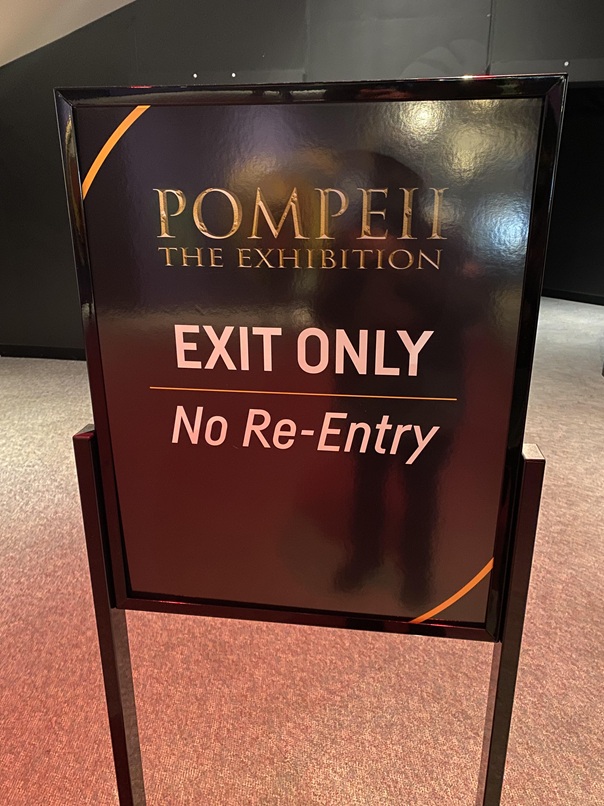
At a recent exhibition, I saw a sign that read: “Exit Only. No Re-Entry.” It seemed not just as a logistical instruction but as a metaphor. Around the same time, I came across a photo of a sign demanding that people speak the local dialect. What struck out to me was that the sign was written in English. These moments echoed something I have long been thinking about: the contradictions that arise when our distinctions fold back on themselves, what George Spencer-Brown called “reentry.”

I am a longtime admirer of Spencer-Brown’s Laws of Form, and in today’s post, I explore how his notion of reentry helps illuminate the paradoxes and blind spots in modern ideologies, especially the rise of xenophobia and extreme nationalism. These rigid ideologies depend on distinctions between us versus them, lawful versus unlawful that appear neat but collapse under their own logic when viewed recursively. We pretend we are only exiting, drawing sharp lines, while ignoring the inevitability and necessity of reentry in our sensemaking.

Drawing Distinctions

Spencer Brown opened his mathematical-philosophical treatise with a simple instruction: Draw a distinction. This simple act of marking a boundary between “this” and “that” forms the foundation of how we structure knowledge, meaning, and identity. We create categories and define what is “in” and what is “out.” This is how form arises through distinction.

In Laws of Form, he also introduced the notion of reentry: the act of folding a distinction back into itself. Simply put, this is a self-referential act. By doing this, the tidy separations we created begin to blur. This move, abstract as it sounds, has powerful consequences for how we think, live, and treat each other. Especially in a world torn by polarization, nationalism, and fear of the “other,” reentry reveals the paradoxes that rigid ideologies try to hide and points us toward a more humane way of navigating complexity.

The Pot and the Form

Let us use a simple example to understand the form better. Consider a pot of boiling water. Here, we can make three identifications:

  • Pot = the mark, or the distinction
  • Water inside the pot = what is indicated, the marked space, the inside
  • Outside the pot = the unmarked space, the outside

Together, all three constitute the form. The pot, as a boundary, plays the role of the mark in Spencer-Brown’s terms. It creates a distinction between what is inside and what is outside. The pot itself is not part of what is inside; it is what makes “inside” possible by drawing a boundary. The mark exists in a meta-position: it defines inside and outside but cannot be reduced to either. It is the operation of drawing the distinction. The pot allows us to interact with what is inside and allows what is inside to interact with the surroundings.

We can use the same example to introduce reentry. Imagine placing that pot inside another pot, creating a double boiler. The inner pot is held by the outer one. The boundary remains, but now it is nested and refers to something beyond itself. This is reentry: when a form does not just define something but begins to refer to its own act of defining. This becomes an act of second-order observation. In the double boiler metaphor, the inner pot (the reentered form) exists within the outer pot (the original distinction), creating a ‘system’ that is both distinct and self-contained.

Reentry challenges the simplicity of binary logic, revealing that ‘systems’ can be self-referential and dynamic. This concept is pivotal in understanding complex systems, where elements influence and are influenced by themselves.

The Purpose of Reentry: Revealing Cognitive Blind Spots

We love binaries: true/false, us/them, lawful/unlawful. But reentry destabilizes these neat categories. Who defines what is “lawful”? The law itself. When the law governs the making of laws (as in constitutional law), we enter a recursive loop. What is legal becomes a matter of interpretation, not clarity. The binary collapses into ambiguity. Reentry shows us that binaries are useful simplifications, not absolute truths. Dogmatic ideas rely on such binaries, and reentry becomes an effective tool for challenging dogma.

Similarly, in language, terms like “normal” are defined by cultural norms, which are themselves shaped by collective perceptions of normality. This circularity demonstrates how meanings are not fixed but evolve through self-reference. Reentry is not merely a logical twist. It reveals something crucial about how we construct meaning.

When we draw a distinction between “lawful” and “unlawful,” we assume clarity. But as soon as we ask who defines the law and realize it is the law itself, we see that the boundary is recursive. It defines itself. This is not a flaw but a feature of complexity.

The Second-Order View: Observing Observation

This leads us to second-order thinking: the act of observing the act of observing. In logic, when a ‘system’ includes itself in its model, it can become unstable. However, it also owns its position. Blind spots can be revealed, opening the door to creativity, paradox, and deeper understanding. Reentry is how we shift from first-order systems (clear categories, fixed forms) to second-order ones (reflexivity, contradiction, emergence). It is how we move from saying “we are right” to asking “how do we know?”

As the cybernetician Heinz von Foerster observed: “The observer must be included in the observed system.”

This represents the leap from first-order thinking (observing the world) to second-order thinking (observing how we observe). Reentry is the mechanism of that leap. Recognizing and thinking along the lines of reentry is deeply needed today because some of the most dangerous ideas we face rely on distinctions that collapse under their own logic.

Reentry and the Illogic of Xenophobia

Xenophobic ideologies often define “us” versus “them,” asserting superiority or purity. However, when these distinctions undergo reentry, when the criteria for inclusion are applied to the in-group, they often fail to hold consistently. Similar to the sign that demanded the use of the local dialect but was written in English, xenophobic logic contradicts itself when examined through reentry.

What does it mean to be a person from country “X”? Is it geography? Culture? Language? Legal status? Values? The more we examine these criteria, the fuzzier they become. Yet we use such labels as if they were clean boundaries, pots that perfectly contain identity. Reentry challenges this assumption by turning the form inward.

If being from country “X” means standing for freedom, justice, and decency, how can one uphold those values while treating outsiders with cruelty? If your culture preaches respect, how can you use that culture to justify disrespect? If your national identity is built on moral ideals, then those ideals must apply to how you treat everyone, not just those inside your imaginary boundaries.

Bigotry collapses under reentry. Its internal logic folds in on itself. The principle violates the practice. The mirror reflects itself and reveals the contradiction. Racism, xenophobia, and nationalism, when examined through the lens of reentry, are not just morally wrong. They are logically incoherent.

The Ethical Need for Redundancy

In complex systems, one of the most powerful safeguards is redundancy. In engineering, redundancy prevents collapse. In ethics, it serves the same function.

Hope is redundancy in action, as are other humanistic notions such as kindness, compassion, and forgiveness. These are not luxuries; they are second-order buffers. They activate when logic stalls. They hold the ‘system’ together when paradox threatens to tear it apart. Reentry exposes the instability of our forms. Redundancy helps us live with that instability.

Ethical redundancy functions like the inner pot in a double boiler. It buffers the heat. It allows care to emerge where rigidity would cause harm. It creates space for ambiguity, reflection, and repair. This is why, in the face of bigotry and rigid ideologies, we must design for ethical reentry. We must build in second chances. We must speak gently even when the logic breaks.

Final Words

In a world obsessed with efficiency, clarity, and being right, reentry is a radical act. It turns the ‘system’ inward. It reveals our blind spots. It shows us where our ideals betray themselves. But reentry does more than expose contradictions; it opens pathways to wisdom. When we embrace reentry, we move from the arrogance of first-order certainty to the humility of second-order inquiry.

The rise of extreme nationalism and xenophobia reflects our collective failure to practice reentry. These ideologies thrive on the illusion of clear boundaries, pure identities, and simple answers. They collapse when subjected to their own logic, but only if we have the courage to apply that logic. Only if we are willing to let our mirrors reflect.

Reentry teaches us that our most cherished distinctions are provisional, our certainties are constructed, and our boundaries are more porous than we dare admit. This is not cause for despair but for hope. It means we can rebuild. We can redesign. We can choose compassion over cruelty, and in that act, we can stay human.

In the end, reentry invites us to remain human and to include kindness as a design principle, building ‘systems’ that can reflect on themselves without breaking. It asks us to hold our beliefs lightly enough that they do not harden into weapons, yet firmly enough that they can guide us toward justice. This is the form of decency: recursive and reflective.

Always keep learning…

Get a Grip on It:

Complexity is a matter of degree and not a kind. – Glenda Eoyang

In today’s post, I am exploring the importance of incorporating diversity when navigating complex environments. I have written previously about the seductive appeal of efficiency and how its blind pursuit can leave us exposed. Efficiency asks us to optimize for known outcomes. It assumes a world where inputs are controlled and variation is minimized. But reality is rarely that generous. It is textured, layered, and in motion. It offers few clean edges and rarely repeats itself in neat loops. As leaders, we are asked to shape structures that can stay viable in this kind of world. The overuse of efficiency in such contexts does not make us leaner or smarter—it often makes us brittle.

We often design as though the ground is level. As if everyone begins from the same place, with the same tools, the same reach, the same slack. But the ground is not level. It has never been. Some people begin with more; more access, more time, more tolerance from the structure. Others begin already contending with friction. Not because they lack capability, but because the design was not shaped with them in mind. This is not just an ethical issue. It is a design one.

In complexity, uniformity fails fast. In simple, symbolic systems—code, logic, procedures—uniformity can be a virtue. The terrain is controlled. The inputs are known. The environment is stable enough to reward sameness. But in complexity—where causes are fuzzy, signals are noisy, and context moves mid-sentence—we need something else. We need grip.

Reality Requires Grip

Reality rarely presents itself in tidy ways. It offers no singular handle for us to grab. Instead, it throws contradictions, mismatched signals, and unexpected constraints. We cannot hold it with one kind of mind, one kind of framework, or one kind of experience. The more varied the terrain, the more varied our grasp must be.

That grip—our capacity to make meaningful contact with complexity—comes from difference. It comes from a range of perspectives, a mix of sensibilities, a spread of lived experiences. It comes from people who notice different things, who ask different questions, who move through the world in different ways. This does come with a cost. Uniform structures may look clean and run fast, but they tend to crack under pressure. Diverse structures take longer to build, but they flex, adapt, and hold when things shift.

Ross Ashby reminded us that only variety can absorb variety. If the environment can surprise us in a hundred ways, then our ‘systems’ must be able to respond in at least a hundred ways. If not, the environment ‘wins’.

We often treat diversity as an accessory, something to be added after the main frame is in place. But in complexity, diversity is not decorative. It becomes load-bearing. The differences give the structure grip, not inward but outward, allowing it to hold against the irregularities of reality. They create structural tension and enable edge awareness. This awareness helps us notice early signals, those subtle cues that something is shifting. The presence of difference prevents the system from becoming complacent, blind, or brittle. Diversity introduces stretch that resists premature closure, while expanding the system’s capacity to perceive what is happening at its limits, where breakdowns often tend to begin.

A monoculture in nature may appear efficient. For example, fields of identical crops may offer predictability, ease of control, and optimized yield when conditions remain stable. But this sameness introduces a hidden fragility. A single disease, an unexpected frost, or a sudden shift in climate can cause the entire network to fail, because uniformity amplifies vulnerability. In contrast, a wild field may seem chaotic or inefficient, yet its diversity in root structures, growth patterns, and tolerances create resilience. When conditions change, not everything is affected in the same way. Some parts fail, while others adapt. The ‘system’ bends, but it does not break.

This is more than an ecological insight. It is a way of thinking about how we organize and sustain ourselves. When a team, a community, or a structure relies on sameness, it may function smoothly in predictable conditions, but it lacks the range to respond when reality becomes more complex. Diversity—cognitive, experiential, and demographic—broadens a group’s capacity to interpret change, adjust course, and stay viable over time. In environments where uncertainty is the rule and control is limited, it is this range that gives the whole arrangement a better grip on reality.

Designing From the Blind Spot

We tend to build from what is visible, measurable, and familiar. We optimize for what is easy to test. But what gets left out often matters more than what gets built in. And too often, the people left out are the ones already carrying the most structural friction. We tend to think of inclusion as a moral gesture. A choice to be kind or fair. When we design only for those already well-positioned, we do not just exclude, we weaken the design itself.

We create brittle solutions, ones that quietly assume access, literacy, capacity, forgiveness. We optimize for efficiency and familiarity, and miss the parts that strain under real-world pressure. But when we start from the edges—from those who live with constraint—we see what the structure hides. We start to notice the steps that are too steep, and that the protocols assume too much. Fixing for them is not just being humane. It becomes diagnostic work. It is how we surface the assumptions that compromise integrity. It is how we build arrangements that do not crack when things get uneven, which they always do.

Final Words

Heinz v on Foerster said:

Act always so as to increase the number of choices.

Maybe the corollary to that is:

Design as if you might be the one with the least choice.

That is not a political statement. It is a practical one. When we build for those with the least slack, we tend to uncover the most insight. And when we design from the blind spot, we do not just fill a gap—we often strengthen the whole. Designing for the most vulnerable builds in the redundancy that makes a structure resilient. When you build in space for the person who cannot read the form, who does not have time to wait, who misses the signal the first time—we are not just helping them. We are making the whole arrangement more resilient.

This is because the real world is not clean. Things fail, contexts shift and people miss a step. And if our design cannot bend in those moments, it will break.

In complex arrangements, redundancy is what keeps the structure whole. Not all paths will be smooth. Not all users will match the ideal profile. Not all steps will land perfectly the first time. This means that we should build space for detours, retries, and second chances. That is not inefficiency. That is how we build resilience. Redundancy is not the opposite of elegance or efficiency. It is the thing that lets the design bend without breaking.

I will finish with one of my favorite quotes from Doctor Who:

Human progress is not measured by industry. It is measured by the value you place on a life. An unimportant life. A life without privilege. The boy who died on the river, that boy’s value is your value. That is what defines an age, that is… what defines a species.

Always keep learning…

Absurdity in Systems Thinking

In today’s post, I am looking at absurdity in Systems Thinking. Absurdity is an official term used in the school of philosophy called existentialism. An existentialist believes that existence precedes essence. This means that our essence is not pregiven. Our meaning and purpose are that which we create. In existentialism, the notion of absurdity comes from the predicament that we are by nature meaning makers, and we are thrown into a world devoid of meaning. We do not have direct access to the external world; therefore, our cognitive framework has been tweaked by evolution to seek meaning in all perturbations we encounter. We are forever trying to make sense of a world devoid of any sense or meaning.

We like to imagine that there is greater meaning to this all and that there is a “system” of objective truths in this world. In this framework, we all have access to an objective reality where we can use 2 x 2 matrices to solve complex problems. In the existentialist framework, we see that instead of a “system” of objective truths, we have multiplicity of subjective truths. Soren Kierkegaard, one of the pioneers of existentialism, viewed subjective truth as the highest truth attainable.

When we talk about a “system” we are generally talking about a collection of interrelated phenomena that serves a purpose. From the existentialism standpoint, every “system” is a construction by someone to make sense of something. For example, when I talk about the healthcare system, I have a specific purpose in mind – one that I constructed. The parts of this system serve the purpose of working together for a goal. However, this is my version and my construction. I cannot act as if everyone has the same perspective as me. I could be viewing this as a patient, while someone else, say a doctor, could see an entirely different “system” from their viewpoint. Systems have meaning only from the perspective of a participant or an observer. We are talking about systems as if they have an inherent meaning that is grasped by all. When we talk about fixing “systems”, we again treat a conceptual framework as if they are real things in the world like a machine.  The notion of absurdity makes sense here. The first framework is like what Maurice Merleau-Ponty, another existential philosopher, called “high-altitude thinking”.  Existentialism rejects this framework. In existentialism, we see that all “systems” are human systems – conceptual frameworks unique to everyone who constructed them based on their worldviews and living experiences. Each “system” is thus highly rich from all aspects of the human condition.

Kevin Aho wrote about this beautifully in the essay, “Existentialism”:

By practicing what Merleau-Ponty disparagingly calls, “high-altitude thinking”, the philosopher adopts a perspective that is detached and impersonal, a “God’s eye view” or “view from nowhere” uncorrupted by the contingencies of our emotions, our embodiment, or the prejudices of our time and place. In this way the philosopher can grasp the “reality” behind the flux of “appearances,” the essential and timeless nature of things “under the perspective of eternity” (sub specie aeternitatis). Existentialism offers a thoroughgoing rejection of this view, arguing that we cannot look down on the human condition from a detached, third-person perspective because we are already thrown into the self-interpreting event or activity of existing, an activity that is always embodied, felt, and historically situated. 

We are each thrown here into the world devoid of any meaning, and we try to make meaning. In the act of making sense and meaning, we tend to believe that our version of world and systems are real. We often forget to see the world from others’ viewpoints.

Every post about Systems Thinking must contain the wonderful quote from West Churchman – the systems approach begins when first you see the world through the eyes of another. This beautifully captures the essence of Systems Thinking. Existentialism teaches us to realize the absurdity of seeking meaning in a world devoid of any meaning, while at the same time realizing that the act of seeking meaning itself is meaningful for us.

Always keep on learning!

References:

[1] Aho, Kevin, “Existentialism”, The Stanford Encyclopedia of Philosophy (Summer 2023 Edition), Edward N. Zalta & Uri Nodelman (eds.), URL = <https://plato.stanford.edu/archives/sum2023/entries/existentialism/&gt;.

An Existentialist’s View of Complexity:

Art by NightCafe

In my post today, I am looking at the idea of complexity from an existentialist’s viewpoint. An existentialist believes that we, humans, create meanings for ourselves. There is no meaning out there that we do not create. An existentialist would say, from this viewpoint, that complexity is entirely dependent upon an observer, a meaning maker.

We are meaning makers, and we assign meanings to things or situations in terms of possibilities. In other words, the what-is is defined by an observer in terms of what-it-can-be. For example, a door is described by an observer in terms of what it can be used for, in relation to other things in its environment. The door’s meaning is generated in terms of its possibilities. For example, it is something for me to enter or exit a building. The door makes sense to me when it has possibilities in terms of action or relation to other things. This is very similar to the ideas of Gibson, in terms of “affordances”.

In existentialism, there are two concepts that go hand in hand that are relevant here. These are “facticity” and “transcendence”. Facticity refers to the constraints a subject is subjected to. For example, I am a middle-aged male living in the 21st century. I could very well blame my facticity for pretty much any situation in life. Transcendence is realizing that I have freedom to make choices to stand up for myself to transcend my facticity and make meaning of my own existence. We exist in terms of facticity and transcendence. We are thrown into this world and we find ourselves situated amidst the temporal, physical, cultural and social constraints. We could very well say that we have a purpose in this world, one that is prescribed to us as part of facticity or we can refer to ourselves to enable us to transcend our facticity and create our own purposes in the world.

In the context of the post, I am using “facticity” to refer to the constraints and “transcendence” to refer to the possibilities. Going back to complexity and an observer, managing complexity is making sense of “what-is” as the constraints, in terms of “what-it-can-be” as the possibilities. We describe a situation in terms of complexity, when we have to make meaning out of it. We do so to manage the situation – to get something out of it. This is a subject-object relationship in many regards. What the object is, is entirely dependent on what the subject can afford. When one person calls something as complex, they are indicating that the variety of the situation is manifold than what they can absorb. Another subject (observer) can describe the same object as something simple. That subject may choose to focus on only certain attributes of the situation, the attributes that the subject is familiar with. Anything can be called as complex or simple from this regard. As I have noted before, a box of air can be as complex as it can get when one considers the motion of an air particle inside, or as simple as it can get when one considers it as a box of “nothing”. In other words, complexity has no meaning without an observer because the meaning of the situation is introduced by the observer.

A social realm obviously adds more nuance to this simply because there are other meaning-makers involved. Going back to existentialism, we are the subject and at the same time objects for the others in the social realm. Something that has a specific meaning to us can have an entirely different meaning to another person. When we draw a box and call that as a “system”, another person can draw a different box that includes only a portion of my box, and call that as the same “system”. In the social realm, meaning-making should be a social activity as well. It will be a wrong approach to use a prescribed framework to make sense because each of us have different facticities and what possibilities lie within a situation are influenced by these facticities. The essence of these situations cannot be prescribed simply because the essence is brought forth in the social realm by different social beings. A situation is as-is with no complexity inherent to it. It is us who interact with it, and utilize our freedom to assign meaning to it. I will finish off with a great quote from Sartre:

Human reality everywhere encounters resistance and obstacles which it has not created, but these resistances and obstacles have meaning only in and through the free choice which human reality is.

Stay safe and always keep on learning…

In case you missed it, my last post was Plurality of Variety:

A Saint and a Leader:

Art by Dall-E

This is available as part of a book offering that is free for community members of Cyb3rSynLabs. Please check here (https://www.cyb3rsynlabs.com/c/books/) for Second Order Cybernetics Essays for Silicon Valley. The ebook version is available here (https://www.cyb3rsyn.com/products/soc-book)

Stay safe and always keep on learning…

In case you missed it, my last post was Informational Closure in the Human and the Machine: