The Magical “All Possibilities”:

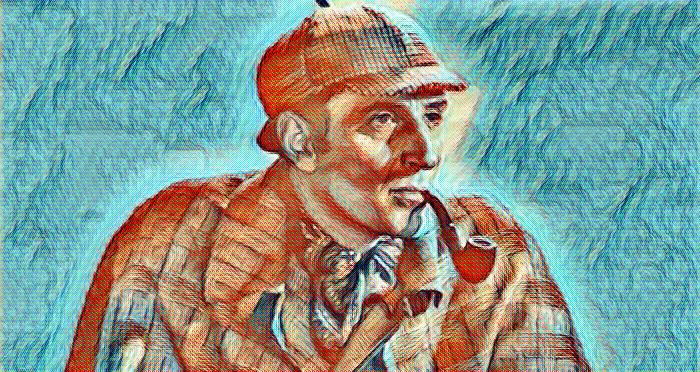
When you have eliminated all which is impossible, then whatever remains, however improbable, must be the truth. – Holmes

Imagine that you have a coin in your hand, and you are throwing it up in the air. How would you assign probabilities for the outcome? Generally, we are taught that a coin flip has a 50% chance of tails and 50% chance of heads, assuming that we are using a fair coin. The reasoning is that there are only two possible outcomes (heads, tails). Therefore, the probability of either one happening is 50%.

I have written about Bayesian epistemology before. If we evaluate the coin flip example, there is more going on here than meets the eye. The basis of all this is – from whose perspective? In Bayesian epistemology, probability is not a feature of the phenomenon such as the coin flip. The coin is not aware of the probabilities with which it should fall. The probabilities that we assign is a feature of our uncertainty, and it has nothing to do with the coin. In the example, only two outcomes were considered. Depending on the observer, this could be expanded. For example, we can consider the coin falling on its edge. Or perhaps, the coin may not land at all if we can imagine a bird catching it in midair and swallowing it, or it could be that the coin is being thrown in space. Based on our experience, we may conclude that the last two scenarios are unlikely. But the key points here are:

  1. Every description requires a describer. Every observation requires and observer. In science and in general language, we ignore the describer/observer. We engage in conversation or studies as if, we have access to objectivity. The science we have is a human science in the sense that it is a version that we have generated based on what our human interpretative framework affords.
  2. We need to be aware of how we made our observation, and be open to modifying it. Whatever we say or do if based on the current state of our knowledge/belief system. This needs to be updated based on the feedback from the environment.
  3. Any attempt at an experiment or study is to reduce our uncertainty about something. Going back to Bayesian epistemology, any expression in probability is an expression of our uncertainty. The phenomenon that we are studying are not following any rules. They do not have a mind of their own. We are projecting our “certainties” as rules onto them. A great example is the often-quoted scenario of birds flocking together to explain complexity. The birds do not know these rules. They exhibit a behavior that got reinforced through natural selection. The rules are our merely a projection of what we think is going on. In other words, the complexity of the flight of birds coming from the simple rules is just our construction.

The idea of “all the possibilities” is made quite clear in the Arthur Conan Doyle quote at the start of this post. This quote is often touted in TV shows and movies alike. However, the quote represents a fallacious idea, the root of which stems from an incorrect assumption. The assumption here is that one can eliminate ALL which is impossible. Similar to the coin toss example, this depends on the observer and their ability to know ALL that can happen, which requires omniscience. Additionally, one has to disprove every one of those possible outcomes. Only after this can one truly look at whatever remains. Aptly, this fallacy is termed as “Holmesian Fallacy”. We simply do not have access to ALL possibilities.

In Cybernetics, a key idea that is relevant here is variety. Variety is the number of possible states. This was put forward by one of the pioneers in Cybernetics, Ross Ashby. For example, we could say that a coin has a variety of 2 – heads or tails. Or we could say that a coin has a variety of 3 – heads, tails or its edge. As we can see the variety is dependent upon the observer. Being aware of this dependency is part of second order cybernetics. If we could restate the definition of variety in second order cybernetics, it would be – variety is the number of possible states as perceived by an observer. Variety is tightly linked to the concept of entropy.

Ashby noted that the initial variety that we have perceived will tend to decay over time if nothing changes. A great example that Ashby gives is the example of a wife visiting a prisoner. Let’s say that the wife wishes to convey a message to the prisoner using a cup of coffee that she can send to him. The warden is smart and he foretells the wife that he will add cream and sweetener to the coffee, and will also remove the spoon from the coffee. In addition, the coffee will always be filled to the brim. The warden has removed a lot of variety from the cup of coffee. The wife realizes now that the available variety that she has is to do with how hot the coffee is. She perceives the variety as 3 – HOT, TEPID or COLD. However, the warden is able to block this with time. If the warden is able to delay giving the coffee to the prisoner, then this variety is also lost. As Ashby put it, as time progresses the variety in the set cannot increase and will usually diminish.

On a similar note, Ashby also spoke of the law of experience. He noted that when we impose a change in a ‘system’, we tend to reduce its knowledge of its initial state or variety. The example he gave is that of a group of boys who have been to the same school – it is found that a number of boys of marked individuality, having all been through the same school, develop ways that are more characteristic of the school they attended than of their original individualities.

If we are including the idea of observer here, we see the “system” as the “system” that also includes the observer. This brings in a self-referential nature to this. If nothing changes, then our useful information regarding a phenomenon will either stay the same or decay over time. The useful variety that we have perceived will remain a constant or will decay over time. In addition, as the observer, we ourselves tend to fall along a line or conform to whichever tribe or community we belong to. We lose our original variety with time. The first step in overcoming these is to be aware. Be aware of our blindness; be aware of our limitations and biases; be aware of our shortcomings. We have to be aware that we do not have knowledge of “ALL possibilities”. We have to be open to challenging our worldviews. We have to evaluate and error-correct our beliefs on a regular basis. We do not perform error-correction on a continuous basis, but on a discontinuous basis.

I will finish with an anecdote on the apparent randomness of quantum mechanics that prompted Einstein to say that God does not play dice. As noted Italian physicist Carlo Rovelli wrote:

When Einstein objected to quantum mechanics by remarking that “God does not play dice,” Bohr responded by admonishing him, “Stop telling God what to do.” Which means: Nature is richer than our metaphysical prejudices. It has more imagination than we do.

Einstein was worried about the uncertainties he faced with quantum mechanics and he noted that the metaphorical God does not play dice like that. In a similar way the late Stephen Hawking noted:

So God does play dice with the universe. All the evidence points to him being an inveterate gambler, who throws the dice on every possible occasion… Not only does God definitely play dice, but He sometimes confuses us by throwing them where they can’t be seen. 

Stay safe and always keep on learning… In case you missed it, my last post was The “Mind Projection Fallacy” in Systems Thinking:
The “Mind Projection Fallacy” in Systems Thinking:
This is available as part of a book offering that is free for community members of Cyb3rSynLabs. Please check here (https://www.cyb3rsynlabs.com/c/books/) for Second Order Cybernetics Essays for Silicon Valley. The ebook version is available here (https://www.cyb3rsyn.com/products/soc-book)

Stay safe and always keep on learning…

In case you missed it, my last post was The Authentic Cybernetician:

The Authentic Cybernetician:

In today’s post, I am looking at the idea of “authenticity” in relation to existentialism. I am inspired by the ideas of Kierkegaard, Heidegger, Sartre and De Beauvoir. The title of this post may be misleading. From an existentialist standpoint, to talk about an authentic person is contradicting the very ideas it stands for. An existentialist believes that existence precedes essence. This means that our essence is not pregiven. Our meaning is something that we create. It is an ongoing construction. I do admit that I find the idea of an authentic cybernetician quite fascinating. I am exploring the idea of “authenticity” in existentialism with relation to cybernetics. As Varga and Guignon note:

The most familiar conception of “authenticity” comes to us mainly from Heidegger’s Being and Time of 1927. The word we translate as ‘authenticity’ is actually a neologism invented by Heidegger, the word Eigentlichkeit, which comes from an ordinary term, eigentlich, meaning ‘really’ or ‘truly’, but is built on the stem eigen, meaning ‘own’ or ‘proper’. So the word might be more literally translated as ‘ownedness’, or ‘being owned’, or even ‘being one’s own’, implying the idea of owning up to and owning what one is and does. Nevertheless, the word ‘authenticity’ has become closely associated with Heidegger as a result of early translations of Being and Time into English, and was adopted by Sartre and Beauvoir as well as by existentialist therapists and cultural theorists who followed them.

From an existentialist standpoint, authenticity has come to be associated with freedom and responsibility. Authenticity is about freedom – of self and others. We are responsible for our actions. Our existence is contingent on many things such as the time and place where we live, the society we live in etc. This is referred to as “facticity” in existentialism. We are not limited by this and we cannot live a life as defined by others. We are autonomous beings and we are able to unfold our lives based on our choices. Having said that we are always existing in relation to others. The “I” is in relation to others. I am a husband and a father; I am also an employee; I am also a friend and so on. The “I” is a stable construction that is continuously unfolded. I am continuously constructing a stable presentation of who I am to other people and to myself. Authenticity comes in when we become aware of all this, and when we strive for the freedom of others.

The idea of unfolding is an interesting idea. It has an undertone of potentiality. The term ‘potentiality’ refers to possibilities. At any given point in time, there are a large number of possibilities, some that we are aware of and many that we are not aware of. We have the freedom to choose the specific possibility and we have to be responsible for that choice. The notion of possibilities aligns with the notion of variety in cybernetics. Variety is the number of possible states of a ‘system’. When a ‘system’ has requisite variety, it is able to stay viable. As Ross Ashby, one of the key pioneers of cybernetics, put it – only variety can absorb variety. When the ‘system’ is able to use one of the many possible states it has, to tackle a specific demand imposed on it by the external world, it is able to stay viable. This is what is referred to as the “absorption” of variety. The ‘system’ should be able to identify the available possible states it has at its disposal. This requires the ‘system’ to have some knowledge of what each possible state can do or not do. This knowledge comes from previous experiences or past interactions. The states that worked will be retained by the ‘system’, and in some cases the ‘system’ will modify certain states while interacting with the external world through a learning situation. All these notions are part of first order cybernetics. I believe that the ‘authentic cybernetician’ should be more interested in second order cybernetics. As Heinz von Foerster put it, first order cybernetics is the cybernetics of observed systems, and second order cybernetics as the cybernetics of observing systems.

From the second order cybernetics standpoint, we are aware of the observing process itself. This means that we are aware of the observation of our act of observing – being aware that we have blind spots and that our observation is a construction based on our biases, experiential reality etc. This would also mean that we realize that there are others also involved in similar observations and constructions. Authenticity in existentialism is being aware of our facticity and the freedom that we have to make choices, and being responsible for our actions. The idea that we are constructing a version of reality, and that we are responsible for that construction is a key point in second order cybernetics. When I talk about ‘authentic cybernetician’, there might be an expectation that I should put forth a prescribed step-by-step formula for being an authentic cybernetician. This would be a first order viewpoint. Being authentic however, requires a second order approach. There is no prescribed methodology here. We are invited to be aware of how we are thrown into this world, and how we are situated here; how we are somewhat defined by our past actions and yet somehow, we are not necessarily bound by those actions. It is about improving our interpretative framework so that we can afford requisite variety.

I will finish with some wise words we should heed from Simone de Beauvoir:

We have to respect freedom only when it is intended for freedom, not when it strays, flees itself, and resigns itself. A freedom which is interested only in denying freedom must be denied. And it is not true that the recognition of the freedom of others limits my own freedom: to be free is not to have the power to do anything you like; it is to be able to surpass the given toward an open future; the existence of others as a freedom defines my situation and is even the condition of my own freedom.

Stay safe and always keep on learning…

In case you missed it, my last post was Affording What’s In Your Head:

Affording What’s In Your Head:

In today’s post I am looking at the idea of “affordances”. This term is attributed to the famous American psychologist, James J Gibson. A loose explanation of affordances is something that offers ‘action possibilities’ or ‘information possibilities’. For example, a seat with its solid and flat surface affords sitting. It also affords standing on it. Gibson explains:

The affordances of the environment are what it offers the animal, what it provides or furnishes, either for good or ill. The verb to afford is found in the dictionary, but the noun affordance is not. I have made it up. I mean by it something that refers to both the environment and the animal in a way that no existing term does. It implies the complementarity of the animal and the environment.

Gibson was making it very clear that affordances are not exclusively the properties of something. They are the possibilities that are perceived by a user. What is perceived constitutes the affordances. His view was that values and meanings of things in environment can be directly perceived. He did not put the liability for the affordance solely on the object, nor did he put it solely on the observer. He put it instead right in the middle.

An important fact about the affordances of the environment is that they are in a sense objective, real, and physical, unlike values and meanings, which are often supposed to be subjective, phenomenal, and mental. But, actually, an affordance is neither an objective property nor a subjective property; or it is both if you like. An affordance cuts across the dichotomy of subjective-objective and helps us to understand its inadequacy. It is equally a fact of the environment and a fact of behavior. It is both physical and psychical, yet neither. An affordance points both ways, to the environment and to the observer. 

Gibson expands on the example of the seat:

If a surface of support with the four properties (horizontal, flat, extended, and rigid) is also knee-high above the ground, it affords sitting on… We call it a seat in general, or a stool, bench, chair, and so on, in particular. It may be natural like a ledge or artificial like a couch. It may have various shapes, as long as its functional layout is that of a seat. The color and texture of the surface are irrelevant. Knee-high for a child is not the same as knee-high for an adult, so the affordance is relative to the size of the individual. But if a surface is horizontal, flat, extended, rigid, and knee-high relative to a perceiver, it can in fact be sat upon. If it can be discriminated as having just these properties, it should look sit-on-able. If it does, the affordance is perceived visually. If the surface properties are seen relative to the body surfaces, the self, they constitute a seat and have meaning. 

I enjoyed Gibson’s explanation of a seat in terms of affordances. This is something that I have looked at in the past to discuss the Socratic Method. Socrates was famous for cornering a student by asking for a definition of something such as a seat. For every answer or example that the student gives, Socrates would give a counter that would perplex the student. Gibson, it seems like, would have given the excellent answer – a seat is anything that affords sitting.

Gibson’s ideas were put forth against the prevalent ideas at that time such as mind/body dualism or subject/object dualism. Gibson realized that there is a circularity between the subject and the object. The affordances are not merely properties of the object, nor are they just imaginations of the subject. The affordances lie in relation to each other. They represent the possibilities for the future. They are future oriented, situated in the present, and based on the past. Gibson building upon the ideas of affordances defines niche as a set of affordances. He differentiates niche from habitat.

A species of animal is said to utilize or occupy a certain niche in the environment. This is not quite the same as the habitat of the species; a niche refers more to how an animal lives than to where it lives. I suggest that a niche is a set of affordances… The natural environment offers many ways of life, and different animals have different ways of life. The niche implies a kind of animal, and the animal implies a kind of niche. Note the complementarity of the two.

This brings up an interesting point that when we look at an environment, it must be from someone’s viewpoint. Similarly, when we look at an agent, it must be in relation to their environment. The agent is situated in the environment; they are defined by their environment. The environment in turn is affected/molded by the agent. When we describe an environment, we are describing the affordances it offers with respect to a species, most often us since we are the ones describing it.

There is a history between the agent and the environment. The agent’s actions and inactions are defined by their niche. The agent perceives the affordance because those affordances worked in the past. This regularity of the environment is quite similar to the idea of structural coupling in cybernetics. The structure of the organism and the perturbations from the environment results in a set of interactions. As Maturana noted – “We speak of structural coupling whenever there is a history of recurrent interactions leading to the structural congruence between two (or more) systems.”

Gibson used the example of a baby to expand on these ideas further. He postulated that a baby does not notice the properties of an object. What it notices is the actionable features, the affordances. There is a nice Heideggerian undertone here. Heidegger talked about the idea of readiness-to-hand. When we engage with an object such as a hammer, we just use the hammer without paying attention to the color of the handle or the material of the handle etc. The hammer is ready-to-hand, and we use it for a specific purpose without the payment of our attention to it. What we notice is the action possibility of the hammer, and not the hammer itself.

There is much evidence to show that the infant does not begin by first discriminating the qualities of objects and then learning the combinations of qualities that specify them. Phenomenal objects are not built up of qualities; it is the other way around. The affordance of an object is what the infant begins by noticing. The meaning is observed before the substance and surface, the color and form, are seen as such. An affordance is an invariant combination of variables, and one might guess that it is easier to perceive such an invariant unit than it is to perceive all the variables separately. It is never necessary to distinguish all the features of an object and, in fact, it would be impossible to do so. Perception is economical. “Those features of a thing are noticed which distinguish it from other things that it is not—but not all the features that distinguish it from everything that it is not”.

From a cybernetics viewpoint, the environment always has more variety than us. This means that an object in the environment can have multiple uses. A seat in our previous example, can be used for sitting as well as for standing. It could be used also as firewood if it is made of wood. Another point is that the environment as we define it with respect to its affordances is incomplete. It still has an indefinite number of niches that are not yet occupied. The external variety is always higher!

There are all kinds of nutrients in the world and all sorts of ways of getting food; all sorts of shelters or hiding places, such as holes, crevices, and caves; all sorts of materials for making shelters, nests, mounds, huts; all kinds of locomotion that the environment makes possible, such as swimming, crawling, walking, climbing, flying. These offerings have been taken advantage of; the niches have been occupied. But, for all we know, there may be many offerings of the environment that have not been taken advantage of, that is, niches not yet occupied. 

I will finish with a great note from William M. Mace:

Ask not what’s inside your head, but what your head is inside of. – Mace

 Stay safe and always keep on learning…

In case you missed it, my last post was Reality for a cybernetician:

Ashby’s Trowel:

In today’s post, I am looking at a concept that I am referring to as Ashby’s trowel. The premise of this idea is very simple – context matters! I will start off the discussion using the very well-known heuristic of Occam’s razor. Occam’s razor, named after the 14th century English Franciscan friar, William of Occam. This is commonly described as – entities should not be multiplied beyond necessity. In other words, explanations should only have the necessary number of assumptions. Very often this is incorrectly presented as a call to seek simplicity. As a cybernetician, I can tell you that simplicity is overrated.

The idea of a philosophical razor is that it can be used to remove the unwanted things by slicing the unwanted assumptions away from the model. Occam’s razor is the most famous of the many philosophical razors. In medicine, Occam’s razor is often contrasted with Hickam’s dictum. Hickam’s dictum is named after the twentieth century American physician, John Hickam. It is described as – patients can have as many diseases as they damn (or darn) well please. So, if an elderly patient complains of several ailments, Hickam would advise that we trust the patient and try to treat several likable diseases instead of assuming that the different ailments are resulting from one single disease. This heuristic is meaningful when the patient is elderly, is on multiple medications, and if the ailments started at different times. In other words, simplicity is overrated when dealing with a complex situation as our human bodies, especially when tackled with age and side effects of many different medications.

A trowel is a tool used by a mason to add and to remove mortar as needed so that a clean level surface is achieved. With Ashby’s trowel, I am putting forth the reminder that the solution that you are seeking should have enough complexity to match the complexity of the problem that you are seeking to solve. Ashby presented this as his law of Requisite Variety – only variety can absorb variety. Here variety refers to the number of possible states of a “system” conjured up (constructed) by an observer. If we take the example of a light switch, it generally has two states – ON and OFF. Thus, its variety is 2. The external variety is always more than the internal variety. In the case of a light switch, the user’s variety of needing something ON and OFF when they want, can be easily met by the light switch. But now consider if the user wants to dim the lighting with the switch. The variety of ON and OFF cannot meet this new demand that is added by the user. The Engineer now has to come up with a dimmer switch that has indefinite variety between its LOW and HIGH setting.

When we have a problem, we are often reminded to go for simple solutions. This may be a good heuristic to hold on to, however this should not be the law. One of the problems with seeking simple solutions is that we stop searching for more solutions once we get to a “simple” solution. This is referred to as the “satisfaction of search.”

From the cybernetics standpoint, simplicity and complexity also depend upon who is doing the observing. What is simple to you may be complicated for me, and vice versa. The more meaningful heuristic to have is Ashby’s trowel – context matters, so we have to match the complexity.

I welcome the reader to look into this more –

I will finish with a wise quote that is very much aligned to Ashby’s trowel, from one of my favorite philosophers, David Hume – If the cause, assigned for any effect, be not sufficient to produce it, we must either reject that cause, or add to it such qualities as will give it a just proportion to the effect.

Stay safe and always keep on learning…

In case you missed it, my last post was The Purpose of Purposeful Entities in Purposive Systems:

Maturana’s Aesthetic Seduction:

In today’s post, I am looking at the great cybernetician Humberto Maturana’s idea of “aesthetic seduction”. Maturana was an important biologist who was one of the creators of autopoiesis. I have written about it previously. He challenged the prevalent notion at that time that our nervous system takes in information from the environment. He proposed that our nervous system is closed. This means that there is no input of information coming in from the environment. Instead, the nervous system is reading itself. When the nervous system is perturbed by the environment, it goes through a structural change based on its current state, and this transformation is what is read by the nervous system. The perception or experience of the red color is a result of our closed nervous framework, rather than the result of the rose’s petals. The information is generated within itself. We are not information processing machines, and there is no input-output business going on. As Raf Vanderstraeten notes:

the central premise of Autopoiesis and Cognition is that systems are informationally closed. Thus, no information crosses the boundary separating the system from its environment. We do not see a world “out there” that exists apart from us. Rather, we see only what our systemic organization allows us to see. The world merely irritates; it triggers changes determined by the system’s own organization. The world cannot instruct an observing system; the world rather is constructed by the observing system. Only a closed system is able to know (the world).

As one can imagine, such an idea may seem rather strange or being “out there”. Maturana spoke of aesthetic seduction with regards to convincing others of his ideas. His stand was that he should not try to convince anyone. He wanted his ideas to speak for themselves and he wanted the beauty of his ideas to invite the readers. This is the beauty of aesthetic seduction (no pun intended). He noted:

The idea of aesthetic seduction is based on the insight that people enjoy beauty. We call something beautiful when the circumstances we find ourselves in make us feel good. Judging something as ugly and unpleasant, on the other hand, indicates displeasure because we are aware of the difference to our views of what is agreeable and pleasant. The aesthetic is harmony and pleasure, the enjoyment of what is given to us. An attractive view transforms us. A beautiful picture makes us look at it again and again, enjoy its color scheme, photograph it, perhaps even buy it. The relationship with a picture may transform the life of people because the picture has become a source of aesthetic experience.

He pointed out that there is no manipulation involved here. He really wanted the readers to enjoy the presented ideas.

I certainly never intend to seduce or persuade people in a manipulative way. Beauty would vanish if I tried to seduce in this way. Any attempt to persuade applies pressure and destroys the possibility of listening. Pressure creates resentment. Wanting to manipulate people stimulates resistance. Manipulation means exploiting our relation with other people in such a way as to give them the impression that whatever happens is beneficial and advantageous for them. But the resulting actions of the manipulated person are, in fact, useful for the manipulator. Manipulation, therefore, really means cheating people.

Maturana advises us to be respectful and engage in open conversations. Our nervous systems may be closed, but that does not mean that our minds should be too.

The only thing left to me in the way of aesthetic seduction is just to be what I am, wholly and entirely, and to admit no discrepancy whatsoever between what I am saying and what I am doing. Of course, this does not at all exclude some jumping about and playacting during a lecture. But not in order to persuade or to seduce but in order to generate the experiences that produce and make manifest what I am talking about. The persons becoming acquainted with me in this way can then decide for themselves whether they want to accept what they see before them. Only when there is no discrepancy between what is said and what is done, when there is no pretense and no pressure, aesthetic seduction may unfold. In such a situation, the people listening and debating will feel accepted to such an extent as to be able to present themselves in an uninhibited and pleasurable manner. They are not attacked, they are not forced to do things, and they can show themselves as they are, because someone else is presenting himself naked and unprotected. Such behavior is always seductive in a respectful way because all questions and fears suddenly become legitimate and completely new possibilities of encountering one another emerge.

Maturana’s words are so beautiful that I am not going to add further to it. I will leave with his words on not wanting to convince others of his ideas:

I never attempt to convince anyone. Some people become annoyed when they are confronted with my considerations. That is perfectly okay. I would never try to correct their views and then force my own ideas upon them.

Stay safe and always keep on learning…

In case you missed it, my last post was A Constructivist’s View of POSIWID:

Being-In-the-Ohno-Circle:

In today’s post, I am looking at the Ohno Circle in light of Heidegger’s ideas. I will try to stay away from the neologisms used by Heidegger and will only scratch the surface of his deep insights. One of the best explanations of Ohno Circle comes from one of Ohno’s students, Teruyuki Minoura, the past President and CEO of Toyota Motor Manufacturing North America, Inc. He had a first-hand experience of it. Minoura noted:

Mr. Ohno often would draw a circle on the floor in the middle of a bottleneck area, and he would make us stand in that circle all day long and watch the process. He wanted us to watch and ask “why?” over and over.

You may have heard about the five “why’s” in TPS. Mr. Ohno felt that if we stood in that circle, watching and asking “why?”, better ideas would come to us. He realized that new thoughts and new technologies do not come out of the blue, they come from a true understanding of the process.

In my case, I thought it was strange when he asked me to go into the circle. But what could I say? I was a freshman and he was the big boss and a member of the board of directors! So, I went into the circle and began to watch the process. During the first hour, I began to understand the process. After two hours, I began to see the problems. After the third and fourth hours, I was starting to ask “why?” Finally, I found the root cause and started to think about countermeasures.

With the countermeasures in place, I reported back to Mr. Ohno what I had observed and the problems I saw and the countermeasures I put in place as well as the reasons for the countermeasures. Mr. Ohno would just say, “Is that so?” and nothing more. He never gave us answers. Most of the time he wouldn’t even tell us if what we did was good or bad. Now I realize what Mr. Ohno was trying to do. He was trying to make us think deeply — and think for ourselves.

I truly appreciate Minoura’s explanation. There are certain aspects of this that resonated with me. First, standing in the circle is not a quick activity. Minoura noted it as an “all day long” activity. The intent is not to simply identify wastes but to gain a maximally possible understanding of the process. Minoura described it almost in phases:

  • During the first hour, I began to understand the process.
  • After two hours, I began to see the problems.
  • After the third and fourth hours, I was starting to ask “why?”

From Heideggerian viewpoint, every “thing” is in relation to another “thing”. There is a realm of totality, and the meaning of an object comes from this interrelationship. We use a hammer in order to nail a wood which is used in order to build a cabinet, which is used in order to… so and so on. Heidegger pushed back on the subject-object distinction that was put forth by Rene Descartes. Much of science is based on this distinction of pretending to be able to separate the subject, the scientist, from an object, the “thing” at hand. In all actuality, we engage with things without the realization that we are engaging with them. When we drive a car, we cannot possibly pay attention to every little action we take. We go with the flow. There is a Zen like aspect to this in that we do not say that we are pushing the pedal down on the gas or that we are rotating the steering wheel to go left. We simply do the needed action by being part of the flow that has emerged around us. We do this by being a part of the environment around us. This includes other drivers in their cars, the objects lying on the road, the animals that may try to cross the road etc. This activity is not about being careless when we are driving. Instead, we are engaging in an embodied activity where the car is part of our extended body, and we are immersed in our environment.

From this standpoint, when we are on the floor, we should not try to “look” for waste without understanding how we are immersed in the gemba. We are not going there to fix issues. Our role is to understand how things are in relation to each other on the floor. We are not rushing in to find problems. We are standing there to understand how the operator is interacting with the artifacts available to them. How are the materials coming in and out of the assembly station? How is the operator engaging with the artifacts and the materials? Are they stopping and looking at their equipment every step of the way? Is the equipment flowing with the operator as an extension? Coming back to the driving example, if we have to search for the gas or brake pedal every time, we will not be driving in a safe manner. Just like knowing where the appropriate pedal is without looking and knowing how much to press on it, the operator should be able to engage with the equipment or the artifact. The equipment or the artifact should not just be present there, but they should be available for them ready to use.

One of the deep insights that Heidegger had was that we do not really understand something until that “something” breaks down and the need of the relationship is exposed. When we are engaging with it fully, we do not always know where the breaking points are. We understand the limitations only when that “something” starts to behave in a fashion that makes its presence conspicuous to us. If the equipment is working well, we do not really notice it. We start to notice things when things are not working the way they should be. To take this thought further with the Ohno circle, if we do not understand how the process should be working, we cannot even get to the numerous possibilities that are present to make the process work even better. When we care about the operator, the process, the product etc., we start to realize the many possibilities of running the operation. In some of these possibilities, the operations may be more ergonomic to the operator, or the product quality may be improved further. We cannot even begin to get to these possibilities unless we are able to understand how things work together. These possibilities will then make us realize where they are not working together. In other words, unless we deeply understand the current state, we should not even fathom to think of an ideal state. This requires us to go back to the gemba as often as possible and as many times as possible, to understand the variations of material, operators etc. Perhaps we can interview the operator, or try and build the part ourselves on the floor. The more we are engaged in, the better we get at improving our understanding.

I will finish with a great Ohno story from Minoura that explains this further:

I want to relay one of Mr. Ohno’s stories here. This is a lesson from a Kaizen attempt on kanban collection. Let me explain the background of this story. Many of you know that Toyota uses what we call Kanban cards to keep track of parts and components. Most of them are small pieces of paper which contain all the information related to a particular part. When a worker begins to use a part from a box, he or she takes the kanban out and puts it in a kanban collection post. The conveyance group comes around to pick them up and take it to the kanban room for processing. They normally drive a tow motor. In order to pick up kanbans they have to stop the tow motor, get off, pick up the kanbans, then get back on the tow motor and head for the next collection area.

Now, as you know, TPS (Toyota Production System) despises waste. Stopping the tow motor, getting off and getting back on the vehicle is a waste of the team member’s time and motion. So, one group went ahead and figured out a Kaizen for kanban collection. The Kaizen was to eliminate the wasted motion and time by making it possible for the kanban collector to gather kanban cards without getting down from the vehicle. They proudly presented this Kaizen to Mr. Ohno.

To their surprise, Mr. Ohno got real angry when he heard the presentation. The group couldn’t understand why he was not pleased, because their Kaizen had eliminated the number one sin in the Toyota Production System: waste. So Mr. Ohno explained: He told them that if they were to implement this Kaizen, the tow motor drivers would be on the vehicle all the time. They would be twisting the accelerator grip for a couple of hours straight. That is not good for the driver’s wrist. Also, Mr. Ohno pointed out that getting off the vehicle and walking a few steps and getting back on provided exercise of different muscles that were not used by driving the tow motor. That would be beneficial for the kanban collector’s well-being.

Mr. Ohno was looking at a bigger picture. He placed the ergonomic well-being of the worker before the short-term goal of efficiency. This happened almost 30 years ago. It was many years before the concept of ergonomics became a household word.

Stay safe and always keep on learning… In case you missed it, my last post was Representations of Reality in Constructivism: