On Probability…

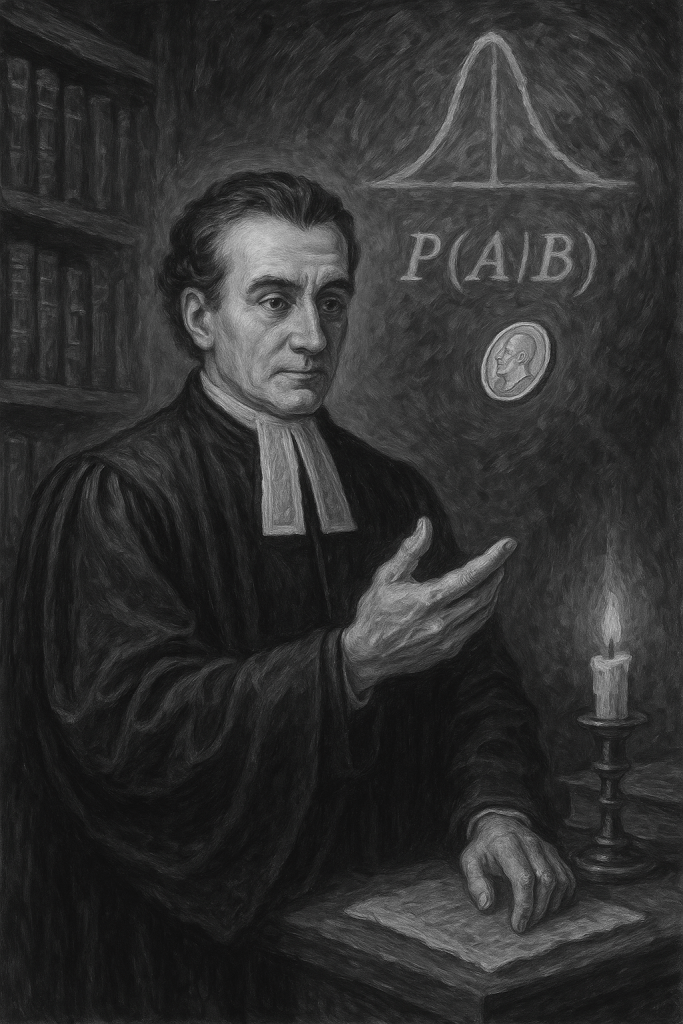
In today’s post, I am exploring the nature of probability. Is probability an intrinsic feature of events that evolves over time, or is it something else entirely? My view is that probability is best understood as a measure of an observer’s uncertainty that can change as new information becomes available, rather than as a property that events themselves possess.

Probability is not an intrinsic property of events that evolves over time. It is a measure of an observer’s uncertainty that changes as the observer gains new information.

This insight becomes clear when we consider what happens before and after an event of interest occurs. You might assign a 35% probability that your favorite team will win their championship match in 2025 based on their team, coaching staff, recent performance, and other factors. When your team does indeed win the championship in 2025, you no longer speak of a 35% chance afterward. You know they won, so your uncertainty about whether your team would capture the 2025 title is gone. The event itself has not changed. What has changed is simply your information about it.

This example reveals something fascinating. The event does not have a probability that flows through time. Your favorite team winning the 2025 championship does not possess an inherent “35% chance property” that somehow transforms into a “100% chance property” when they claim victory. Rather, probability expresses your epistemic state. It expresses what you know and do not know about the event. As your knowledge updates, so does the probability you assign.

Before the season, the probability of 35% captured your uncertainty given incomplete information about how this specific championship race would unfold. After they win, your uncertainty about whether your team won the 2025 championship disappears because you have complete information about this particular outcome. The players were competing and making decisions throughout the season, but your knowledge of the final result was incomplete and then became complete. Probability tracks this change in knowledge, not a change in the event itself.

Your favorite team winning the 2025 championship is a singular, unrepeatable event. This singularity principle applies to every event, whether it is the outcome of a coin toss or whether you miss a train. Even when we consider the 2026 championship, that represents a completely separate event requiring its own probability assessment. You might again assign some probability to your team winning in 2026, but this concerns a different season with different players, different opponents, and different circumstances. The fact that your team won in 2025 provides information that might influence your assessment of their 2026 chances, but each championship stands as a distinct event with its own associated uncertainty.

Different philosophical schools interpret probability in various ways. Frequentists focus on long-run patterns, while others emphasize physical propensities in systems. I adopt the Bayesian perspective here, which treats probability as quantifying an observer’s degree of belief about uncertain outcomes. This framework excels at handling partial information and belief updating as new evidence arrives.

The Bayesian approach formalizes how rational observers should revise their beliefs. You start with a prior probability based on available information. When new evidence arrives, Bayes’ theorem shows how to calculate an updated posterior probability, which then serves as the prior for the next update. Certainty represents probability at its extremes (belief of 1 or 0), but most real-world knowledge involves intermediate probabilities reflecting justified but incomplete information.

Let us return to the championship example with this framework in mind. Your initial 35% probability assignment reflects partial knowledge about the 2025 season that remains open to revision. When your favorite team wins the championship, your belief updates to certainty: probability 1. This transition represents a shift in your epistemic state, not a change in some objective property of the championship outcome. The probability assigned to the event changes only because your information changes.

Your team winning the 2025 championship might influence how you assess their chances for future seasons, but each championship represents a separate event. The 2026 championship is not the same event as the 2025 championship because it involves different circumstances, different player development, different opponents, and different strategic decisions that create their own uncertainty. Your experience from the 2025 season provides information for assessing future championship races, but the probability you assign to the 2026 contest addresses a distinct event with its own epistemic challenges.

Once an event’s outcome becomes known, assigning forward-looking probabilities to that specific completed event loses predictive meaning. However, probabilities retain important roles in other contexts. We use explanatory probabilities to reason about hidden causes of observed effects, and counterfactual probabilities to explore alternative scenarios for learning and decision-making. These applications all involve managing uncertainty about things we do not fully know.

Some philosophers argue for objective chances embedded in physical reality, claiming that the world itself has genuine probabilistic features. Even these can be understood through a Bayesian lens as rational betting odds conditioned on our best current knowledge about physical laws and initial conditions. From this epistemic perspective, probability fundamentally reflects our relationship to knowledge and uncertainty, not immutable features of external events.

Understanding probability as observer-dependent rather than event-dependent has practical implications. It explains why different people can reasonably assign different probabilities to the same event because they possess different information. It clarifies why probabilities can seem to “change” as we learn more: our knowledge evolves while events themselves follow deterministic or genuinely random processes. Most importantly, it positions probability as a dynamic tool for rational reasoning under uncertainty rather than a mysterious property that events carry through time.

Finally, it is important to recognize that while our beliefs may remain probabilistic, our decisions in the real world must ultimately resolve into binary choices. We decide to carry an umbrella or not, to take the highway or not, to treat a patient or not. Practical action demands that we collapse our probabilistic beliefs into definitive commitments. This reinforces that probability serves as a bridge between uncertainty and action, not as a property that events carry through time.

Final Words:

This epistemic view of probability transforms how we think about uncertainty and prediction. Rather than searching for probabilities “out there” in the world, we recognize them as tools for managing our own knowledge and ignorance.

As Pierre Simon Laplace eloquently put it: “Probability theory is nothing but common sense reduced to calculation.”

Once we embrace probability as a measure of what we know rather than what events are, we can use it more effectively as the rational tool it was always meant to be.

Always keep learning…
The Arbitrariness of Objectivism:

The readers of my blog might be aware that I appreciate the nuances of cybernetic constructivism. Cybernetic constructivism rejects the idea that we have access to an objective reality. It does not deny that there is an external reality independent of an observer. However, we do not have direct access to it. Additionally, the external world is more complex than us. As part of staying viable, we construct a version of reality that is unique to our interpretative framework. This takes place in a social realm, and error corrections happen because the construction occurs in the social realm.

Heinz von Foerster, the Socrates of Cybernetics, formulated two imperatives that provide insight into this framework. The first is the ethical imperative that states “act so as to increase the number of choices.” The second is the aesthetical imperative that states “if you desire to see, learn how to act.” I welcome the reader to check out previous posts on these concepts. This worldview supports pluralism, the idea that there can be multiple valid versions of reality. This emerges primarily because the external world being more complex than our cognitive apparatus, we maintain viability by constructing particular versions of reality rather than accessing reality directly.

Common Mischaracterizations:

A primary criticism I encounter involves misrepresenting this worldview as relativism or solipsism. Critics suggest that acknowledging multiple perspectives means that anything goes, or that nothing is shared between observers. This represents a caricature rather than a substantive critique.

Precision is necessary here. Some forms of relativism claim that all views are equally valid, including contradictory ones. In that model, if claim A asserts “only A is valid,” then relativism must also treat that assertion as valid. It has no mechanism for comparison or critique. The result is a flattening of all claims into mere equivalence, where strength, coherence, or context carry no weight.

Solipsism advances an even more extreme position. It claims that only one’s own mind is knowable, denying shared reality altogether. It discards the very possibility of meaningful intersubjectivity. No systems thinker, and certainly no pluralist, takes this position seriously.

Pluralism as a Distinct Position:

Pluralism is neither relativism nor solipsism. It does not claim all views are valid. Rather, it asserts that no view is valid by default. Pluralism insists that perspectives must be made visible, situated in context, and evaluated through dialogue. It resists automatic authority, including authority derived from its own assertions.

Consider what objectivism accomplishes by contrast. It selects a single claim and declares that only this claim is valid while all others are not. But on what basis does it make this selection? Often, no external justification is offered. The grounding remains internal, context-bound, or inherited, yet it is presented as if it were neutral, universal, and self-evident.

This selection process reveals a potential arbitrariness of objectivist claims. The view appears arbitrary because its assumptions may remain hidden from examination. Without transparent justification for why one view should be privileged, objectivism risks the appearance of arbitrariness. What presents itself as necessity may simply be preference in disguise. From a pluralist standpoint, this represents concealment rather than clarity.

The Paradox of Objectivist Authority:

Paradoxically, this form of objectivism begins to mirror the very relativism it claims to oppose. Relativism declares that all claims are valid, including any particular claim A. Objectivism declares that only claim A is valid while offering no method to interrogate why this should be so. Each approach shuts down evaluation through different mechanisms. Relativism dissolves differences into sameness. Objectivism excludes all but one view from consideration at the outset.

This dynamic reveal what objectivism risks becoming, not solipsism in the strict philosophical sense, but functional solipsism. When a worldview refuses to acknowledge its own perspective and denies legitimacy to all others, it ceases to see the world. It sees only itself, reflected and reinforced. This represents the erasure of other ways of seeing under the illusion that one’s own interpretative lens is the world itself.

The Hidden Nature of Objectivist Claims:

The danger of objectivism lies in its method: selecting a single view, designating it as truth, and treating alternatives as error, noise, or confusion. It dresses up a personal, historical, and situated position as universal and eternal. This approach is not more objective than pluralism. It is simply better concealed.

Frameworks that prioritize ontology over epistemology tend to overlook the epistemic humility that characterizes pluralism. When we claim to know what reality is before examining how we come to know it, we bypass the very process of inquiry that might reveal the limitations and situatedness of our perspective. This ontological presumption becomes particularly problematic when it denies its own epistemological foundations.

Pluralism does not collapse into solipsism. Objectivism risks this collapse precisely when it denies that it operates from a particular perspective. The refusal to acknowledge one’s interpretative framework does not eliminate that framework. It merely renders it invisible to examination.

Pluralism is not weakness, indecision, or relativistic drift. It represents a disciplined humility and a refusal to collapse complexity into certainty prematurely. It does not reject standards but demands that they be made visible, questioned, and held accountable to the context in which they arise.

Pluralism increases the space for dialogue, choice, and possibility. It reminds us that what we do not question becomes invisible, not because it is true, but because it hides within the taken-for-granted assumptions of our frameworks.

In a world increasingly polarized between loud certainties and quiet disillusionment, pluralism offers something increasingly rare: the courage to remain open, to ask how we know what we claim to know, and to stay in conversation with perspectives we might otherwise reject.

Final Words:

Not everything is permissible under pluralism. But no single view should escape questioning. The cybernetic constructivist position maintains that our constructions of reality emerge from our particular biological, cognitive, and social constraints. These constructions prove viable not because they correspond to an objective reality we cannot access, but because they enable us to navigate the complexity we encounter.

I will finish with a quote from Heinz von Foerster:

Objectivity is the delusion that observations could be made without an observer.

The task before us is not to eliminate the observer but to acknowledge the observer’s role in every observation. This acknowledgment does not lead to relativism or solipsism. It leads to a more rigorous understanding of how knowledge emerges from the interaction between observer and observed within particular contexts and constraints.

Always keep learning.

When is a ‘System’?

In today’s post, I would like to explore the question, “When is a system?” and reflect on how cybernetics invites us to think differently about systems. This shift in phrasing may seem minor, but it opens up a deeper understanding of what we are truly doing when we speak of systems.

The Cybernetic Shift:

Cybernetics offers a different path. Rather than asking, “What is a system?”, it invites us to ask, “When is a system?” As a student of Cybernetics, I came across Herbert Brün’s question, “When is Cybernetics?”. He was challenging the obsession with an observer devoid pursuit of knowledge. When we ask “What is..” questions, we are focusing on reification. As Paul Pangaro notes[1]:

Let me show this by first asking the question, ‘What is a rock?’ The question as phrased and by its nature implies that rocks exist and that they can be known and defined. This existence stands on its own to such an extent that an answer can be given, ‘A rock is — dot dot dot’; and this description is given as independent of time, context, and observer. The act of providing an answer is to buy into the position that there is a reality that can be expressed in this independence.

Of course the reality is in one sense in the description, not any ‘object itself.’ We do invest in the description as a thing, an ‘objectification’ that exists on its own, which is what we call knowledge. The contribution of personal experience is lost or elided. What is left is the dead description, devoid of a maker and the context and purpose in which it is made.

This change in perspective alters everything. It reminds us that systems are not found in the world as pre-existing objects. They are drawn into being. They do not exist without a point of view, without a purpose, and without a participant. A system is not discovered; it is declared. It does not precede our involvement. Instead, it arises with it.

Consider a simple example: When is healthcare a system? For a hospital administrator, healthcare becomes a system when she tracks patient flow, bed occupancy, and discharge rates. For a public health researcher, healthcare becomes a system when he maps disease patterns, social determinants, and community interventions. For a patient with chronic illness, it becomes a system when they navigate insurance approvals, specialist referrals, and medication management. The same collection of clinics, professionals, and treatments becomes different systems depending on who is looking and why.

Beyond Fixed Definitions:

In this way, cybernetics is not about systems as fixed or definable things. It is about how we observe, how we construct, and how we participate in interrelated processes. As Paul Pangaro explained, the “What is …?” question leads us into traps. When we ask “What is a rock?” we imply that rocks exist independently and can be known and defined outside of time, context, and observer. This creates a “dead description, devoid of a maker and the context and purpose in which it is made.” The act of asking “What is…?” itself creates an investment in notions of absolute reality that cybernetics seeks to question.

Cybernetics is better understood as a way of thinking rather than a field of things. Herbert Brün’s insight, substitute “When is…?” for “What is…?”, captures the essence of the cybernetic act: taking an apparent absolute and providing necessities for taking it as a relative. This shift makes the relativity of knowing explicit, relativity that exists as a function of ever different contexts: time, the observer, purpose. Cybernetics draws our attention to the fact that observation changes what is observed. Descriptions are never neutral. They arise from somewhere and from someone. Meaning does not reside in isolation. It arises through interaction.

The Moment of System-Drawing:

This is why the question “When is a system?” is important. It makes visible the choices we make when we describe a situation as systemic. It pushes us to be aware of our own cognitive blind spots and promotes epistemic humility. It reminds us that the context, including who is asking, when, and for what purpose, decisively shapes what we call “the system.”

As Herbert Brün emphasized:[1]

The by far most important, most significant context, overriding in power every other[,] even ever[-]so-blatantly[-]perceivable context, the context decisive in the beginning and in the end, in the speaker and in the receiver, the context which gives its meaning to a statement, the context in which a statement is most undebatably made, is that context which we call “The person who makes the statement.” And let the period after the quotation mark be legal. For to be quoted is not my statement but “The person who makes the statement” and the context he is, not I make.

Systems come into being when we draw boundaries. They begin to make sense when we ask certain questions. They become stable or unstable, depending on who is involved and what they are trying to do.

This insight was central to the work of C. West Churchman, who reminded us that the systems approach begins when one is open to see the world through another’s eyes. This does not mean agreement. It means recognizing that what we call “the system” already reflects a point of view. What seems essential to me may seem irrelevant to you. What I include, you may exclude.

We are recognizing the observer dependent quality of systems, noting that different observers of the same phenomena might conceptualize them into different systems entirely. For one person, a transportation system may refer to trains, roads, and schedules: the physical infrastructure that moves people from point A to point B. For another, it may refer to access, fairness, and opportunity: who can get where, when, and at what cost. For yet another, it may mean emissions, energy use, and ecological impact. The” system is not one thing. It is always many, depending on how one looks.

The Ethical Dimension:

This orientation opens an ethical space. Cybernetics, epecially second order cybernetics, teaches us that we do not stand outside the world we describe. We bring forth a world through our living, through our speaking, and through our caring. Werner Ulrich took this further by asking us to consider who gets excluded when a system is drawn. The question is not only “What is the system?” or “When is the system?” It is also “Who decides?” and “Who is left out?”

When a city planning department draws the boundaries of a “transportation system” around roads and parking meters, they may inadvertently exclude sidewalks, bike lanes, and public transit, effectively marginalizing pedestrians, cyclists, and those who cannot afford cars. When a hospital defines its “patient care system” in terms of clinical procedures and bed management, it might exclude the experiences of family members, community health workers, or the social determinants that brought patients there in the first place.

To declare a system is to draw a boundary. To draw a boundary is to make a choice. With that choice comes responsibility. Cybernetics is not simply a science of regulation or control. It is a reflection on participation and perspective. It is a reminder that the observer is always part of what is observed.

Final Words:

So when is a system?

A system is whenever someone chooses to see one. It is when relationships are noticed, when patterns are made meaningful, when intentions begin to shape perception. It is not a thing in the world. It is an event in understanding.

To speak of systems, then, is to accept the weight of that declaration. It is to notice that every system includes and excludes. It frames some possibilities and hides others. Cybernetics does not eliminate this fact. It simply asks us to be honest about it.

This awareness changes how we approach systems work. Instead of searching for the “right” system, we might ask: What system-drawing serves our purposes? Whose perspectives are we including or excluding? What becomes visible when we draw the boundaries here rather than there? How might our system-drawing empower or marginalize different groups?

We may never define a system in final terms. But we can choose to be thoughtful in how and when we draw them. We can remain attentive to the ethical and practical consequences of those drawings. And we can remember that every system boundary is a hypothesis about what matters, one that can be questioned, revised, and redrawn as our understanding deepens.

I will finish with a quote from West Churchman that provides further food for thought:

The problem of systems improvement is the problem of the ‘ethics of the whole system’.

Always keep learning…

[1] New Order from Old: The Rise of Second-Order Cybernetics and Implications for Machine Intelligence. A Play in 25 Turns – Paul Pangaro, 1988

The Form of Decency

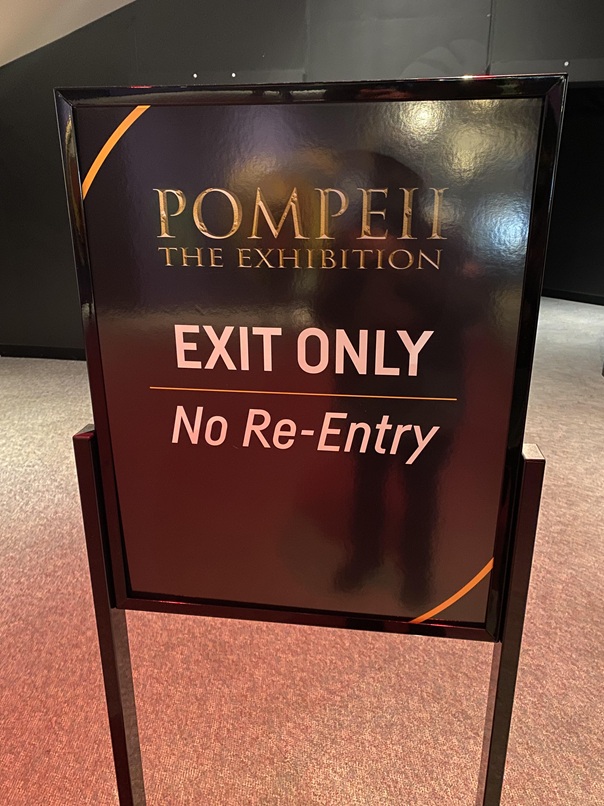
At a recent exhibition, I saw a sign that read: “Exit Only. No Re-Entry.” It seemed not just as a logistical instruction but as a metaphor. Around the same time, I came across a photo of a sign demanding that people speak the local dialect. What struck out to me was that the sign was written in English. These moments echoed something I have long been thinking about: the contradictions that arise when our distinctions fold back on themselves, what George Spencer-Brown called “reentry.”

I am a longtime admirer of Spencer-Brown’s Laws of Form, and in today’s post, I explore how his notion of reentry helps illuminate the paradoxes and blind spots in modern ideologies, especially the rise of xenophobia and extreme nationalism. These rigid ideologies depend on distinctions between us versus them, lawful versus unlawful that appear neat but collapse under their own logic when viewed recursively. We pretend we are only exiting, drawing sharp lines, while ignoring the inevitability and necessity of reentry in our sensemaking.

Drawing Distinctions

Spencer Brown opened his mathematical-philosophical treatise with a simple instruction: Draw a distinction. This simple act of marking a boundary between “this” and “that” forms the foundation of how we structure knowledge, meaning, and identity. We create categories and define what is “in” and what is “out.” This is how form arises through distinction.

In Laws of Form, he also introduced the notion of reentry: the act of folding a distinction back into itself. Simply put, this is a self-referential act. By doing this, the tidy separations we created begin to blur. This move, abstract as it sounds, has powerful consequences for how we think, live, and treat each other. Especially in a world torn by polarization, nationalism, and fear of the “other,” reentry reveals the paradoxes that rigid ideologies try to hide and points us toward a more humane way of navigating complexity.

The Pot and the Form

Let us use a simple example to understand the form better. Consider a pot of boiling water. Here, we can make three identifications:

  • Pot = the mark, or the distinction
  • Water inside the pot = what is indicated, the marked space, the inside
  • Outside the pot = the unmarked space, the outside

Together, all three constitute the form. The pot, as a boundary, plays the role of the mark in Spencer-Brown’s terms. It creates a distinction between what is inside and what is outside. The pot itself is not part of what is inside; it is what makes “inside” possible by drawing a boundary. The mark exists in a meta-position: it defines inside and outside but cannot be reduced to either. It is the operation of drawing the distinction. The pot allows us to interact with what is inside and allows what is inside to interact with the surroundings.

We can use the same example to introduce reentry. Imagine placing that pot inside another pot, creating a double boiler. The inner pot is held by the outer one. The boundary remains, but now it is nested and refers to something beyond itself. This is reentry: when a form does not just define something but begins to refer to its own act of defining. This becomes an act of second-order observation. In the double boiler metaphor, the inner pot (the reentered form) exists within the outer pot (the original distinction), creating a ‘system’ that is both distinct and self-contained.

Reentry challenges the simplicity of binary logic, revealing that ‘systems’ can be self-referential and dynamic. This concept is pivotal in understanding complex systems, where elements influence and are influenced by themselves.

The Purpose of Reentry: Revealing Cognitive Blind Spots

We love binaries: true/false, us/them, lawful/unlawful. But reentry destabilizes these neat categories. Who defines what is “lawful”? The law itself. When the law governs the making of laws (as in constitutional law), we enter a recursive loop. What is legal becomes a matter of interpretation, not clarity. The binary collapses into ambiguity. Reentry shows us that binaries are useful simplifications, not absolute truths. Dogmatic ideas rely on such binaries, and reentry becomes an effective tool for challenging dogma.

Similarly, in language, terms like “normal” are defined by cultural norms, which are themselves shaped by collective perceptions of normality. This circularity demonstrates how meanings are not fixed but evolve through self-reference. Reentry is not merely a logical twist. It reveals something crucial about how we construct meaning.

When we draw a distinction between “lawful” and “unlawful,” we assume clarity. But as soon as we ask who defines the law and realize it is the law itself, we see that the boundary is recursive. It defines itself. This is not a flaw but a feature of complexity.

The Second-Order View: Observing Observation

This leads us to second-order thinking: the act of observing the act of observing. In logic, when a ‘system’ includes itself in its model, it can become unstable. However, it also owns its position. Blind spots can be revealed, opening the door to creativity, paradox, and deeper understanding. Reentry is how we shift from first-order systems (clear categories, fixed forms) to second-order ones (reflexivity, contradiction, emergence). It is how we move from saying “we are right” to asking “how do we know?”

As the cybernetician Heinz von Foerster observed: “The observer must be included in the observed system.”

This represents the leap from first-order thinking (observing the world) to second-order thinking (observing how we observe). Reentry is the mechanism of that leap. Recognizing and thinking along the lines of reentry is deeply needed today because some of the most dangerous ideas we face rely on distinctions that collapse under their own logic.

Reentry and the Illogic of Xenophobia

Xenophobic ideologies often define “us” versus “them,” asserting superiority or purity. However, when these distinctions undergo reentry, when the criteria for inclusion are applied to the in-group, they often fail to hold consistently. Similar to the sign that demanded the use of the local dialect but was written in English, xenophobic logic contradicts itself when examined through reentry.

What does it mean to be a person from country “X”? Is it geography? Culture? Language? Legal status? Values? The more we examine these criteria, the fuzzier they become. Yet we use such labels as if they were clean boundaries, pots that perfectly contain identity. Reentry challenges this assumption by turning the form inward.

If being from country “X” means standing for freedom, justice, and decency, how can one uphold those values while treating outsiders with cruelty? If your culture preaches respect, how can you use that culture to justify disrespect? If your national identity is built on moral ideals, then those ideals must apply to how you treat everyone, not just those inside your imaginary boundaries.

Bigotry collapses under reentry. Its internal logic folds in on itself. The principle violates the practice. The mirror reflects itself and reveals the contradiction. Racism, xenophobia, and nationalism, when examined through the lens of reentry, are not just morally wrong. They are logically incoherent.

The Ethical Need for Redundancy

In complex systems, one of the most powerful safeguards is redundancy. In engineering, redundancy prevents collapse. In ethics, it serves the same function.

Hope is redundancy in action, as are other humanistic notions such as kindness, compassion, and forgiveness. These are not luxuries; they are second-order buffers. They activate when logic stalls. They hold the ‘system’ together when paradox threatens to tear it apart. Reentry exposes the instability of our forms. Redundancy helps us live with that instability.

Ethical redundancy functions like the inner pot in a double boiler. It buffers the heat. It allows care to emerge where rigidity would cause harm. It creates space for ambiguity, reflection, and repair. This is why, in the face of bigotry and rigid ideologies, we must design for ethical reentry. We must build in second chances. We must speak gently even when the logic breaks.

Final Words

In a world obsessed with efficiency, clarity, and being right, reentry is a radical act. It turns the ‘system’ inward. It reveals our blind spots. It shows us where our ideals betray themselves. But reentry does more than expose contradictions; it opens pathways to wisdom. When we embrace reentry, we move from the arrogance of first-order certainty to the humility of second-order inquiry.

The rise of extreme nationalism and xenophobia reflects our collective failure to practice reentry. These ideologies thrive on the illusion of clear boundaries, pure identities, and simple answers. They collapse when subjected to their own logic, but only if we have the courage to apply that logic. Only if we are willing to let our mirrors reflect.

Reentry teaches us that our most cherished distinctions are provisional, our certainties are constructed, and our boundaries are more porous than we dare admit. This is not cause for despair but for hope. It means we can rebuild. We can redesign. We can choose compassion over cruelty, and in that act, we can stay human.

In the end, reentry invites us to remain human and to include kindness as a design principle, building ‘systems’ that can reflect on themselves without breaking. It asks us to hold our beliefs lightly enough that they do not harden into weapons, yet firmly enough that they can guide us toward justice. This is the form of decency: recursive and reflective.

Always keep learning…

All Communication is Miscommunication:

The title of this post is a nod to the French psychoanalyst, Jacques Lacan[1]. In today’s post, I am looking at the idea of communication. The etymology of “communication” goes back to the Latin words, com and munus. The basic meaning of communication is to make something common. “Com” means “together” while “munus” means “service”, “gift” etc. A closely related word to “communication” is “information”. Similar to “communication”, the etymology of “information” also goes back to its Latin roots. The two Latin words are “in” and “formare”. Taken together, the meaning of “information” is something like – to give shape or form to something. In the context of “information”, this would be – to give shape or form to knowledge or a set of ideas.

In Cybernetics, a core concept is the idea of informational closure. This means that a system such as each one of us is informally closed. Information does not enter into the system. Instead, the system is perturbed by the external world, and based on its interpretative framework, the system finds the perturbation informative.

Informationally closed means that all we have access to is our internal states. For example, when we see a flower, the light hitting the retina of our eyes does not bring in the information that what we are seeing is a flower. Instead, our retinal cells undergo a change of state from the light hitting them. There is nothing qualitative about this interaction. Based on our past interactions and the stability of our experiential knowledge we see the perturbation as informative, and we represent that as “flower”.  The word is used to describe a sliver of our experiential reality.

Now this presents a fascinating idea – if we are informationally closed how does communication take place? There can be no direct transfer of information happening between two interacting agents. All that is happening is a relay of perturbations mainly.  In order to posit the possibility of communication, the interacting agents should have access to a common set of meanings. When a message is transmitted, both the transmitter and the receiver should be working with a set of possible messages that are contextual. This allows the receiver to choose the most meaningful messages from the set of possible messages. For example, if my friend says that he has a chocolate lab, and I take it to mean that he has a lab where he crafts delectable chocolate creations, then from my friend’s standpoint a miscommunication has occurred. A person more familiar with dogs would have immediately started talking about dogs.

Communication takes place in the form of verbal and nonverbal communication. This adds to the complexity of communication. All communication takes place in a social realm in the background of history of past interactions, cultural norms, language norms, inside jokes etc. Language, as Wittgenstein would say, lies in the public realm. In other words, our private experiences can only be described in terms of public language. Being informationally closed means that we have to indeed work hard at getting good at this communication business. Language is dynamic and ever evolving, and this makes communication even more challenging. Our communication will always be lacking.

I will finish with the wise words of William H. Whyte:

The great enemy of communication, we find, is the illusion of it… we have failed to concede the immense complexity of our society–and thus the great gaps between ourselves and those with whom we seek understanding.

Always keep on learning…

My last post was Absurdity in Systems Thinking

[1] The Democracy of the Objects, Levy Bryant

How Blank is Your Paper?

Art by NightCafe

This is available as part of a book offering that is free for community members of Cyb3rSynLabs. Please check here (https://www.cyb3rsynlabs.com/c/books/) for Second Order Cybernetics Essays for Silicon Valley. The ebook version is available here (https://www.cyb3rsyn.com/products/soc-book)

Stay safe and always keep on learning… In case you missed it, my last post was OC Curve and Reliability/Confidence Sample Sizes:

Informational Closure in the Human and the Machine:

Art by Dall-E

One of the concepts that seems hard to grasp with regards to Cybernetics is the idea of “informational closure”. This idea was introduced by Ross Ashby as “informational tightness”. Ashby defined Cybernetics as the study of systems that are open to energy but closed to information and control – systems that are “information-tight”. Just like something that is described as water-tight, where water does not enter it from outside, information-tight refers to the condition where information does not enter it from outside.

Ashby also said that when a machine breaks, it changes its mind. Ashby referred to “machine” as a collection of parts that interact on one another and an “organization” as the specific way they are put together. For example, when a user pushes on a button, a door opens. The machine in this case is the button together with the wiring that can interact on the door together with the hinges. Ashby would say that Cybernetics in this case is the study of all possible actions that could have happened when the button was pushed, but did not. The cybernetician would ask why of all the possibilities, the action of the door opening happened? That specific action happened due to the specific manner the parts are connected to one another. If the parts were connected differently something else would have happened such as the door staying closed and refusing to open. I use the phrase “refusing to open” to tease the idea of the machine having a mind. As a nod to Descartes, in the case of this machine, its mind is indeed its body. It acts the way it does because of its structure. If there was a loose connection, then the machine would indeed change its mind, and refuse to open.

Here, the reader might be tempted to say that the user is providing an input or information via the press of the button. From a cybernetics standpoint, the user is actually perturbing the machine, and the machine’s behavior to this perturbation is to behave in a specific manner as dictated by its internal structure and organization. This is the reason why if there was a loose connection, the user pressing the button would result in a different behavior altogether. There is no information being received that is processed by the machine. The user could use the same pressing action on a keyboard and it would elicit an entirely different behavior, one that is consistent with the keyboard’s internal structure and organization. The machine’s mind is already made up, so to speak. If one were forced to define information in this regard, it would be something to the effect of “information is that which has the potential to elicit a response.” But here is the catch, what elicits a response is not the information, but the internal structure of the machine. In order to respond, the machine must have a closed organization. Information tight or informational closure means that the machine does not process information from outside. Instead, it is perturbed and this elicits a response based on its internal structure.

Two Chilean cyberneticians Humberto Maturana and Francesco Varela came up with the idea of autopoiesis that brought a new dimension to this. Their perspective is that humans are informationally closed as well. Maturana pointed out that prior to 1950’s, scientists and laypeople used to talk about neurons transferring or transmitting impulses. And after the advent of information theory by Claude Shannon and Warren Weaver, everything was viewed in a new light – that of information and entropy. The idea of conveying information from one person to the other, and information being processed is an attractive one. From a practical standpoint, one can see that this does not make sense. How many times have you conveyed information to another person only to have been misunderstood? As George Bernard Shaw once said, “The single biggest problem with communication is the illusion that it has taken place.”

We are obviously different than machines. We are not wired in order to be to elicited for specific responses. How we respond instead is based on a historical coherence. An easy example is how one responds to their own name. When we were infants, we were called our names, and we did not respond based on our then closed organization. With each repetition, we came to correlate the sound of the name to a response from us guided by reinforcement in the form of attention, love etc. The utterance of our name created a strong correlation in our behavior. There can still be instances where we may behave differently if our names are called such as in the case when your mother was using a stern voice. The history of interactions with others creates a stable response that we generally tend towards to. The more perturbations we have in the form of these interactions, the more we tend to respond in a particular manner. We have an embodied mind, unlike the machine. And unlike the machine, we are autonomous entities. We may still choose to change our mind for no good reason.

One of the examples that Maturana gave to further this idea is that of looking at a flower. The traditional way is to say that the light from the flower reaches our retina and this acts as information, and we see the flower. The informationally closed way is explained by Maturana as follows:

When light reflected by an object that the observer describes as external reaches the retina, an activity is initiated that is enclosed in the structure of the retina itself (and not in the structure of the source of light, nor in the structure of the world). The external world can only trigger such changes in the nervous system of an organism as are determined by the structure of the nervous system itself. The consequence is that there is no possible way, in principle, for the external world to communicate itself in its primordial, true form to the nervous system.

In other words, the flower does not inform the nervous system that it is a flower. Instead, the nervous system constructs an experiential reality of “flower” based on its own structure. It should refer to itself in order to make sense. This aligns with the view that each of us uniquely experience the world. What the color blue is? or what the sound of a hand clap is? – are all different for each of us, and this is based on our history of interactions and our closed interpretative framework. This brings attention to the essential point that what we experience is only one version of a human reality. To exist in a social realm requires us to be respectful of the other participants.

Stay safe and always keep on learning…

In case you missed it, my last post was On the Ambiguities in Complexity:

Cybernetics and the Stoics:

In today’s post, I am continuing on my thoughts on stoicism through the lens of cybernetics. In Cybernetics, we call regulation the act (art) of responding to external disturbances in order to maintain selected internal variables in a range. For example, our body maintains the internal temperature in a specific range. We have internal regulations built in through evolution to ensure that this is done. In the language of cybernetics, regulation refers to the act of countering the external variety. In order to counter the external variety, we must have requisite variety. As noted in the last post, only variety can absorb variety. If the external temperature goes up or goes down, our body should have a mechanism to react so that the internal temperature is maintained in a specific range. If it is not able to do this, we will not stay viable. The goal of requisite variety in this instance is about maintaining the status quo.

There are mainly two types of regulations in cybernetics as Ross Ashby noted – direct and indirect regulation. Direct regulation is the type of regulation where there is an established framework of counteractions that the agent can use. In the case of body temperature, heat loss can be promoted in a hot environment by many different mechanisms such as sweating or by reduction of muscular activities. Similarly, heat loss can be minimized in a cold environment using several mechanisms such as shivering or other activities to improve body insulation (reducing blood flow to the skin). There are several other mechanisms used by our bodies that are not listed here. These activities come under direct regulation because these happen without any oversight from us. Our bodies have evolved to do these things. Direct regulation is obviously limited in what it can do. For a low complex organism such as a wasp, direct regulation is adequate for survival. When the environmental conditions change or become extreme, direct regulation will no longer be able to provide requisite variety. In this case, we need indirect regulation. Indirect regulation refers to our ability to achieve requisite variety through second order activities. This involves learning mechanisms. For example, when it gets cold, we learn to move to a warmer location or to put on more clothes or to start a fire. We learned to create warm clothes or generate fire at will. This type of regulation did not come through evolution. What did come through evolution is our ability to learn to adapt. The second order refers to the ability to learn. Direct regulation is first order in nature. Second order is where you realize that the current specification is not working and that we need to change what we are doing or change the specification altogether. First order is simply realizing that there is a gap between the current state and where we want to be, and upon this realization continue on an already prescribed path.

We can see that indirect regulation has much more impact for our continued survival than direct regulation. Both types of regulation involve attenuation and amplification of variety in order to achieve requisite variety. As noted before, external variety is always higher than internal variety. Variety is directly correlated to complexity. The impact that the complexity in the world can have on us is ever increasing mainly because we are getting connected to the world in unprecedented ways. What I am typing here at my home can reach someone else in the farthest corners of the world in a matter of seconds. Something that happens locally in one location can have a direct impact on the entire world, as evidenced by the Covid 19 pandemic. How can we ensure our viability in these conditions?

Stoicism provides a lot of guidance for us in this regard. Stoicism provides us guidelines for us to improve our indirect regulatory activities. I am not discussing the dichotomy of control here since I discussed it last time. Instead, I will look at what Stoicism says about adversities in life. Most of our trouble comes from the fact that we do not orient ourselves properly. We give into direct regulation such as freeze, flight or fight. This worked for our ancestors, but this will not work, say for example, in a workplace environment. It is not easy for us to orient because we are not expecting the variety of the adversity that was thrown at us. It could be that we were put in a challenging situation where we have put ourselves or our company at a huge risk condition. Or something drastic happened that requires immediate action or our lives are in danger. How does one improve our internal variety in these conditions? How does one learn to attenuate the external variety so that we don’t focus on the noise? How do we amplify our variety so that we concentrate only on what is needed?

Stoics talk of a great tool that will help us here. It is called “premeditatio malorum”. This stands for “negative visualization”. When we start our day, think of the many ways, the day could go wrong. Think of driving in the traffic and someone cutting us off or getting into an accident. What can we do in this situation? Think of going into the important meeting and you saying something that would be perceived as silly. What would you do in this situation? Meditating on this is in many regards a way to prepare ourselves to better prepare in case such things do happen. It is obviously easy to go wild with this exercise, so we should keep it as practical as possible.

Another key insight from the stoics is the idea of seeing every experience as an opportunity. Every adversity or challenge that we face is an opportunity to learn. The big project that we are embarking upon work is an opportunity to improve ourselves. The challenges that are thrown at us actually make us better when we welcome them as challenges to finetune our skills. Many a time, stoicism is badly represented as being detached from reality. When something bad happens, the stoics are expected to be emotionless. On the contrary, stoicism is about being able to ground ourselves to reality and reorient ourselves so that we can use every experience as a learning opportunity. As with the premeditation malorum, we must exercise caution and not go out of our way looking for challenges. Instead we must take on the challenges that come our way and not run away from them. We must learn to be practical with the theory.

Seneca presents us with a paradox of fortune and laments those who were not fortunate enough to have gone through any misfortunes:

I judge you unfortunate because you have never lived through misfortune. You have passed through life without an opponent—no one can ever know what you are capable of, not even you.

Epictetus asks us who Hercules might have been without any of his adversities:

“What would have become of Hercules do you think if there had been no lion, hydra, stag or boar – and no savage criminals to rid the world of? What would he have done in the absence of such challenges?

Obviously he would have just rolled over in bed and gone back to sleep. So, by snoring his life away in luxury and comfort he never would have developed into the mighty Hercules.

And even if he had, what good would it have done him? What would have been the use of those arms, that physique, and that noble soul, without crises or conditions to stir into him action?”

Perhaps, at this juncture the reader is reminded of resilience and maybe of antifragility. From a cybernetics standpoint, resilience is a matter of maintaining status quo after a setback. This can be done mainly through first order activities and through second order activities as needed. Antifragility, on the other hand requires second order activities which leads to post traumatic growth (PTG).

I will finish with some wise words from the philosopher king, Marcus Aurelius:

Our actions may be impeded . . . but there can be no impeding our intentions or dispositions. Because we can accommodate and adapt. The mind adapts and converts to its own purposes the obstacle to our acting. The impediment to action advances action. What stands in the way becomes the way.

If you are interested in Stoicism, you might like:

Stay safe and always keep on learning…

In case you missed it, my last post was Cybernetics and the Dichotomy of Control:

The Phenomenology of Informationally Closed Beings:

This is available as part of a book offering that is free for community members of Cyb3rSynLabs. Please check here (https://www.cyb3rsynlabs.com/c/books/) for Second Order Cybernetics Essays for Silicon Valley. The ebook version is available here (https://www.cyb3rsyn.com/products/soc-book)

Stay safe and always keep on learning…

In case you missed it, my last post was The Magical “All Possibilities”: