Let’s not hypothesize – Part 1

8FF3

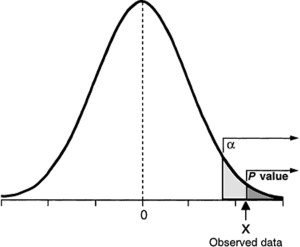
Over the last few months, there has been a lot of frenzy in a small portion of the blogosphere over the “ban of P-values” by the Psych magazine  Basic and Applied Social Psychology (BASP). You can read the full editorial here.

http://www.tandfonline.com/doi/pdf/10.1080/01973533.2015.1012991

My goal is to create a series of posts covering the items discussed in the editorial. This will include talking about the evolution of hypothesis testing, p-values and confidence intervals.

Some of the highlights from the editorial are below.

1) p < .05 is too easy and leads to low quality papers:

we believe that the p < .05 bar is too easy to pass and sometimes serves as an excuse for lower quality research.

There has been a lot of papers about the traditional approach of using p < .05 or even <.01 as being arbitrary values. I welcome the reader to check out this webpage by Chris Fraley, which has a collection of articles and papers about Null Hypothesis Significance Testing (NHST) and p-values.

http://www.uic.edu/classes/psych/psych548/fraley/

2) Confidence Intervals are no better either:

Analogous to how the NHSTP fails to provide the probability of the null hypothesis, which is needed to provide a strong case for rejecting it, confidence intervals do not provide a strong case for concluding that the population parameter of interest is likely to be within the stated interval.

To me, this is very interesting. I have always relied on confidence intervals to get a bound on the uncertainty around my statistic. The magazine banned the use of Confidence Intervals as well.

Interestingly enough, Bayesian procedures are not “banned”.

Bayesian procedures are neither required nor banned from BASP.
I will be very interested in seeing how this impacts the other fields outside Social Psychology. It is true that many scholars have challenged the idea of using p-values, and offered suggestions to include power, confidence intervals, etc. But this editorial challenges all of that.
Keep on learning…

Making a loaded coin fair – The Unfair Coin Problem

Today’s post is about Game Theory.

460px-JohnvonNeumann-LosAlamos

How do you make a loaded coin fair for a coin toss?

Let’s say that the coin is loaded such that heads comes up 75% of the time, and tails 25% of the time. How would one use this coin fairly for a coin toss?

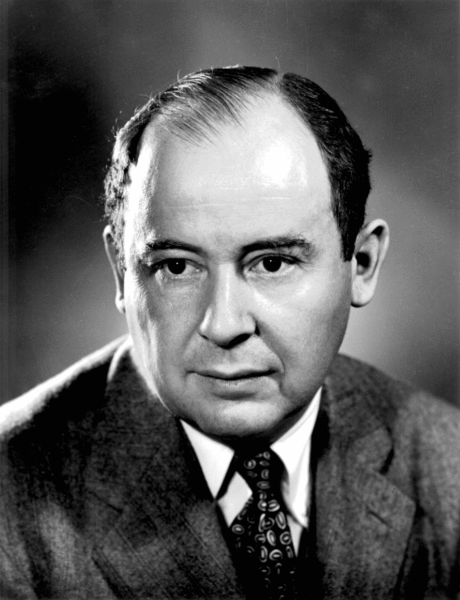
Enter Jon Von Neumann, the father of Game Theory. His solution was elegant and simple;

Flip the coin twice. If the results are the same (HH or TT), ignore and proceed to flipping them two more times. If the two results are different (HT or TH), use the first of the two results. That is it.

The rationale is that p(H) * p(T) = p(T) * p(H), where p(H) is the probability for heads and p(T) is the probability for Tails. Thus, the probability of two consecutive different results is simply the product of the two.

Since p(H) * p(T) = p(T) * p(H), this now becomes a 50-50 chance. Voila, a fair coin toss rule.

This solution is as elegant as the Tit-for-tat solution for the iterated Prisoner’s dilemma question.

This also reminds me of a great quote from Taligent’s Guide to Designing Programs!

Remember that there is no code faster than no code.

Keep on learning…

Reliability/Confidence Level Calculator (with c = 0, 1….., n)

rel

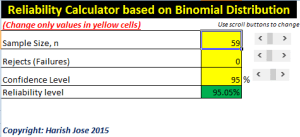
The reliability/Confidence level sample size calculation is fairly known to Quality Engineers. For example, with 59 samples and 0 rejects, one can be 95% confident that the process is at least 95% reliable or that the process yields at least 95% conforming product.

I have created a spreadsheet “calculator”, that allows the user to enter the sample size, number of rejects and the desired confidence level, and the calculator will provide the reliability result.

It is interesting to note that the reliability/confidence calculation, LTPD calculation and Wilk’s first degree non-parametric one sided tolerance calculation all yield the same results.

I will post another day about LTPD versus AQL.

The spreadsheet is available here Reliability calculator based on Binomial distribution.

I have a new post in this topic. Check out https://harishsnotebook.wordpress.com/2019/10/19/aql-rql-ltpd-oc-curve-reliability-and-confidence/

Keep on learning…

Spock and Genchi Genbutsu

thatwhich

I am a big fan of Spock, a key character from the classic Star Trek show. He is a great inspiration for me, and I have already written a post about him here.

Recently, I came across another gem from him that I would like to share.

This is taken from the episode “That Which Survives.”

SPOCK: I note it, Mister Scott, without necessarily understanding it. I propose to run an analysis through the ship’s computers, comparing the present condition of the Enterprise with her ideal condition.

This in my eyes is a good example of Genchi Genbutsu via Grasping the Current Condition. Spock came across a potential problem on the star ship, and he is using the scientific approach to first understand the problem.

If you do not know the ideal state, how will you know what the scope of the problem is?

One should always know the ideal state. This is a form of calibration, a way to know if there is indeed a problem or if it is a false alarm. Humans tend to exaggerate when they try to approximate. When the entirety of data is lacking, one has to approximate, and this can lead him/her to underestimate a threat or overestimate a gain.

Do you know your ideal state at work? At home?

Always keep on learning…

Drop the PA from CAPA

ISO_logo

The new revision of ISO 9001 is going to be released later this year. One of the changes proposed, that piqued my interest, was removal of the Preventive Action section. Preventive Action is “replaced” with Risk Based Thinking.

Preventive Action is proactive in nature. So is risk based thinking. Since my field is medical devices, risk based thinking is deeply engrained in me. It is my understanding that this revision is proposed to create a management system that is risk based.

One of the ways that I have used the PA of CAPA is to identify potential opportunities to implement what we learned from the CAPA. This could be similar products, processes or designs. This is similar to Yokoten in Lean Manufacturing. Jon Miller at Gemba Panterai calls this as “Horizontal Deployment”.

Yokoten means “horizontal deployment” and refers to the practice of copying good results of kaizen in one area to other areas.

The new revision does not take away this meaning. The new revision has in fact moved the thought of risk based thinking to Planning section. Thus, the intent is to spread the idea of risk based management throughout the organization.

As mentioned earlier, risk based thinking is proactive by definition. When properly done, risk based thinking can reduce the nonconformity occurrences, thus reducing the need for corrective actions. Corrective actions are reactive in nature. Risk based thinking leads to more preventive actions throughout the organization.

Paraphrasing heavily from the proposed changes;

When planning for QMS, the organization shall determine the risks and opportunities that need to be addressed to (among other things) prevent or reduce undesired effects.

It will be interesting to see how this will be handled with ISO 13485 standard.

Keep on learning…

Wilk’s One Sided Tolerance spreadsheet for download

wilks

I have created a spreadsheet that allows the user to calculate the number of samples needed for a desired one-sided tolerance interval at a desired confidence level. Additionally, the user can also enter the desired order for the sample size.

For example, if you have 93 samples, you can be 95% confident that 95% of the population are above the 2nd lowest value samples. Alternatively, you can also state that 95% of the population is below the 2nd highest value of the samples.

Here is an example of this in use.

If there is an interest, I can also try creating a two sided tolerance interval spreadsheet as well.

The keen student might notice that the formula is identical to the Bayes Success Run Theorem when the order p =1.

The spreadsheet is available for download here. Wilks one sided

Keep on learning…

Spirit of Buddha – Why do lean implementations fail?

tiffin box

There have been multiple studies about why lean implementations fail. Why is it so hard for organizations to replicate Toyota’s success when implementing its Toyota Production System?

Hajime Oba, a Toyota veteran was once asked why other organizations cannot replicate Toyota’s success. He responded with an analogy that it is like trying to create a Buddha image without having the spirit of Buddha inside. In other words, other companies are trying to create a system of Lean or Toyota Production System that appears the same but does not have “the soul” in it. They recreate the elements including Kanban, JIT, Jidoka, one piece flow etc. but they simply cannot recreate the spirit or the soul. This is a great analogy.

What is the spirit or the soul of lean implementation? In my thinking, this is the culture. The culture is the cement that brings all the elements of the system together, completely aligned in one direction, which is the company’s vision. This is homogenous in nature, meaning that if you take a sample from anywhere in the company (upper management, middle management, etc.), you will get the same vision. The common goal is engrained in everybody’s mind. If you ask the operator on the floor or the CEO, you get the same answer. Everybody has the spirit within them. They do not strive for local optimization. They strive for the system optimization.

This can be also explained, in a way, with correlation and causation. As it is repeated again and again, correlation does not imply causation. There is a high correlation  with the presence of all the tools like Kanban, JIT, Jidoka, Kaizen thinking etc. with many successful companies. However, this does not imply that the success is caused by those tools. In other words, a correlation marked by the presence of the tools does not imply causation for success. What is missing? The culture, or the spirit, or as Mr. Oba put it – the spirit of Buddha. This is like having the body of a car without its engine, the driving force.

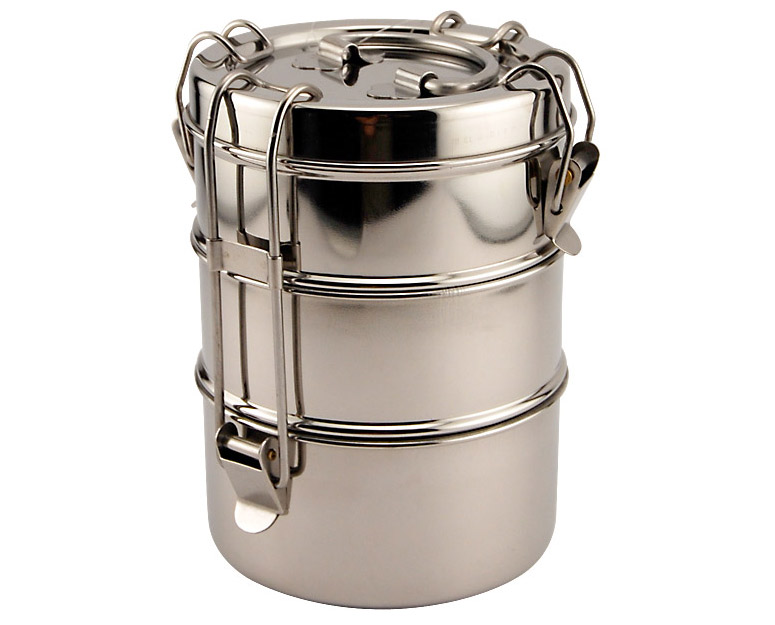
This brings to my mind the accomplishments of one amazing organization. This organization performs 400,000+ transactions a day. The total number of employees is approximately 5000. They have not had any strike in their 120+ years of existence. They have a minimal attrition rate. Their error rate is 1 in 16 million (better than six sigma). They do not use any of the new technologies like an ERP system or bar coding. What they do have is a manual coding of all containers. They get a 100% customer satisfaction rating, year after year. This is the Mumbai Dabbawala Association. They are as they call themselves, a flat organization with no silos. The spirit is very much alive in their organization. Their goal is bring the “lunch box” to the customer and back, on a daily basis at the specified time and location. Come rain or shine, traffic or no traffic in one of the most populated cities in the world. Each employee knows their vision and purpose, and works towards that. You can learn about them more here and here or here.

Keep on learning and keep the spirit alive…

Ship of Theseus and Process Validation

1024px-Model_of_a_greek_trireme

There is a great Greek paradox/puzzle called the Ship of Theseus. There are multiple versions and derivations to it. My favorite version is as follows (highly watered down);

Theseus bought a new ship. Each day he replaced one part of the ship. Plank by plank, and sail by sail and finally oar by oar. Finally no part of the original ship remained. Now the paradox is this – is the ship same as the original ship now that every part has been replaced? This is a great thought experiment about identity and understanding of self. If we go one step further and build a new ship with all the parts that were replaced from the original ship, is the new ship the same as the original ship?

When I read about this great paradox, somehow my mind started thinking about process validation. We get a new piece of equipment, say a pouch sealer, and during the course of multiple years, the equipment gets many of the parts replaced and many of the parts get worn down. Is the sealer the same as the original sealer? Is the original validation still valid?

This is where two main aspects of the process validation are important.

1) Maintaining the validated state; and 2) Revalidation Criteria.

Maintaining the validation state includes proper monitoring of the process, once it is qualified, to ensure that the process is in a state of control. For example, for a sealer validation, we might perform seal strength testing and visual inspection based on a frequency and defined criteria. Any adverse results shall be reviewed and rectified.

The revalidation criteria can be based on predetermined criteria as well. Some examples are below.

1) Major parts of the equipment replaced.

2) Equipment relocated to a new facility.

3) Equipment not in use for more than a year.

4) Significant changes to the process like raw material change.

5) Negative trends in Quality.

Both maintaining the validated state and revalidation requirements must be part of a process validation protocol.

Keep on learning…

8 Things I learned from Spock

Spock_vulcan-salute

Spock (Leonard Nimoy) is no more. The character of Spock from Star Trek has had a huge impact on many peoples’ lives. Leonard Nimoy will be deeply missed.

Here are 8 things that I learned from Spock.

1) If you do not have enough information, say that you do not have enough information or that your hypothesis is based on the limited information. As a Science Officer, he very well knew that he had to give the best possible opinion at all times. But he was open about his lack of information to form an effective hypothesis. For example, Spock would respond “I simply do not have enough data to form an opinion”, to Kirk’s “Opinion, Mr. Spock?” question. Kirk would then follow up with “Speculation, Mr. Spock.”.

2) Do not mix emotions with your hypothesis. In other words, try to eliminate or minimize confirmation bias. This was what separated Spock from Bones in the show.

3) Always have an open mind. Spock always remarked “Fascinating” anytime he came across something new. This also tells us to minimize our confirmation bias.

4) Look for patterns to form your hypothesis. After all, that is the role of a Science Officer.

5) Try to think rationally. Spock put a lot of emphasis on logic.

6) Always be abreast with the latest in your field. This was essential for Spock as a Science Officer. Always keep on learning.

7) Things are not always black and white. Spock learned this from Kirk. Kirk was always willing to challenge the status quo.

8) Improbable things can happen. As Spock said “It would be illogical to assume all conditions remain stable.” With enough iterations, even highly unlikely events can happen.

Thank you and Good Bye, dear Leonard Nimoy.

Keep on learning…

Calculating Lead Times in a Value Stream Map

I was asked a question recently about the lead time calculations in a Value Stream Map. The question was specifically how the lead time is calculated.

There are two ways, that I have seen, of calculating lead times for value stream mapping. They both produce different results.

1) The first one is the one in “Learning to See”. Here the lead time is calculated as follows. Lead Time = Inventory/Daily Demand. There is no relationship with the consumption rate at the subsequent station. If the WIP is 1000 and the daily demand is 100, the lead time is 10 days. The assumption is that the inventory will be used up in only 10 days. This produces an inflated value for lead time and is not the true current state.

2) Calculation of Lead Time based on Little’s Law. To me, this is more realistic. Here the lead time is calculated as follows. Lead Time = WIP * Cycle Time of subsequent station. I know there is a lot of confusion regarding this.  Think of lead time calculation as the future tense. With the same example above, if the WIP is 1000 and cycle time at the station is 60 seconds, the lead time is 60000 seconds or 1000 minutes. Assuming 460 minutes in a day, this equates to 2.17 days (1000/460). In other words, lead time calculation is based on consumption rate.

The only thing to keep in mind with the second calculation is with the inventory we have at the last stage (Finished Goods). The lead time for this will be calculated as Inventory/Daily Requirement. This is because the customer is going to consume this at the rate of daily requirement.

In the end, please note that, “By overanalyzing the tool, don’t overlook the purpose of the tool.”

Keep on learning…