
Ten Things I Learned from The Walking Dead

wd

The Walking Dead is one of the most successful TV shows in America. The story follows Rick Grimes and his group of friends and family in a Zombie apocalypse. I got hooked onto it last year and binge watched all the available seasons on Netflix with my wife. I have come to realize that The Walking Dead can teach you one or two things about Management. Here is my list of 10 things I learned from The Walking Dead. I am hopeful that you can also learn to survive the “problems apocalypse” in your work or life.

  • Observe and let the patterns emerge:

The whole world is falling apart. Nobody knows what to do. Everybody is turning into zombies. It is chaos everywhere. Have you felt that sometimes at work everything is falling apart? There is one problem after the other. What is going on?

You have to let the patterns emerge to start making sense of things. At first Rick and his group thought that you have to be bitten for a person to become a zombie. It was later learned that any person once he dies becomes a zombie. Similarly, they learned that a zombie can be “killed” by destroying its brain. The group has learned to observe and let the patterns emerge! Once the patterns emerge, you can start creating basic rules to survive.

  • This too shall pass:

Rick and his group have learned the important lesson – this too shall pass. If you see a horde of zombies coming your way or if you are surrounded by zombies, panicking will not help. Understand that the problem seems insurmountable at the time, but the problem too shall pass. Each problem is an opportunity that you can learn from.

  • Learn to adapt/ keep learning new things to survive:

Rick’s group contains people from different walks of life. Glenn, a major character was a pizza delivery boy prior to the zombie apocalypse. Glenn learned the superior zombie survival skills to emerge as a leader in his group. Rick’s group had to learn to adapt to live in the new world. They had to always keep learning new things to survive, such as fighting, using guns, hunting etc. Similarly, to overcome stagnation apocalypse at your work or in life, you have to keep learning new things.

As Dr. Deming may or may not have said:

“It is not necessary to adapt/change. Survival is not mandatory.”

  • Teamwork:

The only way Rick’s group is able to keep on surviving is because of only one thing – teamwork. Each person in his group is important. They have appointed Rick as their leader, and they work together to survive. Rick’s group goes out from their haven to the outside world in order to scavenge food and necessities to survive. They risk their lives to do this, and they are able to do it only because of teamwork. Nobody tries to sub-optimize. They know that it is not about one person, and that it is about the group. Anybody trying to look out only for themselves gets killed. It is about system optimization!

  • Rotate/follow-up:

Even if you are good at what you do, you need to rotate your job. You need experts but your team thrives from cross-training. Especially on an assembly line, rotation of the job is important to stay alert. If you are not on the assembly line, request review of what you do. You will learn more that way. Give and take feedback! Remember this, when you are on a watch for zombies, always rotate for survival.

  • Ground Yourself:

Life can be stressful. Your work can be stressful. It is easy to lose hope. You need to learn to manage stress. Find joy in the little things of life. You have to learn methods to ground yourself back to your place of confidence and serenity. The lesson of grounding yourself is very important in martial arts disciplines such as Aikido. Rick’s group has enemies in both zombies and remaining predatory human survivors. Rick’s group knows that losing your cool can get yourself killed.

  • There is almost always a way:

No matter how unsolvable a problem is, there is always a way. Sometimes, there is more than one way. Rick’s group has been in several situations where they felt like there is no way out. But always they found a way out.

Something that I have always wondered while watching the show is– why not climb a tree to escape from the zombies? Zombies do not climb trees.

  • Make sure everybody knows the plan:

One thing that Rick is really good at is that he lets his group know what the plan is. This is important in order to survive. Rick has laid down the rules, and everybody is happy to adhere to the rules. In the show, whenever the leader does not share his plans (e.g. the governor, a negative character in the show) it always ends up bad for his group. When everybody is working towards the common goal, you reach your goal faster, better and cheaper. You need to let your team know the what, the why, the who, the when and the how. Keep your communication lines open and your plans transparent.

  • Develop your people:

Rick is wise to know that you need to develop your people. Almost all the members in his group started off as scared and unsure. For example Carol, a strong character and care taker in his group, was initially portrayed as meek and defenseless. Carol has become a resourceful and strong leader in her own right. She provides counsel to Rick with difficult decisions and protects the group from outside dangers.

Rick helped develop his group members to be strong and able to handle themselves in an emergency. Rick has developed his group with a strong purpose – survival of the entire group. Rick is able to let others lead when required. Rick knows that he cannot survive without his group.

  • Don’t rest on your laurels:

This is most likely the largest of Rick’s pet peeves. He hates the idea of being complacent. His group has been through a lot, but he does not want them to drop their guard. One misstep can lead to a big loss. He is keen on growing themselves and being ready for what comes next. Today’s success does not guarantee tomorrow’s success.

Always keep on learning, and remember to run for the tree when the zombies come…
The Myth of Sisyphus and Respect for People:

sisyphus

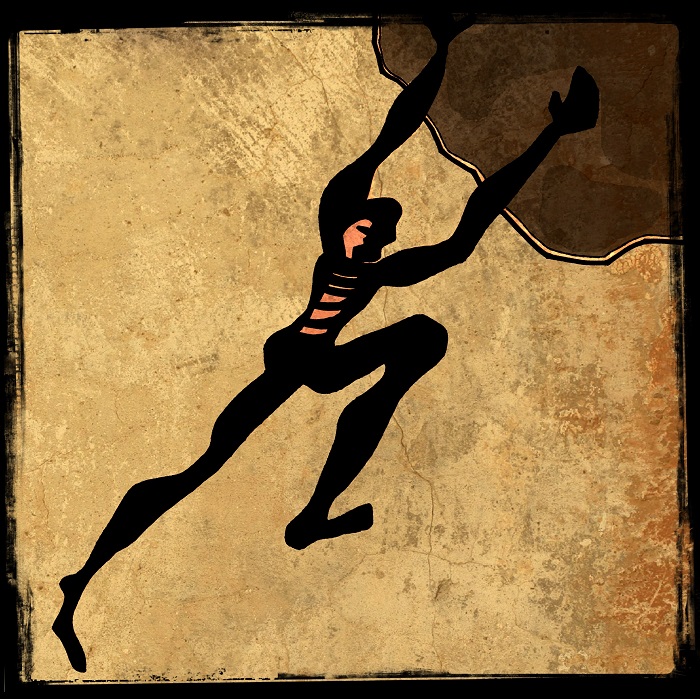
Sisyphus was the king of Ephyra in Greek mythology. The Gods punished him for tricking them. His punishment was to push a boulder to the top of the hill, upon which the boulder would then roll down the hill to the starting point. He had to push the boulder back up again, and the boulder would again roll down. This continued for eternity. Sisyphus was engaged in an endless task of futile effort. Do you feel like Sisyphus at work? What Sisyphus is trying to do is to push the boulder to the top of the hill. There is no value in this. What he is accomplishing is heavy labor and no progress. Sisyphus is a perfect metaphor for non-valued added work.

The myth of Sisyphus is closely related to respect for people. Sisyphus is engaged in a 100% non-value added activity. No matter how much kaizen he does, his activity would still remain 100% non-value added. Perhaps, he can come up with a cart with wheels to improve his work; still what he is doing ultimately does not add any value. He is going through a punishment. Is this comparable to an operator spending 10 minutes to an hour looking for tools or making parts that are poor quality such that they have to be reworked immediately?

Labor Density – Toyota:

Taiichi Ohno, the father of Toyota Production System has stated the following about work and motion;

Moving about quite a bit does not mean working. To work means to let the process move forward and to complete a job. In work there is very little waste and only high efficiency. Managers and foremen must endeavor to transform mere motion into work!

Here, work indicates value added activity. Ohno talks about ugoki, which in Japanese means wasted motion and tenuki, which in Japanese means an act of omission. Ugoki is when an operator is merely moving material from one location to the other. Tenuki is when an operator is carelessly performing an operation such as tightening a bolt half way. Hataraki, on the other hand in English can be translated as value added work.

Toyota describes Labor Density as follows;

   Work/Motion = Labor Density

The goal is to increase the Labor Density as much as possible. There are two ways this can be done. The first way is to increase the numerator (Work) by making the operators work harder. One way of increasing the numerator is when the work load is increased without improving the process itself. The second way, prescribed by Ohno, is to reduce the denominator (Motion) by eliminating waste.

The Counterintuitive Nature of Respect for People and TPS:

Employees at an organization give their valuable time and energy to the organization. Sometimes, it may be perceived that TPS is about getting the maximum benefit out of the employees. This is against respecting them, as taught by TPS. However, TPS is not all about numbers. Toyota’s goal has always been to reduce the overall man hours required by eliminating wasted motions. This concept eliminates those actions that do not produce profit and do not let the process to move forward. This concept utilizes the energy of the employees to effective and useful work. This is stated in an internal Toyota document from 1970’s as an expression for respect for humanity (or respect for people as it is termed now):

If the organization does not create an environment where the work performed by the employee is not value added, it is against the principle of respect for humanity.

The following is taken from Toyota no Genba Kanri,(the title of English translation was changed as Kanban – Just in Time at Toyota);

People’s sense of value cannot be satisfied unless they know they are doing something worthwhile.

island

Source: The first book Toyota Production System, Ministry of Education 1973.

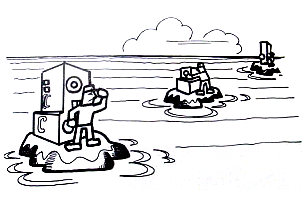
Respect for People is not about making the employees work harder, but increasing the value in what they do. Another way that Ohno talked about this was by introducing the idea of “work floating” and “work flowing”. The process can only progress when things flow. This is the concept of “work flowing”. Everything is connected, and work is pulled by the subsequent operation. However, when material is transported from one operation to another in batches, work is not flowing. It is now “floating”! Ohno called the different stations as remote islands.

Final Words:

Respect for people’s impact on productivity is also backed up by science. Dan Ariely, a professor of Psychology and Behavioral Economics at Duke University, has shown that making work meaningful increases productivity. More on this in a later post.

The Engineer in me tells me that with time, Sisyphus would have cut through the hill due to the constant rolling of the boulder. The boulder would turn into a small pebble from the constant rolling as well. Thus, maybe the moral of the story is to be persistent at what you do, and in the end you will succeed. There is also another explanation that the story is about the sun rising and setting. The sun is the boulder that gets pushed at the break of dawn, and reaches the top at noon time, and then rolls down to cause the night.

I will finish this post with a story I heard as a kid. Strangely enough, there is a character in Kerala’s mythology that is similar to Sisyphus. Kerala is a state in India, and I hail from there. The character of the story is called Naranathu Branthan, the madman of Naranathu. He is regarded as a very wise man today, but was seen by others as a madman in those days. One of his characteristics was that he had elephantiasis (a deformation caused by disease where the leg is swollen up) on his left leg. He used to roll a boulder up a hill every day, and then would let it roll down for his own enjoyment. He would clap his hands and laugh with glee as he watched the rock roll down. Unlike Sisyphus, the madman of Naranathu did it just for pure enjoyment. One day he met Kali, an Indian goddess, as he was retiring for the night. Kali was impressed by the madman and told him that she will give him a boon (blessing).

“I do not want any boons”, the madman said.

Kali informed him that she has to give a boon or a curse, and she insisted that he take a boon.

“I want to increase my life time by a second”, the madman replied.

Kali told him that she could not do that.

“Then I want to decrease my life time by a second”, the madman said.

Kali told him she could not do that either.

The madman thought for a while and asked Kali to move the elephantiasis from his left leg to the right leg. Kali complied, and the madman lived with elephantiasis on his right leg from that day onwards.

Always keep on learning…

In case you missed it, my last post was Stop Asking Why!

Stop Asking Why:

why_s

We have been trained to ask “why” a lot in lean. Today’s post is about asking “why”.

My friend was doing data analysis of ERP transactions, and he noticed that the material handler was creating transactions in two different programs for dock-to-stock components. This process created double entries and did not seem to add value. He asked the question “why” and the material handler reported that she was doing it because it was the way she was trained, and because it was the way they had always done it.

I was always curious about the “5 why” method. English is my second language, and in my native language (Malayalam), I cannot ask the “why” question because it means more than one thing.

For example, let’s look at the following question;

Why are you doing double transactions?

The same question has two different layers. You can get very different answers depending upon how the “why” question is perceived;

  • What causes you to do the double transactions?

The answer could be that the operator was trained to do that or that it is in the procedure.

  • What is the purpose of doing the double transactions?

The answer to this question now makes the waste visible. There is no need for doing the double transaction.

In the Malayalam language, I have to ask each question the way it is written above. The question cannot be perceived in a different manner. It is very direct. I believe that this is where the “5 Why” method in Lean does not get the same results for everybody. The “why” question has more than one meaning, as explained above.

First Question (What Caused):

The first question (what caused) is extrinsic in nature and this is valuable in a root cause investigation. We start from a phenomenon -> cause ->effect view. Thus, the effect happened due to the presence of a cause. The “why” question is a “what caused” question. It would help if the question is asked as a “what caused” question. This type of thinking is also evident in the P-M Analysis method at Toyota. I will discuss about this more in a future post.

As an example, let’s look at a problem where the operator was missing a step. There is a big difference between “why did the operator miss the step?” and “what caused the operator to miss the step?” The first question might lead down a rabbit hole that puts the blame on the operator (needs more training, operator is lazy, etc.). The second question focuses the spotlight on the process or the system (needs error proofing, needs more defined structure etc.). Jon Miller from Gemba Academy has talked about using “what caused” in place of “why” as part of the Practical Problem Solving process.

Second Question (What is the purpose):

The second question (what is the purpose) is intrinsic in nature and this is valuable in a continuous improvement activity or during gemba walks. We start from an “operation yields value” viewpoint.

We should train the employees to ask this question on their processes. This is how we can develop our employees.

As a leader in your organization, you should ask the right question to properly develop your employees.

Story of the Ham and the story of the Can of Beans:

The reader may be aware of the story of the ham. It goes something like this:

ham

The newlywed wife was making her first major dinner for her husband. She was cooking ham. The husband was helping his wife in the kitchen. He noticed that she was cutting the ends of the ham.

“Why are you cutting the ends of the ham?” asked the husband curiously.

“This is how I learned watching my mother” answered the wife.

Now the husband was more curious. He asked his wife to call up her mother to verify the answer. The wife called her mother inquiring about the cutting.

“Hmmm, that is how I learned watching my mother” answered her mother.

Now the wife was also curious, so she called up her grandmother and probed her about the curious cutting of the ham.

The grandmother started laughing.

“Back in the day, we could only afford a small stove. Our roasting pan was small and we cooked the ends separately.”

There is a similar story about opening cans:

can

In this story, the husband notices that the wife opens the cans upside down. The wife tells him that she learned that by watching her mother. A short phone call solved the mystery. Her mother used to store the cans in a dusty cellar. Instead of cleaning the top of the cans, she found it easy to just turn it upside down and then open it.

Next time, instead of asking “why”, ask “what caused” or “what is the purpose”.

Always keep on learning…

In case you missed it, my last post was Who is Right?


Who is right?

132

I came across a great graphic that I thought I should share.

right

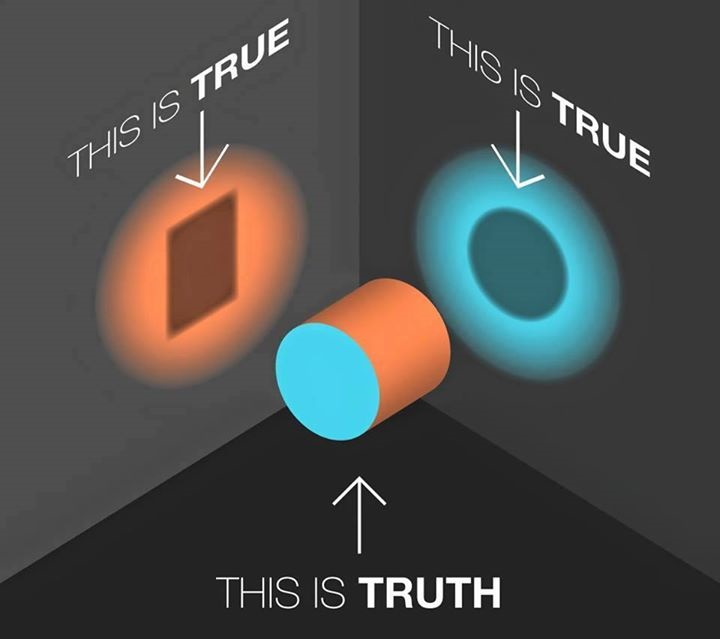
The graphic above shows the importance of understanding the perception of the other party involved. This helps us in understanding their viewpoint.

It is also important as a leader in your organization that when you are trying to spread your vision, to make sure you understand how your employees view your vision. The view at the top of the organization may not match the view at the bottom of the organization.

The view at the top of the organization may not match the view at the bottom of the organization.

Alexander the Great and the monk:

There is a great story I heard from Devdutt Pattanaik, that explains this really well. I have paraphrased it.

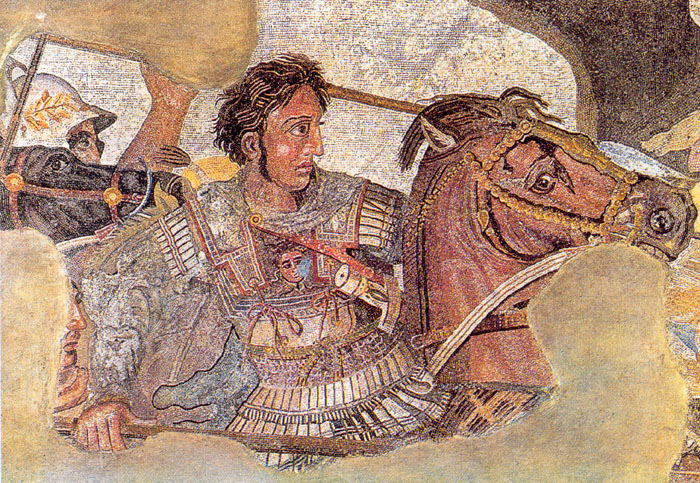
Alexander the great reached India after conquering a lot of nations. On his path to conquer India, he met a monk. The monk was sitting on a rock enjoying the beauty of nature. The monk was naked, and belonged to a sect of Jainism.

Alexander watched the monk for a while. The monk was just sitting and smiling, totally oblivious of Alexander watching him.

“What are you doing?” Alexander asked the monk.

“I am enjoying being nothing.” the monk looked at Alexander, and said.

“What a fool to sit there and do nothing?” Alexander laughed at him. Alexander saw the monk as wasting his life away, doing nothing.

“What are you doing?” the monk asked Alexander.

“I am conquering the world”, Alexander replied with great pride.

Now the monk started laughing at Alexander.

“What a fool to pursue such a futile effort?” the monk thought to himself.

The next time, you face an opposing view; try to understand where the other party is coming from. What is his viewpoint? Are you the monk or Alexander?

Always keep on learning…

In case you missed it, my last post was Lean and the Mountain.

Lean, Six Sigma, Theory of Constraints and the Mountain:

Matterhorn_Riffelsee_2005-06-11 - Copy.jpg

Recently there have been a lot of discussions about which is best – Lean, Six Sigma or Theory of Constraints? Is Lean Six Sigma better than Lean or Six Sigma?

In this brief post, I will try to view this question from my viewpoint. There is a saying based on the 9th century Zen Buddhist teacher Qingyuan Weixin which I have paraphrased loosely below;

“At first I saw the mountain as a mountain. Then when I learned more and more, I realized that the mountain is not a mountain. But now that I have learned it even more, I see that the mountain is a mountain again.”

If you change the term mountain with “Lean” and “a set of tools”, we can paraphrase it as follows;

“At first I saw Lean as a set of tools. Then I learned more and more, I realized that Lean is not a set of tools. But now that I have learned it even more, I see Lean as a set of tools again.”

You can change Lean to any other philosophy in the above saying. I was taken aback by the saying when I first read it. But gradually it made more sense.

When we first learn about Lean, you hear about the tools. You perceive it as a solid and fixed set of tools. This could include 5S, SMED, Poka Yoke, VSM etc. This kind of categorization and labeling makes us believe that Lean is a set of tools and something that is static. It makes us feel that we know it.

Lean = 5S + SMED + Poka-yoke + VSM +…….

Once we learn more and more, we come to realize that it is not static but dynamic. There is no “one size fits all” solution. There is no magic bullet. The strategy that worked for one company does not work for the other. Then we start to see Lean as not a set of tools.

Lean = Eliminate Waste

However, once we learn more and more, and start applying Lean, we gain a new awareness. We realize that Lean has an overall form and yet is free flowing. You realize that you need to understand the problem first, and then address the problem using the appropriate tool. You become spontaneous and you just know which tool to use when and how. Now, Lean has become a set of tools again.

Lean = Understand the context of the problem, and address the problem using the right tool

Always keep on learning…

In case you missed it, my last post was Chewbacca, Poka-Yoke and Respect for People.

Chewbacca, Poka-Yoke and Respect for People:

Sir Chewbacca

One of key concepts in Toyota Production System with respect to Quality (other than Jidoka/Autonomation) is Poka-Yoke (ポカヨケ), or Error Proofing. “Yokeru” in Japanese means “to avoid”. “Poka” means “error” or “blunder”. The story behind Poka-Yoke has an underlying theme of respect for people.

Baka to Poka:

The concept of Poka-Yoke was made famous by Shigeo Shingo, perhaps one of the best Industrial Engineers. He coined it as “Baka-Yoke”. “Baka” in Japanese means “idiot” or “fool”. Thus, Baka-Yoke means “fool proof”.

Around 1963, Arakawa Auto Body adopted a fool proofing device as part of a Baka-Yoke program. This device prevented seat parts from being spot welded backwards. The story goes that one of the part–time workers started crying when the supervisor explained about the fool-proofing device because the workers were sometimes mixing up left and right handed parts.

“Have I really been such a fool”, she asked. She ended up staying home that day. The supervisor had to go to her home to convince her to come back by explaining that she is not a fool. The device was being used because anybody can make inadvertent mistakes.

Shingo was told this story, and after some thought he changed the name to “Poka-Yoke”. Thus choosing a term that communicates more respect for the worker.

Poka-Yoke and Respect for People (RFP):

The story above shows that Shingo was being respectful and the new name of Poka-Yoke is certainly more meaningful since it does not put any blame on the employee. I have heard this story being used to explain Respect for People. But more than the story, I feel that the concept of Poka-Yoke is a part of Respect for People. You may have heard that things go wrong sometimes, especially when the operator is doing a highly repetitive activity. The big red book of Poka-Yoke by Nikkan Kogyo Shimbun states the following;

The idea behind Poka-Yoke is to respect the intelligence of the workers. By taking over repetitive tasks or actions that depend on vigilance or memory, Poka-Yoke can free a worker’s time and mind to pursue more creative and value-adding activities.

Extrinsic and Intrinsic Respect for People:

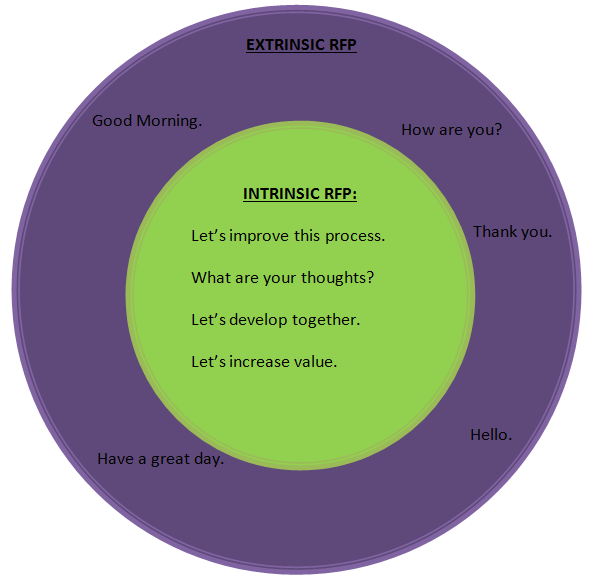
The more I read about TPS and Respect for People, I am coming to view Respect for People as Extrinsic and Intrinsic RFPs.

extrinsic and intrinsic

The Extrinsic RFP is superficial in nature. This is the basic respect you give to your fellow human beings. This is you being nice to people, the basic manners!

The Intrinsic RFP is the meat and potatoes or the true essence of Respect for People. As a leader in your organization you ensure that the work performed by an employee is value added. As the leader of your organization, it should be your job to develop your employees and ensure that they remain valuable assets. Toyota says that they believe in making people before making cars. Respect for people means that the organization is providing an environment where the employees are doing only value added activities.

How does one increase the worth of an employee? You can increase their worth by developing the employee to understand the value in his work. You can increase the worth by training him to look for gaps between the ideal state and current state. By understanding this gap, you can further develop him to take countermeasures and corrective actions to move closer to the ideal state. Ideally, the employee would now be able to train the employees underneath him. The employee is now at a stage to be making decisions and implementing the improvements on his own. In other words, he is empowered.

You might wonder whether Respect for People is value added. The traditional notion of value added activity is that the activity is something that the customer is willing to pay for. My view is that by creating the equation making things is making people, Toyota has transformed people development as a value added activity.

Chewbacca’s Connection to Baka:

I came across an article that suggested that maybe George Lucas created the name Chewbacca from the Japanese phrase “Chū baka” which means “Medium Stupid/Fool” or “Average Idiot”. There is of course no conclusive evidence for this. George has admitted that he was influenced by Japanese culture and movies while making Star Wars. I thought this was a nice story with relation to Poka-Yoke and Respect for People. Let Chewbacca remind you the need for Poka-Yoke as opposed to Baka-Yoke, and Respect for People.

Always keep on learning…

Image Credit – Sir Chewbacca (mcfeezy )

In case you missed it, my last post was “Would Ohno Change the term ‘Lean’”.

Would Ohno Change the Term “Lean”?

vlcsnap-2016-01-10-15h31m11s593

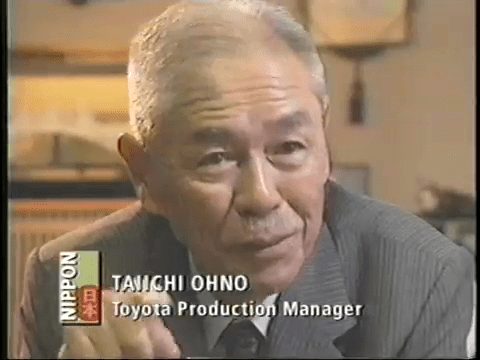
Taiichi Ohno is the father of Toyota Production System. Lean Manufacturing is based on Toyota Production System. The term “Lean” was coined by John Krafcik in his MIT Sloan 1988 Fall paper “Triumph of the Lean Production System”. His terminology was “Lean Production” or simply “Lean”. He noted that;

“Plants operating with a “lean” production policy are able to manufacture a wide range of models, yet maintain high levels of quality and productivity”.

There have been many discussions about whether “Lean” is the correct terminology or not. Lean is supposed to have a negative connotation with it. There is a tendency to assume that Lean indicates reduction – reduction in inventory, reduction in cycle time, reduction in costs etc.

I was pleasantly surprised when I came across Taiichi Ohno’s thoughts on “Lean” Management. As indicated in my last post, Ohno started a consultancy group soon after leaving Toyota. This group was called the New Production System Research Association. Isao Shinohara wrote a book on this called “New Production System – JIT Crossing Industry Boundaries”, in 1985. The main theme of this book is that the TPS ideas are applicable across multiple industries. This book also had a section with an interview with Taiichi Ohno.

Limited, Not Leaner, Management:

In Ohno’s words;

“The idea is to produce only what can be sold and no more. The idea is to limit, not necessarily to reduce, the quantity. The important thing is to keep production costs low whle limiting the production level. It is meaningless to say that producing 15,000 units will reduce production costs when you can only sell 10,000 units.”

He continues;

“The essence of limited management (genryo keiei) and limited production (genryo seisan) is to produce what can be sold at the lowest possible cost.”

My favorite section of the interview was when Ohno was asked about reducing or eliminating inventory.

“Shinohara – Many people think that Toyota Production System is a method for reducing inventory or eliminating inventory altogether.

Ohno – That is not right. I’ve said this so many times, but people don’t seem to understand. The Toyota production system is a philosophy of changing the production and management flows.”

Analogy of a Boxer:

boxer

Taiichi Ohno compares limited production to the regimen of a boxer in his book “Workplace Management”. The boxer has to be in a specific weight classification. If he misses a few training sessions and he puts on weight, he can no longer compete in his class. He would then have to diet to slim down and maintain his weight. This is akin to a company trying to reduce inventory. If he loses more than his intended weight, he will run out of energy and lose the fight. This sort of slimming down is undesirable. Ohno advises against going on a diet for a company without thorough understanding. He calls it a dangerous idea to trim down so much that the essential meat of the company is cut into.

Always keep on learning…

In case you missed it, my last post was “Don’t Strive for Perfection – 60% is good enough”.

60% is Good Enough

AN00222094_001_m

It is 2016! It is a new year and it is time for New Year’s resolutions.

I have been thinking about what I should write for New Year’s. I wanted this post to be something personal.

Pursuit of Rationality:

I came across the phrase “Pursuit of Rationality” in “Toyota Production System – First Textbook”, an internal document at Toyota from the 1970’s. The loose English translation of the relevant section is given below;

“Through thorough observation and pursuit of rationality, we can lay the strong foundation upon which we can build the strong castle of improvement”.

My interest piqued at the phrase “pursuit of rationality”. This has a strong resemblance to “pursuit of excellence or perfection”. It is explained in Taiichi Ohno’s book, Toyota Production System – Beyond Large Scale Production, that rationalization in Japanese writings indicate activities undertaken to upgrade technology, improve quality, and reduce costs. Being rational is being value adding, and not producing waste.

My message to myself and to the readers of my blog is also about pursuit – the pursuit of excellence while pursuing rationality. This may be better explained in Ohno’s thought process as well. Soon after leaving Toyota, Ohno founded the New Production System Research Association, a consulting group with his friends. This group had 25 doctrines that they also pursued. I am focusing on one of these for this New Year!

 Don’t seek perfection. 60 percent is good enough!

We spend a lot of time sharpening our axes, and never strike the tree. We try to get everything just perfect to start doing something, write a post, write a book, start coding etc. We wait and wait, and we end up never doing what we wanted. So let’s pursue rationality this year, and take action. We can always make it better, once we have started it. Let’s plan a little and then DO a little.

Step by Step:

The following is a story I heard from India.

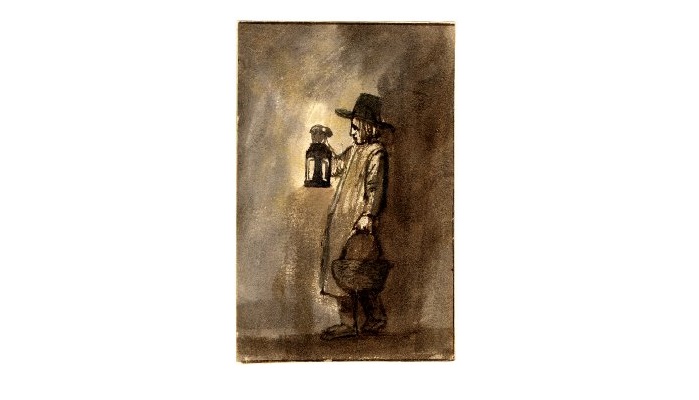
It was pitch dark, and a man had to go to the next town miles away. All he had was a small lantern, and this could light only a few steps in front of him. The man just stood there not knowing what to do. The journey seemed so long and the night seemed very dark. He became sad and depressed.

A monk saw the man standing in front of his house, and asked the man what he was doing.

“I have to go to the next town, and I am packed for the trip. I do not know what to do. The journey seems long, and the night seems dark,” the man responded. “All I have is this small lantern.”

“You do not need a big lamp to illuminate the whole way,” the monk explained. “As you move, the light will move in front of you so that the next few steps are always clear. All you need to do is to hold on to this light and start walking. As the darkness clears with the rising of the sun, if you keep walking you will reach your destination”.

Always keep on learning…

I wish all my readers a prosperous and a rational 2016!

In case you missed it, my last post was about The Rashomon Effect at the Gemba.”

The Rashomon Effect at the Gemba

R

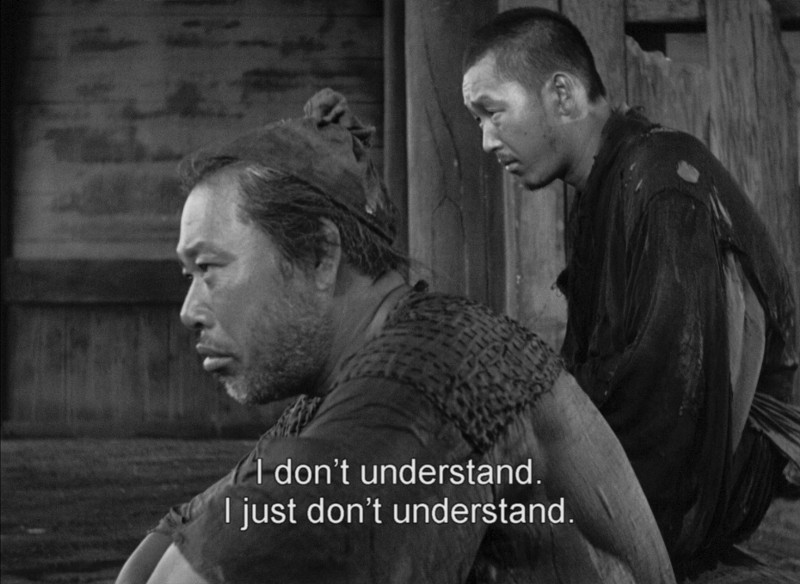
“Rashomon” is a classic Akiro Kurosawa film, based on the story “In a Grove” by Ryūnosuke Akutagawa. In the movie, the same series of events are described by four people from different backgrounds. Each version of the story varies differently than the others. All of the four characters saw and experienced the same events, yet they all tell different versions of how things unfolded and who did what. This has come to be called as “Rashomon Effect” in pop culture. The opening line of the movie is “I don’t understand. I just don’t understand”, and this lays the groundwork of the whole movie.

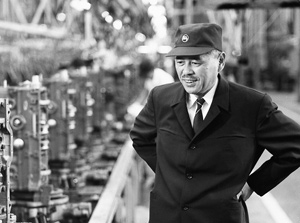
This type of “Rashomon Effect” can also happen at the gemba. One of the great stories about Taiichi Ohno, the father of Toyota Production System, is about the Ohno Circle. The story goes that Taiichi Ohno would take the Engineer or the supervisor to the floor, and if Ohno feels that the supervisor does not see what he sees or that the supervisor does not understand his viewpoint, he would draw a circle on the production floor and ask the supervisor to stand inside it. The supervisor has to stand inside the circle until he starts to see the operational wastes. Then his job is to immediately fix the problems. Ohno is seeing all the waste and problems on the floor. The same activity is also being seen by the engineer. He does not see any of the wastes that Ohno sees. Ohno is said to have been short tempered with this and would scold the engineers. Ohno would return to the floor sometimes 6-8 hours later and would ask what they saw after standing in the circle.

ohno

As I was reading through “Toyota Production System (Kanban) Book”, an internal Toyota document from 1970’s, I came across a paragraph about the Ohno Circle. The rough translation is as follows;

It is expected that the supervisors were scolded by Ohno on the floor. Ohno would make them stand on the floor by drawing a circle. This is similar to being scolded by teacher at school as in “go stand in the hallway!” At school, the purpose is quite different, which is to exclude the student from the classroom. On the floor, the supervisor has to see the problem and improve it. This problem can come into view only by continuous observation in that position, inside the circle.

“Why, why, why, why, why”, ask why five times. This is therefore referred to as the observation method.

I enjoyed that the document tries to differentiate between standing in the hallway and standing on the production floor.

The Ohno Circle exercise is just that – an exercise to strengthen your waste sensors. The more you look, the more you observe. The more you observe, the more you become aware of things differently. Why are there three bins of components on the table? Why does the operator spend time picking the “right” component for assembly? Why does the operator check the component 4-5 times? And so on. Pretty soon the Rashomon effect erodes away. Now the waste becomes visible. Once the waste is identified, then Ohno instructs to ask why again and again, until the root cause can be identified and the issue is fixed.

Bicycle Riders – a Zen Story:

The Rashomon effect reminds me of a Zen story I heard:

A Zen Teacher saw five of his students return from the market, riding their bicycles. When they had dismounted, the teacher asked the students,

“Why are you riding your bicycles?”

The first student replied, “The bicycle is carrying this sack of potatoes. I am glad that I do not have to carry them on my back!”

The teacher praised the student, saying, “You are a smart boy. When you grow old, you will not walk hunched over, as I do.”

The second student replied, “I love to watch the trees and fields pass by as I roll down the path.”

The teacher commended the student, “Your eyes are open and you see the world.”

The third student replied, “When I ride my bicycle, I am content to chant.”

The teacher gave praise to the third student, “Your mind will roll with the ease of a newly tuned wheel.”

The fourth student answered, “Riding my bicycle, I live in harmony with all beings.”

The teacher was pleased and said, “You are riding on the golden path of non-harming.”

The fifth student replied, “I ride my bicycle to ride my bicycle.”

The teacher went and sat at the feet of the fifth student, and said, “I am your disciple”.

Always keep on learning…

In case you missed it, my last post was about “Brooks’ Law – Mythical Man Month”.

Brooks’ law – Mythical Man-Month

mitico_cap1_1

I recently finished reading the book “The Mythical Man-Month”. This book was written by Frederick Brooks Jr. and first published in 1975. This book has been quoted as “the Bible of Software Engineering.” It is based on the experiences of the author at IBM while managing the development of OS/360.

Although the topic of the book is software engineering, I believe that the principles identified in the book are applicable to any project.

The main idea of the book is about the mythical man-month which may be intuitive to some people. This basically can be explained as follows;

  • Project cost is proportional to the number of people involved. Cost = number of men * number of months.
  • Project progress is not proportional to the number of people involved. Number of men or people and months are not interchangeable.

Brooks says “Man-month as a unit for measuring the size of the job is a dangerous and deceptive myth.

This book also gave us Brook’s law. Brook’s law can be stated as follows;

“Adding manpower to a late software project makes it later.”

There is some resemblance to Braess’ paradox in traffic networks, which can be loosely stated as “Adding extra capacity to a network in some cases brings down the overall performance of the network”. I will discuss more about Braess’ paradox at a later time.

Brooks’ Law:

There are multiple factors that make Brook’s law work. The first is the amount of time needed for a new member to get accustomed to the project. This is treated as “ramp-up” time. The second factor is communication. As more members are added to a team, the complexity of communication requirements increases. This is referred to as communication overhead. The third factor is the project type. If there are sequential tasks that are independent in nature, this results in delays due to the first two factors. When a task cannot be partitioned because of sequential constraints, the application of more effort has no effect on the schedule. In Brooks’ words; “The bearing of a child takes nine months, no matter how many women are assigned.”

Why Did the Tower of Babel Fall?

This is perhaps the section that I enjoyed the most. Brooks performs a “management audit” on the Babel project. The tower of Babel is a famous story in Bible, in the book of Genesis. The people of the world wanted to build a tower that reached to the heavens. In the story, the people spoke only one language, and God made the people speak in different languages so that they could not understand each other, and the tower was never completed.

Brooks reviewed the following factors for the “Babel Project”;

A clear mission: There was a clear mission – to build the tower.

Manpower: There was plenty of manpower.

Materials: Clay and asphalt were abundant.

Time: There was no time constraint noted in the story.

Technology: The technology available at that time was adequate.

The Tower of Babel was never built because of two reasons – communication and organization. Brooks explains that lack of effective communication led to lack of coordination. When coordination failed, the project came to a halt. In today’s world, lack of effective communication is very relevant. In my view, the point of organization is about system optimization. Pursuit of local optimization will always result in a decrease of system performance.

I highly encourage the reader to read the Mythical Man-Month book. The first edition is available electronically here.

Funny Project Management Story:

I will end with a story I heard about project management.

A man is flying in a hot air balloon and realizes he is lost. He reduces height and spots a man down below. He lowers the balloon further and shouts:

“Excuse me, can you help me? I promised my friend, I would meet him half an hour ago, but I don’t know where I am.”

The man below says, “Yes, you are in a hot air balloon, hovering approximately 30 feet above this field. You are between 40 and 42 degrees North latitude, and between 58 and 60 degrees West longitude.”

“You must be an Engineer,” says the balloonist.

“I am,” replies the man. “How did you know?”

“Well,” says the balloonist, “everything you have told me is technically correct, but I have no idea what to make of your information, and the fact is I am still lost.”

The man below says, “You must be a project manager”

“I am,” replies the balloonist, “but how did you know?”

“Well,” says the man, “you don’t know where you are or where you are going. You have made a promise which you have no idea how to keep, and you expect me to solve your problem. The fact is you are in the exact same position you were in before we met, but now it is somehow my fault.”

Always keep on learning…

In case you missed it, my last post was about “The Mystery of Missing Advent Calendar Chocolates”.