The Big Picture of Problem Solving:

big_picture

In today’s post, I will be looking at Problem Solving. I am a Quality Professional, and this is a topic near and dear to my heart. There are several problem solving methods out there which includes tools like the Ishikawa Diagram, 5 Why, etc. I will try to shed light on the big picture of problem solving.

Sometimes we fall into the trap of reductionist thinking when trying to solve problems. The reductionist approach is to take things apart and study the parts in isolation. We need to understand that problems are sometimes attributed to the emergent properties of the system and are manifestations of the interactions between the parts. This means that a system has parts, and that the properties of the system are the sum of the whole of the parts and the interactions between the parts. The parts themselves cannot perform the function of the system. For example, the wheel of a bicycle cannot do anything by itself. The same is applicable to the handle. Even when the different parts are put together, the bicycle by itself cannot do anything by itself. When there is a rider, then there is the possibility of the pedals moving, and the wheels rolling. We can say that the system is the bicycle and the rider combined together, and this system has a purpose – to go from one place to the other.

From a problem solving standpoint, we should use both reductionist and holistic approaches. Reductionist thinking is mechanistic in nature, and it does not look at how everything works in relation to one another. However, this thinking has value and is needed to some extent. Russell Ackoff, the famous Systems Thinker, has stated that reductionist thinking, the idea that everything can be reduced to its individual parts, helps us in understanding how a system works. However, this does not explain why a system works the way it does. This requires holistic thinking. Holistic thinking is the “big picture” thinking – how the parts interact together to align with the system’s purpose, and how the system’s emergent properties align with the system’s purpose. This is the thinking that leads to the understanding of why a system is acting the way it is.

When we add humans in the mix, we are introducing parts that have a purpose on its own that may not align with the system’s purpose. The problems that arise from the interaction of humans and other parts in the system are tricky. One of my favorite stories on this is the Cobra Effect story. During the British rule in India, there was a concern about the high number of venomous snakes, especially deadly Cobras, in Delhi. The British regime in Delhi posted rewards for dead Cobras. This had some impact initially since the farmers started killing Cobras. However, things soon got out of hand when some of the farmers started breeding Cobras in order to get the reward. The reward program was scrapped by the British regime when they became aware of this. The interaction between the farmers and the reward system was strong, and the purpose of the farmers was to get as much reward as possible, where as the intent of the system as desired by the British regime was to eliminate or reduce venomous snakes. It is not easy to predict all things that can go wrong, however as we build a system we should look into resilience properties of the system with the expectation that some interactions have been overlooked.

This also reminds me of a manufacturing related story from my Materials Selection class in school. A plant started utilizing ultrasonically welded plastic parts to which plastic tubes were assembled on to. After 6 months, an operator noted that all of the assembled components in inventory were cracked. This puzzled everybody, and the finger was first pointed at the suppler that provided the welded plastic parts. However, the inventory of the incoming components did not show any cracked parts. It was later identified that a new operator started using alcohol as a lubricant to assemble the tubes onto the plastic parts. The operator was trying to make the operation easier to do. The alcohol-induced chemical-stress along with the residual stress from the welding led to the cracking. The human interaction on the part – the ease to assemble was not looked at. The operator’s purpose was to make his process easy and did not look at the big picture – how this interacted with other parts in the system.

Reductionist thinking alone is linear in nature and leads to quick fixes and band-aids.  Some examples are simply replacing a part of the system or providing training alone as the reaction to the problem.

Holistic thinking, on the other hand, is not linear in nature and does not lead to quick fixes with the hope that it addresses the problem. Holistic thinking results in either changing a part of the system, or changing how a part interacts with the system. Both of these result in a modified system.

I have identified nine points to further improve our big picture understanding of problem solving;

  • Problems as Manifestations of Emergent Properties:

Sometimes, the problems are manifestations of the emergent properties in the system. This means that the interactions between parts in the system, when the system is taken as a whole, resulted in the problem. This type of problem cannot be addressed by looking at the parts alone.

  • Cause- Effect Relationship is not Always Linear:

It is not likely that the cause-effect relationship is always linear. Factor “A” does not cause Effect “B”. Factor “A’s” in the interaction with Factor “D” and Factor “E” in the presence of the environment of the system resulted in the problem. The problem and the cause(s) are not always direct and easy to trace.

  • It’s About Interactions:

When trying to solve a problem, understand the interactions in the system first. This was explained by the two stories above.

  • Does Your Solution Create New Problems?

The “verification” stage of a problem solving activity is always deemed as important. This is when we verify that our solution addresses the problem. However, we also need to look at whether the solution can create a new problem. Are we impacting or creating any new interactions that we are not aware of? This is evident from the adage – “Today’s problems are created by yesterday’s solutions”.

  • Go to the Gemba:

The best and possibly the only way to truly understand the interactions and how the system behaves in an environment is by going to the Gemba – where the action is. You cannot solve a problem effectively by sitting in an Office environment.

  • How Much Does Your Solution Fix the Problem?

There is always more than one solution that can address the problem. Some of these are not feasible or not cost effective. One solution alone cannot address the problem in its entirety. There are two questions that are asked in a problem solving process. a) Why did the problem happen? And b) Why did the problem escape the production environment? In the light of these questions, we should understand, how much of the problem can be fixed by our solutions.

  • What is the Impact of Environment?

Sometimes problems exist in certain conditions only. Sometimes problems manifest themselves in certain environmental conditions. The most recent Wells Fargo incident is reported to have started by the push from the Management to meet the aggressive sales goals. This created an environment that eventually led to fraudulent activities. An article on CNN reported; “Relentless pressure. Wildly unrealistic sales targets.” The employees were asked to sell at least eight accounts to every customer, from about three accounts ten years earlier. The reason for eight accounts was explained by the CEO as – “Why eight? “The answer is, it rhymed with ‘great,

  • Quick Fixes = Temporary Local Optimization:

Problems persist when the first reaction is to put band-aids on it. We have to see quick fixes as an attempt to temporarily optimize locally in the hopes that the problem will go away. This almost always leads to an increase in cost and reduction in quality and productivity.

  • Involve the Parts in your Solution:

It goes without saying that the solutions should always involve the people involved in the process. It is ultimately their process. It is our job to make sure that they are aware of the system in its entirety. For example, train them on how a product is eventually used. What is the impact of what they do?

Always keep on learning…

In case you missed it, my last post was In-the-Customer’s-Shoes Quality.
In-the-Customer’s-Shoes Quality:

shoes

I had a conversation recently with a Quality professional from another organization. The topic somehow drifted to the strict Quality standards in Japan. The person talked about how the product gets rejected by his Japanese counterparts for small blemishes, debris etc. The “defects” met the corporate standards, yet the product gets rejected at their Japanese warehouse. This conversation led me to write this post. My response was that the Japanese were looking at the product from the eyes of the customer. The small blemishes and debris impact the perception of quality, and can bring distaste as the product is being used.

In Japanese, the term for quality is Hinshitsu (hin = goods, and shitsu = quality). With the advent of TQM (Total Quality Movement), the idea of two “Qualities” was made more visible by Professor Noriaki Kano. He termed these;

  1. Miryokuteki Hinshitsu, or Attractive Quality
  2. Atarimae Hinshitsu, Must-Be Quality

These concepts were not exactly new, but Prof. Kano was able to put more focus on this. The “Attractive Quality” refers to something that fascinates or excites the customer and the “Must-Be Quality” refers to everything that is expected from the item by the customer. For example, a new phone in the market is expected to function out of the box. It should be able to make calls, connect to the internet, take pictures, play games etc. But if the phone came with the case or if the phone came with the name of the owner etched on the back, then that particular attribute is exciting for the customer. It was not something that he was expecting, and thus it brings “joy” to the customer. The interesting thing about the Attractive Quality is that today’s Attractive Quality becomes tomorrow’s Must-Be Quality. Would you purchase a phone today without the ability to browse the internet or take pictures? These features were added as Attractive Quality features in the past, and they have become Must-Be Quality features today.

The Japanese Quality guru Kaoru Ishikawa called these “Forward-looking qualities” and “Backward-looking qualities”. He called the special features like “easy to use”, “feels good to use” etc. as forward looking qualities. In contrast, “absence of defects” was called as backward looking. The father of Statistical Quality Control, Walter Shewhart called these as Objective and Subjective qualities.

Sometimes the Miryokuteki Hinshitsu also refers to the “Aesthetic Quality” of the product. Apple products are famous for this. There is a lot of attention paid by the Apple Designers for the Aesthetic Quality of their products. The IPhone should feel and look good. Even the package it comes in should say that it contains a “quality product”. In the Japanese culture, the concept of Aesthetics is rooted in “Shibui” and “Mononoaware”. Shibui can be defined as a quality associated with physical beauty “that has a tranquil effect on the viewer”. It brings to attention the naturalness, simplicity and subdued tone. Mononoaware on the other hand refers to the merging of one’s identity with that of an object. (Source: The Global Business by Ronnie Lessem, 1987).

The Total Quality Movement (Or Total Quality Control Movement as it is often referred to in the Japanese books) was taken quite seriously by the Japanese manufacturers. The following concepts were identified as essential;

  1. Customer orientation
  2. The “Quality first” approach
  3. Quality is everyone’s responsibility – from top management down
  4. Continual improvement of Quality
  5. Quality assurance is the responsibility of the producer, not of the purchaser or the inspection department
  6. Quality should be extended from the hardware (i.e., the product) to the software (i.e., services, work, personnel, departments, management, corporations, groups, society and the environment)

Source: Kaoru Ishikawa

Rather than relying on inspection, the Japanese manufacturers, including Toyota and Nissan, believed in building in quality throughout the entire process. The awareness of quality was seen as essential by the operator involved in making the product. It became a matter of owning the process and taking pride in what the operator did. Kenichi Yamamoto, the previous chairman of Mazda, is quoted to have said by BusinessWeek – “any manufacturer can produce according to statistics.”Yamamoto’s remark is about not focusing simply on quantities. Even when we are focusing on quality we should focus on both the objective and subjective quality. This reflects how our company culture views the ownership of quality.

Final Words:

I have always wondered why the windows in an airplane are not aligned with the airplane’s seats. It appears that the plane’s body is built based on a standard, and the seats are later added based on what the plane carriers want. There is not always a focus on what the customer wants, which explains why the seats are not aligned with the windows. I refer to the idea of the quality of a product as “in-the-customer’s-shoes quality”. If you were the customer, how would you like the product?

I will finish off with a story I heard from one of the episodes of the delightful TV show, “Japanology Plus”. This story perfectly and literally captures the concept of in-the-customer’s-shoes quality.

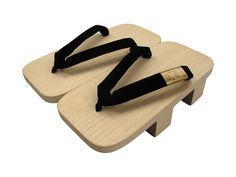
The episode was interviewing a “Japanophile” who was living in Japan for quite a long time. He talked about one incident that truly changed his view on Japan. He went to a small tea house in Japan. He was requested to remove his shoes before entering the room. After the tea, when he came out he was pleasantly surprised to see that his shoes were now moved to face away from the room. This way, he did not have to turn around and fumble to put his shoes on. He can simply put the shoes on his way out without turning around. He was taken aback by the thoughtfulness of the host.

Always keep on learning…

In case you missed it, my last post was “Four Approaches to Problem Solving”.

Four Approaches to Problem Solving:

dc

As a Quality professional, I am always interested in learning about problem solving. In today’s post I will be looking at the four approaches to Problem Solving as taught by the late great Systems Thinker, Russell Ackoff. He called these “Problem Treatments” – the ways one deals with problems. They are;

  1. Absolution – This is a common reaction to a problem. This means to ignore a problem with the hope that it will solve by itself or it will go away of its own accord.
  2. Resolution – This means to do something that yields an outcome that is “good enough”, in other words, that “satisfices”. This involves a clinical approach to problems that relies heavily on past experience, trial and error, qualitative judgment, and so-called common sense.
  3. Solution – This means to do something that yields the best outcome that “optimizes”. This involves a research approach to problems, one that often relies on experimentation, quantitative analysis, and uncommon sense. This is the realm of effective counterintuitive solutions.
  4. Dissolution – This means to redesign either the entity that has the problem or its environment in such a way as to eliminate the problem and enable the entity involved to do better in the future that the best it can do today – in a word, to “idealize”.

I see it also as the progression of our reaction to a big problem. At first, we try to ignore it. Then we try to put band aids on it. Then we try to make the process better, and finally we change a portion of the process so that the problem cannot exist in the new process. Ackoff gave a story in his book, “The Democratic Corporation”, to further explain these ideas. Ackoff was called in by a consultant to help with a problem in a large city in Europe. The city used double-decker buses for public transportation that had a bus driver and a conductor in it. The driver got paid extra based on how efficiently he could keep up with the schedule, and the conductor got paid extra based on how efficiently he could collect fares and keeps track of receipts. The conductor was also in charge of letting the driver know when the bus was ready to move by signaling to them from the rear entrance to the bus. During peak hours, problems arose. To meet the high volume of passengers, conductors started to let passengers in without collecting fares with the thought that they could be collected between stops. The conductors could not always get back to the entrance to signal to the driver that they were ready to move. The drivers started to determine themselves when they could move by trying to see that no one was getting off or on to the bus. All this caused delays that were costly to the driver. This resulted in great hostility between the drivers and the conductors. The drivers were trying to do what was best for them, and the conductors were trying to do what was best for them.

The management at first tried to “absolve” by pretending that the problem would go away on its own. When things got worse, the management tried to “resolve” by proposing to retract the incentives. This was not met well by both the drivers and conductors, and the management was not willing to increase their wages to offset the incentives. Next the management tried to “solve” the problem by proposing that the driver and the conductor share the total sum of incentives. This also was not met well by the drivers and the conductors because of lack of trust and unwillingness to increase their interdependence.

Finally, Ackoff proposed a modification to the process. He proposed that during the peak hours the conductors should be taken off the bus and placed at the stops. This way he can collect the fares from the people already at the stop, and he can verify the receipts of the people getting off the bus. He also can easily signal the bus driver. The problem was “dissolved” by this modification to the process.

Final Words:

One of the best teachings from Ackoff for Management is that to manage a system effectively, you must focus on the interactions of the parts rather than their behaviors (actions) taken separately. The next time you are facing a problem, think and understand if you are trying to absolve, resolve, solve or dissolve the problem. I will finish with a great story from Osho about the butcher who never had to sharpen his knife.

There was a great butcher in Japan and he was said to be a Zen master. After hearing about him, the emperor came to see him at his work. The emperor asked only one thing, about the knife that he used to kill the animals. The knife looked so shiny, as if it had just been sharpened.

The emperor asked, “Do you sharpen your knife every day?”

He said, “No, this is the knife my father used, and his father used, and it has never been sharpened. But we know exactly the points where it has to cut the animal so there is a minimum of pain possible — through the joints where two bones meet. The knife has to go through the joint, and those two bones that meet there go on sharpening the knife. And that is the point where the animal is going to feel the minimum pain. I am aware of the interactions.”

“For three generations we have not sharpened the knife. A butcher sharpening a knife simply means he does not know his art.”

Always keep on learning…

In case you missed it, my last post was Respect for People in light of Systems Thinking.

Respect for People in Light of Systems Thinking:

rc

Respect for People is one of the two pillars in the Toyota Way and in today’s post I will be looking at Respect for People in the light of ideas from the late great Systems Thinker, Russell Ackoff. This post is inspired by Ackoff’s teachings.

Back in the old days (Renaissance period onwards – 1400’s) humans knew little and thought that they knew everything. There was a lot of stress on “Analysis” and “cause and effect” thinking. The thinking behind “Analysis” is that one learns a phenomenon by taking things apart. This was seen as the only way to understand the universe – by breaking down things and studying each part. This fostered the idea of cause and effect thinking. Every relationship was seen as a cause and an effect, in a linear fashion. In Ackoff’s words, this led to interesting doctrines;

The commitment to cause-and-effect thinking led to … if we want to explain a phenomenon, all we have to do is find its cause. To further explain that cause, we simply treat it as an effect and find its cause. But is there any end to this causal regression? If the universe can be completely understood, there had to be a first cause—and this was the official doctrine as to why God exists. God is the only thing in the universe that could not be explained because God was the first cause.

This type of linear thinking led us to thinking of the world as a clockwork machine. The Industrial Revolution introduced the machine age where work could be mechanized. Work was seen in a reductionist viewpoint as a simple transformation of matter through energy. Frederick Taylor, proponent of Scientific Management, introduced the ideas of improving efficiency through principles of Industrial Engineering. Work could now be broken down into basic elements – analysis, and each element can be focused on to improve it. The modern factory consisted of machines and humans engaged in these basic tasks in a clockwork fashion. In Ackoff’s words;

The machines and people were then aggregated into a network of elementary tasks dedicated to the production of a product—the modern factory. In the process of mechanizing work, however, we made people behave as though they were machines. We dehumanized work.

This goes against the idea of Respect for Humanity. Toyota teaches that its production system is a Thinking Production System, and that their operators are not just a pair of hands.

Ackoff concludes that the idea of free will, introduction of the Uncertainty principle and Systems Thinking launched the Systems Age in the first half of Twentieth Century. In Systems Thinking, the approach of “Synthesis” was introduced. “Synthesis” uses the opposite approach to “Analysis”.” Synthesis” is the idea of putting things together to understand the system. In Ackoff’s words;

The first step of synthesis is to determine the larger system of which the system to be explained is a part. The second step is to try to understand the larger system as a whole. The third step is to disaggregate the understanding of the whole into an understanding of the part by identifying its role or function in the containing system.

If Analysis leads to Knowledge, Synthesis leads to Understanding! However, this also meant that we may never be able to understand the whole universe. The concept of Synthesis forces us to look at the impact of the environment and each factor and how they interact with each other. This was missing in Analysis. This idea led to the understanding that an organization is not a simple mechanistic clockwork where people are mere forms of “living machinery”. An organization in the light of Systems Thinking becomes a Social Technical system. Ackoff advises us;

Most managers are still acting as though the corporation is a mechanism or an organism, not a social system. Although we don’t normally treat machines as organisms, one legacy from the Machine Age is that we have a tendency to treat organisms as machines, and even social systems as machines. That has a very limited usefulness, but it is not nearly as useful as looking at a social system as a social system.

This provides further insight into the concept of Respect for People in my opinion. Respect for People is not thinking in terms of the Machine Age. It is about looking at the social system and seeing workers as people who can think and come up with better ways of doing things, and where the system gains from their input.

Final Words:

I encourage the readers to read or watch anything that is available from Russell Ackoff. I will finish off with a “Zen” story from Japan that talks about the harmony of the whole;

There’s a story about the famous rock garden at Ryōanji temple. The story goes that when the garden was finished, the designer showed it to the priest and asked him what he thought.

The priest was delighted. “It’s magnificent!” he said. “Especially that rock there!”

The garden designer immediately removed the rock. For him, the harmony of the whole was paramount.

Always keep on learning…

In case you missed it, my last post was The Value of Silence.

The Value of Silence:

quarter-rests

Today’s post is an introspective post for me. I will be looking at “silence”, its cultural implications in Japan, its use as a form of self-improvement and some stories about silence in the Toyota Production System. I was in a meeting recently, and during my self-reflection time at night, I observed that I did not learn or try to understand the perspective in the meeting. I was not listening because I was trying to prove my knowledge to the other side. I was not being silent or listening. Perhaps, I am a harsh critic of myself. But I have made up my mind that I will be practicing silence more.

One of my favorite sayings about silence is;

Knowledge speaks and wisdom listens.”

This is sometimes attributed to the great musician Jimi Hendrix. However, there is no proof that he did say this. There is a similar quote by Oliver Wendell Holmes;

“It is the province of knowledge to speak and it is the privilege of wisdom to listen.”

I am an avid fan of Japanese Culture and interestingly, silence is an important facet in Japanese culture. It is said that it is tough to negotiate with Japanese businessmen since they employ long periods of silence that others are not used to. In the West, silence is generally unbearable. It is viewed as a break in communication. In Japanese culture, silence is viewed as a communicative act. Silence can be effectively utilized in negotiations since it can make the other side nervous. In the Japanese culture, however, silence has several positive attributes which includes being respectful and polite, and avoiding confrontation.

I am looking at silence in four regards as a practice of self-improvement;

  • Respect for others:

Stephen Covey said “Seek first to understand and then to be understood.” He identified this as the fifth habit of his Seven Habits of Highly Effective People. In Zen, there is a great lesson that you are given two ears and one mouth, and that their use must be in the same ratio – listen two times more than you speak.

  • Self Reflection:

Engaging in silence is a pre-requisite for self-reflection. This allows the mental fog to clear out and the mind to organize better. Think of silence as an act of clearing up space in your mind to allow deep-felt thoughts to come in.

  • Teaching:

Being silent sometimes prompts the other side to keep on talking and perhaps encourage them to come out of their comfort zone. This can have the effect of being a good sounding board for their ideas. This is similar to the Socratic teaching method of asking questions. But in this case, remaining silent allows the other side to focus on their thoughts more and find the solutions to the problems at hand.

  • Effectively Communicating:

This may seem counterintuitive, but engaging in silence can improve your communication. In Japanese calligraphy, the empty space is as important as the written words. This empty space is quite similar to the “negative space” in design. It is the valleys that point our attention at the hills. The same is applicable for the use of effective silence in communication.

Silence in the Toyota Literature:

There are two instances I have seen where “silence” jumped out at me. The first one was in Masaaki Sato’s “Toyota Leaders”, where Sato talked about the ex-President and Chairman of Toyota. Eiji was a person who employed silence in his communication; he considered each question seriously and provided responses after much thought. EIji is hailed by Forbes as the creator of the Modern Version of Toyota. EIji was also a strong supporter of Taiichi Ohno, the father of Toyota Production System, and his “out of the ordinary” methods.

The second instance is from the book “Just-In-Time For Today and Tomorrow”, co-authored by Taiichi Ohno. In the book, Ohno talked about how the other employees were against his methods that would later become the Toyota Production System. All the hate and resentment were absorbed by his two managers, Eiji Toyoda and Saito Naichi. They both allowed Ohno to continue with his methods and to find ways of reducing manufacturing costs. Ohno referred to their relationship as a silent relationship of mutual trust. They both did not question Ohno and in turn Ohno did not ask for their approvals.

“I knew all too well how they worried about me and what I was doing. Yet they never said “Do This!” or “Do that!” For my part, I never had to say “I’d like to do this” or “Please let me do that.”I just did everything I thought had to be done. Had I asked permission, my resolve would have weakened because of the pressure to prove what I was doing. Had either side said anything, the relationship would have collapsed.”

Final Words:

This post was written as a reminder to myself to use silence more. I will finish with a great Zen story on silence;

There once was a monastery that was very strict. Following a vow of silence, no one was allowed to speak at all. But there was one exception to this rule. Every ten years, the monks were permitted to speak just two words. After spending his first ten years at the monastery, one monk went to the head monk. “It has been ten years,” said the head monk. “What are the two words you would like to speak?”

“Bed… hard…” said the monk.

“I see,” replied the head monk.

Ten years later, the monk returned to the head monk’s office. “It has been ten more years,” said the head monk. “What are the two words you would like to speak?”

“Food… stinks…” said the monk.

“I see,” replied the head monk.

Yet another ten years passed and the monk once again met with the head monk who asked, “What are your two words now, after these ten years?”

“I… quit!” said the monk.

“Well, I can see why,” replied the head monk. “All you ever do is complain.”

Always keep on learning…

In case you missed it, my last post was The Spirit of Mottainai in Lean.

The Spirit of Mottainai in Lean:

1-89-070_680

In today’s post I will be looking at “Mottainai” and the many ways it relates to Lean. The Japanese word “Mottainai” is sometimes used in connection with “Muda”, the Japanese word for waste. Muda literally means “no (mu) value (da)”. Mottainai on the other hand is translated as “wastefulness”. This is a very loose translation. Mottainai literally means “absence of intrinsic value” (Mottai = intrinsic value, and Nai = absence of). The best explanation of the difference between the two is;

  • Muda – Storing rotten food in the refrigerator. There is no value or use.
  • Mottainai – Throwing away food that is still good. There is still some use left.

There are two meanings to Mottainai in the Japanese culture;

  1. Regret about not utilizing something. This can be a regret about not using resources, talent or even time.
  2. Gratitude about kindness or thoughtfulness from others.

In the first context, children are often scolded in Japan for not eating all of their food. The act of scolding children for not eating all of their food is a global phenomenon and the reason generally given is about the starving people in the other parts of the world. However in the backdrop of mottainai, the scolding is about the lack of respect to all of the people who worked hard to produce the food. In the second context there is a sense of humility. People say “mottainai” when they receive blessings or help from their superiors or elders. They are grateful for the blessings or the good wishes, and they are proclaiming that they will not let those blessings go to waste. I will look deeper at the concept of Mottainai as it relates to Lean or the Toyota Production System.

Lean Implementations:

One of the oldest and strongest religions in Japan is Shintoism. The concept of Mottainai has roots in Shintoism. Shintoism teaches that everything has a spirit or soul, including inanimate objects. The idea of Mottainai stems from the belief that it is wrong to not fully use the intrinsic value of a thing, and teaches reverence for your personal things like katana and tea pot. Ignoring this will bring the “wrath” of the spirit of that object.

Hajime Oba, a Toyota veteran was once asked why other organizations cannot replicate Toyota’s success. He responded with an analogy that it is like trying to create a Buddha image without having the spirit of Buddha inside. He said

“What they are doing is creating a Buddha Image and forgetting to put soul in it.”

Simply copying the tools of lean without understanding your problems is Mottainai. As a Lean Leader, your responsibility is to first understand the problems you are trying to solve. This understanding becomes the soul or spirit.

Respect for People:

Respect for People (RfP) is one of the two pillars in Toyota Way. RfP has a strong connection with Mottainai. The inspiration for this article came from an article I read by Toshihiko Irisumi at the Lean-In website. He wrote;

“The fact that women managers are extremely rare in Japanese corporations is a wasteful (“mottainai”) reality for both talented women and for the future of corporations.”

I found the particular use of the word “Mottainai” qute interesting. This is a strong admonition from Irisumi. In the same light, engaging operators in non-value added activities is Mottainai. In the same line of thought, not engaging in the improvement activities is not showing respect to your management. This is wasting their trust in you and calls for Mottainai. Respect for people goes both ways!

Kaizen:

Tomo Sugiyama, in his book “The Improvement Book”, talks about an improvement activity being a “problem-free Engineering” activity. One of the examples he gives is “Air Free” Engineering. Sugiyama was a Production Manager at Yamaha Motors, and one day he started staring at the shelves on the floor. The shelves were storing items in a random order with no thought. There were signs on the floor stating “Don’t store air!” He pointed out that there was lot of wasted space on the shelves and based on his advice the operators rearranged the shelves and was able to generate about 35% more space. Sugiyama may have potentially gotten rid of unwanted shelves and saved production floor space as well. The prior state resulted in wasted space, time and motion looking for things. Thinking in terms of Mottainai leads to kaizen.

Eighth Waste:

“Not utilizing others’ creativity” is often called the Eighth Waste in Lean. Ohno, the father of Toyota Production System, identified only seven wastes in manufacturing. The eighth waste was later added by Lean practitioners. The concept of Mottainai puts the right perspective on this and identifies it as a wasteful activity – wasting talent and time!

Final Words:

The concept of Mottainai gives food for thought for a Lean Leader. I will finish off with a story that first talked about Mottainai. This is a story from the 12th century about Minamoto no Yoshitsune in the Battle of Yashima between the Tiara Clan and the Minomoto Clan.

Yoshitsune was on his horse and being chased by the enemies.  Yoshitsune accidentally dropped his bow. His bow was a low quality bow.

“Don’t pick up the bow, let it be”, one of his friends called out. Yoshitsune did not heed his words and went to retrieve his bow.

The Minomoto clan was victorious in the battle. Yoshitsune’s friend admonished him again for going after the bow and used the term “Mottainai” to state that it was a wasteful activity that could had gotten him killed. Yoshitsune’s life was after all more valuable than the bow.

Yoshitsune responded back that if the enemy had seen that inferior quality bow, it would had disgraced his clan and given hope to his enemies.

Always keep on learning…

In case you missed it, my last post was Labor Day.

Labor Day:

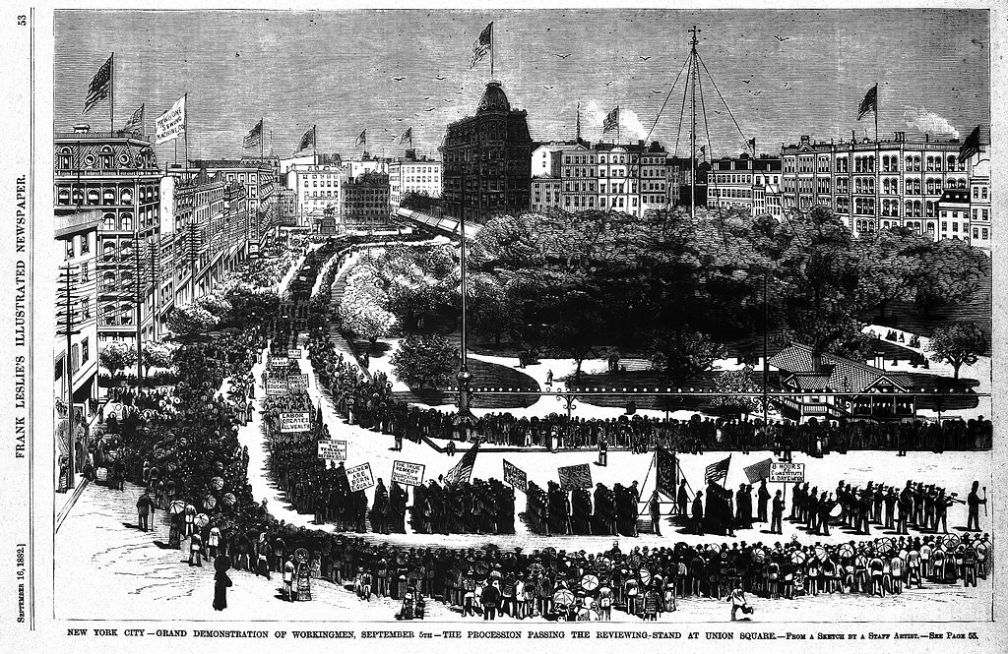
First_United_States_Labor_Day_Parade,_September_5,_1882_in_New_York_City

America celebrates Labor Day on September 4th this year. The US Department of Labor website states;

Labor Day, the first Monday in September, is a creation of the labor movement and is dedicated to the social and economic achievements of American workers. It constitutes a yearly national tribute to the contributions workers have made to the strength, prosperity, and well-being of our country.

It is interesting to look at why a date in September was chosen instead of a date in May for Labor Day. May 1st was already unofficially celebrated as “International Workers’ day” (May Day). A possible reason for choosing September has been cited as it being the end of summer.  Another reason has been cited as the day being in the middle of Independence Day (July) and Thanksgiving Day (November). Jonathan Cutler, associate professor of sociology at Wesleyan, gave another reason for not choosing May 1st as the day for Labor Day. On May 4, 1886, protesters in Chicago gathered to demand an 8-hour workday. Toward the end of the day, a peaceful demonstration devolved into violence when a bomb was hurled toward the police, killing one officer instantly and injuring others. The police responded by firing into the crowd, killing a still undetermined number of people. The goal of the rally was an 8-hour work day (40 hour week). The first Monday of September was chosen for Labor Day in by the then US President Grover Cleveland (1894) as an attempt to avoid the May date altogether. Cutler in an interview with NPR said;

“May Day has always been linked to the demand for less work and more pay [sic]; Labor Day celebrates the ‘dignity’ of work,”

The usage of “Dignity of work” is particularly interesting, and it connects with the concept of “Respect for People” in TPS.

Final Words:

Norman Bodek (the great publisher and previous owner of Productivity Press) tells a story of a man at an automotive plant. That man did nothing but put tires on the line for forty-three years. He would pick up a tire and put it on the hook to go to the assembly line. That was it. He did this same operation for forty three years. Norman stated;

“You can imagine the excitement of getting up in the morning to go to the plant and put tires on a hook for forty-three years… Work is seen as an evil necessary for survival. It does not have to be like that.”

Respect for People is about developing them so that they can increase the value of what they are doing. It is about letting them come up with ways to solve their problems, eliminate waste in what they are doing, and increasing their self worth. It is about the “dignity of work.” In Norman’s words again;

“The task of management is not to make the changes that are needed, but to establish a system that encourages all workers to become more involved in their work, and allows them to make those changes”

Given the chance to improve his work, it is highly unlikely that the man in the above story would want to continue simply putting the tires on the hook every day. It is likely that he was doing as he was told – nothing else. This story demonstrates a “missed opportunity” to demonstrate Respect for People.

I will finish off with a story from writer Paulo Coelho;

When he died, Juan found himself in an exquisite place, surrounded by all the comfort and beauty he had always dreamed of. A man dressed in white spoke to him:
‘You can have anything you want, any food, any pleasure, any diversion,’ he said.
Delighted, Juan did everything he had dreamed of doing while alive. Then, after many years of pleasure, he again searched out the man in white.
‘I’ve done everything I wanted to do. Now I need a job, so that I can feel useful,’ he said.
‘I’m sorry,’ replied the man in white. ‘But that is the one thing I can’t give you; there is no work here.’
‘How awful!’ said Juan angrily. ‘That means I’ll spend all eternity bored to death! I wish I was in Hell!’
The man in white came over to him and said softly:
‘And where exactly do you think you are, sir?’

Always keep on learning…

In case you missed it, my last post was Own Your Lean Journey:

Own Your Lean Journey:

147277400344480

One of my favorite quotes by Taiichi Ohno came when he was scolding a supervisor for not coming up with his own ideas to solve the problem at hand. The supervisor was trying to do just as he was told. Ohno remarked;

“You are a fool if you do just as I say. You are a greater fool if you don’t do as I say. You should think for yourself and come up with better ideas than mine.”

If we are to heed Ohno’s words, he is asking us to “own” our lean journey and avoid copying Toyota because Toyota’s solutions are specific to Toyota’s problems. If we do not have Toyota’s problems, their solutions might not work. Even Toyota has evolved and adapted to continue being the leader of the automotive world.

In a similar vein Ohno said the following;

“Defend your own castle by yourself!” (Source: Tom Harada)

Ohno wants us to take charge and be in control of our own destiny. These are strong words for a Lean Leader. Ohno’s teachings and sayings are very similar to several of the Zen koans – not everything is straightforward, and they have rich and deep meaning. Ohno’s quotes remind me of a quote from Buddha;

“Don’t blindly believe what I say. Don’t believe me because others convince you of my words. Don’t believe anything you see, read, or hear from others, whether of authority, religious teachers or texts. Don’t rely on logic alone, nor speculation. Don’t infer or be deceived by appearances. Find out for yourself what is true and virtuous.”

Buddha’s words add a deeper understanding to what Ohno said.

Final Words:

The essence of Ohno’s advice is about understanding our problem at hand and going outside our comfort zone. Being inside our comfort zone means that we are not venturing out on our own, we are copying what we have heard or seen. By understanding the problem at hand, we can propose countermeasures, experiment with ideas and break the mental models holding us back.

I will finish this off with a story about Buddha;

Buddha was teaching his disciples one morning.

A man came up to him and asked Buddha. “Does God exist?”

“He does,” Buddha responded.

About noon time, another man came to Buddha and asked, “Does God exist?”

“No, he does not,” Buddha replied.

Later that day, a third man came to Buddha and asked the same question, “Does God exist?”

“That is for you to decide,” was Buddha’s answer.

After the man left, Buddha’s disciples started questioning him. “Master, why did you give  such varying answers to the same question?”

Buddha smiled and replied, “Because they are all different people, and each one of them will reach God by his own path. The first man will believe what I say. The second will do everything he can to prove me wrong. The third will only believe in what he is allowed to choose for himself.”

Always keep on learning…

In case you missed it, my last post was Aim for System Optimization with Kaizen.

Aim for System Optimization with Kaizen:

Local

Kaizen is often translated as “Continuous Improvement” in Japanese and is identified as one of the core themes in lean. In today’s post I am looking at the question – can kaizen ever be bad for an organization?

In order to go deeper on this question, first we have to define kaizen as a focused improvement activity. The question at this point is whether we are optimizing the process. Merriam-Webster defines Optimization as;

Optimization – an act, process, or methodology of making something (as a design, system, or decision) as fully perfect, functional, or effective as possible.

In my opinion, kaizen does not mean to optimize the process to 100% perfection. My point of contention on this is that kaizen should not be about local optimization. Local optimization means to optimize a process so that it is fully optimized without taking the whole system into consideration. This leads to tremendous waste. The local improvement should not cause a problem to an upstream or downstream activity. My best analogy is to work out the upper body without taking the lower body into consideration. This leads to a disproportionately developed body. In a similar vein, Prof. Emiliani views kaizen as a non-zero-sum activity – “everybody wins’!

Let’s look at an example. As part of a kaizen event at a hospital, the intake staff was able to make the client intake process very efficient. They were able to show that their improvement activities resulted in a much shorter time for client intake and they were able to get more clients in through the door. However, this caused more problems at the downstream processes. The staff at these processes were not able to serve the higher number of clients adequately which resulted in higher customer dissatisfaction and staff burn-outs.

Kaizen is a gradual and small incremental change towards the ideal state. The key point here is “ideal state”. How would you define “ideal state”? The “ideal state” means the ideal situation for the organization as a whole. Taiichi Ohno, the creator of Toyota Production System, said that “No standard = no kaizen.” The standard defines the process at its current goal and has three elements;

  1. Takt time – the defined rate of production to meet customer demand
  2. Sequence of work – the defined sequence of work to ensure safety, quality and efficiency
  3. Standard Work in Process – the defined inventory required to ensure that the takt time goal is met

Toyota’s goal is to improve overall efficiency and not local efficiency. This defines the goal of kaizen. Break the current state and create the new standard – while keeping the overall efficiency in mind. Ohno’s favorite way to challenge the current standard is by asking to use fewer operators to achieve the same required output.

Management’s Role:

What is Management’s role in all of this? Management has to lay the framework for everything to function properly. Dr. Deming, the pioneer of continuous improvement activities, says the following;

It is management’s job to direct the efforts of all components toward the aim of the system. The first step is clarification: everyone in the organization must understand the aim of the system, and how to direct his efforts toward it. Everyone must understand the danger and loss to whole organization from a team that seeks to become a selfish, independent, profit center.

Source: The New Economics, Dr. Deming.

Final Words:

It is important to view the improvement activities from a big picture standpoint. Viewing kaizen from a system standpoint is essential. I have always been curious about how the small incremental improvement activities would make a big difference in the end.  I will finish this post talking about the 800 year old Bronze statue of St. Peter holding the keys to Heaven in St. Peter’s Basilica in Rome.

St Peter

It looks like St. Peter is wearing shoes on his right foot and sandals on the left foot. Over eight centuries, pilgrims have been touching his right foot that is more accessible (it sticks out more) and asking for blessings. No one has been rubbing on the foot or sanding it down.  There has been no complaint of vandalism or apparent damage to the statue. The simple act of touching and kissing over time worn the bronze statue down – that St. Peter lost all his toes on his right foot. It is said that the Church started requesting visitors to start touching the left foot more. It appears that the left foot has got a lot of catching up to do.

StPeter-feet

Always keep on learning…

If you enjoyed this post, you can read more here.

In case you missed it, my last post was Seneca’s “On Shortness of Life”.

Seneca’s “On Shortness of Life”:

Time- Life is Long

Lucius Seneca (4 BC- AD 65) was a Roman Stoic philosopher and statesman. He was Emperor Nero’s tutor and unfortunately was forced by the emperor to take his own life. One of Seneca’s famous works is “On Shortness of Life”, a collection of letters and essays he wrote. Seneca’s ideas and thoughts on time gel very well with the concepts in Toyota Production System, and are still appropriate today.

There are two concepts that stuck out to me in reading the collection “On Shortness of Life”, and these both have the underlying theme of “personal time”. The first concept is about learning the value of personal time. Seneca said;

  • I am always surprised to see some people demanding the time of others and meeting a most obliging response. Both sides have in view the reason for which the time is asked and neither regards the time itself — as if nothing there is being asked for and nothing given. They are trifling with life’s most precious commodity, being deceived because it is an intangible thing, not open to inspection and therefore reckoned very cheap — in fact, almost without any value.
  • Nobody works out the value of time: men use it lavishly as if it cost nothing… We have to be more careful in preserving what will cease at an unknown point.

Along the same vein, the second concept is about productivity and improving productivity by spending your time wisely. People often complain about “not having enough time”. Seneca said;

  • It is not that we have a short space of time, but that we waste much of it. Life is long enough, and it has been given in sufficiently generous measure to allow the accomplishment of the very greatest things if the whole of it is well invested.
  • Life is long if you know how to use it.

The Value of Time in the Toyota Production System:

One of the core themes in the Toyota Production System is time – respecting other’s time and reducing the time spent in getting the product in to the customer’s hands from the factory floor. In a similar vein to Seneca’s view on the value of time, Eiiji Toyoda, a strong supporter of Taiichi Ohno, said;

  • A person’s life is an accumulation of time – just one hour is equivalent to a person’s life. Employees provide their precious hours of life to the company, so we have to use it effectively; otherwise, we are wasting their life.

This is a strong statement as Michel pointed out in his post, and it exemplifies the idea of Respect for People. Respect for People is about respecting the person’s time – not allowing him to squander it away on non-value adding activities. Wasting others’ time is a cruel activity.

Taiichi Ohno has said the following about productivity;

Measure your performance based on productivity and not by how busy you are.

Ohno’s first challenge to anybody on the floor was to find a way to get the job done with fewer operators. I should point out that Ohno never wanted to get rid of the operators. His view was that every operation or process is full of waste and this leads to operators being engaged in non-value adding activities. Being busy and getting things done are not always the same.

Similar to Seneca, Ohno pushed the supervisors and operators to use their time well and find ways to eliminate waste. It was not about working longer or bringing in more people to get the job done. It was about eliminating the waste in the operation – thus increasing the value of the operation. Toyota challenged every employee to view their production system as the Thinking Production System. This challenges people to spend their time wisely and not squander it. It is about knowing how to wisely use time in your life.

These two ideas align very well with the two pillars of the Toyota Way;

  1. Respect for People – value other’s time
  2. Continuous Improvement – learning how to use time wisely

Final Words:

I will finish off with an Ohno story that clearly shows an appreciation for others’ time (source: Pascal Dennis);

Taiichi Ohno was visiting a supplier’s plant in the early 1950’s. He spent his time observing the operators on the floor. He observed one particular operator on a machine. The operator stood in front of the machine, watching it. Ohno observed him for a few cycles of the machine.

He then asked the operator, “How often does this machine break down?”

“Never”, the operator replied.

“So what do you do all day”, Ohno continued.

“Well, I watch this machine, Ohno-san”, was the response.

“So you watch this machine all day, and it never breaks down?”

“Yes”, the operator responded, “that is my job.”

“What a terrible waste of humanity”, Ohno exclaimed to himself.

Always keep on learning…

In case you missed it, my last post was The Colors of Waste.