Recently, I came across an interesting insight at the Toyota Global website. The section of interest is shown below:
Eventually, the value added by the line’s human operators disappears, meaning any operator can use the line to produce the same result. Only then is the jidoka mechanism incorporated into actual production lines. Through the repetition of this process, machinery becomes simpler and less expensive, while maintenance becomes less time consuming and less costly, enabling the creation of simple, slim, flexible lines that are adaptable to fluctuations in production volume.
I was taken aback by the first sentence of the paragraph – eventually, the value added by the line’s human operators disappears! Generally, we talk about increasing the value-added activities in Lean or TPS (Toyota Production System). Here, Toyota seems to be stating a paradox – We should get so good at what we do that we do not add value anymore. We keep finding better and better ways at doing what we do that it does not necessarily need us or even a human to do that job.
The website details the ideas of TPS, mainly Jidoka. Jidoka is the idea of building-in quality so if a defect is produced, the line stops automatically. I have talked about it on my website before – here and here. Toyota is advising us to make the operations as simple as possible. We are advised to remove the complexity of the operation. The operator does not have to face unwanted complexity. This complexity should be absorbed by the Engineers or Management designing the assembly line or the operation. This is an idea similar to Tesler’s law that I have discussed before. Before we can implement the ideas of Jidoka, we need to make the operation as stable as possible by avoiding unwanted variation from the operations. By doing this, multiple machines can be handled by one operator.
The paradoxical message might seem to be promoting automation. It is not so simple. Toyota focuses on work done by hand. The website states:
The work done by hand in this process is the bedrock of engineering skill. Machines and robots do not think for themselves or evolve on their own. Rather, they evolve as we transfer our skills and craftsmanship to them. In other words, craftsmanship is achieved by learning the basic principles of manufacturing through manual work, then applying them on the factory floor to steadily make improvements. This cycle of improvement in both human skills and technologies is the essence of Toyota’s jidoka. Advancing jidoka in this way helps to reinforce both our manufacturing competitiveness and human resource development.
The emphasis on doing the work by hand ensures that we understand all the aspects of the operation. Even if a robot is doing the work, it has to be most efficient. This allows for maximum flexibility. The robot imitates a human activity whether it is to grab or move or transform something. When most companies are going for automation, Toyota focuses on simpler activities that might be done with simple machines rather than state of the art robots. The push is to simplify the operation even for a robot! The manufacturing world has to adapt to ever changing demands, and this means that the assembly lines or the operations will have to be changed as needed. The environment has a lot more variety than what we can tackle. Thus, the goal is not to get stuck with a monument of expensive and large automation but simple and small machines/robots that can be easily moved or modified as need to meet the demand. The website continues:
Human wisdom and ingenuity are indispensable to delivering ever-better cars to customers. Going forward, we will maintain our steadfast dedication to constantly developing human resources who can think independently and implement kaizen.
We are to do our jobs so that we can keep “dehumanizing” the activities so that we have more time to focus on making more improvements. By “dehumanizing”, I mean that we keep improving our work so that we are not engaged in repetitive activities that can be done by a machine. The more time we spend on making improvements, the more efficient and effective we become. The machine can be viewed as a closed system. It keeps doing what it is programmed to do. When we interact with the machine, we provide it with new information that allows it to do something new.
Taking this idea of the paradox further – in an ideal world, when we do our jobs effectively, we are engaging in eradicating our jobs all together. For example, a doctor should be engaging in activities to create conditions where a doctor is no longer needed!
I will finish with Taiichi Ohno’s wise words:
It is easy to remember theory with the mind; the problem is to remember with the body. The goal is to know and do instinctively.
Please maintain social distance and wear masks. Please take vaccination, if able. Stay safe and Always keep on learning… In case you missed it, my last post wasComplexity is in the Middle:
In today’s post, I am inspired by the idea of a rhizome by Félix Guattari and Gilles Deleuze. They spoke about it in their fascinating book, A Thousand Plateaus. A rhizome is defined in Oxford dictionary as a continuously growing horizontal underground stem which puts out lateral shoots and adventitious roots at intervals. Common examples of rhizomes include crab grass and ginger. Guattari and Delueze or G&D as often notated, used the idea of a rhizome as a metaphor. They put the idea of a rhizome against what they called as “arborescent” or tree-thinking. A tree has a very definite structure; one that is hierarchic with the branches, main stalk and the root system. G&D viewed tree-thinking as being focused on a central idea and building a world view upon that. They noted:
The tree is already the image of the world, or the root the image of the world-tree.
Tree-thinking believes in having a true image of the world. As G&D noted, the tree-thinkers’ law is the law of reflection. They believe that they can simply copy the rules and apply them to any situation. Any situation has a clear structure that is hierarchical and centralized. This can be understood by all if they just follow the logic presented. With this thinking, things can be separated out to distinct categories that do not overlap. Most times this leads to a dichotomy – either this or that, with no middle ground. As G&D noted – binary logic is the spiritual reality of the root-tree. Additionally, the arborescent thinking is also linear thinking, where things follow a linear pattern and rarely lead to paradoxes or confusion.
In a contrast to this, G&D presented rhizome. A rhizome does not have a central structure. It does not have a beginning or an end. Wherever you are, you can start from there. A rhizomic plant can grow from any point in the horizontal structure. If you cut a rhizome in half, each half can grow separately.
A pack of organisms can act as a rhizome. Structures such as a burrow or a city can be a rhizome. There is a collective identification that can be started at any point in the structure. You can start from any point in a city and walk around the city to absorb its culture. It is not specific to one point that we can pinpoint as the start or the end. Just like in a map, we can start anywhere and move around in a map. There is not start or an end. A torn map still remains a map. A rhizome includes the best and the worst.
G&D also calls a collection of elements that are connected together in an intricate relationship as a rhizome. One of the examples they give is that of a certain type of wasp and an orchid. The orchid flower resembles the female wasp, and this leads to a relationship where the wasp becomes part of the reproductive cycle of the orchid. There is a lot more going on in this relationship. This is explained in a very poetic language by G&D:
The orchid deterritorializes by forming an image, a tracing of a wasp; but the wasp reterritorializes on that image. The wasp is nevertheless deterritorialized, becoming a piece in the orchid’s reproductive apparatus. But it reterritorializes the orchid by transporting its pollen. Wasp and orchid, as heterogeneous elements, form a rhizome. It could be said that the orchid imitates the wasp, reproducing its image in a signifying fashion (mimesis, mimicry, lure, etc.). But this is true only on the level of the strata-a parallelism between two strata such that a plant organization on one imitates an animal organization on the other. At the same time, something else entirely is going on: not imitation at all but a capture of code, surplus value of code, an increase in valence, a veritable becoming, a becoming-wasp of the orchid and a becoming-orchid of the wasp. Each of these becomings brings about the deterritorialization of one term and the reterritorialization of the other; the two becomings interlink and form relays in a circulation of intensities pushing the deterritorialization ever further. There is neither imitation nor resemblance, only an exploding of two heterogeneous series on the line of flight composed by a common rhizome that can no longer be attributed to or subjugated by anything signifying.
A rhizome has a circular relationship amongst the elements of its assemblage. A book’s relationship with the world is one such example. A book is never a copy of the world. Its meaning changes with the world. The book changes how we view the world, and this in turn changes how we view the book. G&D noted:
contrary to a deeply rooted belief, the book is not an image of the world. It forms a rhizome with the world, there is an aparallel evolution of the book and the world; the book assures the deterritorialization of the world, but the world effects a reterritorialization of the book, which in turn deterritorializes itself in the world (if it is capable, if it can).
G&D noted that a rhizome is characterized by connections and heterogeneity – any point of a rhizome can be connected to anything other, and must be. Heterogeneity simply means the different or non-identical components in the rhizome. Coming back to the example of the pack of organisms, I am reminded of the idea of complexity. Often, complexity is denoted by the numerous connections within a collective that lead to unforeseen and nonlinear results. Things somewhat make sense when we look backwards. A very good example of a complex phenomenon is child rearing. No matter how many kids you raise, every experience is unique. There is nothing that you can do that will ensure a fixed outcome. There are however several heuristics that might help you along the way. Giving a loving and caring home is a great heuristic for example.
Understanding the idea of a rhizome helps me also understand complexity better. To me, complexity is about possibilities. It is about the numerous connections that are made. Every point is able to connect to any other point. There is no fixed outcome expected. There are mostly nonlinear relationships in a rhizome. The start and the end are boring parts; the excitement is always in the middle. Complexity is in the middle. G&D noted each chapter as a plateau in their book. From this standpoint, a rhizome is also a plateau – just the middle. G&D were French, and they used the term “milieu” to denote the middle. They used the term also because it stood for context. Complexity is all about context. There is no one way for a rhizome. A rhizome is what a rhizome does. You cannot copy what worked in one situation and expect the same outcome from a different situation. A rhizome changes with time. Complexity changes with time. This implies that along with asking what is complexity, we should also ask WHEN is complexity?
Stafford Beer, the eminent Management Cybernetician, viewed variety as the unit for complexity. In Cybernetics, variety is the number of possible states of a collective. For example, a light switch has two states, ON and OFF. The more connections an assemblage has, the more variety it possesses. The more variety something has, the more complex it becomes. A human being has more variety than a switch. A switch is somewhat predictable, while a human being is not. A collection of human beings is even more complex. A human is a rhizome. A collection of human beings is a rhizome. A collection of human beings in their environment is also a rhizome. As I noted before, I see complexity in terms of possibilities. A light switch does not have a lot of possibilities. A light switch, some wires, circuit boards, electronic components and a very curious child have a lot of possibilities. Wherever there are connections, there is a rhizomatic possibility. Wherever elements come together as an assemblage and interact, there is a rhizomatic possibility. The possibility comes from a decentralized space. Every word and every thought are part of a rhizome. This post is also a rhizome with you, the reader.
A rhizome has to remain only a metaphor for complexity or else it fails what G&D intended. It cannot be an exact image of complexity. It cannot be the only way to explain complexity.
G&D were inspired by the great cybernetician and anthropologist Gregory Bateson. They got the idea of a plateau from Bateson. I will finish with a great quote from Bateson:
What is the pattern that connects the crab to the lobster and the orchid to the primrose, and all four of them to me? And me to you?
Please maintain social distance and wear masks. Please take vaccination, if able. Stay safe and Always keep on learning… In case you missed it, my last post wasView from the Left Eye – Modes of Observing:
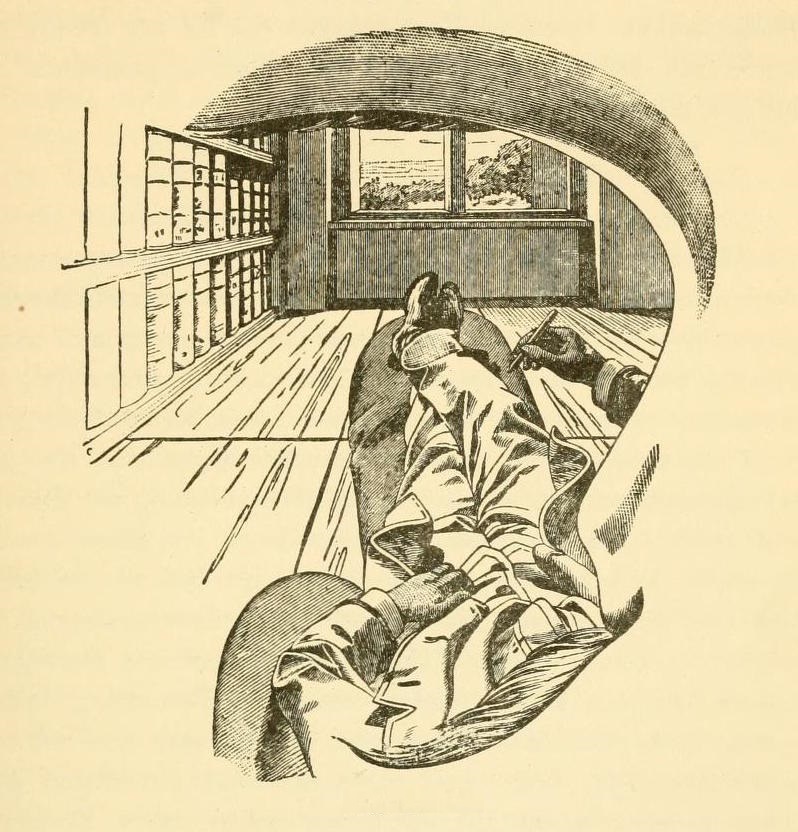
I was introduced to the drawing above through Douglas Harding who wrote the Zen book, “The Headless Way.” The drawing was drawn by Ernst Mach, the 19th Century Austrian physicist. He called the drawing, “the view from the left eye.” What is beautiful about the drawing is that it is sort of a self-portrait. This is the view we all see when we look around (without using a mirror or other reflective surfaces). If we could draw what we see of ourselves, this would be the most accurate picture. This brings me to the point about the different modes of observing.
Right now, you are most likely reading this on a screen of some sort or perhaps you are listening to this as a podcast. You were not paying attention to the phone or computer screen – until I pointed it out to you. You were not paying attention to how your shoes or socks or clothes feel on your body – until I pointed them out to you. This is mostly how we are in the world. We are just being in the world most of the time. Everything that we interact with is invisible to us. They just flow along the affordances we can afford. The keyboard clacks away when we hit on the keys, the door knobs turn when we turn them, etc. We do not see them until we have to see them. The 20th century German philosopher, Martin Heidegger called this ready-to-handedness. Everything is connected to everything else. We interact with the objects in order to achieve something. We open the door to go inside a building to do something else. We get in the car to get to a place. We use a hammer to hammer a nail in order to build something. Heidegger called these things equipment, and he called the interconnectedness, the totality of the equipment. The items are in the background to us. We do not pay attention to them. This is how we generally see the world by simply being in the world.
Now let’s say that the general flow of things breaks down for some reason. We picked up the hammer, and it is heavier than we thought and we pay attention to the hammer. We look at the hammer as a subject looking at an object. We start seeing that it has a red handle and a steel head. The hammer is not ready-to-hand anymore. The hammer has become an object and in the foreground. Heidegger called this as present-at-hand. When we really look at something, we realize that we, the subjects, are looking at something, the object. We no longer have the affordances to interact with it in a nonchalant manner. We have to pay attention in order to engage with the object, if needed.
With this background, I turn to observing again. In my view(no pun intended), there are three modes of observing:
No self – similar to ready-to-hand, you just “are” in the world, enacting in the world. You just see things without any thought to self. There is no distinction of self in what you observe. Perhaps, we can refer to this as the zero person or zero order view.
Seeing self – you make a distinction with this. You draw a line between you the subject, and the world out there. The world is out there and you are separate from the world. This is similar to present-at-hand. The world is out there. This is also the first order in First Order Cybernetics.
Seeing self through self/others – Here you are able to see yourself through self or others. You are able to observe yourself observing. This is the second order in Second Order Cybernetics. In this case, the world is in here, within you, as a constructed stable reality.
In the first mode, you are being in the world. Heidegger would call this as “dasein.” In the second mode, you see the world as being outside. And in the third mode, you see the world as being inside. There are no hierarchies here. Each mode is simply just a mode of observing. In the second and third modes, you become aware of others who are like you in the world. In the third mode, you will also start to see how the others view the world since you are looking through others’ eyes. You realize that just as you construct a world, they too construct a world. Just like you have a perspective, they too have a perspective. The different modes of observing lead to a stable reality for us based on our interpretative framework. We cognize a reality by constructing it based on the stable correlations we infer from our being in the world. Sharing this with others lead to a stable societal realm through our communication with others. A community is formed when we share and something common emerges. It is no accident that the word “community” stems from the root word “common.”
When we observe a system, we also automatically stipulate a purpose for it. Systems are not real-world entities, but a means for the observer to make sense of something. We may call a collection of automobiles on the road as the transportation system just so that we can explain the congestion in the traffic. The same transportation system might be entirely different for the construction worker working on the pavement.
We have to go through the different modes of observation to help further our understanding. Seeing through the eyes of others is a practice for empathy. And this is something that we have to continuously practice to get better at. Empathy requires continuous practice.
I will finish with Ernst Mach’s explanation for his drawing:
Thus, I lie upon my sofa. If I close my right eye, the picture represented in the accompanying cut is presented to my left eye. In a frame formed by the ridge of my eyebrow, by my nose, and by my moustache, appears a part of my body, so far as visible, with its environment. My body differs from other human bodies beyond the fact that every intense motor idea is immediately expressed by a movement of it, and that, if it is touched, more striking changes are determined than if other bodies are touched by the circumstance, that it is only seen piecemeal, and, especially, is seen without a head…
It was about 1870 that the idea of this drawing was suggested to me by an amusing chance. A certain Mr L., now long dead, whose many eccentricities were redeemed by his truly amiable character, compelled me to read one of C. F. Krause’s writings, in which the following occurs:
“Problem : To carry out the self-inspection of the Ego.
Solution : It is carried out immediately.”
In order to illustrate in a humorous manner this philosophical “much ado about nothing,” and at the same time to shew how the self-inspection of the Ego could be really “carried out,” I embarked on the above drawing. Mr L.’s society was most instructive and stimulating to me, owing to the naivety with which he gave utterance to philosophical notions that are apt to be carefully passed over in silence or involved in obscurity.
In today’s post, I am inspired by the idea of Metanarratives from the French philosopher, Jean-François Lyotard. Lyotard’s most famous work is The Postmodern Condition: A Report on Knowledge. He presented the term “postmodern” in this book. He defined postmodern as:
Simplifying to the extreme, I define postmodern as incredulity toward metanarratives.
A metanarrative or a grand narrative is a larger scale narrative that a group of people hold on to, to make sense of how the world is progressing around them. There is a teleological aspect to it such that the “progression” of the society can be explained. Leotard viewed this as a grand narrative of modernity, one where the society is progressing towards a future where all our problems are solved and where we all live happily ever after. The postmodern view distrusts any such grand narratives. The grand narrative is how we find meaning in the world around us.
The New World Encyclopedia defines metanarratives as follows:
Metanarrative or grand narrative or mater narrative is a term developed by Jean-François Lyotard to mean a theory that tries to give a totalizing, comprehensive account to various historical events, experiences, and social, cultural phenomena based upon the appeal to universal truth or universal values. In this context, the narrative is a story that functions to legitimize power, authority, and social customs. A grand narrative or metanarrative is one that claims to explain various events in history, gives meaning by connecting disperse events and phenomena by appealing to some kind of universal knowledge or schema. The term grand narratives can be applied to a wide range of thoughts which includes Marxism, religious doctrines, belief in progress, universal reason, and others.
Perhaps, it is because the world has grown closer together and more exposed to the different cultures that the postmodernists believe that we have lost faith in the grand narratives. Instead of grand narratives, what we have are localized small narratives that are often intertwined. Lyotard uses the Wittgenstein’s language games to explain this. Wittgenstein noted that the meaning of a word is in how we use the word. The words themselves are invariant; their meanings are not. The words are not fixed labels of things, but something we come together to agree upon while engaged in language games. As Simon Malpas notes:
Like normal games, there are a variety of language games that may not always have rules in common. For example, in chess there are rules that allow us to move the pieces in certain ways, set out our objectives for victory and make certain moves illegal. In the same way, in science certain types of statement can be made about the world and certain aims and rules are involved in scientific enquiry and experimentation. The success or failure of a given statement is thus determined by how well it works within the rules of the language game in which it occurs.
Located in a multiplicity of language games that no longer follow a single metanarrative, an individual’s identity becomes dispersed… As language games are linked to identity, Lyotard argues that the wider range of different language games that are considered legitimate within society, the more open and pluralist that society can become. The main threat facing postmodern society is the reduction of knowledge to a single system whose only criterion is efficiency… Once the grand narratives have fallen away, we are left only with the diverse range of language games, and the aim of postmodern criticism should be to do justice to them by allowing them to be heard in their own terms.
It is easy to be mesmerized by a grand narrative. This could be a political slogan about making a country great again. It could also be the belief that the whole is always greater than sum of its parts. We might be told that we should be willing to sacrifice for the benefit of the whole. These grand narratives often lack the variety to sustain itself. The idea of the whole being greater than some of its parts is often taught in Systems Thinking. This posits the view that there is indeed an objective whole. As David M. Boje notes, a system is a fiction of the whole. The most important piece that is often ignored is the question – to whom? All systems are mental constructs that an observer or a group of observer constructs. The keyword here is the observer. The grand narrative that “the whole is greater” is based on an observer. This does not mean that another observer will see the system identically. To a patient, the healthcare system has specific needs such as affordable healthcare and this may be entirely different than the CEO managing a hospital. If we are able to answer the following questions, then we might be able to better understand the “whole” – who does the summation? From whose perspective is the whole and parts determined? For whose purpose?
Lyotard noted that no self is an island; each exists in a fabric of relations that is now more complex and mobile than ever before.
The social subject itself seems to dissolve in the dissemination of language games. The social bond is linguistic, but is not woven with a single thread. It is a fabric formed by the intersection of at least two (and in reality an indeterminate number) of language games, obeying different rules.
One single grand narrative cannot explain away the multitude of human experiences. Our role as a systems thinker is to welcome the multiple local narratives and engage in the different language games. We should challenge the rules that govern images and narratives. We should understand that the different language games may not always work together. We should welcome pluralism – the idea that multiple perspectives may be equally meaningful and valid.
It may be difficult at first to digest the postmodernist ideas. The realization that there is no singular objective reality may not be easy to accept. This realization however makes us more acceptable to welcome other perspectives of the world, the social realm. Socrates was declared wise by the oracle of Delphi because one thing Socrates knew was that he did not know anything. This type of self-reflection is possible when we give upon the metanarrative of an objective knowledge.
Please maintain social distance and wear masks. Please take vaccination, if able. Stay safe and Always keep on learning…
In today’s post, I am carrying on some of the ideas from Heidegger. See the last post for more details. I have written about Hermeneutics before here. Heidegger was a student of the great German philosopher, Edmund Husserl. Husserl pioneered the school of phenomenology. Phenomenology is the study of how things appear to us experientially. The objects we experience are the phenomena. As Susan Laverty notes:
Phenomenology is essentially the study of lived experience or the life world (van Manen, 1997). Its emphasis is on the world as lived by a person, not the world or reality as something separate from the person (Valle et al., 1989). This inquiry asks “What is this experience like?” as it attempts to unfold meanings as they are lived in everyday existence. Polkinghorne (1983) identified this focus as trying to understand or comprehend meanings of human experience as it is lived. The ‘life world’ is understood as what we experience pre-reflectively, without resorting to categorization or conceptualization, and quite often includes what is taken for granted or those things that are common sense (Husserl, 1970). The study of these phenomena intends to return and re-examine these taken for granted experiences and perhaps uncover new and/or forgotten meanings.
Husserl taught that to understand things around us, we have to go back to the things themselves. He gave a detailed methodology to make phenomenology happen. He wanted a structured approach just like in science or mathematics. Husserl believed that how we experience things can be affected by our biases about things. So, he proposed that we “bracket” our presuppositions, biases etc. and approach the thing at hand. This suspension of our presuppositions is a phenomenological reduction. It is said that Husserl would spend days with his class analyzing a trivial object such as a mailbox. His version of phenomenology was free of social, cultural and historical “grasps” on the object. The object was a standalone entity waiting to be experienced, and through this experience an understanding of the entity was possible. He suggested with his method, we are able to come to a descriptive presentation of the phenomena.
Heidegger, as Husserl’s student was very taken by the idea of phenomenology. However, Heidegger realized that we cannot be separated from our presuppositions. We can understand existence only through our existing; the way we are. Heidegger realized that the experience of a phenomenon is a personal activity, and therefore we may come up with multiple descriptions of the phenomenon. Most importantly, the process of coming up with a description is an interpretive process. We make sense of the phenomenon as an interpretive process. Heidegger’s version of phenomenology is thus termed as “hermeneutic phenomenology”, whereas Husserl’s version is termed as “transcendental phenomenology”. Heidegger realized that the knowledge we achieve at any point in time is incomplete, and is contingent on our existence at that point in time. Our relationship to the phenomenon is affected by who we are, where we are, when we are and how we are experiencing the phenomenon.
A key point in hermeneutics is the hermeneutic circle. This circle is actually a recursion. Hermeneutics is generally associated with interpreting a text. Generally, when we start to read a part of the text, we get an idea of what the whole of the text stands for. As we get more into the text, we get a better understanding of the part, which helps with a better understanding of the whole text, and so on. This can be viewed as a recursive function. The uniqueness of our worldview comes from the recursive nature of our experiential living. We keep updating our worldview based on the current worldview which is impacted by our past worldview. And round and round we go.
Heidegger’s view that we cannot assume freedom from our presuppositions is an important thing to keep in mind in Systems Thinking. This reaffirms the idea that we are not able to experience a singularly objective reality. Reality is multidimensional, and have many variations contingent on many social factors. The circularity of hermeneutics is explained well by M. N. Babu:
The most important consequence of the circularity of understanding for hermeneutics that there is no pure starting point for understanding because every act of understanding takes place within a finite historically conditioned horizon, within an already understood frame of reference. It is no longer a question of how we are to enter the hermeneutical circle, because human consciousness is always already in it. We understand only by constant reference to what we have already understood, namely, our past and anticipated experience. The experiencing and reflecting subject is never a tabula rasa upon which the understanding of raw experience inscribes its objective character, rather, all experience and reflection are the result of a confrontation between one’s pre-understanding or even prejudice and new or perhaps strange objects. The inevitable presence of pre-understanding or prejudice is not necessarily the distortion of the meaning of an object by an arbitrary subject, rather, it is the very condition for any understanding of all. Heidegger, however, contends that presuppositions are the very condition for any reception of the object whatsoever. His notions of the ontological character of understanding and the primordial connection of subject and object in their pre- understanding and the primordial connection of subject and object in their pre-reflective relational whole provides the foundation for this contention. For him, all interpretation is a derivative form of a prior understanding, in which the prior relationship between subject and object is brought to explication.
How does one proceed when we realize that we cannot be free of our presuppositions? Heidegger advises that we need to get into the circle in the right way. Hans-Georg Gadamer provides clarity on this. As Jean Grondin notes:
Gadamer takes up Heidegger’s suggestion that the important thing is to get into the circle in the right way, but for him this mainly means that the “prejudiced” nature of our understanding should be recognized as that which makes understanding possible in the first place. This is what he calls the “ontological” and positive aspect of the hermeneutical circle. He emphasizes the ontological nature of the circle to fight against the false ideal of a presupposition‐less type of knowledge which would have been imposed upon the humanities by the objectivity requirement of exact science. His aim in highlighting the hermeneutical circle is to liberate the humanities from this alienating model. But does this mean that all presuppositions, prejudices, and anticipations are valid? Obviously not, since this would call into question the very idea of truth, which a book entitled Truth and Method surely wants to defend. Gadamer does maintain the distinction between adequate and inadequate anticipations. According to his best account of this key critical difference, it is through temporal distance and the work of history that we are able to make this distinction.
The most important thing in the process of making sense of a phenomenon is to understand the context. If the context is not understood, we fall into the trap of relativism. Relativism is the idea that all views are equally valid. A better nuanced version of this is pluralism. Pluralism is the idea that there are multiple views of a phenomenon that are different but equally valid. The difference between pluralism and relativism is in understanding the context. As we have been discussing, this understanding requires hermeneutical phenomenology. When we are aware that our understanding is always incomplete and imperfect, we are more open to going through the self-correcting hermeneutic cycle. We are open to challenge what we think we know, and we welcome scrutiny of our ideas. We put our assumptions open for all to see. Rather than being stuck with the realization that our views are imperfect and incomplete, we learn to cope with the world.
The great Systems Thinker, C. West Churchman said that the systems approach begins when first you see the world through the eyes of another.
We can only know things in terms of things we already know. From this standpoint, when we are looking at a new phenomenon, we have to look at it in terms of things we already know. If we are looking at a social “system”, then we have to always start from things that are common. The basis of all that is common in a social realm is the humanity in us all, and that is a good place to start. This is my takeaway from Churchman’s advice.
Please maintain social distance and wear masks. Please take vaccination, if able. Stay safe and Always keep on learning…
In today’s post, I am looking at the Being-question from Martin Heidegger. Heidegger is a philosopher I put off studying mainly because he was a Nazi sympathizer. His ideas are said to be of utmost importance for the twentieth century and he influenced many of the post-modern philosophers such as Sartre, Foucault, Derrida, Rorty etc. Heidegger’s main philosophical work is “Being and Time”.
At that time, the prevalent view about how we view the world was based on the distinction between the subject and the object. The subject, let’s say an observer, is able to stand outside and observe the world. The world is independent of the observer. The observer is able to study the world and using their rational mind to come to meaningful conclusions. This view was made famous by the French philosopher, René Descartes. Descartes emphasized the difference between the subject and the object. The observer themselves are not part of the observation. What is observed (the object) is part of an objective reality that is readily accessible to everyone. From this standpoint, we come to see systems as physical entities of the world that is waiting there to be objectively observed and understood by everyone.
Heidegger wanted to turn this view upside down. He viewed the idea of trying to prove an objective reality as a scandalous activity. He did not deny the subject and the object. However, he viewed the subject as being a part of the world; an embedded being in the world. Heidegger thought that the question of “what exists?” is a useless activity. He realized that the question – “what does it mean to be existing?” was more meaningful.
Descartes not only asks whether such a thing as material substance exists, he actually tells us what it means for such a thing to exist: if it takes up space it is a material thing that exists. Heidegger, however, argues there is an even more fundamental question that can be asked: What does it mean to exist at all? The question is not whether something does exist or how to characterize the existence of particular kinds of things, like material things or mental things, but simply to ask about the very meaning of Being.
To ask what it means to exist or simply to be is to engage in the most fundamental kind of questioning possible. Heidegger calls this die Frage nach den Sinn von Sein, “to question what it means to be,” or simply, “the Being-question.”
Here the word “Being” is capitalized to reflect how it was written by Heidegger and it does not stand for a Supreme Being. The Being is basically us in the world interacting with the world.
Gelven gives a great example to further the idea of the “Being-question”:
Suppose I ask “What is a jail? ” You answer, “The jail is that red-brick building down the street with bars on the windows and locks on the cells. ” In this case, the question is about an entity, and the answer provides one with characteristics that describe or identify the entity. Suppose I ask, “What does it mean to be in jail? ” In response, you say, “To be in jail is to be guilty of a crime and to be punished for it by suffering the loss of liberty. To be in jail thus is to be punished, to feel reprimanded, to suffer, possibly to be afraid, to be lonely, to feel outcast, etc. ” The second question is answered by reference to what it means to exist in various ways, such as being guilty or being unfree. The question What is a jail? is answered by the description of other entities, bars in the windows, locks, unsavory patrons; but the question of the meaning of anything is answered by reference to other meanings. In this we simply recognize there must be a parallel between the kind of question asked and the kind of answers given.
But suppose I press this distinction and ask Which question is prior? A moment’s reflection will assure us that what it means to be in jail is the reason or the ground for the jail being built the way it is. In other words, what it means to be in jail is prior to what kind of thing a jail is, for the meaning determines the entity. If I understand what it means to be in jail, I will know what is required to make a jail. So, in the formal sense of what explains what, meaning precedes entity. The inquiry into what it means to be in jail is not only different from the question about what kind of thing is a jail, it is also prior to it, for the meaning ultimately explains the entity.
The problem with believing that there is an objective reality ready for everyone to access is that we take others for granted and also view them as part of the “objective” reality. We don’t realize that most of what we see and believe are contingent on our past experiences, biases, worldviews etc. These are not necessities. It would be a categorical error to assume that the conditions of contingencies are actually conditions of necessities. An easy way to explain the difference between contingency and necessity is to think of a red triangle. The color “red” is contingent on the direction I gave you. I could have said blue instead of red or any other color for that matter. However, it is necessary that you have three sides to the triangle. You cannot have two sides or four sides for the triangle since then it ceases to be a triangle.
When we assume that systems are physical entities of the world, we fall into the categorical error. We bring in our biases and worldviews and impose them on others. Similar to the jail example above, if we simply ask “what is a hospital and how can we improve the hospital?”, we get answers that go nowhere. If instead, we try to ask the question – “what is it like to be a patient in the hospital?”, and try to see this from another person’s viewpoint, we might be able to make some headway. The world as we see it, is our construction of our being in the world. We are in a social realm, and we cope with the world by being part of it, rather than being apart from it.
Gelven also gives another example:
I ask: What is the mind? This question is the traditional metaphysical one; it asks for classification and identification. I also ask: Do I have a mind that is anything more than the physical brain? Here the question is one of whether something exists. Let us now re-ask this all-important question in terms of Heidegger’s revolution. What kind of question could we ask? What does it mean to think? Notice what happens when we rephrase the question in this way. By asking What does it mean to think? I avoid completely the metaphysical questions of whether something exists or what kind of thing it is. Yet, at the same time, the question probes just as deeply into what I want to know.
How we are in the world depends on our affordances to be in this world. As the great Cybernetician/Enactivist Francesco Varela pointed out – Our cognition is directed toward the world in a certain way: it is directed toward the world as we experience it. For example, we perceive the world to be three/ dimensional, macroscopic, colored, etc.: we do not perceive it as composed of subatomic particles. To this, I will also add Cybernetician Bruce Clarke’s quote- We still have a hard time taking for real that all knowledge of the environment depends upon the specific realities of the systems that observe it. The systemic reality of the environment is to be both the precondition and the product of an observing system.
The next time when someone asks you to improve the system, remember to use the Being-question. I will finish with a quote from Heidegger:
In order to be who we are, we human beings remain committed to and within the being of language, and can never step out of it and look at it from somewhere else. Thus, we always see the nature of language only to the extent to which language itself has us in view, has appropriated us to itself. That we cannot know the nature of language—know it according to the traditional concept of knowledge defined in terms of cognition as representation—is not a defect, however, but rather an advantage by which we are favored with a special realm, that realm where we, who are needed and used to speak language, dwell as mortals.
Please maintain social distance and wear masks. Stay safe and Always keep on learning… In case you missed it, my last post wasRound and Round We Go:
In today’s post, I am looking at a simple idea – Loops, and will follow it up with Heinz von Foerster’s ideas on second order Cybernetics. A famous example of a loop is “PDCA”. The PDCA loop is generally represented as a loop – Plan-Do-Check-Act-Plan-Do…, and the loop is represented as an iterative process where it goes on and on. To me, this is a misnomer and misrepresentation. These should be viewed as recursions. First, I will briefly explain the difference between iteration and recursion. I am using the definitions of Klaus Krippendorff:
Iteration – A process for computing something by repeating a cycle of operations.
Recursion – The attribute of a program or rule which can be applied on its results indefinitely often.
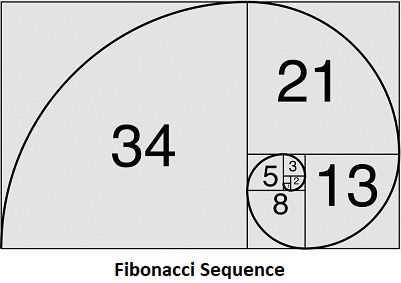
In other words, iteration is simply repetition. In a program, I can say to print the word “Iteration” 5 times. There is no feedback here, other than to keep count of the times the word was printed on screen. On the other hand, in recursion, the value of the first cycle is fed back into the second cycle, the output of which is fed into the third cycle and so on. Here circular feedback is going on. A great example of a recursive function is the Fibonnaci sequence. The Fibonacci sequence is expressed as follows:
Fn = Fn-1 + Fn-2, for n > 1
Fn = 1, for n = 0 or 1
Here, we can see that the previous value is fed into the equation to create a new value, and this is an example of recursion.
From the complexity science standpoint, recursions lead to interesting phenomenon. This is not an iterative non-feedback loop any longer, where you come back to the same point again and again. With recursion, you get to circular causality with each loop, and you enter a new state altogether. Each loop is directly impacted by the previous loop. Anything that leads back to its original starting point doesn’t lead to emergence and can actually lead to a paradox. A great example is the liar paradox. In a version of this, a card has a statement written on both sides of a card. They are as follows:
The statement on the other side of this card is FALSE.
The statement on the other side of this card is TRUE.
This obviously leads to a paradox when you follow it along a loop. You do not get to a new state with each iteration. Douglas Hofstadter wonderfully explained this as a mirror mirroring itself. However, with recursion, a wonderful emergence can happen, as we see in complexity science. Circular causality and recursion are ideas that have strong footing in Second Order Cybernetics. A great example of this is to look at the question – how do we make sense of the world around us? Heinz von Foerster, the Socrates of Cybernetics, has a lot to say about this. As Bernard Scott notes:
For Heinz von Foerster, the goal of second-order cybernetics is to explain the observer to himself, that is, it is the cybernetics of the cybernetician. The Greek root of cybernetics, kubernetes, means governor or steersman. The questions asked are; who or what steers the steersman, how is the steersman steered and, ethically, how does it behoove the steersman to steer himself? Von Foerster begins his epistemology, in traditional manner, by asking, “How do we know?” The answers he provides-and the further questions he raises-have consequences for the other great question of epistemology, “What may be known?” He reveals the creative, open-ended nature of the observer’s knowledge of himself and his world.
Scott uses von Foerster’s idea of undifferentiated coding to explore this further. I have written about this before here.
Undifferentiated coding is explained as below:
The response of a nerve cell encodes only the magnitude of its perturbation and not the physical nature of the perturbing agent.
Scott continues:
Put more specifically, there is no difference between the type of signal transmitted from eye to brain or from ear to brain. This raises the question of how it is we come to experience a world that is differentiated, that has “qualia”, sights, sounds, smells. The answer is that our experience is the product of a process of computation: encodings or “representations” are interpreted as being meaningful or conveying information in the context of the actions that give rise to them. What differentiates sight from hearing is the proprioceptive information that locates the source of the signal and places it in a particular action context.
Von Foerster explained the circular relationship between sense data and experiences as below:
The motorium (M) provides the interpretation for the sensorium (S) and the sensorium provides the interpretation for the motorium.
How we make sense depends on how we experience, and how we experience depends upon how we make sense. As Scott notes, we can explain the above relationship as follows:
S = F(M). Sensorium, S, is a function of motorium, M.
M = G(S). Motorium, M, is a function of sensorium, S.
Von Foerster pointed out that this is an open recursive loop, since we can replace M with G(S).
S=F(G(S))
With more replacements for the “S”, this equation becomes an open recursive loop as follows:
S=F(G(F(G(F(G(…………G(S)))))……
Scott continues:
Fortunately, the circularity is not vicious, as in the statement “I am a liar”. Rather, it is virtuous or, as von Foerster calls it, it is a creative circle, which allows us to “transcend into another domain”. The indefinite series is a description of processes taking place in sequence, in “time”, with steps t, t+1, t+2 and so on. (I put “time” in quotes as a forward marker for discussion to come). In such indefinite recursive expressions, solutions are those values of the expression which, when entered into the expression as a base, produce themselves. These are known as Eigen values (self-values). Here we have the emergence of stabilities, invariances. The “objects” that we experience are “tokens” for the behaviors that give rise to those experiences. There is an “ultimate” base to these recursions: once upon a “time”, the observer came into being. As von Foerster neatly puts it, “an observer is his own ultimate object”.
The computations that give rise to the experience of a stable world of “objects” are adaptations to constraints on possible behaviors. Whatever else, the organism, qua system, must continue to compute itself, as a product. “Objects” are anything else it may compute (and recompute) as a unitary aspect of experience: things, events, all kinds of abstraction. The possible set of “objects” it may come to know are limited only by the organism’s current anatomy and the culture into which she is born.
Heinz von Foerster said – The environment contains no information; it is as it is. We are informationally closed entities, which means that information cannot come from outside to inside. We make meanings out of the perturbations and we construct a reality that our interpretative framework can afford.
I will finish with a great observation from the Cybernetist philosopher Yuk Hui:
Recursivity is a general term for looping. This is not mere repetition, but rather more like a spiral, where every loop is different as the process moves generally towards an end, whether a closed one or an open one.
Please maintain social distance and wear masks. Stay safe and Always keep on learning…
In today’s post, I am looking at the ideas inspired by mirror neurons. Mirror neurons are a class of neurons that activate when someone engages in an activity or when they observe the same activity being performed by someone else. It was first identified by a group of Italian neurophysiologists led by Giacomo Rizzolatti in the 1980s. They were studying macaque monkeys. As part of their research, they placed electrodes in the monkeys’ brains to study hand and mouth motions. The story goes that the electrodes sent signals when the monkeys observed the scientists eating peanuts. The same neurons that fired when the monkeys were eating peanuts fired when they merely observed the same action. Several additional studies indicate that the mirror neurons are activated to respond to goal-oriented actions. For example, when the scientist covered the peanut bowl, and performed the action of picking a peanut and eating, the mirror neurons still fired even though the monkeys could not see the peanut bowl. However, when the scientist simply mimicked the action of taking a peanut without a peanut bowl, the neurons did not fire. There have been several hypotheses regarding the mirror neurons such as they facilitate learning by copying, and that they are the source for empathy.
The most profound idea about mirror neurons is that action execution and action observation are tightly coupled. Our ability to interpret or comprehend other’s actions involve our own motor system. For example, when we observe someone doing an action, depending upon whether we have performed the action adds depth to how we can observe the action being performed. If I am watching a ballet and the ballerina performs a difficult move, I may not fully grasp what I have seen since I do not know ballet and because I have never performed it. However, if I watch a spin bowler in Cricket throwing an off-spin, I will be able to grasp it better and possibly tell how the ball is going to spin. This is because I have played a lot of Cricket as a youth. The same with a magician performing a sleight of hand.
The idea of mirror neurons brings an extra depth to the meaning of going to the gemba. Going to gemba is a key tenet of Toyota Production System. We go to the gemba, where the action is, to grasp the current situation. We go there to observe. Gemba, it is said, is our best teacher. When we go there to observe the work being performed, we may get a different experience depending upon whether we ourselves have performed the work or not. Heinz von Foerster, the Socrates of Cybernetics, said – if you want to see, learn how to act. He was talking about the circular loop of sensorium and motorium. In order to see, there has to be interaction between the sensorium and motorium.
In a similar way, Kiichiro Toyoda, the founder of Toyota Motor Corporation is said to have remarked that engineers would never amount to anything unless they had to wash their hands at least three times a day; the evidence they were getting their hands dirty from real work.
I will finish with a great advice from Taiichi Ohno:
Don’t look with your eyes, look with your feet. Don’t think with your head, think with your hands.
Please maintain social distance and wear masks. Stay safe and Always keep on learning…
This is a follow-up to my last week’s post – Notes on Regulation: In today’s post, I am looking at the Arvid Aulin-Ahmavaara’s extended form of the law of requisite variety (using Francis Heylighen’s version). As I have noted previously, Ross Ashby, the great mind and pioneer of Cybernetics came up with the law of requisite variety (LRV). The law can be stated as only variety can absorb variety. Here variety is the number of possible states available for a system. This is equivalent to statistical entropy. For example, a coin can be shown to have a variety of two – Heads and Tails. Thus, if a user wants a way to randomly choose one of two outcomes, the coin can be used. The user can toss the coin to randomly choose one of two options. However, if the user has 6 choices, they cannot use the coin to randomly choose one of six outcomes efficiently. In this case, a six-sided die can be used. A six-sided die has a variety of six. This is a simple explanation of variety absorbing variety.
The controller can find ways to amplify variety to still meet the external variety thrown upon the system. Let’s take the example of the coin and six choices again. It is possible for the user to toss the coin three times or use three coins, and use the three coin-toss results to make a choice (the variety for three coin-tosses is 8). This is a means to amplify variety in order to acquire requisite variety. From a cybernetics standpoint, the goal of regulation is to ensure that the external disturbances do not reach the essential variables. The essential variables are important for a system’s viability. If we take the example of an animal, some of the essential variables are the blood pressure, body temperature etc. The essential variables must be kept within a specific range to ensure that the animal continues to survive. The external disturbances are denoted by D, the essential variables by E and the actions available to the regulator as A. As noted, variety is expressed as statistical entropy for the variable. As Aulin-Ahmavaara notes – If A is a variable of any kind, the entropy H(A) is a measure of its variety.
With this background, we can note the extended form of the Law of Requisite Variety as:
H(E) ≥ H(D) – H(A) + H(A|D) – B
The H portions of the term represents the statistical entropy for the term. For example, H(E) is the statistical entropy for the essential variables. The larger the value for H, the more the uncertainty around the variable. The goal for the controller is to keep the H(E) as low as possible since a larger value for the entropy for the essential variables indicate a larger range of values for the essential variables. If the essential variables are not kept to a small range of values, the viability of the organism is compromised. We can now look at the other terms of the equation and see how the value for H(E) can be maintained at a lower value.
Heylighen notes:
This means that H(E) should preferably be kept as small as possible. In other words, any deviations from the ideal values must be efficiently suppressed by the control mechanism. The inequality expresses a lower bound for H(E): it cannot be smaller than the sum on the right-hand side. That means that if we want to make H(E) smaller, we must try to make the right-hand side of the inequality smaller. This side consists of four terms, expressing respectively the variety of disturbances H(D), the variety of compensatory actions H(A), the lack of requisite knowledge H(A|D) and the buffering capability B.
As noted, D represents the external disturbances, and H(D) is the variety of disturbances coming in. If H(D) is large, then it also increases the value generally for H(E). Thus, an organism in a complex environment is more likely to face some adversities that might drive the essential variables outside the safe range. For example, you are less likely to die while sitting in your armchair than while trekking through the Amazonian rain forest or wandering through the concrete jungle of a megacity. A good rule of thumb for survivability would be to avoid environments that have a larger variety for disturbances.
The term H(A) represents the variety of actions available to counter the disturbances. The more variety you have for your actions, the more likely you are able to counteract the disturbances. At least one of them will be able to solve the problem, escape the danger, or restore you to a safe, healthy state. Thus, the Amazonian jungle may not be so dangerous for an explorer having a gun to shoot dangerous animals, medicines to treat disease or snakebite, filters to purify water, and the physical condition to run fast or climb in trees if threatened. The term H(A) enters the inequality with a minus (–) sign, because a wider range of actions allows you to maintain a smaller range of deviations in the essential variables H(E).
The term H(A|D) represents a conditional state. It is also called the lack of requisite knowledge. It has a plus sign since it indicates a “lack”. It is not enough that you have a wide range of actions, you have to know which action will be effective. If you have minimal knowledge, then your best strategy is to try out each action at random, and this is highly inefficient and ineffective if time is not on your side. For example, there is little use in having a variety of antidotes for different types of snakebites if you do not know which snake bit you. H(A|D) expresses your uncertainty about performing an action A (e.g., taking a particular antidote) for a given disturbance D (e.g., being bitten by a particular snake). The larger your uncertainty, the larger the probability that you would choose a wrong action, and thus fail to reduce the deviation H(E). Therefore, this term has a “+” sign in the inequality: more uncertainty (= less knowledge) produces more potentially lethal variation in your essential variables.
The final term B stands for buffering (passive regulation). It expresses your amount of protective reserves or buffering capacity. Better even than applying the right antidote after a snake bite is to wear protective clothing thick enough to stop any snake poison from entering your blood stream. The term is negative because higher capacity means less deviation in the essential variables.
The law of requisite variety expresses in an abstract form what is needed for an organism to prevent or repair the damage caused by disturbances. If this regulation is insufficient, damage will accumulate, including damage to the regulation mechanisms themselves. This produces an acceleration in the accumulation of damage, because more damage implies less prevention or repair of further damage, and therefore a higher rate of additional damage.
The optimal formation for the Law of Requisite Variety occurs when the minimum value for H(E) is achieved, and when there is no lack of requisite knowledge. The essence of regulation is that disturbances happen all the time, but that their effects are neutralized before they have irreparably damaged the organism. This optimal result of regulation is represented as:
H(E)min= H(D) – H(A) – B
I encourage the reader to check out my previous posts on the LRV.
In today’s post, I am looking at the idea of regulation. I talked about direct and indirect regulation in my previous post. In today’s post, I will look at passive and active regulation.
Ashby viewed a system as a selection of variables chosen by an observer for the purpose of sensemaking and control. The observer is looking not at what the system is (what the variables are), but at what the system does. In other words, the observer is interested in the behavior of the system. The observer is interested in influencing the behavior so that the system is maintained in certain desirable states. Of all possible states, the system can be in, the observer would like to keep the system in a chosen few states. To achieve this, the observer has to model the behavior of the system. As J. Achterbergh and D. Vriens note:
we should “model” the behavior of this entity (system) in such a way that we can understand how it behaves in the first place, and how this behavior reacts to “influences.” One could say that (at least) two kinds of influences on behavior (input) can be discerned: “disturbances” – causing the concrete entity to behave “improperly,” and “regulatory actions” – causing “proper” behavior (by preventing or dealing with disturbances).
The general understanding is that the environmental disturbances cause the system to behave improperly. The role of the regulator is to prevent the disturbances from reaching the essential variables of the system. The controller sets the target for the system, while the regulator acts on realizing the target. An easy example to distinguish the controller and the regulator is with a thermostat. The homeowner in this case is the controller, while the thermostat is the regulator. The homeowner decides the range for the thermostat, and all the thermostat can do is turn on or off depending upon the temperature inside the house. The regulator is not able to change the target; only the controller can change the target.
The goal of the regulator, as noted above, is to ensure that the disturbances from outside do not impact the essential variables of the system. Ashby noted:
An essential feature of the good regulator is that it blocks the flow of variety from disturbances to essential variables.
J. Achterbergh and D. Vriens expand this further:
Regulators block variety flowing from disturbances to essential variables. The more variety they block, the more effective the regulator. The most effective regulator is the one that blocks all the variety flowing from disturbances to essential variables… We can now also define regulation as the activity performed by the regulator. That is, regulation is “blocking the flow of variety from disturbances to essential variables.” If the more general description of essential variables is used (i.e., those variables that must be kept within limits to achieve some goal) then the purpose of regulation is that it enables the realization of this goal. If the goal is the survival of some concrete system, then the purpose of regulation is trying to keep the values of its essential variables within the limits needed for survival, in spite of the values of disturbances.
This is a good place to introduce the main law of Cybernetics – the law of requisite variety (LRV). LRV is the brainchild of Ross Ashby, the most prolific thinker and pioneer of Cybernetics. LRV states that only variety can absorb variety. Here variety is the number of possible states. For example, a light switch has a variety of two – ON or OFF. If the user just wants the light to be turned on or off, then the light switch can meet that variety. However, if the user wants the light to be dimmed down or up, then the situation calls for a lot more variety than two. Here, a light switch with a variety of two cannot absorb the variety “thrown” at it. However, a dimmer switch with an indefinite amount of variety can achieve this.
Ashby was inspired by Claude Shannon’s tenth theorem. There is an upper limit for the amount of variety the regulator can absorb. The controller will need to find ways to attenuate variety (filter out unwanted variety thrown at the system) and amplify internal variety such that the requisite variety is achieved. A simple example of attenuating variety is the big sign on the front of a fast-food place. The customer should not go into the fast-food place and ask to buy a car. Since there is an upper limit to a single regulator, the controller has to use multiple regulators linked to achieve amplification of variety. The fast-food place can use more employees during rush-hour to meet with the extra variety thrown at it. This is an example of amplifying variety.
Ashby talked about two types of regulation. This has been explained as Passive and Active regulation by J. Achterbergh and D. Vriens. Passive regulation does not make any selection. We can state that passive regulation is always working. An easy example to explain this is the shell of a turtle. It does not make any selections. J. Achterbergh and D. Vriens explained this as follows:
In the case of passive regulation there exists a passive block between the disturbances and the essential variables. This passive block, for instance the shell of a turtle, separates the essential variables from a variety of disturbances. It is characteristic of passive regulation that it does not involve selection… the regulator does not select a regulatory move dependent on the occurrence of a possibly disturbing event, for the block is given independent of disturbances. Because no selection is involved, the passive “regulator” does not need information about changes in the state of the essential variable or about disturbances causing such changes to perform its regulatory activity.
Francis Heylighen explained passive regulation as buffering:
Buffering—at least in the cybernetic sense—is a passive form of regulation: the system dampens or absorbs the disturbances through its sheer bulk of protective material. Examples of buffers are shock absorbers in a car, water reservoirs or holding basins dampening fluctuations in rainfall, and the fur that protects a warm-blooded animal from variations in outside temperature. The advantage is that no energy, knowledge or information is needed for active intervention. The disadvantage is that buffering is not sufficient for reaching goals that are not equilibrium states in themselves, because moving away from equilibrium requires active intervention. For example, while a reservoir makes the flow of water more even, it cannot provide water in regions where it never rains. Similarly, fur alone cannot maintain a mammal body at a temperature higher than the average temperature of the surroundings: that requires active heat production.
Active regulation requires a selection of activity and requires information. J. Achterbergh and D. Vriens explained active regulation as follows:
In the case of active regulation, the regulator needs to select a regulatory move. Dependent on either the occurrence of a change of the state of the essential variable or of a disturbance, the regulator selects the regulatory move to block the flow of variety to the essential variables. Because it has to select a regulatory move, the active regulator either needs information about changes in the state of the essential variable or about the disturbances causing such changes in order to perform its regulatory function.
There are two forms of active regulation – feedforward (cause-controlled) and feedback (error-controlled). In feedforward regulation, the regulator anticipates and acts when it senses the disturbances prior to having any impact on the essential variable. Heylighen explained this as:
In feedforward regulation, the system acts on the disturbance before it has affected the system, in order to prevent a deviation from happening. For example, if you perceive a sudden movement in the vicinity of your face, you will close your eyelids before any projectile can hit it, so as to prevent potential damage to your eyeball. The disadvantage that it is not always possible to act in time, and that the anticipation may turn out to be incorrect, so that the action does not have the desired result. For example, the projectile may not have been directed at your eyes, but at a different part of your face. By shutting your eyes, you make it more difficult to avoid the actual impact.
In feedback regulation, the regulator acts only after the essential variable is impacted.
In feedback regulation, the system neutralizes or compensates the deviation after the disturbance has pushed the system away from its goal, by performing an appropriate repair action. For example, a thermostat compensates for a fall in temperature by switching on the heating, but only after it detected a lower than desired temperature. For effective regulation, it suffices that the feedback is negative—i.e. reducing the deviation—because a sustained sequence of corrections will eventually suppress any deviation. The advantage is that there is no need to rely on a complex, error-prone process of anticipation on the basis of imperfect perceptions: only the direction of the actual deviation has to be sensed. The disadvantage is that the counteraction may come too late, allowing the deviation to cause irreversible damage before it was effectively suppressed.
Ashby viewed feedforward as reacting to threat, and feedback as reacting to disaster. Feedforward control (cause controlled) generally comes from feedback control (error controlled). We should have a somewhat good knowledge of the situation’s behavior and this comes from previous feedback experiences.
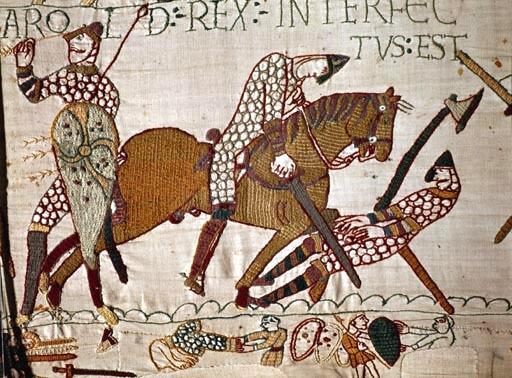
In next week’s post, I will look at the extended form of the Law of Requisite Variety. I will finish this post with an example from J. Achterbergh and D. Vriens to further explain the three forms of regulation with an example of a medieval knight:
To illustrate these different modes of regulation, imagine a medieval knight on a battlefield. One of the essential variables might be “pain,” with the norm value “none.” In combat, the knight will encounter many opponents with different weapons all potentially threatening this essential variable. To deal with these disturbances, he might wear suitable armor: a passive block. If a sword hits him nevertheless (e.g., somewhere, not covered by the armor), he might withdraw from the fight, treat his wounds and try to recover: an error-controlled regulatory activity, directed at dealing with the pain. A cause-controlled regulatory activity might be to actively parry the attacks of an opponent, with the effect that these attacks cannot harm him.
Please maintain social distance and wear masks. Stay safe and Always keep on learning…

 Harish's Notebook - My notes... Lean, Cybernetics, Quality & Data Science.